
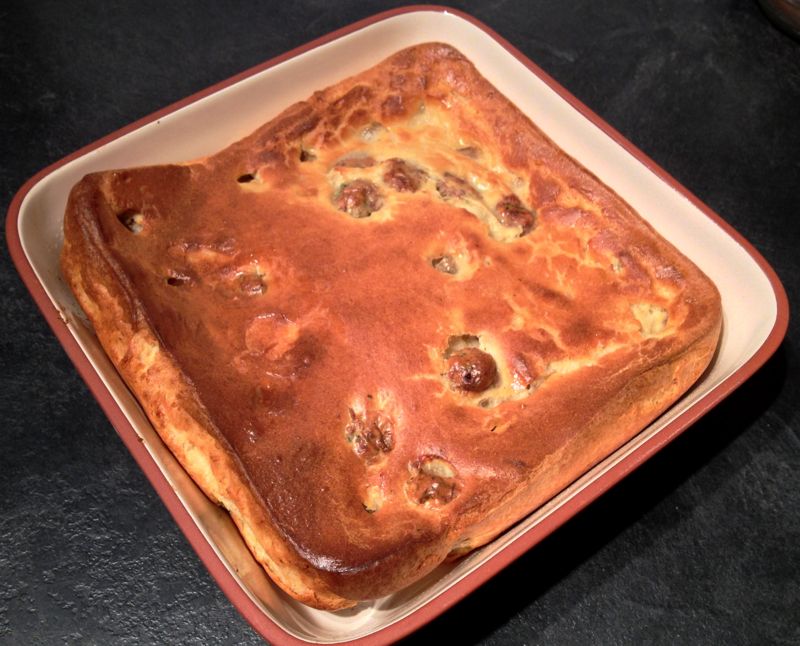
Tadpoles in the Hole

toad in the hole

It’s been cold and grey recently with even snow on the ground and a chill in the air and I’ve wanted warm, filling food, rich with carbs and comfort to see me through. A recent trip to Waitrose to get ox cheek from their butchery counter to make Mister North’s famous tongue and cheek pudding also resulted in the purchase of a lovely jar of beef dripping and so my mind immediately thought of Yorkshire puddings or a proper toad in the hole. But sadly my house was sausage-less and I thought such delights would have to wait for another day when I suddenly thought ‘could you make it with meatballs instead?’

My dinner companion assured me that would work very nicely indeed and because he’s wittier than me, named it Tadpoles in the Hole before I’d even rolled my sleeves up to roll the meatballs. How could you not want to eat a meal with a name like that? The oven went on to get lovely and hot to make sure my batter rose well and I turned my attention to the meatballs.

I used turkey mince for mine as it was the first draw on my game of freezer roulette, but any relatively lean meat would work well. I mixed the meat with some breadcrumbs and added lemon zest and tarragon as I had both to hand, but your seasonings here are only limited by your imagination. Some chilli would have been just the ticket here actually and I do love black olives and parmesan in a meatball. Whatever you go for, roll your meatballs nice and small so you get one in every bite of batter and chill for at least half an hour first. You’ll also need to leave your batter to sit for about this long so plan ahead slightly and then this is a very simple dish to assemble and cook.

It also works fabulously well with a caramelised onion gravy which if you have a bit of extra time to spare, but is extremely good served naked as well. I tend to slow cook a big batch of onions at a time and then freeze them in portions so you don’t need to wait on them turning sticky sweet and golden every time you need them.

Tadpoles in the Hole (serves 4)

For the meatballs:

  • 250g lean mince
  • 125g breadcrumbs
  • zest of 1/2 lemon
  • 25g chopped tarragon
  • salt and pepper
  • pinch cayenne pepper
  • 1 egg, beaten

For the batter:

  • 200g plain flour
  • 2 eggs, beaten
  • 150ml milk
  • 1 teaspoon mustard powder
  • 2 tablespoon beef dripping

For the gravy:

  • 2 onions, sliced
  • 25g butter
  • pinch demarara sugar
  • 2 tablespoons plain flour
  • 300ml stock (vegetable or animal, depending on your meat choice)
  • 100ml vermouth or wine (replace with more stock if you don’t have any)
  • generous dash of Worcestershire sauce
  • seasoning

Start with your onions for the gravy. Slice them into half moons and cook in the butter on a low heat for about 30 minutes on a low heat or until soft and just starting to colour. If there is liquid coming off them, drain it and keep for the gravy as it’s pure onion flavour. Add in the sugar and leave to cook for about another 45 minutes. They need no attention (I went off and watched an episode of Breaking Bad which meant I wouldn’t have noticed the kitchen going on fire) but to properly caramelise an onion til jammy and golden takes time. If you do extra, they freeze well and take only a few seconds in a microwave to defrost.

Try not to become utterly fixated by the do it yourself meth trade while your onions are cooking, and start on your batter instead. Resting it really does make a difference, making it much lighter and fluffier and rise better. I presume this is something to do with the gluten. But I like to think it’s a reward for patience. The batter is easy, put everything but the beef dripping into a bowl and mix til the consistency of double cream. The odd slight bump in the batter doesn’t matter as mixing it too much can make it flop. Leave to rest on the worktop til needed.

Your meatballs also like a rest before dinner and are similarly simple. I love rolling them, I find it very relaxing and the longer you chill them for the less they fall apart when cooking. They are so easy to make, it’s also worth doing a freezer batch while you’re there. Basically put everything but the egg in a bowl and mash together well with your hands to combine everything. Then add the egg a bit at a time, making sure the mix isn’t too wet and mix well. Then roll about a fork’s worth at a time into a meatball and chill til needed. Doing them with this proportion of breadcrumbs makes them very light and stretches the meat a longer way making this great value.

raw meatballs

When you’re ready to eat, put the meatballs in your dish and add the dripping and heat for at least ten minutes or until it is smoking hot. Hot fat may be mildly terrifying, but it’s the secret of a pillowy billowing batter. Pour your batter in carefully from the edge so you don’t cause the meatballs to float and pop into the oven as fast as possible and leave it to cook for 40 minutes. On pain of death, don’t open your oven door again before then or you’ll end up with a giant pancake with meatballs poking out forlornly.

Make your gravy about 10 minutes before by adding the plain flour to the buttery onions and cook til quite dry. Then add in the warm stock, including those onion juices and the wine if using, and stir until it starts to thicken. Season and add the Worcestershire sauce. Add more liquid if you like it less thick. This gravy can be adapted to be veggie or vegan if you use oil and tamari instead if you need a meat free gravy at some point.

When your tadpoles are completely cooked and the hole is puffy and golden and slightly quivering with its own self importance, serve big slices of it with lashing of gravy and heaps of peas (garden or mushy) on the side and give fervent thanks for cold weather. As comforting as eating a hot water bottle, this is deliciously decadent with the meat to batter ratio and a great twist on a old favourite. It’s just as well we’ve got a north wind coming in…

portion


Damsons: not just for gin…

damson_gin_crumble-01

I don’t believe in doing a dry January. It’s a long bleak month, made grey by the weather and the removal of those lovely twinkly Christmas lights and decorations. The rest of the world withdraws from society, exhausted after the festive season and starts detailing every morsel they do or don’t eat with a side helping of shame and the Special K diet. So frankly I need a drink just to deal with them.

I don’t mean going out and drinking every bar in the borough dry, but I do enjoy a winter time tipple, usually just before bed to warm the cockles properly. And luckily my family always comes up trumps with just the ticket over Christmas in the shape of homemade fruit gins. Mister North tends to specialise in damson gin and our mum tends to go for sloe gin, which is a family tradition dating back to my childhood. However the weather in 2012 was not good for sloes, so both of them went for damson gin this year.

Warm and jewel coloured, this plum rich sweet liquor warms you better than an electric blanket and with much more style. Sipped slowly in front of fire, it softens and soothes you to sleep well when you get to bed. Served long, tall and cool over ice with tonic to cut it, it reinvents the gin and tonic in a way that’s not just for Christmas. You can even, oddly enough, douse fish in it to make a sultry salmon gravlaks.

Read more

Christmas Chestnut Caramel Shortbread

shortbread

When I was growing up, I associated certain tastes with times of the year. Chestnuts were the taste of celebrations at Christmas when my mum made a gorgeous frozen pudding similar to a Nesselrode pudding with sweetened chestnut puree and we occasionally had marron glacee at my granny’s house round the open fire. But caramel shortbread was the taste throughout the year. None of this ‘millionaire’s shortbread’ malarkey, caramel shortbread was the traybake of choice in our house.

Weirdly though, I’ve never made it myself. I tend to dip into my less well known Northern Irish repetoire of wee buns and bakes when I’m making anything like this back in London, but everyone has heard of this treat so I’ve neglected it for a while, but a recent conversation gave me a Christmassy craving for caramel and when Zoe and Tim from Brixton Blog gave me a tin of chestnut spread last week, I knew I had to combine the two tastes and this classic a new lease of life.

Read more

Maple Rosemary Popcorn Pie

Maple Rosemary Popcorn Pie

Maple Rosemary Popcorn Pie

At this time of year, although Hallowe’en is to me a very Irish celebration, I do like a spot of Americana in my stomach as the autumn nights draw in. Glorious orange pumpkins, soups and stews spiked with smoky frankfurters or the same sausages battered and served up as corndogs, glistening sticky pecan pies and handfuls of crispy popcorn. They seem to have the right flavours for the season and sheer greed and a slightly abstract conversation made me wonder if I could perhaps multi task and turn the latter two into one dish for ultimate eating?

I wanted something slightly more grown up that the crunchy toffee coated popcorn I so desired as a child on cinema trips which now seems sickly sweet and artificial. Reading recipes for caramel corn made me think mine needed the adult twist of sea salt for sure,  but I wanted something else to lift it and my memory went back to this lovely post for Rosemary Sea Salt Millionaires’ Shortbread that I’ve been meaning to make for yonks. Seeing that my rosemary bush was the only thing in the garden to survive the summer of slugmageddon decided it for me and that woody floral flavour would be my secret weapon.

Maple Rosemary Popcorn Pie: makes one 9″ pie (or 4 small ‘uns with tonnes leftover like me)

  • 250 g sweet shortcrust pastry
  • 3 tablespoons popping corn
  • 1/2 teaspoon coconut oil
  • 100g unsalted butter
  • 50g golden syrup
  • 50g maple syrup (use all golden if you don’t have maple)
  • 150g golden caster sugar
  • 3 eggs
  • large pinch of sea salt (enough to just taste the salt)
  • tablespoon chopped fresh rosemary

First start with your pastry. You can just use bought stuff for this, but if you’re making your own, may I recommend the sweet shortcrust by Dan Lepard in Short and Sweet? I’ve always had issues with my pastry shrinking no matter how well I chill it and this recipe is foolproof. I’m not going to write it all out because Dan explains it well elsewhere if you search, but really because if you’re buying a cookbook, it should be this one. Call it an early Christmas present…

Line your tart tin and chill the pastry again before blind baking for 15 minutes at 180℃ or until just colouring the palest golden shade. Leave to cool while you make your filling.

Place three tablespoons of raw popping corn kernels in a paper bag (I use leftover flour bags) and the smidge of coconut oil and fold the bag over loosely and microwave for about just under 2 minutes (I usually whip it out at 1.45 or it starts to burn) and voila! You have the quickest easiest popcorn possible. If doing something as delicious as this just carry as normal, but you’ve skipped the whole washing up stage.

Now melt the butter, sugar and syrups together in a pan. I’ve used unsalted butter because it’s too easy to overdo the salt with regular butter and then adding more salt, so have gone for a blank canvas, but obviously, you can improvise if you only have salted butter. Take the mixture off the heat and add in the chopped rosemary and the salt. Allow the mix to cool for about 10 minutes. Don’t skip this stage or your mix will be so liquid to pour in the case, you’ll stick everything in the kitchen to itself, you and the tart case as I did the first time.

Once the mix is cooled slightly, beat the eggs in it. They won’t curdle now you’ve reduced the temperature of the mix. Then stir the popcorn into the mix. You’ll need to do this fairly carefully and repeatedly as popcorn floats quite well and resists dunking unless really coaxed. I originally used this caramel corn which made it easier, but a) really isn’t very nice or worth the washing up and b) made the pie so sweet, the Scottish person I tried it on couldn’t eat it. Once your popcorn is entirely coated, pour the filling into the tin making sure you don’t overfill or the whole thing will stick. Bake the large case at 180℃ for about 40 minutes whereupon it should be golden brown but still slightly soft in the middle.

Remove from the oven and allow to cool and set slightly. Both this pie and the pecan pie it’s based on are best served slightly warm but not hot unless you want to remove several layers of skin from your mouth with molten sugar. This pie calls out to be served with clotted cream or really good vanilla ice cream. Just don’t expect as much crunch as pecan pie and you’ll love it. The popcorn is both soft and sugar coated crisp and the filling is like proper butter toffee with bite. The salt should be just enough to enhance the sweetness and the rosemary adds just enough interest to leave you guessing what the extra flavour is. Once I’d toned the sugar down, this was great.

If you like popcorn, you’ll love encasing in butter, sugar and syrup and then crisping it right up. If you don’t love popcorn, you’ll think this is just another American oddity, but to be honest, that’s why I rather liked it!

Chocolate Liquorice Cake or how to perk up a prune…

The last few weeks have been a bit of a blur of new tastes and food experiences and travel and general activity. I’ve had great company and great meals, but I’ve been yearning to get back in the kitchen and play with my new finds. Mister North had very kindly shared some of his Lakrids Liquorice Powder from a Harvey Nicks bloggers’ lunch and I was intrigued as to what on earth to do with it since the package gives no clues and the site is entirely in Danish and my Sarah Lund fixation really only gives me rudimentary Danish vocab for the world of crime, not cooking.

I’d been eyeing up this David Lebovitz chocolate and prune cake for a while. Luscious with dark chocolate and butter, it’s a flour free number with a squidgy mousse-like consistency and having never made a cake like this before, I couldn’t wait to give it ago. I decided to give it an extra edge by adding some of the liquorice powder to the cake as liquorice is many times sweeter than sugar and I liked the idea of using it to smooth out the sharpness of the dark chocolate and give the prunes an extra earthiness.


I’ve linked to David’s orginal recipe so you can just follow that or you can do what I did and misread it and thus go about it slightly differently and awkwardly. Your call, but be aware my version gives you an excuse to drink some rum as you go…

Chocolate and Prune cake (from David Lebovitz, tweaked by me)

  • 170g pitted prunes
  • 80ml dark rum (or other dark spirit of choice)
  • 1 tablespoon sugar
  • 340g dark chocolate, chopped
  • 6 large eggs, separated
  • 170g butter
  • 3 tablespoons sugar
  • 2 tablespoons raw liquorice powder

First prep your prunes. I cut mine into quarters and then soaked them overnight in the rum and sugar because I obviously thought I was making a tealoaf instead of reading the recipe properly. However, if I’d done it properly, I wouldn’t have discovered how good rum soaked prunes on my morning porridge…

Then butter a 9 inch cake tin (preferably springform). I also used cocoa powder on it and the cake stuck more than usually happens in my tin so I’m not sure I’d do that again.

I melted the chocolate and butter over hot water, stirring well to make sure it was well melted and glossy. I took it off the heat and added in the prunes and remaining rum which cooled the mixture slightly which meant I could add the egg yolks without fear of scrambling them. Pop the liquorice powder in at this point.

Whisk the egg whites until stiff and firm, adding the sugar gradually and then fold them into the chocolate mix a third at a time, making sure you don’t overbeat and knock all the air out of the batter. Pour it into the tin and bake at 170℃ for 40-45 minutes. You can’t use the old skewer trick as the cake rises massively and the centre should be slightly soft, but the edges are pulling away from the tin. Cool well and you’ll notice the cake settles back down again in size.

David Lebovitz says the cake can be made up to three days in advance. I made mine two days in advance and kept it in a tin and felt that actually it was a touch dry round the edges, so I’d say wrap it well in a tea towel to be sure.

The cake was worth waiting for, very grown up with the bitter edge of dark chocolate,  sticky and squidgy with nuggets of prunes and completely and utterly lacking in any hint of liquorice at all. I couldn’t taste it and I’m presuming the others who ate it couldn’t either as no one asked what the other flavour was or if there was a magic ingredient. It didn’t even sweeten the cake particularly as the one question that was asked was if there was any sugar in the cake at all. I actually really enjoyed the lack of sweetness, which is unlike me and my common milk chocolate eating ways, but was disappointed by the Lakrids.

This is the second dish I’ve used it in. Once sweet and once savoury, and I couldn’t taste it either time. I’ve bookmarked this recipe as my go to quick chocolate cake, especially for gluten free folk, but I’m not inclined to persevere with the Lakrids, unless someone can give me a really good idea for it or takes me quietly to one side and explains that I’ve been doing it wrong…