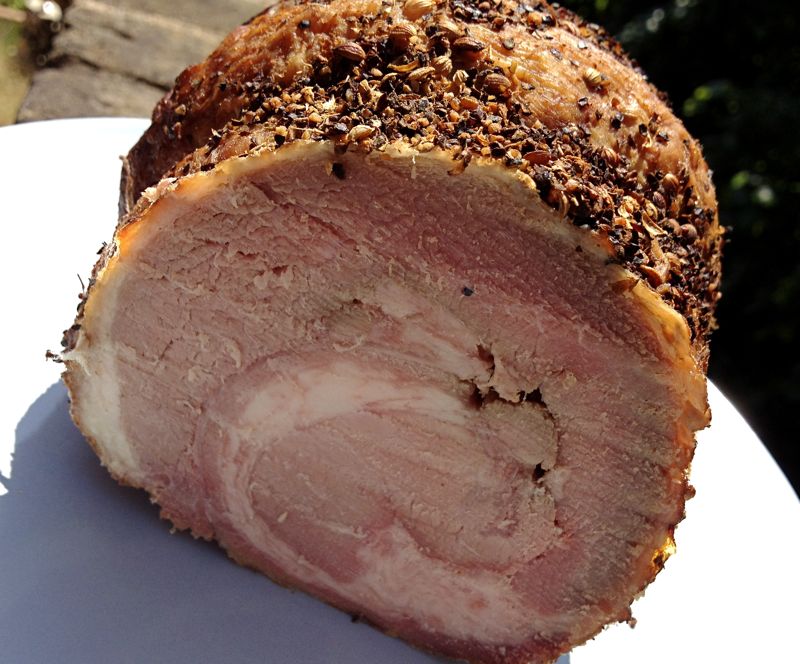
Pastrami

There is a long weekend coming up and I have an excellent suggestion as to what you could do with it. Why not have a go at making home made pastrami? It’s not quick, but it’s also not difficult in the slightest. And if the weather is good over the Jubilee, it’s an excuse to get the barbecue out. Tempted yet?

Pastrami is beef brisket, brined and cured, then rubbed with spices and smoked until cooked. It’s also known as the finest sandwich filling around and something you always want more of so having a great big hunk of it in the fridge as cold cuts when you’re off work is just ideal. I’d actually never cooked with brisket before, but Mister North’s superlative spiced beef at Christmas had piqued my interest and I was just waiting to get my hands on one. And thanks to Becs over at Lay The Table alerting me to the presence of Farmison and their grass fed, higher welfare standard meat by mail order, I ordered a 2kg beauty on a Tuesday evening and had it ready for its brine bath by Thursday tea time which impressed me greatly and I’ll certainly be using them again for things my butcher can’t get me easily.

Brining meat is very easy. You simply prepare a solution of water, spices and salt and immerse the meat for the required time. This is also a cure thanks to the presence of saltpetre and means the meat doesn’t spoil, but retains a lovely rosy hue instead of looking leathery like some cooked beef does. Although the meat will be preserved by the process, you still need to be cautious with hygiene and make sure everything you use is nice and clean. It’s also worth preparing everything in advance rather than weighing spices at each step or you’ll lose track and end up accidentally doing too much of one thing.

Pastrami

  • brisket (I used a 2kg piece)
  • 200g sea salt
  • 100g dark brown sugar
  • 2 litres water ( I boiled it and cooled it)
  • 6 cloves of raw garlic
  • few stalks of thyme
  • 2 teaspoons of saltpetre (I had mine from the bacon)
  • 1 tsp whole cloves
  • 1 tsp whole peppercorns
  • 1 tsp whole coriander seeds
  • 1 tsp shichimi togarashi (or chilli flakes)
  • 2 tsp allspice berries
  • 2 cinnamon sticks
  • 1 tsp mustard seeds
  • 1 tsp fennel seeds
  • 1 tsp ground ginger
  • 1 tsp ground mace
  • 1 tsp mustard powder
  • 4 bay leaves (ie: I just used everything in the cupboard, bar cumin)

If your brisket comes in one of those meat hairnets, remove that now, but keep the string around it to keep the brisket shaped and rolled. Rub a handful of the salt over the meat while you dissolve the rest of the salt, the sugar and the saltpetre in the hot water. Give the spices a bash to release their oils and flavours and add to the water. Bruise the garlic cloves to release the flavours and put them and the thyme into a deep tupperware and put the meat in and pour the brine you’ve just made over the meat. Seal it up and leave it in the fridge for up to five days, but a minimum of two.

The meat will still have a pinkish tinge when you take it out of the brine so don’t worry, it’s quite safe to cook. The meat needs to be smoked to give that proper pastrami feel so there are two ways you can do it. If the weather is nice, you can use the barbecue or you can do it in the oven, but either way you’ll need wood chips to impart the  smokiness that lifts this from just being beef. Don’t forget to rub a crust of ground coriander seeds and cracked black pepper over the top of the meat first.

I started mine off on the barbecue using the indirect method where the charcoal is on either side of the grill and the meat is in the middle in the coolest spot so that it cooks without getting that charred exterior that direct cooking gives. I added pecan wood chips that I had soaked first and I got a fairly good smoke on but the charcoal went out about two hours in and since I don’t have a meat thermometer, I couldn’t tell if the meat was cooked so I popped in the oven to finish off. I put the rest of the wood chips in a dispable foil tray and put the meat above them on a trivet, then covered it all with foil and slow cooked it for 90 minutes at 150℃. The moisture from the wood chips steams the meat so it doesn’t dry out, but keep an eye and make sure they don’t lose moisture themselves. You might need to top up.

Once you’ve let the meat cool down then you can congratulate yourself. You’ve just made  pastrami from scratch! It’s as simple as that. Now serve it either slightly warmed (pop it back in the oven to heat gently) or at room temperature for a stunning picnic lunch. I made mini pretzel rolls and bagels from Dan Lepard’s excellent recipe and heaped them high with gherkins and mustard on the side and it all seemed to go down marvellously, fortifying us well to sit through four hours of Eurovision, but leaving me with a goodly amount of leftovers for cold cuts in the warm weather. Don’t delay and you could be seeing in the oh so British Jubilee next week with some very American pastrami!

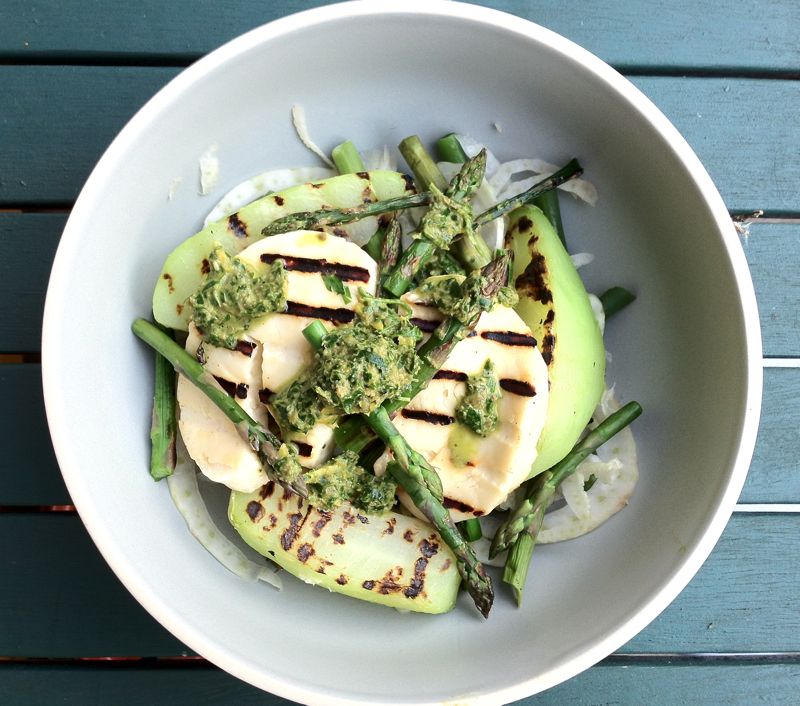
Cho Cho and Asparagus Spring Salad

Chayote salad or cho cho

While this week might have felt like high summer, it is still only spring. But before you feel too downcast, that means it is asparagus season and although you probably don’t need any excuse to indulge in those gorgeous green spears, this lovely spring salad might introduce you to some vegetables you don’t know just as well.

When I first moved to Brixton, I kept seeing strange kermit-green items that looked like a pear crossed with a sock puppet’s mouth on the stalls in market and was unsure if they were to be eaten as a sweet thing like a fruit or more like a vegetable. In fact I wasn’t even sure what they were called until I was flicking through a Caribbean cookbook and spied a photo of them and discovered the Trinidadians call it christophene and other Caribbean cultures call it a cho cho. (Actually it’s the most named fruit I’ve ever seen…)

Usually served as a side dish, cho chos are unbelievably succulent yet firm fleshed, a little bit like a super-charged courgette. I served them blanched then fried off with a bit of chilli and garlic all last summer, which was delicious, but I made a mental note to branch out a bit this year. I thought their fresh feel would be perfect in a salad and here I’ve combined them with thinly sliced fennel, chargrilled asparagus and green beans all topped off with a parsley and caper salsa verde style dressing which served with some steamed new potatoes and some halloumi made a lovely vegetarian dinner dish, but it would also be perfect alongside some grilled fish.

Cho Cho and Asparagus Spring Salad

  • 1 Cho cho (peeled, cored and quartered)
  • 1 bunch asparagus
  • 1/2 bulb fennel
  • about the same amount of green beans as asparagus
  • 1 bunch parsley
  • zest of one lemon
  • juice of two lemons
  • 2 teaspoons drained capers
  • small glug of olive oil
  • splash of vinegar (anything except malt will do)
  • mustard to combine
  • salt and pepper

Don’t panic about the relaxed amounts above. This is a simple salad but it’s to your tastes so there’s no need to be precise to the gram or ounce.

Peel, core and quarter your cho cho and then boil for about 6 minutes or until it still has some give when poked with a knife. Add the green beans in about 4 minutes from the end and cook til still slightly squeaky and al dente. Drain both. Set the cho cho aside and put the green beans in cold water to keep them from cooking further.

Heat a griddle pan until smoking (or if you happen to have the barbecue going…) and then cook the cho cho until properly seared on each side, adding the asparagus when you turn the cho cho the first time. While that’s cooking away adding tonnes of flavour, slice the fennel as thin as possible with a knife or mandolin.

Then put everything for the dressing in a hand blender except the mustard and blitz until the parsley is finely shredded. See how liquid it is (this will vary with the size of the lemons) and then add as much mustard as you think will combine it into a fairly thick dressing. You could also add anchovies to the dressing if you like their saltiness or leave the capers out and put some mint and garlic in instead.

Once the cho cho is well grilled and the asparagus is smokily charred, add to the drained beans and sliced fennel and drizzle everything with as much dressing as you desire and serve for the freshest dish of the weekend. The cho cho is extremely refreshing and the dressing just explodes with flavour and everything is very healthy but without any sense of denying yourself. All the ingredients are easily available in Brixton market (you might struggle to get cho chos in Tesco) and this whole dish should take no more than 15 minutes to assemble leaving you plenty of time to get outside and enjoy the weather!

*This post was orginally featured on Brixton Blog, but it’s too perfect for this weather not to share it with you!


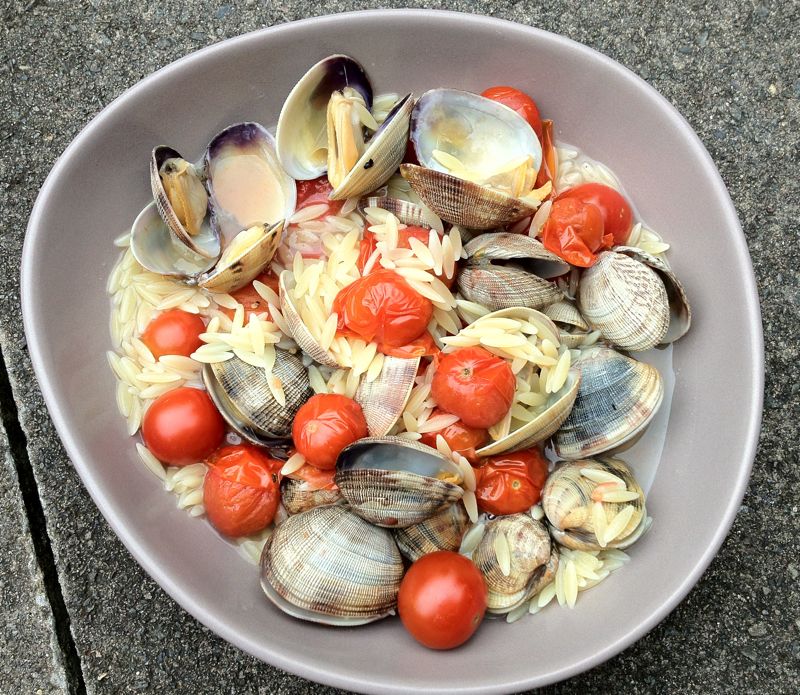
Orzo with palourde clams and cherry tomatoes

Orzo Vongole

Orzo with palourde clams and cherry tomatoes

As soon as the sun appears I immediately feel like eating more, but cooking less. It doesn’t feel especially appealing to be in my rather dark kitchen when the great outdoors feels so light and bright. I need food that won’t interfere with my late spring schedule of sitting on the patio with a G&T. It needs to be low maintenance, but not the stodge of those winter casseroles and soups that you can just leave to get on with it. It needs to feel fresh but be packed with flavour. It’s a tall order, but I felt my fishmonger* could point me in the right direction. And there nestled amongst the rather tempting bass and octopus and prawns, was the perfect solution. A bulging net of smooth shelled palourde clams beckoned to me

Clams are most closely associated with spaghetti and this sweet shellfish works perfectly with the tang of tomatoes and the solid base note of pasta. I wasn’t going to stray too far from this classic combination, but I wanted something one pot so there was the minimum of preparation and very little washing up. The packet of orzo I’d picked up in the pound shop was about to have its moment…
I put half a cup of the rice shaped pasta into my saute pan and added three times the amount of water and simmered it until the orzo had swollen in size and there was barely any water left. At this point I added in a teaspoon of bonito flakes and a quarter of a cup of water as a quick fish stock then adding in a couple of handfuls of cherry tomatoes and the washed clams. A quick season and a splash of vermouth and the lid went on, allowing everything to steam and infuse for about five minutes or until the clams are open and the tomatoes have collapsed in on themselves making a simple sauce.

The clams add so much flavour to the somewhat neutral orzo and the hints of bonito and vermouth make everything taste much more like you made an effort. There should be just enough liquid at the bottom of the pan to make sure you need a hunk of crusty bread to get the maximum effect from this dish. Scatter a bit of parsley over it all and tuck in with a fork and spoon and a napkin to hand. This is a get stuck in hand on kind of meal and it’s fabulous. 15 minutes maximum from start to finish and you’ve got a bowl just packed with flavour. This is a one pot wonder just as at home as a meal to impress friends or as quick post work dinner when you can’t face chopping and stirring. Either way it only needs a large glass of chilled white wine to make it complete!

*I always go to Dagon’s in Granville Arcade/Brixton Village for fish. They are good quality, have a wide selection, are reasonably priced and super friendly. Treasure them.

Saltfish and Parsnip Croquettes

When I was wee, you saw croquettes on the menu quite often, usually involved leftover potato and tinned fish in luridly orange breadcrumbs and often oddly accompanied by chips for triple carbing. This rather British concoction has fallen out of favour, replaced by the rich bechamel filled croqueta of tapas bars as we become more cosmopolitan. I rather miss the old version and when I was picking up some saltfish in the market the other week, my mind went toward reinventing, and hopefully reviving them.

I love the firm texture of saltfish or salt cod and since discovering that it freezes well after soaking, often have some to hand since it is eternally versatile. I also often have leftover mash as I find it a kitchen staple. I just needed something else to lift the croquettes from their bland reputation and when rummaging in the fridge on a damp Bank Holiday and sincerely hoping I wouldn’t have to go outside, I stumbled across a parsnip and thought its spicy sweet flavour would go brilliantly with the fish. I suddenly had the perfect leftovers brunch!

Saltfish and Parsnip Croquettes (best as leftovers, slower to make from scratch)

  • 150g saltfish, soaked according to instructions. (I do a big batch and then freeze it for quick dishes)
  • 250g mashed potato (I use a ricer for super smooth mash)
  • 100g grated raw parsnip
  • 1 egg, beaten
  • 100g panko breadcrumbs
  • oil for frying

These are super simple and should take about 30 minutes to make including chilling. Peel and grate a large parsnip. Mix it into the mashed potato with your hands until well combined and then flake in the soaked saltfish, checking for any bones as you go. Season to taste (most of the salt will have soaked off the fish, but be cautious in case it hasn’t) and mix up well with your hands. Then take about a handful and roll into a ball, then out into a sausage shape. This amount should make six. Place on a slightly oiled plate and chill for minimum 20 minutes or until needed.

When you are ready for the croquettes, either heat a frying pan with olive oil for shallow frying. Crack the egg into a bowl and beat. Tip the panko breadcrumbs onto a plate. Then roll the croquette in egg and dip in the breadcrumbs and then into the hot pan. The panko crumbs which are made without a crust will become golden and crispy while the inside is hot and fluffy. Turn regularly giving each side about a minute. Drain onto kitchen paper. You could use a deep fat fryer if you prefer as this will do all sides at once. Serve with salad as a starter or with a poached egg on top as a main course. Chilli sauce is essential either way.

I like all the constituent parts of these so I expected to enjoy them. I was pleasantly surprised to adore them.  The breadcrumb coating was light and crispy and not at all greasy, giving way to a smooth filling crammed with firm flaky fish and peppered with still slightly crunchy parnsip that really came into its own, leaving behind its bland reputation completely. This was the best brunch I’ve had in a long time and I look forward to making them again and trying oven baking them as fishcakes. If you’ve ever wondered what to do with either saltfish or a parsnip, I can’t recommend these enough. If the croquettes of my childhood had been this flavoursome, they would never have fallen out of fashion!

*This post originally appeared over at Brixton Blog where those lovely Brixtonians let me have free run of their kitchen.

Ginger and Marmalade Flapjacks

When I first started baking three or four years ago I started out with flapjacks, having heard they are so simple you can even let the kids make them. They sounded foolproof. I quickly proved that wrong with several batches being so bad even the local birdlife passed them over in favour of some fried chicken bones on the path. Reminded to never to make my ungrateful feathered friends those lard and seed things Blue Peter used to tell me about, I have been in a sulk with flapjacks ever since.

An impromptu visit to The Beanery in Loughborough Junction the other day piqued my interest again with their delicious ginger flapjacks. The warm tingle of ginger lifted the oats nicely, but made with that American upstart corn syrup instead of good old British golden syrup, they lacked the stickiness I crave in a flapjack. There was nothing else for it but to try and make my own. I decided to use syrup and add the gooey-ness of a blob of homemade marmalade to really give my teeth something to sink into.

Excited by this flavour combo, but still nervous there would be a repeat of the Massive Crumblings™ of yore, I needed a failsafe recipe and safe hands. I turned to Felicity Cloake and her Perfect series, reading her recipe and all the comments from flapjack lovers underneath. It looked promising.

Ginger and Marmalade Flapjacks (adapted from Felicity Cloake’s recipe)

  • 150g salted butter
  • 3 tablespoons golden syrup
  • 2 tablespoons dark muscavado sugar
  • 3 tablespoons marmalade (pop a bit more in if it’s very coarse cut)
  • 4 teaspoons ground ginger
  • 250 g porridge oats
  • sliced stem or crystallised ginger

Line a tray (I used a 23cm by 23cm one) with greaseproof paper and preheat the oven to 150℃. Melt the butter, sugar and golden syrup together until bubbling gently, then add in the marmalade and as soon as it is melted, take off the heat. Put the oats and the ground ginger and sliced ginger in a bowl and add in the butter-syrup mixture, stirring well. Once you’ve marvelled at how seemingly healthy oats soak up butter like a hungry sponge, spread the mix out in the tray well, making sure you fill the corners properly. Bake for 25 minutes. I took mine out when they were still a bit anaemic looking but they darkened as the residual heat cooked them a bit more outside the oven.

Cool for about 5 minutes, then cut into pieces. I got 9 ‘I’m going on a ten mile hike’ sized chunks or 16 ‘just a mouthful ones’. I then on Felicity’s advice left them to cool completely in the tray to stop them falling apart when lifted out. The wait nearly defeated me but I was rewarded by a nice symmetrical traybake which was delightfully firey with ginger and tangy with marmalade peel and slivers of candied ginger. Best served with a cup of good strong tea, they will theoretically keep well in an airtight container, but bolstered by my first ever flapjack success, I failed to have any notable leftovers. The flapjack jinx is over!