Broccoli Slaw

I haven’t seen my lovely friend A in several months as she’s been Stateside sampling lobsters and fresh corn on the Maine coast, but thanks to the power of the Internet, she has managed to give me a truly fantastic gift in the shape of this recipe for broccoli slaw from Smitten Kitchen…

Fresh and simple, it re-invented the wheel somewhat for me in how I eat my favourite vegetable. I could eat broccoli with everything including breakfast, but I had never thought to try it raw until now. And it is revolutionary. It tastes fresher, less boarding house brassica in after taste and is addictively crunchy in texture. And of course, if you’re feeling lazy, it makes it even easier to get your 5 a day than getting the steamer out and playing the waiting game.

While I was immediately interested in this lovely sounding slaw, I also automatically started making plans to change the recipe. Deb suggests using her buttermilk dressing, but after my recent buttermilk disaster, I am steering well clear of the stuff until I can find a decent source. I was also perturbed by the amount of sugar and mayonnaise in it. If I’m going to eat raw veggies I want them to be super healthy (so that I can keep my fat intake for a nice cheese elsewhere). I also don’t like dried fruit in savoury dishes and find dried cranberries to be extremely expensive. And I didn’t have any flaked almonds…

So instead I made a dressing from live yoghurt with a big splash of cider vinegar and some salt and pepper. Creamy, yet tangy it goes beautifully with the broccoli and is low fat and easy while not creating any washing up as it can be mixed straight into the slaw. I then perked it up with some thinly sliced red onion, a handful of pumpkin seeds and in a flash of inspiration, some fresh pomegranate seeds. Super healthy and incredibly pretty!

And amazingly tasty! Those little jewels of pomegranate burst on the tongue with a explosion of sweet juicy deliciousness, the onion crunches with taste and the pumpkin seeds add extra taste filled texture to the mix of vegetables and the whole thing is just perfect!

I have made this six or seven times since getting the recipe just under a fortnight ago. I’ve eaten it on its own, with a steak, with a stew and with an avocado salad. I made it for the lunch at the most recent Invisible Food Walk and it went down a storm, even with the littlest walkers who loved the colours and textures. I just can’t get enough of this fresh feast and even though I will probably make myself ill by eating too much of it in the future, I can’t urge you enough to try this.

Make a big batch, knowing that it will keep well in the fridge and then amaze yourself by managing to eat it all in one veg-tastic sitting before having to make some more to satisfy the broccoli lust it will inspire!

Stuffed Squid…

I don’t think Shirley Conran and I would get along. She thinks life is too short to stuff a mushroom and I seem to have a fascination with stuffing just about any food I can get my hands on. Stuffed cabbage leaves are a winter staple in my house, I loved my recent dalliance with a stuffed marrow and last Saturday I feasted on these amazing garlicky stuffed tomatoes as suggested by Nigel Slater. Having exhausted all the vegetables I can think of stuffing, I needed a new challenge…

And what better than nature’s very own windsock in the shape of a whole squid? Inspired by another Nigel Slater recipe from last week’s Observer Food Monthly and some stunning looking squid on my local fishmonger’s counter, I couldn’t resist.

After getting the fishmonger to clean the squid, my eye was caught by the last of the beautiful rainbow hued Bright Lights chard in the garden and I decided to base the stuffing around this. I also dug out the last of the wonderful breadcrumbs from the freezer from a stunning rye loaf from the Tebay farm shop to add a nutty hint of flavour to it all. A pinch of mace, a slug of olive oil and some lemon zest followed suit. But the crowning glory was the rest of the tin of smoked anchovies Mister North gave me for my birthday. These add a stunning depth of rich complexity to the already amazing umami taste of these fabulous little fish.

I combined everything and stuffed the squid as full as I could get it without ripping the beautiful soft flesh. The excess stuffing went round them and tentacles and I dotted them with the very last few Tumbler tomatoes from the garden before covering them in a rich tomato sauce made with the leftover oil from the anchovies and a few home grown chillies for a kick. Add in a splash of vegetable stock and it was ready to go in the oven for around 45 minutes.

It looked majestic when I opened the casserole dish. The tomatoes had intensified in the colour to a deep ruby red flecked with a hint of emerald from the chard and the milky white squid bathed in it like a less malevolent Moby Dick. It was so soft and tender from the long slow cooking that it was quite difficult to lift out of the dish without it falling apart. I served it with some of the Shetland Blue potatoes from the garden and well anointed with the silky soft tomato sauce and it was fantastic.

The squid cut beautifully and was delightfully tender with just enough of a bite to keep it interesting. The stuffing was umami and iron rich and the tomato sauce was sweet and tasted of the summer we didn’t really have. It was great with the potatoes to soak it up, but even with that, I had a lot of sauce leftover. I froze this to eat with pasta some night or to form the base of a quick fish stew.

I can’t think of a single flaw with this dish. Easy to make, perfect for using up odd and sods in the fridge in the sauce or stuffing and stylish enough to serve at a dinner party or as a Friday night treat at the end of a hard week. Try it with baby squid to cut the cooking time, because this dish is so good you’ll be driven to distraction waiting to taste it!

Fried chicken…

I’ve been feeling quite confident in the kitchen recently so I decided it was time to shake things and make sure I didn’t get into a rut, so I invited 16 people round for beer and fried chicken at the weekend…

I love fried chicken, but have never really mastered the art of a light crispy coating and succulent chicken within, usually ending up with something closer to the greasy delights of KFC than I would care to admit. Obviously the way to sort this culinary blip is to put yourself under intense pressure in a very hot kitchen and then serve the results to your highly discerning friends. One of whom happens to make the best fried chicken you’ve ever eaten.

I was going to need some help to refine my recipe and get it right. I hoped Felicity Cloake over at the Word of Mouth blog on the Guardian had covered fried chicken in her ‘Perfect’ series each Thursday as she has a knack for explaining things well and giving handy hints that take a dish from pedestrian to perfection. But no such luck. I re-read the recipe I’ve been using for years from a weird little cookbook called Kenny Cooks America written by an oddly angry man called Kenny Miller who suggests marinading the chicken in milk first. I decided to take that a bit further and try using buttermilk instead to see if the extra acidity would help tenderise the chicken further.

Seeking reassurance on the internet, I Googled buttermilk fried chicken and found myself in the ever capable hands of Deb over at Smitten Kitchen with her delicious looking recipe. She suggests taking the buttermilk idea that little bit further and brining the chicken in a buttermilk brine overnight. The sheer saltiness of brining scares me slightly, but my American friends swear by it to keep meat (even a turkey) juicy and succulent. I often find frying chicken can make it a bit dry so this seemed like the perfect time to try it out.

I ran into some difficulty almost immediately though. Buttermilk is quite hard to come by here in England, even with Gin and Crumpets’ handy tip about Polish shops often stocking it and I had only ordered three small cartons online from Sainsbury’s which wasn’t enough for the both the brine and the batter. I improvised slightly and made up a brine from a mixture of natural yoghurt, buttermilk and a splash of whole milk to loosen it enough. Deb suggested mashed garlic, but I was fearful that this would jar with the mellow tastes of the dairy. Taking my cue from Nigella’s amazing Garlic Chicken from How to Eat, I boiled the garlic cloves til tender, popped them from their skins and pounded them in the pestle and mortar. This went into the marinade along with a hearty splash of Tabasco.

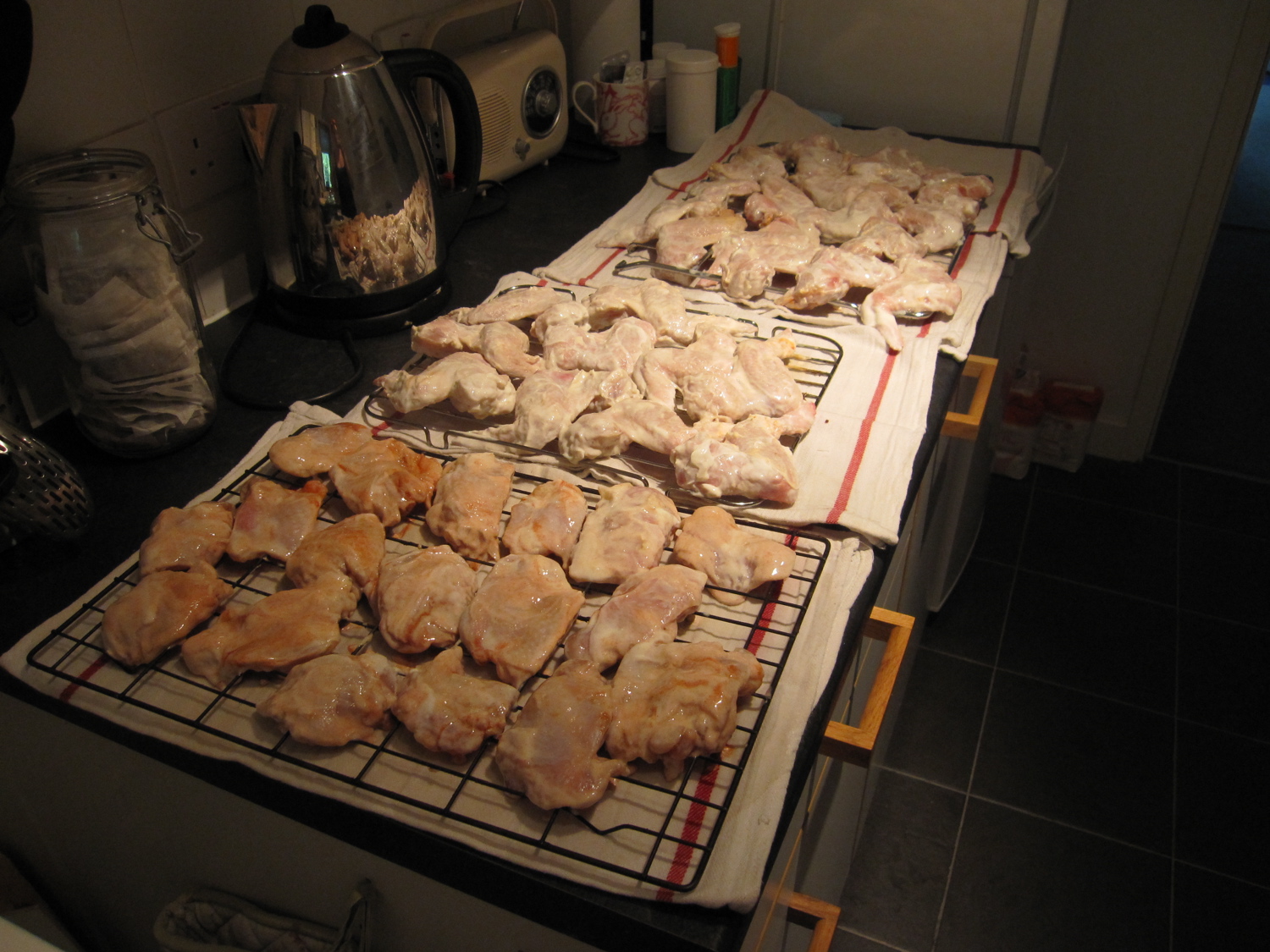
To this mixture I added the terrifyingly large amount of salt needed to make a brine. The recipe calls for Kosher salt, but having no idea where I could get such a thing in Brixton, I used good old Maldon Sea Salt instead. I kept the skin on the chicken (using a mixture of wings and thighs) and poured the mixture over them, rubbing it in well with my hands and then popping it all in the fridge overnight. Next morning, each piece was taken out and laid on a rack to airdry before being coated and fried. I could feel how tender the meat was even at this stage…

Batter ready...

Despite what Deb said, I don’t have a thermometer to test how hot the oil was for the chicken, but I erred on the side of caution and heated the pan while I was making the batter because an electric cooker means everything takes longer. The batter was very quick to make, but it was here that everything started to go wrong and my confidence began to depart me in droves.

The use of baking powder in the batter means that it puffs up incredibly and it seemed very thick, almost like industrial sealant rather than batter. I can only assume that the cultured buttermilk I was using is different in texture to the buttermilk in the recipe. Mine was more the consistency of yoghurt and I think it might have needed to be more milky to get a looser lighter batter. Nonetheless I perservered and dipped my chicken thigh pieces in seasoned flour, then batter, then flour again to get a light crisp coating and put them into the hot oil.

Frying pan, fire, all that...

They browned quickly and the first few pieces looked just the ticket as I turned them. Golden brown, crispy and light. I thought I might be about to give my friend D a run for her money. But then things started to go hideously and horribly wrong with the next batch of chicken pieces. The batter had continued to puff up and thicken and had become almost solid in texture, thus over coating the chicken and making it spongy and difficult to cook. I watered it down with some milk, but it didn’t seem to improve the consistency much with big globs of batter simply dripping into the dish of flour most unappealingly.

I allowed the pan to come back to the right heat and placed more chicken in it, but it soon became obvious that the coating was thick enough to be soaking up the oil and spreading around the edges so that each piece expanded in size and the batter formed a lip on each side when it was turned over, meaning each side was golden brown, but the middle still looked uncooked in colour. It was almost impossible to cook the sides evenly, having to set the pieces on the edge of the pan to try and colour it all evenly. This didn’t really work though and resulted in chicken that was overcooked in places. I then sampled one of these less alluring looking pieces of chicken and was beyond disappointed by it.

The offending article!

The batter was thick and bready like the stuff you get on cheap turkey shapes at a well known frozen foods store. Despite the generous amount of smoked paprika and seasoning in the flour, it tasted bland with a weird sweet aftertaste that made it seem cheap. This overpowered the amazingly juicy and succulent chicken and rendered the whole thing pretty revolting. I gave up at this point and returned the rest of the un-fried chicken to the original marinade along with some sumac and black pepper so I could cook it as yoghurt chicken rather than throw it all out. I was annoyed enough to have spoilt some good chicken and a couple of quidsworth of buttermilk without wasting anything more.

I cooled the chicken I had cooked so it could be reheated the next day, no longer caring if it wasn’t as crisp as I’d have liked since it was so rubbish to begin with. I then spent ages cleaning up the massive amount of mess the overly thick batter and hot oil had made. The lingering smell of frying food took much longer to subside.

I served the heated chicken the next day and while the batter hadn’t improved any the chicken was actually more moist and succulent than before. Very little of this got eaten and I’m not offended at all. It was mediocre at best and it is was up against the best fried chicken possible. I warned people off mine and hoped that D will give me her secret recipe instead. Hold out til then folks and don’t bother with this one unless you enjoy the faff of making disappointing poultry…

Quince Jelly

After trying quince and rhubarb earlier this year, I have been somewhat fascinated by this most majestic of fruits, so when my aunt arrived around with 3lbs of them she had got from a friend’s tree, it was like Christmas had come early. Looking at these beautiful small golden orbs, there seemed only one contender for what to do with them and that had to be quince jelly!

Read more

Supermalt Cupcakes

A recent blog post by friend Yoruba Girl Dancing about white people’s lack of love for Supermalt got me thinking. I love the taste of malt thanks to growing up with Veda bread and working in a diner as a teenager making malted milkshakes, so I don’t really mind Supermalt, although I do find it teeth-itchingly sweet. But having never sampled it until I moved to Brixton, it’s not really part of my repetoire and I would never buy it to quench my thirst. What about cooking with it instead?

I made these Coca-Cola cupcakes for my friend G’s birthday party a few weeks ago and was impressed by how easy they were to make and how incredibly moist and brownie-esque they were. I could see no reason why they wouldn’t work with Supermalt instead of Coke. Hopefully they’d be as moist as the Coca-Cola ones, but more like a cake crossed with Soreen…

The slight risk that they might just be disgusting meant I decided to make them over the weekend for a birthday party where I knew my friend C would be bringing some of her legendary lemon and blueberry cupcakes which would take the taste away if my baking experiment went awry!

The trickiest part of this recipe was finding a small enough amount of Supermalt. It tends to come in six packs and I had to go to several shops before I could get my hands on a single can of the stuff. Mission accomplished, I got cracking on the recipe. It is best to melt the butter, cocoa powder and Supermalt together first to allow it to cool slightly to minimise the chances of the egg curdling when you mix everything together. Out of interest, the amount of Supermalt (or Coke) required comes to about 2/3 of a normal can…

The Supermalt mixes takes about 5 minutes to melt and measuring out the rest of the ingredients does the same. Then you simply mix everything together, watching the batter going from thick and fudgy to soft and smooth by the time it is all mixed and combined. It’s one of the easiest cake recipes I know and it’s difficult to over-mix this batter so it’s a good one to do with kids. It’s also nice and thick for spooning into cases so great even if you’re a bit clumsy.

I used some new square cases from Ikea that are a cross between a bun and muffin case in size (and a rather fetching print to boot) and each one took two full dessertspoons of batter. Don’t overfill your cases with these cakes as they rise a fair bit and look better not overspilling the cases. Even with the slightly bigger cases, I got 18 cakes from this batter before popping them in the oven for about 25 minutes or until I remembered what was making the lovely baked smell in my flat…

While they were cooling, I turned my attention to making a frosting for the cakes. Last time I used the Coca-Cola buttercream suggested and found it to be incredibly sweet and a bit sickly even with a fizzy Cola Bottle for a touch of tanginess. This time I thought a cream cheese frosting would go down better. I combined two packs of full fat cream cheese with a splash of leftover Supermalt and two tablespoons of cocoa powder and found I had gone too much the other way and the frosting wasn’t sweet enough. In fact it had a bitter aftertaste that jarred somewhat. I abandoned the idea of adding more Supermalt and put a teaspoon of vanilla extract and about a tablespoon of icing sugar to sweeten it slightly and this time it was perfect. Light, creamy, slightly sharp and not at all cloying.

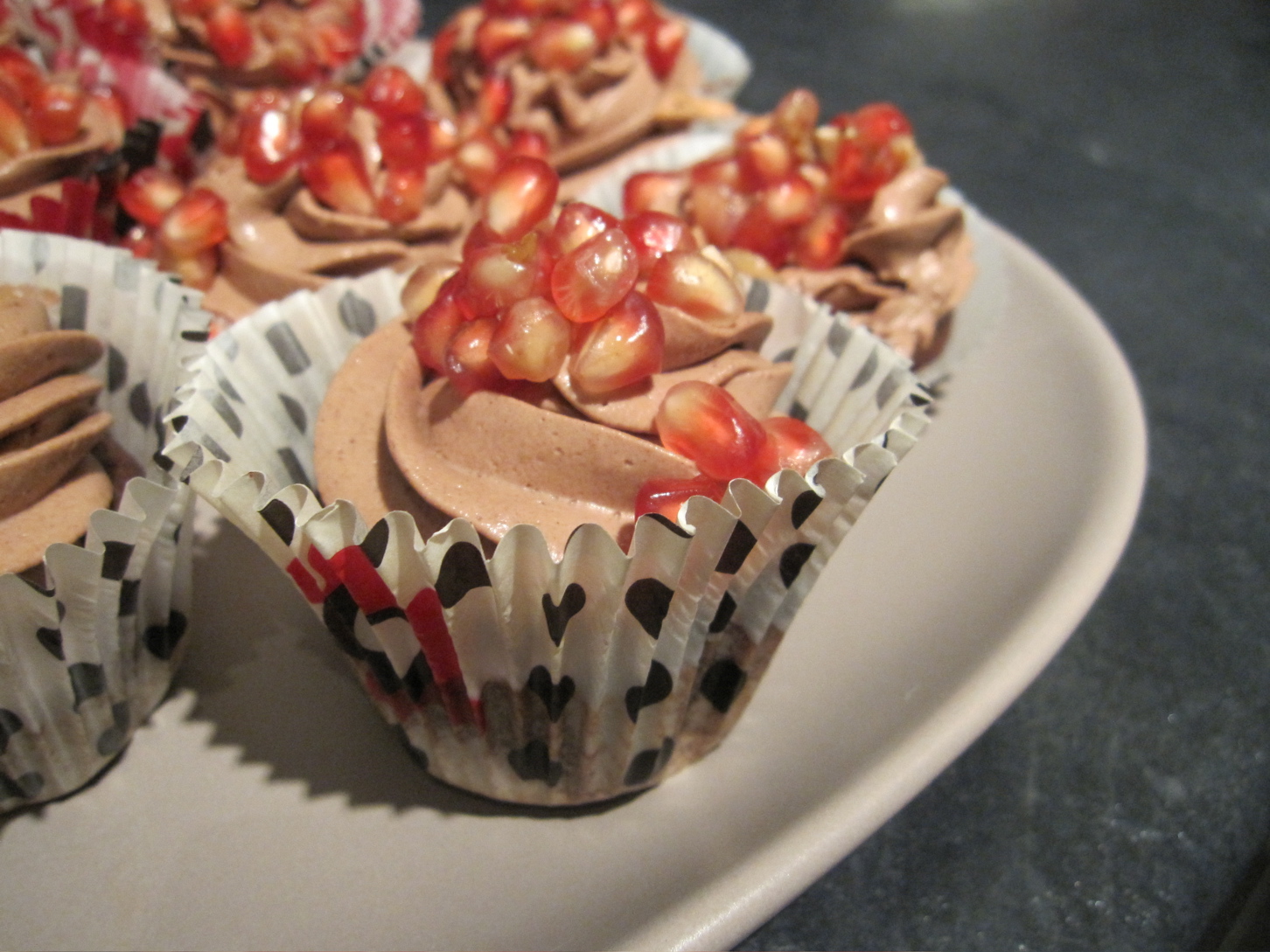
I left the cupcakes wrapped in a teatowel overnight and then my friend C very kindly frosted them for me the next day before I added a an extra blast of sharpness with some pomegranate seeds on top before serving them up to ravenous guests. And they went down a storm! I think they were much better with the Supermalt than the Coca Cola as they were less sweet and firmer and tasted more grown up with a bite of dark chocolate, but without losing the fudgy finish that sets these aside from the average chocolate cupcake.

If you manage to have any of these fabulous cupcakes left (I only had three) they also keep amazingly well wrapped in a teatowel to protect the frosting. They ultimately didn’t taste anything like Soreen cake, but were so good I’m glad I have a second spare can of Supermalt in the fridge to make these due to popular demand! Especially if I don’t have to go camping with them!