
Beetroot and Cobnut Pesto

This weekend saw September’s Invisible Food Walk and the beautiful autumnal day brought much seasonal foodie inspiration. I eyed up some crabapples for a chili infused jam, noted where the sloes are in Brixton, marvelled at the abundance of elderberries and sampled some amazing vegan food at the post walk picnic.

One of these dishes was a vegan pesto made with beetroot greens and cashew nuts. I was too busy stuffing my face with it to ask what the umami element was since it definitely wasn’t parmesan. Whatever it was it was delicious and I lost out on seconds to a couple of the kids who were very taken with the colour and the flavour…

So when I picked my first crop of beetroot from the garden the next day to accompany the grouse Mister North and I roasted, I made sure to keep the lovely young tender leaves, stems and teeny tiny baby beets that hadn’t really reached full potential. I planned to pick up some pine nuts next day and make a pesto with them when I remembered Mister North had picked up some fresh Kentish cobnuts at the Farmers’ Market earlier that day. Why not use these seasonal treats to make the pesto instead of the more traditional pine nuts?

While the grouse was roasting, we stripped the outer husks and then popped the cobnuts in the oven at 180°C for about 20 minutes to roast them lightly before shelling them. This was trickier than it sounds. The shells are quite tough and the nuts quite soft and buttery in texture so it was almost impossible to get them out intact. Obviously this wasn’t a problem for pesto, but might have been if you wanted to serve them as nibbles.
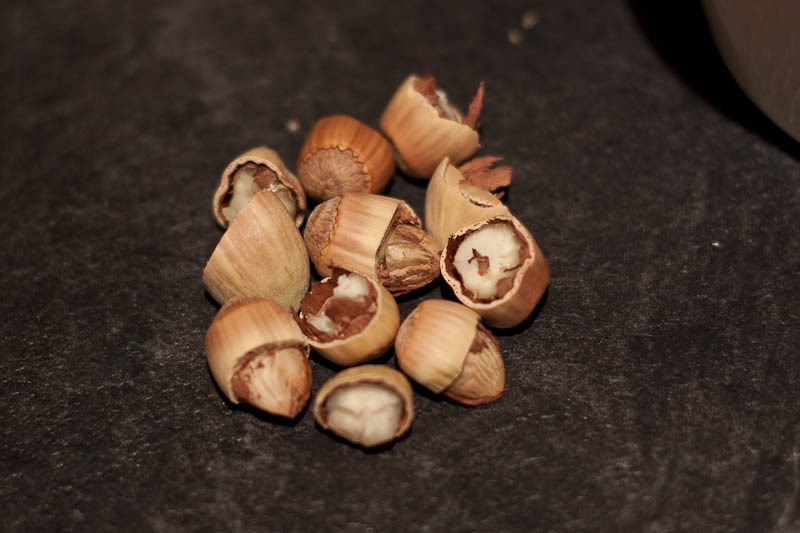
Once the cobnuts were shelled (using a cleaver, chopping board and metal skewer), I blitzed them in the food processor along with the chopped beetroot leaves and stems and some rapeseed oil to get a chopped but well bound texture. Olive oil would of course work beautifully here, but I had run out and had to improvise a bit, although the rapeseed oil made this an even more fantastically seasonal British dish! I then added in some grated parmesan and a good grinding of black pepper to finish. Feeling very domesticated I put some of this gorgeously vibrant pesto into a pot for Mister North to take home and the rest in the fridge for me.
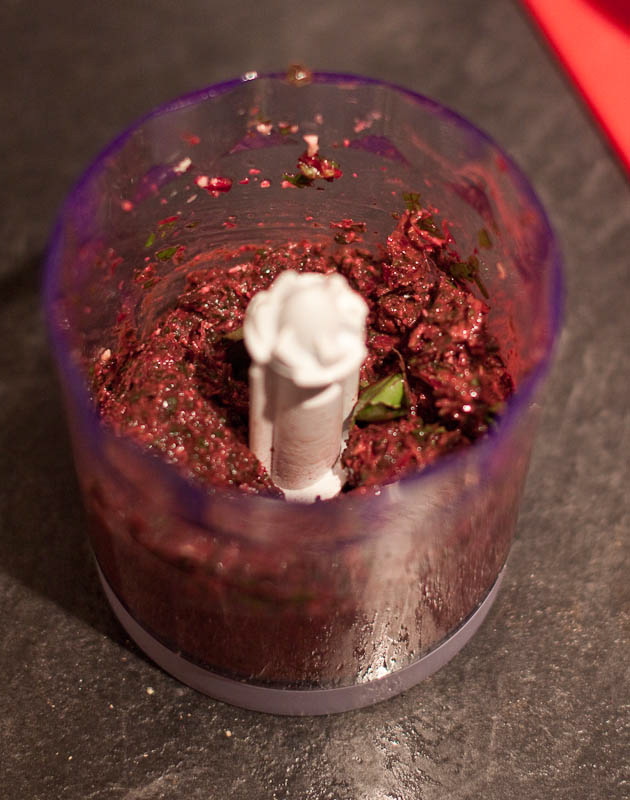
We both ate the pesto the next day. He served his stirred through fresh pasta for dinner and I had mine on oatcakes with a sliver or two of Pexommier cheese for lunch and we both loved it. Sweet and earthy, it tasted deliciously fresh compared to traditional basil pesto and the light smooth texture of the cobnuts made it especially creamy and quite light. It needed some extra pepper to lift it completely, but this was otherwise a real seasonal delight!


There’s no excuse to waste any beetroot tops you might have around, and don’t worry if you can’t get cobnuts. Pine nuts or walnuts would be equally lovely. Think pink this week when you’re picking up veg from the garden or the farmers’ market and make this fab pesto for a quick and easy meal!

Clamato: the clam before the storm!

As a small child following my parents round the supermarket during the weekly shop, my eye was always caught in the juice aisle not by the shiny foil packs of Capri Sun or the cartons of Um Bongo, but by the truly bizarre creation that is Clamato. Combining tomato juice with clam broth seemed like the most revoltingly fascinating thing I had ever heard of. Those glass jars taunted me as I half hoped my parents would buy it, but feared I would have to actually drink this weird fishy beverage. Then the independent supermarket we visited closed in the mid 90s and was replaced by a Sainsbury’s and so trips to buy groceries became much less exciting and I forgot all about Clamato…

An adult obsession with the Fifth Taste or umami reminded me of my childhood fascination with Clamato and suddenly the idea of shellfish infused tomato juice ceased to be scary, but in fact became oddly alluring. Imagine my disappointment when it turned out it had become incredibly tricky to get my hands of this bivalve infused nectar here in the UK. It may form the basis of Canada’s favourite cocktail, but the Brits are a lot less keen. I was tempted to pay vast sums of money for a bottle of the stuff online, but instead I was excited to find a quart bottle of Clamato nestled amongst the other treasures at Sawers Deli in Belfast last week. Mister North and I were definitely sampling a Caesar this weekend!

I was momentarily disheartened to see that the tomato base of Clamato is from concentrate instead of fresh juice, but since I’m not a particular coneissour of tomato juices, I figured I’d still enjoy it. I was less convinced though by high fructose corn syrup being the third ingredient on the list. The HFCS along with a dose of onion and garlic powder and only dried clam broth to add that extra umami kick makes me think Clamato isn’t as high quality as I thought it was. With a mounting sense of disappointment akin to discovering Father Christmas has the wrong house, it was time to actually sample the product.

I dusted down my best martini glasses, crushed some ice and enlisted the help of my mixologist friend G and got cracking with a round of Caesars. This is basically a Bloody Mary made with Clamato for those of us who like our cocktails to be a good substitute for brunch! They are as easy to make as a Bloody Mary, but because we were nervous about the taste sensation awaiting us we had decided to go for a smaller glass rather than the traditional long style of a Bloody Mary.

Feeling fancy, we dipped the rim of the glasses in celery salt and then shook a shot of Russian Standard vodka together with the same amount of Clamato along with a shake of Worcestershire sauce and Tabasco. This was poured into a glass rinsed out with fresh lime juice and garnished with a celery stalk since I couldn’t get either Mister North or G to join me in the apparently common addition of a prawn…

There was nothing left to do but to taste it. First impression was of celery salt. Lots of celery salt in fact. But the second impression was that it was pure umami heaven. The clam broth isn’t distinctly noticeable in its fishiness, but simply adds a rich base note that perfectly compliments the smooth tomato-ness. Once I’d brushed some celery salt off the rim of the glass, I couldn’t stop sipping this and enjoying every wave of glutamate goodness I got from it.

Mister North seemed less enamoured, but admitted he isn’t a huge fan of Bloody Marys at the best of times. Both G and I love them (especially the morning after the night before) and we rattled through our Caesars much more quickly and enthusiastically, going back for seconds before we went out for dinner. I was delighted to fulfil a childhood ambition by finally sampling Clamato (although I didn’t dream of vodka in it then) and even more chuffed to discover I hadn’t carried something so heavy home in my suitcase for nothing!

I have enjoyed a Caesar or two on several occasions since then, rather enjoying reintroducing cocktail hour in my house. In fact, so pleased clam-rich enjoyment of Canada, I decided to try out Mexico’s Clamato cocktail next in the shape of a Chelada. It sounded odd, but then hadn’t I thought that about Clamato itself?

It turns out mixing beer, Clamato, lime juice and hot sauce isn’t just odd. It’s repulsive in more ways than I thought I could experience in just one mouthful. Maybe it’s because I used Meantime London Pale Ale instead of the recommended Budweiser or maybe it’s because this combo is so disgusting that I find it hard to believe that even the most determined middle of the night drinkers could come up with this concoction and actually stomach it. To me it tasted of like the shame and acidity of a really bad hangover. I barely managed one mouthful and then threw the rest down the sink, running the tap as keenly as you might when faced with a massive spider and then removed the taste with the rest of the bottle of Meantime.

At £5.99 a bottle I won’t be buying Clamato again, but despite the hideousness of a Chelada, I am rather hooked on this umami-tastic drink. So I’ll be experimenting with making my own version of this drink with a better quality tomato juice and some shellfish liquor whether that be from cooking my own or simply adding a dash of bonito to oomph it up. Once you’ve gone to this level of glutamate joy, you’ll find it hard to go back…

In a pickle…

Anyone who knows me in real life knows I have a bit of a gherkin habit. I am more than slightly obsessed by these nobbly bobbly warty little cucumbers spiked with a mouth puckering hit of vinegar and hopefully a lingering hit of dill. My idea of a treat is a jar of Krakus Pickled Dill Cucumbers and a fork in front of the TV of an evening. I suffer envy as green as a gherkin at the fact all sandwiches and burgers come with a pickle in the USA while we lag behind here. In extreme cases (ie: a hangover), I have been known to go to McDonalds and buy a double cheeseburger just for the gherkins, rather than the burger. It was therefore inevitable that I would have to try growing my own this year…

I got some Gherkin National seeds off Ebay since this is supposed to be an easy to grow variety that is perfect for pickling and planted five of the ten seeds in one of my raised beds in about mid May. I probably should have sprouted them indoors where it was warmer and less challenging for them as only one plant came up. It became quite tall quite quickly and drank up huge amounts of water but seemed to do very little in the way of producing fruit until one day last week when I looked at it again and discovered one little spiny gherkin nestled in under the leaves! I harvested it with intense pride and wondered how feasible it was to pickle one cucumber?

The famous gherkin!

Luckily though I brought it back over to Ireland with me to show off to my mum (and anyone else around) and discovered that she had picked some other smallish cucumbers at a friend’s house (along with the marrow) and it was a bit more worthwhile trying my hand at pickling a job lot of cukes. Being fairly new to this pickling malarkey and somewhat impatient to try the fruits of my labour while I was still in Belfast, I eschewed more traditional recipes that take around a month to mature and went for an overnight recipe I had picked up from a fellow commenter on an American website I read.

To make your own quick pickles, you can follow this recipe. Even with the cup measurements, it is very easy!

2 cups sugar
1 cup vinegar
1 tablespoon salt
1 teaspoon celery salt
1 teaspoon dill seed
8 cups cucumbers, sliced but not peeled. (This is approx. 4 large cucumbers, in my experience)
1 cup onion, sliced

1. Stir sugar in the vinegar until dissolved. Add salt, celery salt, and dill seed, mixing together.
2. Pour over cucumbers and onions.
3. Stir and push under liquid
4. Let stand for 24 hours, covered at room temperature
5. Put in jars and refrigerate.
6. No need to can, just keep in refrigerator. They will keep indefinitely.

NOTE: Even though it seems like you don’t have enough liquid at first, in several hours you will have enough liquid to cover the cucumbers!

In keeping with the pioneer spirit of making this most American of side dishes, I went off recipe a bit. My mum didn’t have any fennel or dill seeds in the house, so I used caraway and coriander seed instead for a similar flavour. There was no type of vinegar specified, so I used 2/3 cider vinegar and 1/3 malt vinegar to stop the pickles being too sharp. I also used a few shallots rather than an onion. They would also take crushed garlic or chili peppers very well if you fancy that.

It took about five minutes to chop, measure and stir everything together in a large plastic mixing bowl. I then covered them with a teatowel and a plate and literally forgot about them for two days while I was preoccupied with other things. When I came across them again they had released lots of liquid and were very well covered. The cucumbers looked more the texture of pickles than something served in an English sandwich and I was very pleased with the excellent looking results for such minimal efforts.

I bottled the majority of them in the leftover sterilised jars from the quince jelly and served those that were left over with a rather good steak sandwich using minute steak from The Well Hung Meat Company. And even if I do say so myself, the pickles were spectacular. Firm and juicy with an excellent crunch, they are quite a sweet pickle and the hint of caraway worked beautifully with the sugar. Accompanied by rare steak and black pepper they were perfect. Sweet, but sour at the same time and absolutely packed with flavour without the overpowering vinegariness that some commercial gherkins have. We loved them and have served them three or four times since with cold meats and cheese.

These are the easiest thing in the world to do and if you happen to have a few jars knocking about and access to some small homegrown cucumbers, preferably the warty knobbly less watery ones than you see in a supermarket, then you’d be a fool not to whip a batch of these up! Apparently they keep very well, but I doubt the rest are even going to see the weekend with me around. See you all at Gherkins Anonymous!

To-marrow never comes…

My courgette plants have been a disappointment, maybe even an embarrassment, this year with only four or five fruit to the same number of plants. All the recipes I collected to deal with my impending glut have languished unused. So I was beyond thrilled to visit the house of a friend of my mum’s this week and come home with two marrows instead! Two big bruisers of the vegetable patch, these mighty marrows cried out for a bit of retro style chic and simply demanded to be stuffed…

I decided that the thing that would rescue this dish from memories of soggy school dinners and rationing recipes was to use strong flavours and plenty of spicing. The sight of some leftover roast local lamb in the fridge from the previous night piqued my interest and I almost instantly decided on a sort of Middle Eastern inspired lamb, tomato and spiced couscous stuffing for my marrow. The possibility for strong flavours here made it unlikely that this stuffed marrow would be bland!

While the couscous was soaking, I stripped the remaining lamb from the bone, diced it and coated it in sumac for some zesty flavour. I added some cardamom, ras el hanout and anchovy sauce to the couscous along with a hefty grind of fresh black pepper and turned my attention to the marrow itself.

Unleash the beast!

This monster of the garden weighed about 2.4 kilos in total and took some serious wrangling to chop in half lengthways. I then hollowed out the seeds in the centre with a handy ice-cream scoop and trimmed the ends to make sure it fitted in my roasting tin before stuffing it full of the delightfully spiced couscous, studded with fresh tomatoes and juicy lamb. The tray was then wrapped in foil and popped in the oven at 200°C for around 35 minutes while I relaxed with a lovely glass of Sancerre.

Around half an hour later, I looked in the oven and realised that the marrow was nowhere cooked. In fact 35 minutes in the oven was a drop in the ocean for this behemoth. To help it along, I added two cups of water into the tin to help the marrow steam and bake at the same time and put it back in the oven for another 45 minutes.

Another glass of wine later and around 40 minutes after the marrow went back in, it was perfectly cooked. The skin was still firm, but the flesh inside was soft and easy to serve with a spoon without being watery or mushy. The couscous was slightly golden and crispy on the top and it all smelled delicious, but there was still the worry in my mind that even this extravagantly spiced mega-marrow would be as dull as this vegetable’s uneviable reputation.

First taste told me that my worries were were unfounded. The marrow itself was actually quite flavoursome, a bit like a slightly more tasty courgette. The texture was similar to swede (or what we Northern Irish and many Scots call turnip) with a firm but fibrous feel. It was less watery than turnip and a sweeter flavour, which worked well with the hints of rose petal and citrus in the couscous and was well complimented by the kick from the cloves and the black pepper. We ate one half of the marrow very quickly and both of us were happy to have seconds and thirds to finish it all up. My mum had been slightly sceptical about the forthcoming marrow-fest while it had been cooking as she remembered less than enjoyable marrow and ginger jam from childhood, but she seemed more than taken with this modern take on such a traditional veg.

So if your courgette glut gets out of hand and you end up with a massive marrow, don’t just dismiss them or bung them on the compost heap. Turn the oven on and stuff it to your heart’s content. I think lentils and fresh tomatoes would make a tremendous stuffing for this blank canvas of a courgette. Keep it veggie or add some coarse crumbled sausage meat if you fancy some porky goodness if you so prefer. Just don’t simply dismiss the marrow as something to be entered in a garden fete competition for oversized garden produce!

Sweet on corn…

It’s still theoretically summer and that means just one thing to me right now….fresh corn on the cob! I can’t get enough of those sweet juicy bursting kernels of sheer goodness in the past few weeks. And with tightly wrapped ears of corn a mere £1 for four at the farmers’ market last week, I can afford to indulge this lust with wild abandon.

I’ve been eating the corn straight from the cobs, lightly boiled and slathered in chili and butter, dripping down my hands and smeared over my face as I eat the barely cooled corn over the sink with glee. I’ve stripped the kernels from the cobs with a knife and added these yellow nuggets of joy to the classic Chilean stew of porotos granados to put my munchkin squash to good use. And I’ve made stock with the denuded cobs and warmed up these increasing autumnal evenings with the delicious chicken and sweetcorn soup from the Leon Cookbook. And yet I still can’t enough corn so when I stumbled across a recipe for double corn muffins, I just had to make them…

A Dan Lepard recipe from the Guardian Weekend magazine, this is an incredibly simple recipe which combines fresh corn kernels, cornmeal and grated courgette, making it perfect for anyone with a zucchini glut! I decided to leave the bacon out as I wasn’t sure if I was serving these to any vegetarians and replaced it with a scotch bonnet pepper for a bit of a tingle. Other than that I followed the recipe exactly.

And it is a particularly easy recipe to follow. A quick softening of the onion, pepper and corn while I measured out the dry ingredients, beat an egg and poured the wet ingredients in my beloved measuring cups, then stirred it all together in one large mixing bowl. No folding, no faffing and absolutely no chance of over working the flour because it all combined beautifully. I mixed up this chunky flavoursome batter and popped it in the fridge overnight, so I could make the muffins fresh on Sunday to take to accompany a fried chicken fest at a friend’s house.

In the morning I spooned one dessertspoon of the batter into a regular sized bun case. Obviously these are meant to be muffins, but I’ve run out of muffin cases and couldn’t be bothered going in search of some over the Bank Holiday weekend. I planned to reduce the cooking time slightly to balance up the smaller sized muffins, but since I’m not at my sharpest early on a Sunday without at least two cups of tea in me, I actually put the oven on at 180° instead of 200° and ended up having to leave them in for 15 minutes longer after turning the oven up a bit to get them both cooked and appetisingly golden brown.

The mini muffins came out looking rich, glossy and golden but the paper cases looked soaked in oil even though I think I might have undermeasured it, but definitely had a bit less courgette in there that might have helped soak it up. I left them to cool slightly on the advice of the recipe to firm up before sampling the smallest and least appealing looking of them just to make sure I wasn’t going to poison anyone!

They were pleasingly firm, breaking apart cleanly and without disintegrating into crumbs. They were deliciously moist and studded with chewy kernels of corn with a good kick from the scotch bonnet and tasted so intense I could have sworn there was a bit of mature cheddar in there too. And despite the marked cases, they weren’t at all oily on the tongue, remaining light and chewy.

While these were a good accompaniment to chicken and would be a good breakfast dish too, they didn’t really make the most of the corn as it ended up tasting suspiciously like tinned sweetcorn after I’d cooked it. In fact with the scotch bonnet added, it tasted a bit like that weird tinned corn with bits of peppers in which was not what I was expecting. They would have been better with the sharpness of cayenne instead of the fruitiness of scotch bonnets or chilli sauce to minimise the tinned feeling. I might even go crazy next time and add some cheddar or parmesan to oomph up the umami undertones they already have.

But if you ever find yourself with a forlorn tin of sweetcorn, a courgette that’s seen better days and 30 minutes to spare, you couldn’t do better than making a batch of these, preferably full sized, and serving one split in half with a fried egg on top for a top class store cupboard supper…