Homemade Vanilla Extract

IMG_4142

I’ve been meaning to post this recipe for a while as it’s completely changed my cooking and baking habits and after such a busy week, it’s nice to to feature something simple and slow to develop. More like musing than cooking, it’s perfect after a fortnight that’s seen me submit the manuscript on the slow cooker book to Ebury, feature in the Metro and finish the three days of photography on the book, seeing my creations come to life in a way I hadn’t envisioned when I was eating them.

It was a real pleasure to collaborate with Mister North this week as he is the photographer for the book. My writing and his photography was enhanced by the wonderful food styling of Olia Hercules who was a real joy to work with. It was also great fun spending time with my lovely editor Laura Higginson. And of course having the excuse to eat all the food from the shoot. Very different to my previous life working in fashion…

I felt a pang when my borrowed slow cookers went back to the publisher this week and I comforted myself by pot roasting a chicken in my own one and baking myself a cake which is where the vanilla extract came in. A splash of vanilla in any cake, custard or dessert tends to lift it from good to glorious, but there’s no way round it, vanilla extract is expensive and I usually find myself rationing it like fine perfume.

However just before Christmas 2012 whilst perusing Ebay, I discovered that you can buy vanilla pods for a fantastic prices on there. Scoring 32 of them for £8, I assumed they’d at least have a hint of vanilla and look nice tied to Christmas presents or nestled into sugar. When they arrived however I could smell the rich sweet scent of vanilla through the package before I’d opened it. Unwrapped, each pod was sticky soft and left a sprinkle of vanilla seeds behind on your fingers like fairy dust. And that was just the A Grade pods. They go up to AAAAA in quality.

As with any excess of anything, I thought I’d stick them in some booze and see what happened. Three pods and a smidge of sugar went into some vodka for the perfect festive tipple. I also had a cheap bottle of dark rum left over from a mojito night and wondered what would happen if I put 10 in there and left it in the dark for three months? Vanilla extract that will knock your socks off and make those bottles of Nielsen Massey seem like The Body Shop oil you dabbed behind your ears at the age of twelve.

Rich chestnut brown, spicy sweet and utterly heady, this extract was amazing. The seeds melt into it to make it thick and glossy and the flavour is so intense you need half the amount you normally do. Considering those posh bottles retail at £4.70 per 100ml or around £47 per litre, making your own makes financial sense too. I made around 750ml of extract in December 2012 and gave small bottles of it as gifts, keeping some for myself. I’ve tested two cookbooks since then, baked myself silly and still have 150ml left. My vanilla beans are also currently brewing a second batch too which is just as intensely flavoured meaning I will probably never need buy commercial stuff again.

Homemade Vanilla Extract (makes 700ml)

  • 700ml dark rum
  • 10 vanilla pods

So simple to make. Simply split your pods so that they are opened out and flattened slightly. Pop them into a clean Kilner jar and cover with dark rum. I used Basics for this. Put somewhere dark and cool for at least 3 months. Shake the jar every few days to help infuse it all.

After 3 months, decant around 50ml into a small bottle and use. Leave the rest to keep infusing for up 9 months or decant it to give as gifts. I put half a pod into each small bottle to keep the infusion going and look pretty. I don’t bother to strain the extract as the seeds look beautiful to me.

Friends I gave this to asked for more for Christmas 2013 and I do actually have some waiting to be delivered! If you are a baker, this is a brilliant way to make the most of vanilla in your kitchen. You will never think of vanilla as bland or flavourless again once you’ve tasted this.
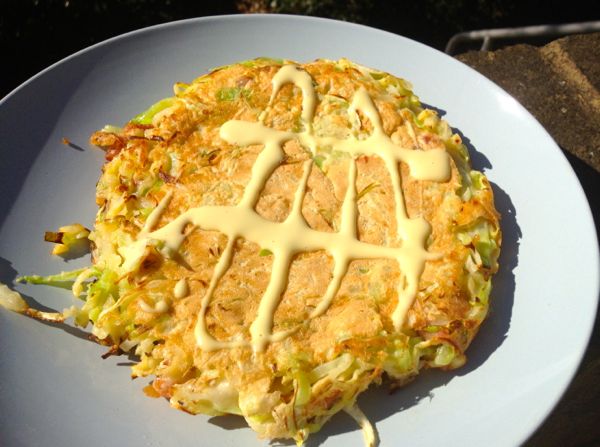
 

St Patrick’s Day Okonomiyaki

okonomiyakiI have no idea what the adjective for Irish-Japanese fusion food is, but we need one. Both Ireland and Japan love a bit of cabbage and seaweed (and whiskey). Their cuisines have more in common than you’d think.

This idea came from Mister North who having seen the design for Recipes from Brixton Village on mentions the recipes he is most excited by as he reads. Okonomiyaki is a Japanese pancake made primarily from cabbage, but the number of spring onions (or more accurately scallions) in it made him think it overlapped with the Northern Irish delicacy of champ.

Since okonomiyaki means ‘as you like it’ I wondered if I could make a champ based version for St Patrick’s Day. I have grown to love okonomiyaki after Motoko Priestman opened Okan in Brixton Village, dishing up a variety of okonomiyaki in the Osaka style. My favourite is the mochi and cheese, but this is a little like choosing your favourite pet or child as they are all fabulous in their own way.

There are few more filling and healthy lunches than an okonomiyaki making it perfect for fortifying one’s self if you’ve had a few swallies the night before. I’ve gone stereotypically Irish here with bacon, cabbage and scallions. Annoyingly I was seaweed-less but some nori or dulse on top would have been perfect. I also varied from the usual topping of mayonnaise to use a creamy buttermilk dressing and omitted the typical okonomiyaki or ‘burnt sauce’ that tastes like ketchup combined with HP sauce.

St Patrick’s Day Okonomiyaki (adapted from Recipes from Brixton Village)

Serves 1

  • 50g pancetta or bacon cubes
  • 150g sweetheart cabbage, shredded finely
  • 2 scallions, chopped
  • 1 egg, beaten
  • 50g potato, grated
  • 50g plain flour
  • pinch sea salt
  • pinch brown sugar
  • 1 teaspoon baking powder
  • 50-75ml water
  • 1 egg
  • 1 tablespoon oil
  • 1 tablespoon buttermilk or yoghurt
  • 1 teaspoon mayonnaise
  • salt and pepper
  • seaweed flakes to serve

Okonomiyaki usually has toppings like thinly sliced squid, belly pork, prawns or cheese which are cooked as the pancake itself cooks, but because I only had thick cubes of bacon, I’ve cooked them first as they might still have been raw otherwise. Pan fry until crisp round the edges.

Shred the cabbage in very thin slices and then break it up into individual shreds with your hands into a large bowl. Add the cooked bacon and any fat from the pan. Thinly slice the scallions and add in. Beat the egg into it all. Set aside.

Take a skillet or heavy pan and heat on a high heat for about 3-4 minutes while you make the batter. Don’t add the oil at this point.

Prepare your batter by grating the potato in a bowl and adding the flour, sugar, salt and baking powder. Crack the egg into it and beat it in. Add enough of the water to make the whole thing a soft and pourable batter. Stir quickly but without overmixing. Pour 3/4s of the batter into the cabbage and bacon and mix lightly. Set the rest of the batter aside.

Add the oil in the pan and turn it down to a medium-low heat. Put the cabbage batter into the pan, smoothing it out from a heap to a thick pancake. Don’t push it right down to knock the air out. Cook the okonomiyaki for about 3 minutes.

Pour the remaining batter on top of it all. This would usually help seal the toppings into the okonomiyaki. Carefully flip the okonomiyaki over and cook on the other side for about 2-3 minutes. The base of the okonomiyaki will be quite dark from the hot pan but you want the top a bit paler.

Serve on a plate, paler side up and drizzle with the buttermilk dressing. Sprinkle with the seaweed flakes and a few spare scallion slices if you have them. Eat immediately and experience the perfect cross between a pancake, boxty and a potato farl. You may fancy a wee stout on the side. I had good strong tea instead.

Recipes from Brixton Village - front cover

Recipes from Brixton Village will be published on May 22nd 2014 from independent bookshops and the Kitchen Press website. It can be pre-ordered now for delivery as soon as it’s published.

Fried Porridge

fried porridgeI am probably constructed half and half from oats and potatoes if you consider my Scottish and Irish heritage. Childhood days started with oats in the form of porridge and ended with spuds for dinner very often. Both are still mainstays of my table even now.

Porridge is surprisingly controversial. People have strong feeling about the type of oat used, the ratio of water and milk and whether salt or sweet and they stick to their guns. I make mine with Flahavans oats if I can get them, using half milk and half water and I add a pinch of salt as the oats cook. This makes it all the right smooth consistency for me without being too creamy and the salt makes it taste much more intense. I then tend to eat mine plain or with some fruit on top if I’m feeling virtuous. Occasionally I have a little drizzle of golden syrup, but I have fairly simple tastes with my porridge.

Others however have magical porridge powers involving spurtles and things like steel cut or pinhead oats and take it all very seriously. They also mention something about a porridge drawer which I was reminded of recently when talking to Caitríona at Wholesome Ireland. This would have been a small section in a dresser where the leftover breakfast porridge was poured and allowed to cool and set before being cut into slices. Children ate when they came home from school or men took it as their ‘piece’ for lunch. A forerunner of the flapjack or the cereal bar basically.

Apparently the porridge drawer was common in both Ireland and Scotland, but I’ve never seen one or eaten from one. Curiosity piqued I asked my dad who grew up on the west coast of Scotland and he remembers the sliced ‘purritch’ being fried up in bacon fat or butter and served for dinner. I love the idea of being able to go savoury or sweet here but I’ve tempted go sweet as I had some leftover spiced butter from making hot buttered rum at Christmas. Read more

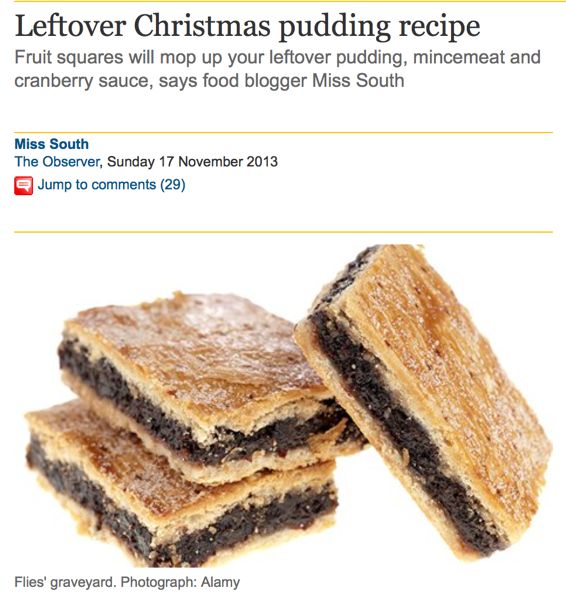
Festive Flies’ Graveyards


Screenshot 2013-12-27 21.58.46

Being organised enough to make my own Christmas pudding this year is fantastic because it’s given me the opportunity to make these fabulous festive flies’ graveyards (or fruit squares for the more squeamish) with the leftovers.

These buttery pastry squares packed with dried fruit were a must have at every tea time get together when I was a child. Both my granny and my Aunt Kathleen made them beautifully and I felt I had a lot to live up to trying to get mine right, so I’ve kept it simple here for this Observer Food Monthly piece and used my granny’s recipe to be sure.

These are fantastic with some leftover cranberry sauce dolloped in and make a great alternative to mince pies when you are a month into the season. Enjoy with custard or brandy butter for more of a dessert feel. I’m off to whip up another batch for the family now I’m home.

You can find the full recipe here. What other leftovers are you using up this week?

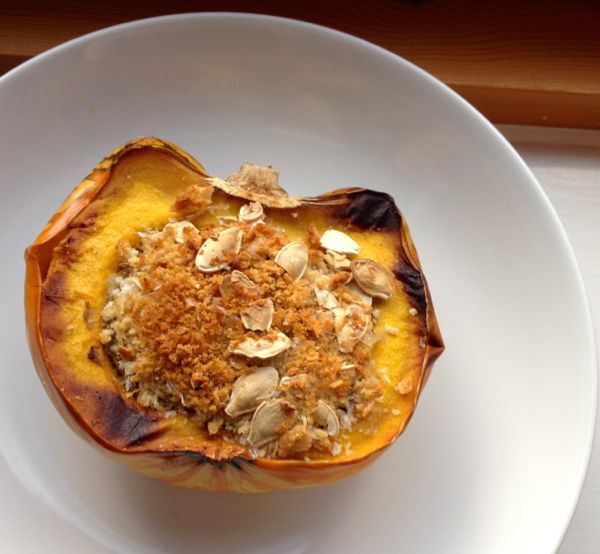
Sprout Stuffed Squash

sprout squashChristmas is the spiritual home of Brussels sprouts. People have very strong feelings about them one way or the other. Except in our childhood home. I don’t really ever remember eating them on the festive plate when I was wee, possibly because we don’t do turkey either (and don’t even mention bread sauce.)

The first time I really remember them appearing was a few years ago when both our mum and I spotted the same recipe for sprout gratin in the Guardian and were keen to make it. I can’t remember whose recipe it was and I’ve long since lost the cutting, but basically the sprouts are lightly boiled and then blended up with cream and parmesan and baked with more parmesan and breadcrumbs on top. Very simple and utterly amazing. I’ve seen people get territorial over the last spoonful of it.

So when I was coming up with something for £3 Christmas Challenge for the Trussell Trust, this dish was at the back of my mind but I wasn’t quite sure where to go with it. But as you all know, if I’m stuck for an idea, my mind turns to stuffing. And what better to do with the spare Crown Prince squash I’d had sitting getting its gourd on since Hallowe’en on the window sill?

Read more