Roll up for rollmops!

You can tell I’m half Scottish. I love oats, raspberries are my favourite fruit and I never say no to haggis. But the real clincher is how much I heart herring. I adore rolled them in the aforementioned oats and fried or grilled with anchovy and herb butter, but nothing tops the rollmop. Shiny silver herring soused with onion, spices and cucumber in a handy pot? To me it’s a treat of such delight, I’d be more likely to pick up some pickled fish than chocolate if I wanted to cheer myself up…

So when I found myself with a spare kilner jar recently and espied some beautiful herring on the counter at Dagon’s in Brixton Village (just by Honest Burgers for those wondering) I knew the time had come to take the obsession up a notch and make my own rollmops. I got the fishmongers to fillet the fish and practically skipped home to get a-pickling.

I used this Hugh Fearnley Whittingstall recipe as a guide. I soaked the herring in brine for a few hours, which plumps them up beautifully but does produce a fairly unpleasant odour. So open a window if you can. I then sterilised a clean kilner jar in the oven, while I heated vinegar, allspice, peppercorns, finely sliced onion and dill in a pan. The truly revolting smell of warm vinegar will get rid of any fishiness in the house and made me wonder if I shouldn’t just go back to plastic tubs of soused herring in future…

But the satisfaction of rolling the fillets up, filling the jar with vinegar and herbs and spices and sealing it firmly with a snap won out and by the time the fish went into the fridge, I wasn’t sure if I can manage to wait three days for them to be ready. In the end, I got sidetracked by life and didn’t get to them for a week and they were very much worth the extra wait.

Plump as anything, soft as butter and well flavoured, I cut them with the side of the fork, watching them flake apart perfectly and served them on some lightly buttered sourdough from Wild Caper. They were one of those simple lunches that is in actually fact so good you can hardly believe how lucky you are to be eating it at home. Delicately spiced and super flavoursome, there was no contest between these and the usual shop bought.

I’d definitely use the splash of cider in with the vinegar next time as there was just a bit too much rawness to the vinegar for my liking and it clashed slightly with the soft sweet fish. (Do not go all health conscious and skip the sugar in the recipe. You’ll blow your head off otherwise.) Some cucumber would knock this out of the the park mixed in with the onion and I’ll use some homegrown tarragon instead of the dill, because I intend keeping a jar of these beauties in the fridge all the time now. A few minutes effort makes this a simple treat I can’t get enough of, especially served with some potato salad for an ultimate Northern European feast!

A warm salad for warm summer nights

So, I’ve recently returned from a week’s holiday in the warmth and civilisation of Languedoc. It’s not a part of the world I was familiar with, and as well as good weather, my companions and I enjoyed a week of superb local food and wine. As they’d been to the area before I enjoyed some local delicacies under their guidance, and we made plenty of new discoveries too. We ate simply, and tried as much as the short timescale could allow (finally ticked bouillabaisse off my list of ‘to dos’, cooked superfresh whitebait, and gingerly tried freshwater clams which we’d sourced ourselves from Lac du Salagou). Plus freshly picked figs & plums everyday, moules et frites at the local village knees-up, and a host of other delights.

I’ve only warmed in recent years to classic French cooking – my reference point was always further south in Italy – and I associated French with more courtly and less rustic cooking. However there’s a healthy overlap between the high-end and the more accessible, so I’ve been expanding my repertoire and gaining more confidence talking mirepoix rather than soffritto. In part this helps when you’re in an area where the aroma of herbs hangs heavy in the air – wild thyme and mint nestling next to tall fennel plants in the verges – and bushes and trees are laden with fruits and nuts. Foraging and gathering becomes a daily constant, not an occasional novel experience.

I’d mentioned previously I was working on the forthcoming Parlour Café Cookbook: before going on hoilday I’d worked up several of these recipes into postcards, and one in particular stuck in my mind: a warm salad of Puy lentils and goats cheese. It’s one of the star recipes in the book and supposed to be a favourite with the regulars,  so I decided to give it a whirl.

We picked up most of the ingredients in the local supermarket before a trip up country to visit Roquefort and Millau – great cheese, rather dull tour of the caves, although I did pick up some sheep’s butter there – and on the way home had to make our respective ways through an enormous, spectacular and somewhat frightening electric storm. Everyone was a bit frazzled by the end of the trip, so it was rather relaxing to potter around in the kitchen, unwinding with a glass in one hand and a stirrer in the other, unwinding while knocking this oh-so-simple recipe up. Mind you, it’s always fun find your way round somebody else’s kitchen for the first time, making the most of what you find lurking in the cupboards.

It still makes me smile that this most Mediterranean of dishes actually comes via Dundee, but using local ingredients (and some great local wine) meant it was perfectly transposed to a more Gallic setting. Rather than rewritng this I’ll use Gillian’s words from the cookbook, annotated slightly.

Puy Lentil and Goats Cheese Salad

Serves 4

●200g Puy lentils [oddly they weren’t labelled as Puy but verte]
●1 onion, chopped
●1 carrot, chopped
●2 stalks of celery, chopped [wonderful dark green celery, still with all the leaves]
●A handful of fresh thyme [straight from the local hills]
●1 bay leaf
●150ml extra virgin olive oil
●3 – 6 garlic cloves, peeled and roughly chopped [I used the full six cloves, and it was extremely feisty… I guess due to the freshness of the garlic. No worries about being bitten that evening!]
●50ml red wine vinegar [I couldn’t find any in the store cupboard so I used a mix of balsamic & some red vin du table instead]
●100g goats cheese [we used a local, strongly flavoured little number]
●a large handful of parsley, roughly chopped
●sea salt and freshly ground black pepper

Cook the lentils in boiling water for 20 minutes, until they are absolutely tender.

Meanwhile, fry the onions, carrots, celery, thyme and the bay leaf in a couple of tablespoons of the olive oil until soft and lightly coloured. In a food processor or with a hand blender, blend the garlic with the rest of the olive oil. With the motor still running, slowly pour in the vinegar and blend until it’s emulsified.

Drain the lentils and pour out onto a flattish dish. Smother in the garlicky dressing and turn gently so everything is glistening. Once the vegetables are cooked, gently mix them into the lentils and leave the salad to cool.

Then toss gently with the goats cheese, torn into chunks, and the parsley. Season with salt and freshly ground pepper if you think it needs it.

The only major change I made was that a couple of our party didn’t like goats cheese, so we served their portions first – they had comté instead – then crumbled the cheese in afterwards. We’d also picked up some smoked sausage to add some savoury notes to the dish. Otherwise we kept it simple – a hunk of fresh bread, a fresh green salad on the side, and some local wine to help everything go down.

This is such a good recipe: it doesn’t take long to make, tastes stunning, and it’s most evocative of warm summer nights and lazy times. I can see why it’s a favourite at the café, and I think it will be with you too. Delicious!

Brixton Ginger Cake

Ginger cake

One of the few branded foods that I have a soft spot for is McVities Jamaican Ginger Cake. Squishy, sticky and so good smeared with butter, I occasionally sneak one into my trolley on the odd occasion I’m in a supermarket. But since I live in a area with a big Jamaican population I feel a bit guilty buying something that is probably highly inauthentic and mass produced. I decided it was time to try making my own version.

But how to get that almost difficult to eat super sticky feeling in a cake without the use of commercial levels of oil and played about with sorts of sugars? I always find that adding vegetables to a cake really up the moisture levels and adds a depth that sugar and fat alone cannot achieve. But what you achieve in moisture can often be overwhelmed by a vegetal taste that jars somewhat with me. Even the sweeter veg like beetroot and carrot can be cloying.

Independently of this cake dilemma, I kept seeing strange kermit-green items that looked like a pear crossed with a sock puppet’s mouth on the stalls in Brixton Market, but never known what they were. Having had my head bitten off once or twice for asking questions at the market, I’m now reluctant to buy unknown items. So when I flicked through a beautiful Caribbean cookbook and finally realised they were Christophenes or cho chos, I picked a couple up immediately and following a recipe, blanched and fried them with chilli and garlic. As a side dish they were odd. Incredibly crisp and fresh like a Chinese Pear but fried, they were incredibly succulent but didn’t taste of much.

Instead of being disappointed, I realised I had found the perfect vegetable to add to a cake. Especially a ginger cake where one can’t risk a clash of flavours without a risk of your baked goods coming up more like a curry when in fact you want a dark, sticky and grown up cake. I looked around for a recipe to fit the bill and couldn’t find one, so for the first time I decided to bake fairly freehand.

I did take some tips from this Ginger Cake at The Caked Crusader, but completely omitted the evaporated milk, fresh ginger and the icing and added in the cho cho to give some serious squish. I boiled it until tender, mashed it and left to drain with a weight on top to get rid of excess water and got on with winging the rest of it. One whole cho cho is about 200 grammes raw.

To make this cake you need:

225g plain flour
1 teaspoons baking powder
½ teaspoon bicarbonate of soda
1 teaspoon ground allspice
½ teaspoon grated nutmeg
2 teaspoons ground ginger
180g unsalted butter
100g light brown sugar
half a jar of stem ginger in syrup
a cooked and mashed cho cho or christophene
125g black treacle (or molasses)
2 eggs

100g plain flour
100g cold butter
50g sugar
cinnamon

Preheat the oven to 180°C and prep a loaf tin (preferably a 2lb or 900g one. But if like me you’ve forgotten what size it is, prep it anyway.)

Boil and mash the christophene (also known as chayote or mirlitons) and drain well. If you can’t get a cho cho, use some mashed courgette instead.

Sift the flour, baking powder, bicarbonate of soda, allspice, nutmeg and the ground ginger into a bowl and mix together. I would use half the amount of baking powder as the original. Mine exploded like a my hair on a drizzly day with double.

Blitz the stem ginger, the entire jar’s worth of syrup and the treacle together to make a heavenly smelling puree. If you’ve not got any syrup left in the jar, make your own with dark sugar, water and double the ground ginger or add some freshly grated ginger root.

Beat the butter into the dry ingredient until well combined. Beat in the sugar. Pour in the elixir of ginger and treacle and beat in the eggs with a folding motion. It’s actually much easier than the usual all in one sponge method, saves on washing up and creates an amazing light fluffy puffy batter that smells divine. I didn’t find mine runny at all, quite robust in fact, but The Caked Crusader warns that ginger cake can be a thinner batter.

Mix the remaining cold butter, plain flour and sugar to make a crumble crumb and line the base of the loaf tin with it. I decided I didn’t want an icing or I feared the cake would be teeth itchingly sweet, but this would hopefully make it look more exciting than a bit lump of loaf.

Pour the batter into the tin and bake for approximately 45-50 minutes or until a skewer comes out cleanly. But bear in mind that this cake is so moist, even when it’s perfectly cooked the skewer might still be sticky. I turned the oven off and left it for 5 minutes more to be sure.

Leave to cool in the tin for 30 minutes or until you can be bothered to take it out of the tin. i was so overcome with having baked off the cuff for once (I am usually rigid on anything involving flour) that I couldn’t face the fear it wouldn’t come out and left it for any hour. I inverted it and it slid out beautifully. I’m glad I’d been warned it might dip in the middle or I’d have panicked. I let it cool completely and then wrapped tightly in a tea towel overnight.

It was so moist, it crumbled a bit when I unwrapped it and it was a slightly bedraggled looking loaf cake. But this one is all about the taste not the looks. But I could forgive its shabby exterior when I tasted the spicy ginger flavour and enjoyed the sponge pudding like texture. It was as sticky and moreish as I had hoped and went down well with others who tried it. I felt the crumb added nothing to it in the end except a vaguely greasy aftertaste so I’d skip that again.

But for a great sticky treat that would go with any cup of tea (and keep well) you can’t beat this cake. Perfect to bake on a Sunday. It means you can bring back the much missed tradition of elevenses this week!

Rosemary and anchovy flatbread

Going flat-out for flatbread …

Rosemary and anchovy flatbread

We’re both fans of fast, healthy and delicious Mediterranean-influenced food here at North/South Food. Miss South is definitely more confident and experienced when it comes to baking than I am, but a recent recipe I came across persuaded me to pander to my basest kneads and enjoy my daily bread.

I’m currently designing a cookbook for the wonderful Parlour Café on West Port in Dundee, run by Gillian Veal. Over the last few years her delicious and unfussy cooking styles have added some sunshine to the local food scene, and her recipes have become firm favourites with many Dundonians. So it’s perhaps only natural that Gillian’s sharing some of her favourites recipes with the wider world.*

One of the pleasures (or should that be perils) of receiving the manuscript for a cookbook is trying to resist the urge to try out all the recipes: in this case as soon as I saw the recipe for rosemary and anchovy flatbread I was powerless to resist the temptation to snip sprigs of rosemary and crack open a tin of anchovies. Rosemary oil and salty fish on warm bread? Instant win!

Having made these a couple of times now I’m a major fan. Incidentally they’re so moreable I challenge you to make them last more than one sitting. Perfect with some home-made smoky hummus or an edamame bean dip.

So without further ado let me share this recipe, in Gillian’s own words, alongside my photos. Enjoy!

Gillian’s Rosemary and Anchovy Flat-Bread
Makes 8 – 10 flat-breads

● 250 grams wholemeal flour
● 250 grams of plain white flour
● 250 ml warm water
● 1⁄2 a teaspoon of dried yeast
● 80mls olive oil
● 12 anchovy fillets
● 1 sprig of rosemary ● sea salt and pepper to season

“Mix both flours in a large bowl and make a well in the middle. Dissolve the yeast in the warm water and gradually pour into the flour while mixing with the other hand. Pour in 60ml of the olive oil as well, and keep mixing until the ball of dough comes together. Turn the dough onto a lightly floured surface and knead until it becomes smooth and elastic – you will feel the dough changing and it will bounce back when you stick a finger into it (5 minutes should do it). Cover the bowl with cling-film and set aside somewhere warm for about one and a half hours.

Meanwhile prepare the topping. Tear the leaves off the sprig of rosemary, chop them roughly and bash them up in a mortar and pestle with the anchovies and a glug or two of olive oil until you have a rough paste.

When the dough has about doubled in size, punch it down, gather into a ball and divide into 8 – 10 pieces depending on how many people you’re feeding and how big you want your breads to be. Heat up the oven to 220C, and put in two lightly floured baking trays. Roll the dough pieces out into rough circles, about half a centimetre thick, and evenly spread with the anchovy and rosemary paste. Push it into the dough with your fingers and make sure they’re well covered.

Get the hot baking trays out of the oven, and place the waiting flat breads on them. Sprinkle with sea salt, freshly ground black pepper and a drizzle of olive oil and put back in the oven for around 6 minutes until they are golden and starting to puff up”


*If, as I suspect, this recipe whets your appetite then I urge you to buy the book when it’s published later this autumn by Kitchen Press. Wonderful recipes and delightful illustrations make this a perfect kitchen companion. We’ll have full details on here closer to the time…

Easy Peasy Lemon Curd

An impromptu breakfast at Wild Caper in Brixton has led me to a new summer obsession. Nestled in between the toasted sourdough, homemade jams and ricotta was a small dish of mellow yellow in the shape of proper lemon curd. Creamy as custard and bursting with the invigorating tang of sunshine soaked lemons, I fell in love with it. And went back the next week for more of the same. (Wild Caper doesn’t even advertise it does breakfast, but it’s the best in Brixton… you need to go there!)

I was tempted to buy a jar of it the third time I went in (this time for one of their sourdough doughnuts) but having found some proper unwaxed Italian lemons in The Fruit Garden in Herne Hill the day before, I postponed my original plans for limoncello and decided to make a vat of lemon curd instead.

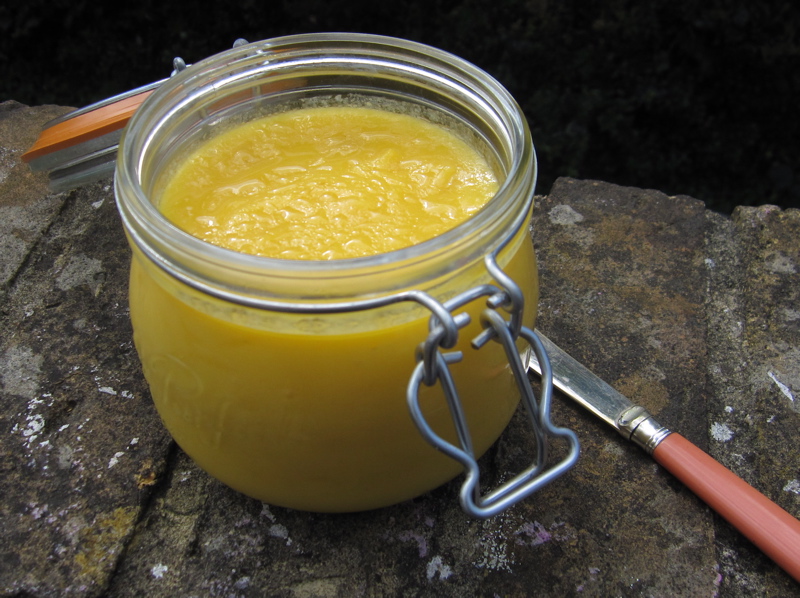
I expected it would be delicious. I did not expect it would be easier than falling off a log to make it. The only remotely fancy thing you need is a bowl over a pan of water and a lemon zester or grater. I followed this recipe from the lovely Rachel Eats as it seemed the most straightforward I could find. I halved the amount of sugar as I loathe sickly sweet citrus things and wanted some sharpness to it. It made about a pint of curd and filled a small Kilner jar.

Start by sterilising your jars in the oven. This is very important. Then get down to zesting and juicing your lemons as your (unsalted) butter melts above the water. Revel in the citrussy spell of summer now infusing your kitchen as you go. Add the lemon to the butter and put in as much sugar as you choose and make sure it is all melted. Double check the water isn’t boiling under the bowl and things aren’t too hot and then add in your eggs, whisking firmly and making sure nothing scrambles and then cook it out until it looks thick and opaque. Resist the temptation to stick your finger in there. It’s hot and you need to be fussy about good preserve hygiene.

Pour into your sterilised jar promptly, close the Kilner jar or cover with a lid and leave to cool. Scrape the bowl out and lick the spatula with unreserved glee. This stuff is amazing. Light, yet buttery with an utterly moreish tingle of lemon. You’ll be hard pushed to walk past the jar without dipping into it.

Dollop it on bread or Ryvita with a base of cream or curd cheese. Perk up your porridge with it. Stir it into yoghurt for a luxury dessert. Ripple it through ice cream. Give crepes a new lease of life. Take your lemon drizzle cake up a notch. Fill lemon poppyseed muffins with it. Eat it off the spoon out of the jar. Try to resist the urge to turn everything you come across into curd, even though you imagine grapefruit and passion fruit would both be sensational with the sharpness and sweetness that a good curd has. Make friends and influence people with jars of this when they invite you for instead of a mediocre bottle of wine from the corner shop. The possibilities are endless. But just make sure you make it immediately…