Nesselrode Pudding

I have been cooking with chestnuts a lot this winter and while telling my mother about my triumphant puree de marron filled doughnuts, we got onto the subject of a frozen chestnut pudding she used to make for Christmas back when we were kids. Lighter than the traditional pudding, it was studded with marinaded dried fruit, sweetened with chestnut puree, it was a real family favourite. She used a clipping from (quite possibly the Radio Times) with the recipe on and it was a sad day when that precious piece of paper got lost and we stopped making the nameless pudding. Buoyed by nostalgia and Google, we looked up frozen chestnut pudding in the vain hope of finding something similar and were thrilled to discover that we had been making a dish called Nesselrode Pudding and that our festive dessert was sorted for this year.

This is a Victorian era pudding named for a MittelEuropean Count and was fabulously popular in those days, showing off expensive luxury items to full effect on Christmas Day while keeping some of the tastes of a British Christmas such a dried fruit and brandy. It relies on the flavours of sweet chestnuts and brandy to end the feast in style and we were delighted to have the chance to re-visit this classic family favourite!

Read more

A Classic in Coke…

As a family, we don’t have many Christmas traditions (unless supping a lot of cava counts as a tradition?) but one thing has come to symbolise Christmas more than any other foodstuff and that’s a ham. More precisely, a ham cooked in Coca Cola as suggested by Nigella Lawson in her classic cookbook How to Eat.

Cooking with Coke has become quite fashionable over the past few years and the world seems to split into two camps about it, with those who are highly sceptical about it and those, like me, who embrace it wholeheartedly and seek any opportunity to add Atlanta’s finest to a dish from cake to Christmas ham. So I would be most disappointed not to get off the plane in Belfast to discover a perfect pink ham in the fridge waiting to be transformed into a smoky spicy sweet sensation in time for Christmas Eve supper.

Not only is the ham beyond tender and moist after its soft drink with vegetable extracts bath, it is also the easiest thing in the world to make. All you need is one plump piece of pork, about 2 litres of Coke and an onion or two studded with cloves, a large pot and a full stomach so as not to be driven wild as the ham infuses and cooks over the next 2 or 3 hours. Simply cover the ham in the liquid, add your onion and bring to the boil. Turn down to a simmer, place a lid on the pan and leave to just cook slowly at roughly an hour per kilo. I usually go off and finish wrapping my presents feeling utterly festive and increasingly hungry…

Normally we simply take the ham out to cool before serving in a selection of sandwiches, suppers and side dishes, omitting the crust Nigella mentions as it’s a bit too mustardy for our liking, but this year, we decided not to get stuck in our ways and try something new, glazing the top of the ham with a mix of black treacle, mustard and homemade quince jelly before blasting it in the oven to get a dark sticky crust to add another dimension to the barbecue influenced meat.

The glaze takes no time at all to make up, as I simply put some Meaux mustard, treacle and quince jelly in a pan to melt down, adding a splash of soy sauce and some tamarind paste and allowing it to all meld together before brushing it over the snow white fat on top of the pink porker and popping it in the oven for 15 minutes at 190 degrees. I then took it out, reglazed it and put in the oven again at 220 degrees for another 10 minutes.

After resting it for 20 minutes, it made the most amazing sandwich. Malted bread spread with mustard, the remains of the glaze and spiked with home made sweet pickles, it was soft and juicy with the right amount of salt and a delicious spiced flavour with a sticky sweet yet umami topping. The minute the sandwich was finished, we were reaching for another slice of the ham, unable to get enough of it. This is one tradition that gets better with every passing year!

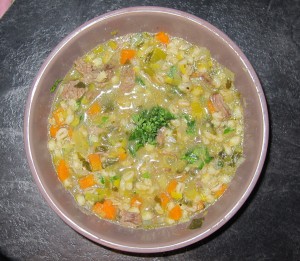
Scotch Broth (or central heating in a bowl)

You can’t have failed to notice that it is absolute brass monkeys out there. With bells on. I’ve certainly never seen snow this early in the winter in London and I’m immensely grateful that I don’t really have anywhere to be for the next few days so I can stay indoors and stay warm. I could either run the heat all day or I could make a bowl of serious soup to banish the chills. It was time to break out the family recipe for Scotch Broth…
Read more

A Gold Medal for these Grahams…

As I’ve mentioned before, I’m a bit of an Americanophile with a particular penchant for all American foods, so imagine my glee when I discovered an online recipe for graham crackers. Forget Oreos, these are the archetypal American biscuit. Golden and honeyed, they are light and crunchy and nothing in the British biscuit family, even the digestive, quite cuts it for me.

Graham crackers are hard to describe if you haven’t had one. Their unique texture comes from the the type of flour usually used to make them. Graham flour is the brainchild of one Reverand Sylvester Graham who believed processed white flour was a devilish abombination and that bran would cure all ills. He created a type of flour that had the wheat germ and endosperm ground separately from the flour and then added back in to create a coarser flour that none the less makes exceedingly light crackers.

This flour is difficult to come by outside the USA and so I was resigned to the fact that I would only be able to indulge my graham cracker love while on holiday or when friends brought me boxes back in their suitcases. But this recipe uses regular plain flour! Time to go crackers methinks and risk the fact the use of processed flour might inflame my carnal desires…

I was originally planning to use these crackers to make a base for a pumpkin pie. They would have been crushed and mixed with butter to make a crumb based crust somewhat like one can do with a digestive or two when making cheesecake. However on first reading the recipe seemed too complicated to start baking something just to destroy it again and I decided to go with a traditional pastry pie shell instead.

I was also pleased that upon thorough reading to see that the recipe for the crackers is actually incredibly easy. I was just thrown by the talk of different mixers with a large selection of attachments making it lot trickier than it is. I don’t have a mixer so I assembled my ingredients (all easily found in the store cupboard, nothing fancy) and decided to give it a go by hand. Apart from it taking twice as long to crumble the butter because it was frozen rather than chilled, this is was so easy I cannot understand why anyone would bother making washing up by using a mixer.

About five minutes after I started mixing it all, I had a gorgeous golden dough flecked with sugar and stiff enough to wrap easily in clingfilm and chill in the fridge overnight. The recipe mentioned it would be rather sticky, but I didn’t find that at all. I wonder if this was because I used golden caster sugar rather than a muscavado or because plain flour is slightly different to all purpose flour? Either way the dough was a dream to handle and I ddin’t need all the flour I put on the clingfilm or the work surface.

Next morning I had a well chilled dough that was still easy to handle. Deb mentions in her recipe using a pastry wheel to cut the crackers into traditional rectangles, but since no graham cracker has ever lasted long enough in front of me to notice the shape, I decided to go off piste and cut them in star shapes instead. The dough cut easily and the scraps came back together well too. I used half the dough, rolled out to about an 1/8 of an inch and got around 40 biscuits from it.

I placed them on lined trays and sprinkled the sugar cinnamon topping over them before popping the trays in the fridge for around half an hour. Cooking the dough from chilled should make the crackers even lighter and crispier so it’s not worth skipping this stage. They then went in the preheated oven at 180˚C for about 12 minutes before they were perfectly cooked. I cooled them on a rack and lasted about 3 minutes before I snaffled one of them.

And they were fantastic. Buttery but light, beautifully crisp and infused with honey, they crunched gorgeously when I bit into them. The scattering of sugar on top made them even crunchier and the hint of cinnamon was perfect with the flavour of honey. It took such willpower not to stuff my face with one after another until they were all gone (and then admit that to my now biscuitless friends what I had done). I managed to get some on a plate and serve them up.

It probably says a lot about how delicious and moreish these graham crackers are that there was only one solitary biscuit remaining at the end of an afternoon so filled with baked goods we didn’t even manage to get round to one of the cheesecakes…they might be my favourite thing to have baked this year and I strongly urge you to try them immediately. I have no idea if they keep well, but I don’t think you’ll have any left to store!

Stuffed Squid…

I don’t think Shirley Conran and I would get along. She thinks life is too short to stuff a mushroom and I seem to have a fascination with stuffing just about any food I can get my hands on. Stuffed cabbage leaves are a winter staple in my house, I loved my recent dalliance with a stuffed marrow and last Saturday I feasted on these amazing garlicky stuffed tomatoes as suggested by Nigel Slater. Having exhausted all the vegetables I can think of stuffing, I needed a new challenge…

And what better than nature’s very own windsock in the shape of a whole squid? Inspired by another Nigel Slater recipe from last week’s Observer Food Monthly and some stunning looking squid on my local fishmonger’s counter, I couldn’t resist.

After getting the fishmonger to clean the squid, my eye was caught by the last of the beautiful rainbow hued Bright Lights chard in the garden and I decided to base the stuffing around this. I also dug out the last of the wonderful breadcrumbs from the freezer from a stunning rye loaf from the Tebay farm shop to add a nutty hint of flavour to it all. A pinch of mace, a slug of olive oil and some lemon zest followed suit. But the crowning glory was the rest of the tin of smoked anchovies Mister North gave me for my birthday. These add a stunning depth of rich complexity to the already amazing umami taste of these fabulous little fish.

I combined everything and stuffed the squid as full as I could get it without ripping the beautiful soft flesh. The excess stuffing went round them and tentacles and I dotted them with the very last few Tumbler tomatoes from the garden before covering them in a rich tomato sauce made with the leftover oil from the anchovies and a few home grown chillies for a kick. Add in a splash of vegetable stock and it was ready to go in the oven for around 45 minutes.

It looked majestic when I opened the casserole dish. The tomatoes had intensified in the colour to a deep ruby red flecked with a hint of emerald from the chard and the milky white squid bathed in it like a less malevolent Moby Dick. It was so soft and tender from the long slow cooking that it was quite difficult to lift out of the dish without it falling apart. I served it with some of the Shetland Blue potatoes from the garden and well anointed with the silky soft tomato sauce and it was fantastic.

The squid cut beautifully and was delightfully tender with just enough of a bite to keep it interesting. The stuffing was umami and iron rich and the tomato sauce was sweet and tasted of the summer we didn’t really have. It was great with the potatoes to soak it up, but even with that, I had a lot of sauce leftover. I froze this to eat with pasta some night or to form the base of a quick fish stew.

I can’t think of a single flaw with this dish. Easy to make, perfect for using up odd and sods in the fridge in the sauce or stuffing and stylish enough to serve at a dinner party or as a Friday night treat at the end of a hard week. Try it with baby squid to cut the cooking time, because this dish is so good you’ll be driven to distraction waiting to taste it!