Hello deer… Venison Pasty

Hurray! It’s game season again… a chance to cook a broader range of foodstuffs. As the range of seasonal veg decreases, the blackboard at my local butcher’s is filling up with a wonderful selection of goodies. Recently venison and grouse caught my eye, so I snapped some up at Stansfields when I saw it.

I bought a few hundred grams of diced venison without a clear idea of what I wanted to make with it, but I started to entertain a growing desire to make a pasty. I love a well-made pasty, but where I live is pie country so it’s relatively rare to find a genuine, glorious example of the crust-encased pocket of goodness. I’ve made game pie before, but not pasties, so research and experimentation was called for…

Diligent homework threw up a lot of passionate and divisive opinion about pasties in general, and the Cornish pasty in particular. It was clear that under a strict interpretation of the rules this could not be seen as a true Cornish pasty: that requires beef, swede (turnip as we’d call it back home), and if you’re particularly strict, it needs to be made in Cornwall. It was becoming obvious I couldn’t label this as anything but a venison pasty. At least I was in good company: Shakespeare mentions venison pasties in the Merry Wives of Windsor.

So this was a posh imposter (with a heritage, admittedly), with a spread of ingredients which no traditionalist would entertain, but it sounded mouthwateringly good with the venison, and butternut squash as a substitute for turnip. In homage to ‘proper’ pasty making I followed the instructions on the Cornish Pasty Association website, and discounted my original idea of adding a shiitake mushroom and butter reduction over the top of the mix, as I’d read ‘proper’ pasties don’t have any pre-cooked ingredients in them.

As I was in the middle of making the shortcrust pastry for this I remember think I should’ve left baking to Miss South… it’s definitely her forté. I gave it a good go, but only after I’d mixed up the flour, egg (I used one double yolker duck egg), butter, baking soda and salt did I realise I’d have to hand-mix and rub the mix… I only have a hand-held food processor and it was starting to protest strongly at working the dough as vigourously as it needed. Still, I managed to manually get the pastry mix looking biscuity, as it was meant to, and then rolled it into a ball and bunged it into the fridge for an hour or so in some clingfilm to rise up.

To make 3 (rather large and overfilled) pasties I used around 330g venison, 200g of shallots and red onions in roughly equal measure, 300g of butternut squash, and slightly less potato. Ah well, I’ve never been a stickler for measurements anyway. I diced everything fairly small, mixed it all up with the seasoning, and a splash of oil so the flavours would mingle gently. Miss South suggested I supplement the normal seasoning with a pinch of mace: something which proved to be an inspired choice in adding warmth and old-fashioned flavour, redolent of big country house kitchens. It was only after putting the finished pasties in the oven I realised I should really’ve used up the flat-leaf parsley I’d meant to put in. Oh well…

I did over-fill the pasties (perhaps I should’ve made larger pastry circles, or doled 4 fillings out rather than the 3 I managed) so this made the distended pockets rather hard to seal (using a little egg to moisten the edges) and crimp (perhaps crimping should be left to the experts… the CPA, or The Mighty Boosh). I was amused that when I checked various references online crimping was described as a technique one couldn’t easily explain. My induction into this ancient art was somewhat therefore ignominious; and did allow more leakage than it probably should’ve, as the photos testify. I then baked the three of them at a medium heated oven for around 40 minutes, slowly being driven to distraction by the aroma filling the kitchen.

As mentioned my baking skills are not as fully honed as my sister, so in hindsight I wish I’d placed these on a better-greased tray, or even onto a wire shelf to cook. This did absolutely nothing to impact on the flavour though… these pasties were rich, warming and absolutely delicious. Autumnal heaven! Now I’ve lost my pasty cherry I’m going to make more of these with a variety of fillings… perfect for the lunchbox as a self-contained delight.

Algerian Heaven at Khamsa, Brixton

The recent World Cup didn’t leave many people in England with a feeling of anticipation, but it did serve the useful purpose of introducing me to Khamsa, the newly opened Algerian restaurant in Brixton. The only Algerian restaurant around, it featured heavily in press coverage of the England/Algeria game and it became tricky to get a table for a while. But since Mister North was down this weekend, we thought we’d try and squeeze in and sample its home cooked delights.

This small, but perfectly formed restaurant just opposite Lidl on Acre Lane were able to fit us in for a 8pm booking on Saturday night and we went along, appetites whetted by a Caesar or two, keen to sample this underrated cuisine and bolstered by excellent reviews. We took a bottle of red as Khamsa is BYO and were pleased to see that we were made most welcome despite being early for our table.

We were seated at a corner table with a large Berber serving plate in the middle and North African style cushions on a bench to sit on. These are quite slippery to sit on and there isn’t a huge amount of leg room, so if you’re in need of a bit of extra breathing room, ask for one of the other tables when you book. This minor quibble aside, we fell on the menu eagerly and tried to decide what to order from the amazing sounding juice menu alone. There is such a delicious selection on offer that we kept the wine for later and chose the pear and basil and the spinach, cucumber and lime to cleanse our palates.

These drinks were freshly made before our eyes while we perused the food options. The starters consist of a large selection of salad dishes and can be ordered as 8 dishes for 2 people for £12. Despite there being three of us, we thought this would still be the best option as it allowed us to sample widely yet keep some room aside for the sensational sounding main courses. We checked that the portions were suitable for three and when assured that they were ordered the starters before deciding on our mains.

This gave us time to try the juices and make sure no one ordered the same main course since G and I had both gone for the same pear and basil juice. This was delicious. The pear was sweet and succulent with the slightly spicy hint of basil stopping it from being cloying. I found Mister North’s cucumber, lime, spinach and mint a bit too wholesome for me, but tasty all the same. Over our juices, he chose a beef stew with chickpeas and pomegranate and walnut couscous while G went for the Couscous Modern or a choice of chicken and lamb kebabs with merguez sausage and vegetable couscous on the side. My choice was a parcel of salmon with courgette and aubergine or hout fi razma.

Important decisions made and an impromptu language lesson later, we just had time to get settled before the starter arrived. Eight teardrop shaped dishes of brightly coloured vegetables, jewel like pulses and creamy dips with a plate of Berber bread on the side filled the table and we got stuck in without ceremony. Everything was excellent, but we felt that that the whole platter suffered slightly from being fridge cold which stifled some of the flavours a bit. But it is testament to the cooking at Khamsa that everything was still excellent.

For me the stand out dishes were the cooked carrot and cumin salad or zroudia amcharmia and the chakchouka modern or slow cooked onions with merguez sausage. The carrots were deliciously sweet without the slightly bitter aftertaste so many of them seem to have these days. They retained just enough bite and the cumin lifted them without overpowering. They worked beautifully with the meltingly soft sweet onion dish with its lingering kick of tomato and chilli. The sausages were fantastic, the coarsely chopped meat spiked with chilli and spices. We could have eaten a whole one each…

The other starters were good. A dish of lentils and green olives was a savoury revelation while black eyed beans soaked in olive oil were sensational. The baba ganoush and hummous were light, creamy and very tasty and went beautifully with the olive rich Berber bread. Only the ajhroum di felfel or roasted pepper salad and a vegetable couscous didn’t hit such high notes. The couscous was a little bit bland and the pepper salad bitter due to it mainly being green peppers. But overall, we were most impressed by the selection and left very little behind despite the portions being more than generous for three people.

We had high hopes for the main courses after that and I was certainly more than pleased with my salmon fillet. Steamed in foil, it was beautifully cooked, flaking with just the edge of a fork. It came on a bed of couscous and harissa and coated with a knockout good paste of aubergines and garlic on top and courgettes around the edge. It was light, tasty and full of flavour and I could see why the waitress had told me it was her favourite. I found it hard not to bolt it down in seconds.

Mister North was also pleased with his beef tagine. Meltingly tender chunks of beef and fat chickpeas came in a rich gravy that coated the beautifully bejewelled looking pomegranate and walnut couscous and left a lovely chilli tinged kick behind. G was less impressed by his main. The meats were generously portioned and very tender, but came served on enough couscous to feed about 3 people and with a rather bland vegetable stew on the side. He described it as the safe option and it definitely needed something like harissa on the side to liven it up. Other than this and the variation in sizes between the main courses, we were impressed.

Despite being perfectly replete, we heeded the advice on the reviews we had read and ordered a plate of pastries to try. The chef at Khamsa originally trained as a pastry chef at some of the finest pastry schools in France and it showed in every single crumb of our taster plate. We shared a vanilla infused number, similar to a doughnut and a syrup drizzled creation like a fig roll, stuffed with dates. We then tried individual pastries with the stand out being a date stuffed with a pistachio marpizan infused with basil and mint. I usually don’t like dates, but I regretted letting Mister North get this one!

We lingered over the pastries with a huge pot of Algerian mint tea and chatted with the staff. Khamsa is run by a husband and wife team who cook everything from scratch including the jams and condiments. Although the restaurant was busy and bustling, they both made time to speak to us to explain their food and ask how we had enjoyed it. They were so friendly and genuine we actually had difficulty getting them to give us change for a tip!

Our bill came to £69 in total for three of us or £23 each. Considering this was for a three course meal with tea and a fresh juice, I think this was excellent value. Mains range from £9.50 or so to £13.50 and although we drank the bottle of wine we brought, I think this meal would have been just as good without booze, making it even better value!

We loved the cosy intimate upstairs restaurant and thought the large downstairs room with scattered floor cushions and acres of space would be perfect for a party since you could get as raucous as you like. Everything was spotlessly clean, the kitchen in open plan and everything is freshly homemade. You’d struggle to get a table on a Friday or Saturday after 8pm, but luckily you can sample Khamsa at breakfast or lunch too as it is open all day. I’ll be nipping in here to try the rosewater scented coffee and a few more pastries as a North African treat next time I brave the utilitarian world of Lidl, but I’d recommend travelling for this one. It’s rare to find a well priced restaurant that combines good ingredients, well cooked food and such a pleasant atmosphere. Claphamites and Brixtonians should treasure the neighbourhood pleasure that is Khamsa…

Supermalt Cupcakes

A recent blog post by friend Yoruba Girl Dancing about white people’s lack of love for Supermalt got me thinking. I love the taste of malt thanks to growing up with Veda bread and working in a diner as a teenager making malted milkshakes, so I don’t really mind Supermalt, although I do find it teeth-itchingly sweet. But having never sampled it until I moved to Brixton, it’s not really part of my repetoire and I would never buy it to quench my thirst. What about cooking with it instead?

I made these Coca-Cola cupcakes for my friend G’s birthday party a few weeks ago and was impressed by how easy they were to make and how incredibly moist and brownie-esque they were. I could see no reason why they wouldn’t work with Supermalt instead of Coke. Hopefully they’d be as moist as the Coca-Cola ones, but more like a cake crossed with Soreen…

The slight risk that they might just be disgusting meant I decided to make them over the weekend for a birthday party where I knew my friend C would be bringing some of her legendary lemon and blueberry cupcakes which would take the taste away if my baking experiment went awry!

The trickiest part of this recipe was finding a small enough amount of Supermalt. It tends to come in six packs and I had to go to several shops before I could get my hands on a single can of the stuff. Mission accomplished, I got cracking on the recipe. It is best to melt the butter, cocoa powder and Supermalt together first to allow it to cool slightly to minimise the chances of the egg curdling when you mix everything together. Out of interest, the amount of Supermalt (or Coke) required comes to about 2/3 of a normal can…

The Supermalt mixes takes about 5 minutes to melt and measuring out the rest of the ingredients does the same. Then you simply mix everything together, watching the batter going from thick and fudgy to soft and smooth by the time it is all mixed and combined. It’s one of the easiest cake recipes I know and it’s difficult to over-mix this batter so it’s a good one to do with kids. It’s also nice and thick for spooning into cases so great even if you’re a bit clumsy.

I used some new square cases from Ikea that are a cross between a bun and muffin case in size (and a rather fetching print to boot) and each one took two full dessertspoons of batter. Don’t overfill your cases with these cakes as they rise a fair bit and look better not overspilling the cases. Even with the slightly bigger cases, I got 18 cakes from this batter before popping them in the oven for about 25 minutes or until I remembered what was making the lovely baked smell in my flat…

While they were cooling, I turned my attention to making a frosting for the cakes. Last time I used the Coca-Cola buttercream suggested and found it to be incredibly sweet and a bit sickly even with a fizzy Cola Bottle for a touch of tanginess. This time I thought a cream cheese frosting would go down better. I combined two packs of full fat cream cheese with a splash of leftover Supermalt and two tablespoons of cocoa powder and found I had gone too much the other way and the frosting wasn’t sweet enough. In fact it had a bitter aftertaste that jarred somewhat. I abandoned the idea of adding more Supermalt and put a teaspoon of vanilla extract and about a tablespoon of icing sugar to sweeten it slightly and this time it was perfect. Light, creamy, slightly sharp and not at all cloying.

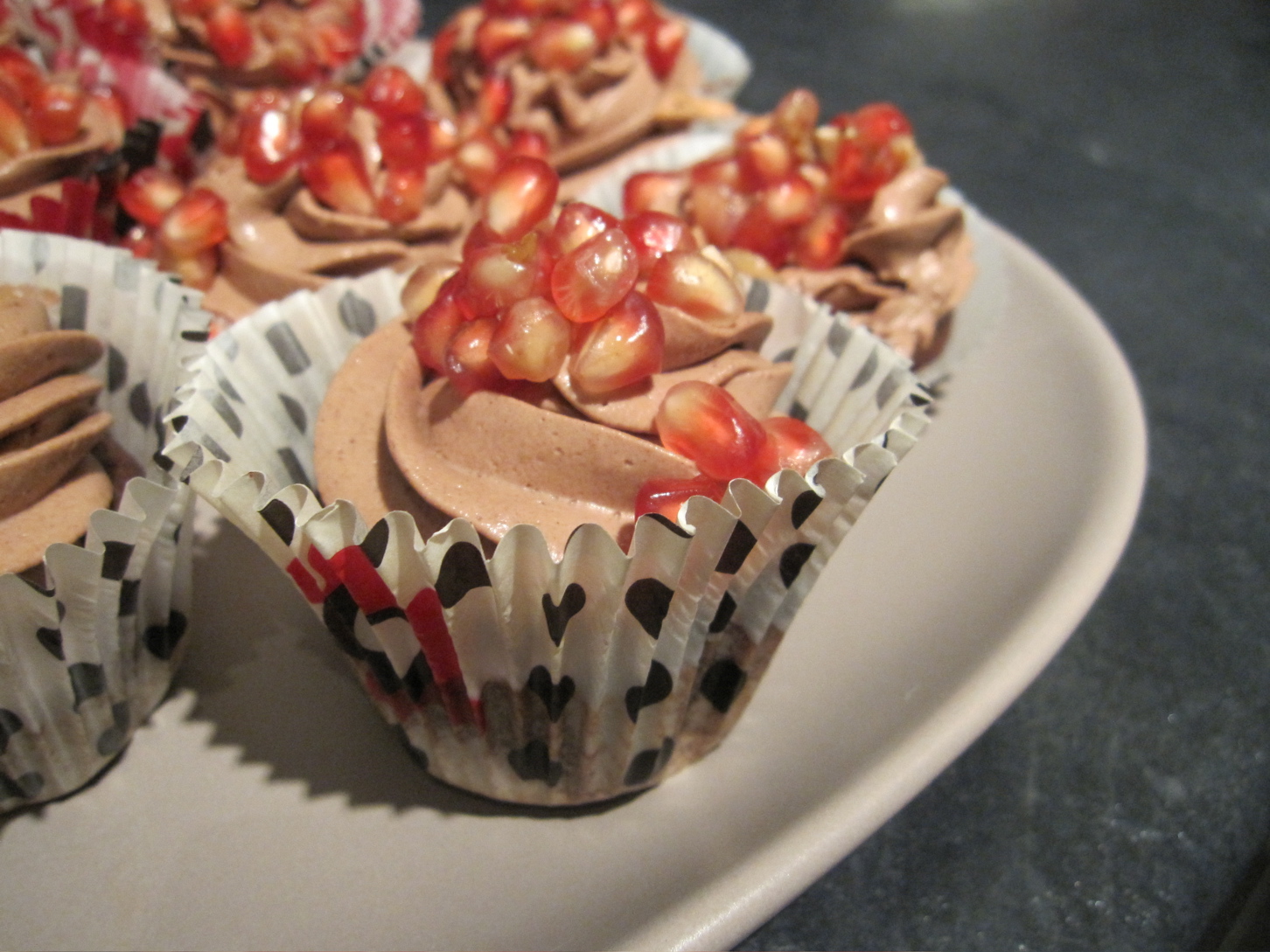
I left the cupcakes wrapped in a teatowel overnight and then my friend C very kindly frosted them for me the next day before I added a an extra blast of sharpness with some pomegranate seeds on top before serving them up to ravenous guests. And they went down a storm! I think they were much better with the Supermalt than the Coca Cola as they were less sweet and firmer and tasted more grown up with a bite of dark chocolate, but without losing the fudgy finish that sets these aside from the average chocolate cupcake.

If you manage to have any of these fabulous cupcakes left (I only had three) they also keep amazingly well wrapped in a teatowel to protect the frosting. They ultimately didn’t taste anything like Soreen cake, but were so good I’m glad I have a second spare can of Supermalt in the fridge to make these due to popular demand! Especially if I don’t have to go camping with them!

Baked eggs

Egg-tastic!

Miss South is doing some visiting for the next few days and rather than leave her housesitter* with a miserable looking selection of vegetable ends and a half empty egg box in the fridge, I decided to use up the various bits and bobs therein and make baked eggs and kale for dinner the night before departure.

The iron rich goodness of kale accompanies eggs just as well as spinach does in the classic eggs Florentine and this dish is like a more hearty, less tricky version of that classic. A bit of Googling to get the timings and temperature right on the eggs led me to this Jamie Oliver recipe with smoked fish and cream which would succesfully fill an egg and spinach shaped hole in your life if you can’t be bothered to make hollandaise. Being incredibly lazy after a day’s packing and cleaning, I opted to completely omit the creamy portion of the dish completely and stick to the basics of kale, eggs and anchovies to make a simple supper.

I sweated the kale down slightly with some butter and two or three chopped anchovy fillets until it was slightly softened, then added some tomatoes from the garden that needed using up to soften them a bit too. I then cracked the three remaining Burford Brown eggs from the fridge into the pan and popped the open pan into the oven at 180° for about 10 minutes…

I got slightly sidetracked for about an extra four minutes thanks to some high drama on Coronation Street, but when I got to the oven, the contents of the pan looked perfectly happy. The kale underneath the eggs was soft and tender, the tomatoes were just cooked enough to have the juice bursting out, but not enough to collapse. The kale on top was slightly crispy more like the wonder that are kale chips and the eggs were neatly swaddled by these lovely leaves, looking just perfectly set.

I scooped the whole panful out onto a plate, seasoned it well with pepper, but skipped the salt due to the anchovies and tucked in. It was delicious, light crispy kale tinged with salty savoury umami anchovies and soft creamy eggs merging together in sheer loveliness. The eggs were slightly less runny than I would have liked, but it was my own fault that they ended up a tad overdone. I’ll stick to no more than ten minutes in the oven in future.

Even with the slightly overdone eggs, this was a fantastic dinner. Quick, easy, cheap and only one pan of washing up to boot! It would be terrific with a bit of chorizo thrown in or some sausages or the smoked fish in the above recipe. In fact, it is just a fantastically adaptable recipe for any evening when you can’t quite be bothered to cook, but there’s a rather long queue in Sainsbury’s to buy a ready meal…

*the housesitter got left with two bottles of wine instead!

Suffering fools gladly…

gooseberry_fool-01.jpg

I was recently chatting with Miss South about the relative dearth of gooseberries for sale; prompted in part by a recent episode of the Food Programme about berries. We both loved gooseberries straight from the garden at our granny’s… the slightly peculiar texture (a little hairy and seedy like pomegranates or tomatoes) and tangy flavour was unlike anything else, and distinctly seasonal. A highly evocative memory of childhood.

An occasional treat, and one which brings back deliciously happy memories, is that of gooseberry fool. Thick cream and fruit, served in glass dishes during halcyon summer weather conditions in the countryside. In my mind’s eye, heavenly. The fact I’ve not had this dessert for so many years has undoubted contributed to a little rose-tinted spectacle wearing on my part, but also led me to crave enjoying this unctuous creamy delight all the more.

So when I saw a couple of punnets in Tesco (I’ve been scouring the markets but haven’t seen any for sale anywhere else) I pounced on them. The particular variety was touted as being sweeter and more suited to desserts than normal, and they had a slight ruddy glow to their green translucency. I was all for following a straightforward recipe for fool, but skimming through the ever-dependable Leon Cookbook I noticed they suggested pairing gooseberries and elderflower, which sounded like a wonderful match. They also suggested mixing greek yoghurt with double cream to create the creamy base, which I thought would add a touch more tang and bite to the flavour. As with all good recipes, it provided a helping hand rather than a restrictive straightjacket… not least as I didn’t have all the ingredients to hand in the correct quantities.

First the fruit got cooked down in a mix of water and sugar (a bit less sugar than Leon had suggested as the variety of berry was supposed to be sweet) and then cooled down. A couple of tablespoons of elderflower cordial got added to the mix (my homemade elderflower liqueur is still brewing away although I’d like to try this again with that once it’s ready). I used roughly a 2-to-1 proportion of double cream to natural yoghurt, then whipped the mix until it got as close to that ever-smirkworthy state of ‘stiff peaks’. The fruit was then folded into the dairy mix, squashed and smashed but still ostensibly whole. This proved to be much better than creating a smooth compote, as it made for a contrasting texture sensation. After dividing into bowls and bunging them in the fridge overnight I was able to enjoy a decadent breakfast course… light, creamy, tart, sweet and so moreable. Yum!

I’ve always liked the British predilection for fools, flummeries, blancmanges, syllabubs and other traditional dairy desserts. These haven’t totally faded from public culinary consciousness, but receive far less attention than they should. I urge you to rediscover the delights of fruit fools as they’re so damn good, and wonderfully easy to make.