
Parkin

I don’t have much of a history with Bonfire Night. Not celebrated in Northern Ireland for a variety of reasons, Halloween was our festival instead. Talked of in Enid Blyton books and Blue Peter, I was vaguely aware of bonfires, Guy Fawkes and pennies for the guy as a child, but never celebrated it until I was about 15. Mister North had moved to the north west to attend university and seeking teenage independence, I travelled over to visit him at half term. My long boat and train trip was rewarded by a trip to the hills outside Rochdale with his flatmate to experience Bonfire Night properly.

Around the huge bonfire, there was treacle toffee, sausages, black peas and parkin. Memories are slightly hazy from the lashings of Boddingtons also available, but the peas were just the thing to thaw you on a freezing cold night, but it was the parkin that warmed my heart completely. All sticky with treacle and chewy and delicious with spice, it almost converted me to standing in fields in November.

Sadly, they don’t go in for parkin in the south and thus I’ve still never really embraced Bonfire Night even though I’ve lived in England for years. So imagine my glee when listening to Woman’s Hour this week, I discovered parkin was super easy to make and that I just had time to let it mature in time for the big night.

In the end, I used this recipe from Waitrose to make my parkin as I couldn’t be bothered adjusting the imperial measurements from the Radio 4 one and it didn’t call for self raising flour as I could neither be bothered to mix my own or get dressed to go and buy some. I subbed golden syrup for the honey and left out the sugar as all that treacle and syrup is sweet enough for me. I used lard instead of butter and upped the spicing with twice as much ginger and a pinch of mace. The whole thing barely took longer than setting out all the ingredients it’s so simple. Do use a pan to heat the milk on the stove as you add the bicarb to it and it expands quite a bit. It’ll be volcanic in a jug.

Other than that, it’s simple, straightfoward and perfect for kids to do. Don’t overmix the batter, it can afford to be a little bit lumpy like muffin batter. Then pour into a deep square tray you’ve lined as parkin is traditionally served in squares. Recipes vary regionally and this one sounds more like the darker Yorkshire version. Pop in the oven for 50 minutes and get very hungry as a delicious oaty flavour heats up the kitchen.

You’ll need good willpower with parkin. It’s essential that you allow it to rest and don’t eat it straightaway. A week is about the length of time recommended to let it mature into proper sticky heaven. I cooled mine in the tin, cut into squares and stashed it away in a tin on a high shelf out of mind and managed to forget about it for about a week.

And it tasted amazing. Dark with treacle, spiky with ginger and smoky with mace. But it was drier than I expected. Mind you I was expecting it to stick to the roof of my mouth and melt on my tongue which might be slightly over the top. I’ve only got a 15 year old memory to compare it to after all. And I did manage to consume two large pieces with pleasure and a large cup of Yorkshire Gold in front of the Corrie omnibus which still made for a fairly perfect morning. I’d stick a bit more syrup in future, cook it slightly less and maybe only leave it for two or three days next time. But now I’ve rediscovered parkin, I’ll be putting Bonfire Night in the diary…

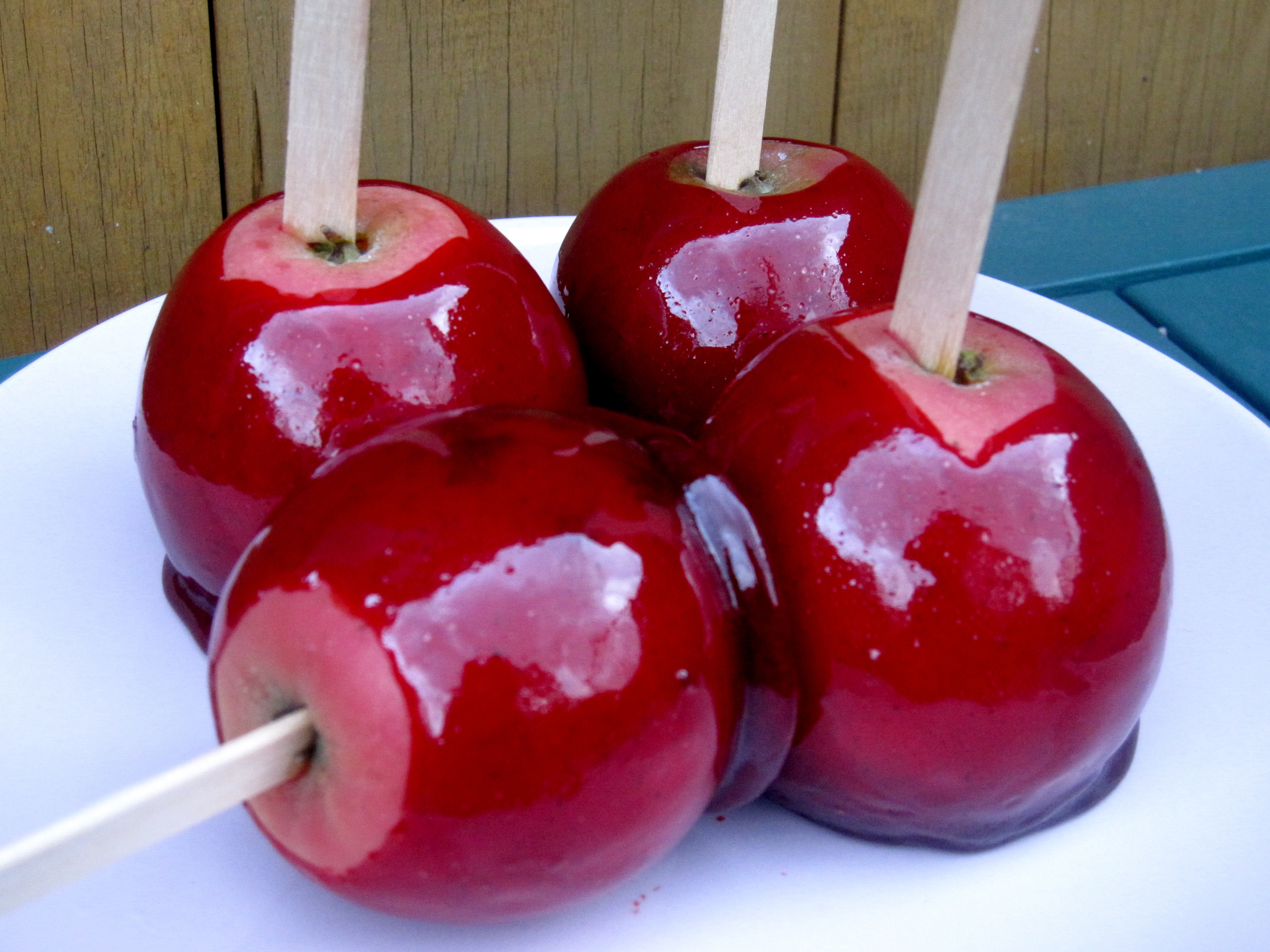
Salted Vanilla Toffee Apples

Halloween is a big deal in Ireland. We don’t celebrate Guy Fawkes’ Night (for obvious reasons in Northern Ireland) but the Irish have been holding a celebration around this time since Celtic times when Samhain was the equivalent of New Year. The date merged with the Christian All Souls Day and All Hallows’ Eve to become Halloween. Traditionally the time when the link between the world of the living and the dead was closest, it is a time of supernatural feeling and rememberance of those passed on. Irish and Scottish emigrants to America took the traditional Halloween customs with them and those have been exported back across the Atlantic to the less spooky-minded folk of England in recent times.

As kids growing up in Belfast, Halloween was a big deal. Half term always fell around this time and we were off school to celebrate with a variety of traditions from a turnip lantern and full on costumes, trick or treating, apple bobbing, indoor fireworks (anything more explosive was banned) and a rich array of seasonal foods. Our mum made her legendary apple dumpling most years, steamed in a cloth, complete with silver coins for luck and it was also the time of year for barmbrack. But we also got in another one of our five a day with a toffee apple or two.

Wrapped in cellophane, these twinkled and crinkled in the run up to the big night and produced a fantastic crunch when we were finally allowed them. Sharp shattering toffee, softened but crunchy apple and a burst of tangy juice, these got eaten faster than any other apple in the year. These are the taste of childhood to me and I haven’t eaten one for years. Could I make them a touch more adult while keeping the memories?

One of my favourite things I’ve made all year was the Salted Caramel Butter Ice-Cream and thinking back on it inspired me to add a salted twist to toffee apples. It was the perfect time to use the Halen Môn Vanilla Sea Salt I’ve been hoarding for a while and make them salt sweet perfection. I got some lolly sticks off Ebay and stocked up on English apples at Brixton Farmers’ Market. I was ready to heat sugar to scary temperatures…

First up, scald your apples with just boiled water to take off any waxy coating they might have. Dry them completely and push the sticks into them firmly. Line a baking tray with greaseproof paper and heat in a small pan:

225g golden granulated sugar
about a heaped tablespoon golden syrup
1 tsp vinegar (I used cider)
1 tsp sea salt
50ml water

Melt everything, bring to the boil and then get it all to the hard crack stage or approximately 150C. A sugar thermometer is a godsend here to make sure you don’t go over. Take the pan off the heat directly at this point and add in some red food colouring to get that proper candy apple red. I used a teaspoon of powdered colouring and I’d hazard a guess at the same of liquid. Natural isn’t the look we’re going for.

Keep the toffee molten and very liquid, putting back on a low or residual heat if needs be. Tilt the pan to one side to get the toffee as deep as possible and roll your apple in it, coating as high up as you can. Allow the excess the drip off into the pan and then set on the lined tray. Repeat until you run out of toffee. I got 6 small apples out of this, but probably could have done 8. Dollop any leftovers onto a tray to set like toffee and cover with chocolate or make spun sugar baskets or add a dash of bicarb for a cinder toffee-esque treat.

The toffee will set almost instantly on the apples and on the pan. Fill it with water and bring to the boil to save hours of soaking and scrubbing. Admire your handiwork and feel smug that you have not burnt yourself or the sugar. Then get stuck into a toffee apple as soon as possible.

They tasted exactly as I wanted. The flavour and feel of childhood but with a tiny tinge of adulthood from the salt. There was just a hint of vanilla, almost like a waft, rather than a flavour. You could add essence if you wanted a more defined taste. I scarfed mine in the same record speed as I used to, revelling in the soft apple and the shimmering crunchy toffee. I wrapped the remaining ones in cellophane and hoped fervently that no one called to trick or treat so I could eat the lot…

A tail of pork pie…

After our all too brief dalliance with summer, autumn is upon us once more. Some might moan, but it’s my favourite time of the year. Crisp sunny days, scuffly crunchy leaves, purple tinged sunsets, the smell of bonfires and an excuse to indulge in a few more carbs. Have I converted you yet?

I decided to take advantage of this first really cold snap this week with a pie for dinner. What could be better than lots of seasonal ingredients topped with flaky puff pastry? What about accessorising the whole thing with a boar’s tail and beating Fergus Henderson at his own game? Not so much cow pie as pig tail pie…

I got the tail at the stall* in Brixton Farmers’ Market for the bargain price of a pound and couldn’t resist its curly charms, especially since there’s a fair bit of meat on one. You can also get them smoked at the Colombian butcher in Brixton Village.

To fill my pie, I used diced pork leg as I couldn’t stretch to wild boar this time. For a seasonal sensation, I added shallot, leek and some seasonal mushrooms, all sweated off in butter and coated in flour and bathed in Henney’s Herefordshire cider before simmering it all for 40 minutes on a low heat. When it thickened up, I added fresh tarragon, a pinch of mace and a good grind of black pepper. Like all the best pie fillings, it can be prepped in advance and then given a lovely lid when needed.

My lovely lid came courtesy of Jus-Rol. I wanted to do puff pastry and with butter the price it is, I did not feel inclined to experiment. Instead I failed to read the instructions for use properly and ended up having to defrost one sheet in the microwave. This was a bad idea. It ended up brittle and with greasy patches. I had to use the other sheet instead and allow it to come to room temperature naturally. Feeling deflated that I could mess up bought pastry, I turned attention to the tail.

I wanted it to partly inside the pie to cook the meat and allow the bone to infuse the gravy. This is surprisingly difficult. Pig’s tails are incredibly flexible and not especially easy to position. I put the pastry lid on the pie and slit it open to wedge the tail inside. This took longer than I thought and led to an interesting moment where I stopped while holding a floppy tail in one hand and wondered how exactly my life turned out this way…

Eventually with some ingenious overlaid pastry stars holding the tail in place, the pie went in the oven at 220C for about 40 minutes. I peered in after 30 or so and marvelled at how much it really had puffed up. It also smelled tremendous. I boiled some spuds and did some peas to go on the side and rushed to get at it.

The tail had crisped up at the very very end and the meat inside was nicely cooked. It might be better to skin it first as there was quite a lot of slightly flabby skin to wade through, but it was surprisingly tasty to gnaw on and it had added a meaty kick to the pie filling. Pork leg wouldn’t be my first choice of cut usually, but it softened up nicely and was delicious. The cider and tarragon worked well and the pastry was great. I had two helpings straightaway (and forgot the peas both times!)

If you can get hold of a tail or two, try not to be put off by the cute factor. It’s a tasty thing perfect for a bit of stock or to make people’s eyes open wide when you serve this pie. I just wish I’d gone the whole hog and bought a snout in the market too…

*I’m really sorry, but I cannot remember the name of the boar people at all, but they are there every week and super helpful and very friendly.

Finished potato apple bread

Potato Apple Bread

Finished potato apple bread

I grew up on apples and even though more fashionable and fancy fruits have come along since then, none of them have replaced the apple as well, the apple of my eye. Our grandmother lived near County Armagh – with its world famous apple trees – and had an orchard of her own on the farm that produced beautiful Bramleys in abundance. A visit to her’s wasn’t complete without a slice of apple pie.

Another treat I remember when I used to stay with her in the school holidays was the Ulster classic of potato apple bread. Sheets of stodgy but delicious potato bread, filled with tart apple and fried til golden brown on the outside. It is a total treat at anytime, but particularly tastes of autumn when you could pick the apples freshly. It also used to pop up as a seasonal treat in the bakeries of Belfast as the leaves turned and the school year started.

I always thought it was a fiendishly tricky thing to make until I whipped up a batch of potato bread for the first time a few years ago and realised it’s as easy as falling off a log. It followed that the apple version couldn’t be much trickier. And after getting my hands on some Lambeth apples courtesy of Incredible Edible Lambeth and the London Orchard Project at the new monthly Make It Grow It Sell It market, the time had come to try it out.

Potato bread is traditionally made with leftover mashed potatoes, but if you manage to have leftover mash in your house then you’re a better person than I. Instead I peeled about 300g of Maris Pipers, boiled until tender, drained and dried well and added a knob of salted butter before mashing well. Don’t add milk or you’ll end up with something akin to babyfood with this recipe. The salted butter stops the potato being bland so don’t skip it.

Then add around 3/4 cup or 75 grammes of plain flour into the mashed potato and form a dough. You may need more flour ,depending on the wetness of your spuds. Mix well to form a stiff but malleable dough. Knead for a few minutes to firm it up and try to keep it moving all the time or it sticks to your surface and forms a gluey mess.

While you are making the potato dough, put your apples on to stew down. I like them fairly chunky so don’t chop too finely and don’t add more than a tablespoon of water to them while they cook. I don’t add any sugar as I prefer the tart tanginess of apple than the sweet applesauce vibe. You could add cinnamon or cloves if you like too, but I didn’t bother.

Take about a fist-sized lump of the potato dough and roll out on some greaseproof paper until it’s as thin as you can without it being difficult to work with or likely to rip. Then place on a plate and cover with your stewed apple, leaving a good lip round the edge. But don’t skimp on filling! Then roll out another fist sized lump of dough on the greaseproof paper and place on top of the appley bit and seal well with your fingers making an enclosed sandwich.

Slide into a well-heated oiled frying pan. Give it about 4 minutes either side, but keep an eye so it doesn’t burn. Potato bread seems to stay raw for ages and then cook completely before you’ve even realised. Once golden and gorgeous on either side, I like to eat it as quickly as the insanely-hot apple filling will allow without hurting yourself.

It works really really well. The slightly salted potato brings out the sweet tang of the apples and it makes a perfect breakfast if you fancy a change from standard tattie bread. You can also serve it cooled down for elevenses or an afternoon snack with a big mug of strong tea. There just isn’t a time it’s not utterly delicious. Just make more than you expected: everyone wants seconds of this one!

Roll up for rollmops!

You can tell I’m half Scottish. I love oats, raspberries are my favourite fruit and I never say no to haggis. But the real clincher is how much I heart herring. I adore rolled them in the aforementioned oats and fried or grilled with anchovy and herb butter, but nothing tops the rollmop. Shiny silver herring soused with onion, spices and cucumber in a handy pot? To me it’s a treat of such delight, I’d be more likely to pick up some pickled fish than chocolate if I wanted to cheer myself up…

So when I found myself with a spare kilner jar recently and espied some beautiful herring on the counter at Dagon’s in Brixton Village (just by Honest Burgers for those wondering) I knew the time had come to take the obsession up a notch and make my own rollmops. I got the fishmongers to fillet the fish and practically skipped home to get a-pickling.

I used this Hugh Fearnley Whittingstall recipe as a guide. I soaked the herring in brine for a few hours, which plumps them up beautifully but does produce a fairly unpleasant odour. So open a window if you can. I then sterilised a clean kilner jar in the oven, while I heated vinegar, allspice, peppercorns, finely sliced onion and dill in a pan. The truly revolting smell of warm vinegar will get rid of any fishiness in the house and made me wonder if I shouldn’t just go back to plastic tubs of soused herring in future…

But the satisfaction of rolling the fillets up, filling the jar with vinegar and herbs and spices and sealing it firmly with a snap won out and by the time the fish went into the fridge, I wasn’t sure if I can manage to wait three days for them to be ready. In the end, I got sidetracked by life and didn’t get to them for a week and they were very much worth the extra wait.

Plump as anything, soft as butter and well flavoured, I cut them with the side of the fork, watching them flake apart perfectly and served them on some lightly buttered sourdough from Wild Caper. They were one of those simple lunches that is in actually fact so good you can hardly believe how lucky you are to be eating it at home. Delicately spiced and super flavoursome, there was no contest between these and the usual shop bought.

I’d definitely use the splash of cider in with the vinegar next time as there was just a bit too much rawness to the vinegar for my liking and it clashed slightly with the soft sweet fish. (Do not go all health conscious and skip the sugar in the recipe. You’ll blow your head off otherwise.) Some cucumber would knock this out of the the park mixed in with the onion and I’ll use some homegrown tarragon instead of the dill, because I intend keeping a jar of these beauties in the fridge all the time now. A few minutes effort makes this a simple treat I can’t get enough of, especially served with some potato salad for an ultimate Northern European feast!