A Classic in Coke…

As a family, we don’t have many Christmas traditions (unless supping a lot of cava counts as a tradition?) but one thing has come to symbolise Christmas more than any other foodstuff and that’s a ham. More precisely, a ham cooked in Coca Cola as suggested by Nigella Lawson in her classic cookbook How to Eat.

Cooking with Coke has become quite fashionable over the past few years and the world seems to split into two camps about it, with those who are highly sceptical about it and those, like me, who embrace it wholeheartedly and seek any opportunity to add Atlanta’s finest to a dish from cake to Christmas ham. So I would be most disappointed not to get off the plane in Belfast to discover a perfect pink ham in the fridge waiting to be transformed into a smoky spicy sweet sensation in time for Christmas Eve supper.

Not only is the ham beyond tender and moist after its soft drink with vegetable extracts bath, it is also the easiest thing in the world to make. All you need is one plump piece of pork, about 2 litres of Coke and an onion or two studded with cloves, a large pot and a full stomach so as not to be driven wild as the ham infuses and cooks over the next 2 or 3 hours. Simply cover the ham in the liquid, add your onion and bring to the boil. Turn down to a simmer, place a lid on the pan and leave to just cook slowly at roughly an hour per kilo. I usually go off and finish wrapping my presents feeling utterly festive and increasingly hungry…

Normally we simply take the ham out to cool before serving in a selection of sandwiches, suppers and side dishes, omitting the crust Nigella mentions as it’s a bit too mustardy for our liking, but this year, we decided not to get stuck in our ways and try something new, glazing the top of the ham with a mix of black treacle, mustard and homemade quince jelly before blasting it in the oven to get a dark sticky crust to add another dimension to the barbecue influenced meat.

The glaze takes no time at all to make up, as I simply put some Meaux mustard, treacle and quince jelly in a pan to melt down, adding a splash of soy sauce and some tamarind paste and allowing it to all meld together before brushing it over the snow white fat on top of the pink porker and popping it in the oven for 15 minutes at 190 degrees. I then took it out, reglazed it and put in the oven again at 220 degrees for another 10 minutes.

After resting it for 20 minutes, it made the most amazing sandwich. Malted bread spread with mustard, the remains of the glaze and spiked with home made sweet pickles, it was soft and juicy with the right amount of salt and a delicious spiced flavour with a sticky sweet yet umami topping. The minute the sandwich was finished, we were reaching for another slice of the ham, unable to get enough of it. This is one tradition that gets better with every passing year!

Sprout and about!

Brussel sprouts appear to be the festive equivalent of Marmite…terribly British, extremely versatile and loathed and loved in equal measure. For most people it just wouldn’t be Christmas dinner without them, but I’ve rarely met anyone who seems utterly devoted to their green goodness, but I have a recipe that might change all that! Adorn your plate with the incredibly easy and utterly heavenly roasted brussel sprout this year!

Tossed in hot oil or goose fat for a more indulgent feeling, these much maligned veg become green goddesses. A crisp outside yields to a tender inner, packed with flavour and filled with goodness. The intense heat really brings out their flavour with no danger of them being soggy or with that bitter brassica bite.

It’s almost insulting to post a recipe for you as these are simply the easiest thing around. Peel off the outer leaves, season well with just black pepper and toss in hot oil or fat and roast whole in the oven for around 30 minutes at 180° until crisp and delicious. Sprinkle well with sea salt and serve immediately.

You can make these even more delicious by adding bacon or chorizo or roasted chestnuts or my particular favourite, a sprinkling of crumbled blue cheese in the serving dish. Just be sure to make more than you think you need because even the most ambivalent sprout eater will want seconds of these little stunners!

Pot luck with Lancashire Hotpot

Autumn’s definitely the time to turn up the heat, run down the blinds, and take solace in slow-cooked, slow-release, one-pot wonders. As I felt the first fingers of frost tapping on the windows in October I decided it was definitely time to blow the dust off my slow-cooker, which doesn’t get much love during the summer months.

One morning when I was at Stansfield’s the butcher, I asked about the availability of mutton. As chance would have it, some was due in later that day: Paul had serendipitously thought it was about that time for the older, more flavoursome meat to make a reappearance as it was drawing in a bit out there. Now, I love a good bit of mutton. Snobs may turn their noses up at an auld bit of sheep over a young lamb, but for certain dishes I’m a firm believer that the grain and richness of an older beast is much more appropriate. The dish I had in mind was a good old Lancashire Hotpot, a perfect home for an older sheep to end its day in…

It’s hard to find a definitive recipe for Lancashire Hotpot: such a family favourite means there are a thousand variations and versions, particular to a certain place. I’ve had delicately-balanced miniature portions in restaurants and great splodges of home-served goodness, and the unifying elements are normally lamb/mutton, carrots and spuds. After that it seems to be open season for a whole range of additional elements.

A few years ago I saw the Hairy Bikers making hotpot in Bury Market and they suggested adding a layer of the local black budding to give a layer of unctuous goodness at the bottom of the pot.I tried this the first time I had a go at making this dish, and never looked back. Black pudding makes a great gravy base at the best of times (as used here) and it adds an extra touch of the local speciality to a hotpot.

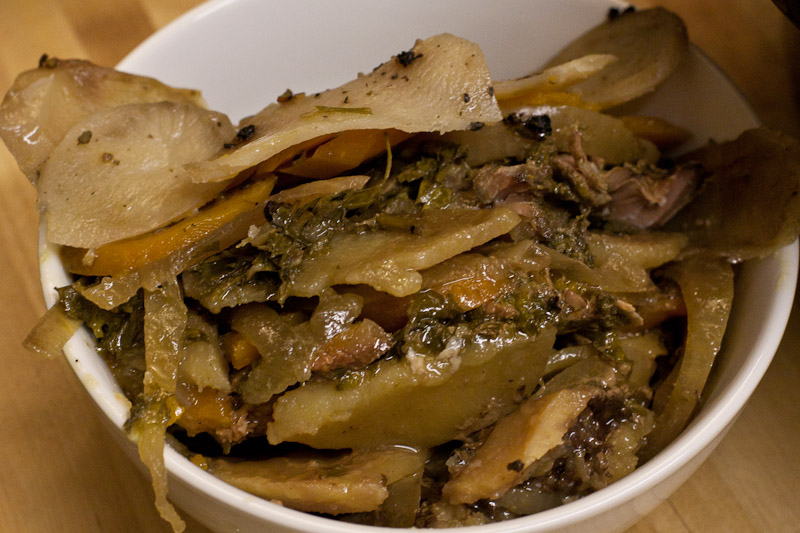
I started by slicing a load of spuds and carrots, then laying down a layer of thinly-sliced spuds on top of a well-greased pot. Season well, and add the next layer… in this case a sliced link of Ireland’s black pud. Then another layer of spuds (I love that dauphinoise-esque experience of lots of layers of well-buttered spuds) and pieces of mutton, cut fairly small and mixed with some fresh parsley. Then that was covered by sliced carrots, then potatoes, then mutton and… well, you get the picture. Hardly scientific in terms of quantities, but delightfully fun to arrange.

Last time I made this I added a proper stock, but reckoned in the slow cooker I’d be able to rely on the liquid in the veg, so just poured some water down the edges, mixed with Worcester sauce. Some older recipes suggest adding oysters to the mix: I added a splash or three of Anchovy Sauce for a similar umami kick. The whole thing was then finished off with slivers of butter on the top, before the lid went on for 8 hours of overnight slow-cooking.

Proper Lancashire friends have told me the origin of the dish is that was cooked slowly all day in oven, ready for the working folk to get home. I’m a fan of all things cooked for aeons so the slow-cooker (crockpot) seemed a likely option. What I’d not bet on was how appealing it is to wake up to the heavenly smell of a hotpot: It took an almost superhuman effort not to wolf down a portion for breakfast, and instead save it for my intended evening meal.

Fast forward through the day and I served this up to a friend for an informal evening meal. Always good to see us attacking the pot for seconds with such gusto: hopefully this proves the worth of such a classic, simple, traditional British dish. Preferably the slower cooked, the better!

Lebkuchen plate

Lebkuchen

Christmas is one of the times of the year I like best. Mainly because it gives me the chance to buy presents for other people, drink alcohol in the middle of the day everyday and go to parties on a fairly regular basis. However one requires fortification for all these activities along with something to bring to all those parties, so to prevent you having to worry a minute longer about how to keep your energy up and impress the neighbours, I bring you a recipe for the easiest Christmas cookie around, German spiced lebkuchen

I adore these soft spiced biscuits so much that I normally raid Lidl this time and year and buy about eight boxes, eating them up until Easter when I get sidetracked again by hot cross buns. So imagine my glee when I discovered a recipe for them that is so easy, so quick and so simple, I could knock up a batch in the time it took for the yeast to get ready for my doughnuts

Oven on, I melted the butter and the remains of a bottle of honey on the stove, topping it up to the right amount with the syrup I bought for the pumpkin pie. I measured out my ingredients, delighted that I finally had a reason to use the random bag of groung almonds I’ve had knocking around in the cupboard for about a year, and added the spices, popping a pinch of mace in for good luck too. A quick stir with the spatula to combine the wet and dry and ingredients and I had a lovely soft cookie dough in under 5 minutes.

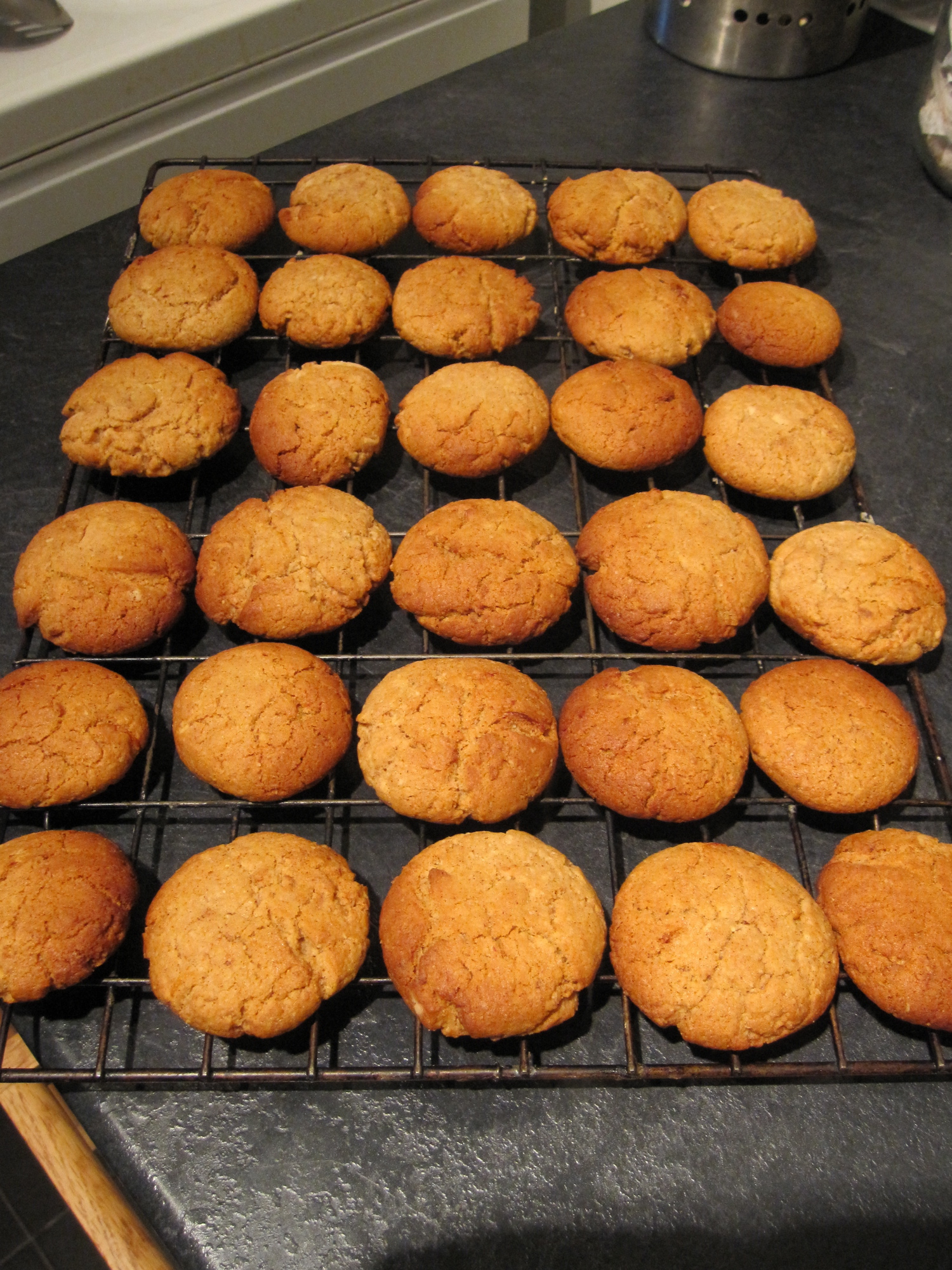
I plucked pieces off and squashed the balls of dough to make disc shapes on a greased and paper tray and baked about half the cookies in a batch since I didn’t have enough trays for all them at once. I noticed the dough dried out a bit in between, so I’d recommend wrapping it in a bit of clingfilm between batches. You can also form the discs, put paper between them and freeze them so you always can always offer fresh cookies even if people call unexpectedly. I got about 30 cookies from this recipe.

The cookies took about 12 minutes to cook and colour and I don’t find my oven runs hot, so check after 10 minutes to make sure these don’t burn. Add a moment or two more if you’re baking them from frozen. Transfer them to a wire rack and cool them for about 15 minutes if you are icing them. I tried one (just for research purposes you understand!) without the the icing and they were lovely as they were, but look a little bit insipid when left plain.

I mixed up the icing as instructed, using only one tablespoon of water and if I’m honest, I think it was a bit runny and probably didn’t really need the water at all. I iced them using a small spatula and they dripped a fair bit as the icing set, so when I do these again, I’ll skip the water and just use egg white and icing sugar.

The icing set quickly, making this a fairly simple step as you just don’t want to complicate such a simple recipe. I sneaked another one once they had set and was very pleased with how they turned out. Soft and melting (despite the lack of fat) they were warm with ginger and left a tingle thanks to the black pepper and mace that isn’t too savoury or grown up with the hint of sweetness of the icing. I imagine these being just as popular with the kids as with the adults.

These are a fantastic biscuit. Quick and easy to make, great fun to do with the kids, keep well and are much more nuanced with festive spice than shopbought versions. I didn’t expect to be considering another contender for biscuit of the year so soon after the graham crackers, but these are definitely in the running! Maybe I’ll have a seasonal category just for these?

Christmas Chestnut Doughnuts

I was invited to a festive soiree this weekend to get some Christmas cards prepared, drink mulled wine and generally get in the seasonal mood. I wanted to bring something Christmassy to this get together, but I couldn’t think what since I loathe mince pies with a passion and find the December obsession with dried fruit in general a bit hard to handle. Walking home from a shopping trip where I had picked up a can of purée de marron because it was such a nice looking tin, I saw a small child eating a doughnut and had a flash of inspiration. What about festive doughnuts stuffed with chestnut puree and sprinkled with nutmeg and cinnamon? Having never met someone who doesn’t like doughnuts, I decided with was a marvellous idea, because even if it went wrong, I would finally find out after 25 odd years of wondering, how they get the filling into a doughnut…

Read more