
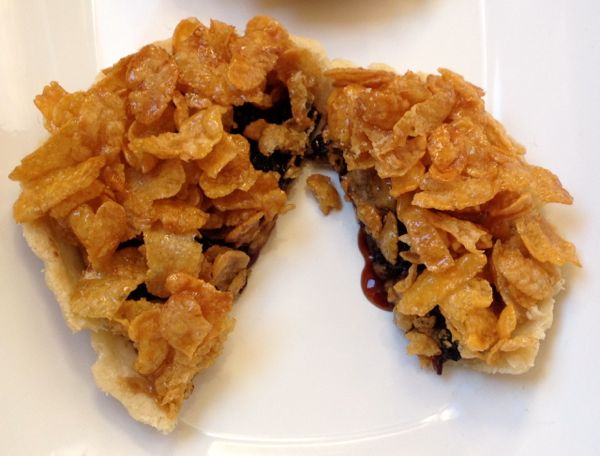
Cornflake Tart


cornflak c-upMister North and I must be very rare specimens indeed because we went to a primary school that served excellent school dinners. The only thing I remember hating was the cabbage which they served minced and overcooked. Otherwise, I have very fond memories of eating lunch at school. There were proper hand cut twice cooked chips that I still dream about, Irish stew and of course, proper puddings with custard to match.

Most people liked the chocolate sponge and custard best, but my favourite was the cornflake pudding. A slab of crumbly pastry topped with red jam and sweet crunchy cornflakes on top, served with simple yellow custard. I last ate it when I was no more than 11 years old and I’ve spent years trying to track a recipe for it down. I’ve asked many people if they remembered it and in between triggering memories of Spam fritters, people have either rhapsodised about it or looked blank.

I was starting to think it was a Northern Irish thing when eventually I came across something about on Mumsnet and realised it was actually very simple to make and just the thing to use up some spare pastry. But would it taste the same or was I about to destroy a treasured childhood memory like the time I rewatched Button Moon and realised it was just an actual button?

Cornflake Tarts (makes 4 individual sized tarts)

For the pastry:

  • 175g plain flour
  • 45g cold cubed butter
  • 40g lard
  • 2-3 tablespoons cold water

For the topping:

  • 150g raspberry jam
  • 30g unsalted butter
  • 25g sugar
  • 1 tablespoon golden syrup
  • 75g cornflakes

Start by making your pastry. I like the incredible shortness you get using half lard and half butter (plus it’s much cheaper too) but if you prefer, you can use all butter.

Put the flour in a large bowl and rub the lard and butter through it. I think I’ve mentioned before that my pastry always shrinks massively in the tin and some plaintive wailing about it to a friend, established that I was rubbing my fat into the flour too much and over working the pastry. So don’t be afraid to leave some lumps of fat in this instead of trying to get only tiny crumbs.

Add two tablespoons of ice cold water (I’ve also been using too much water because overworking the pastry had made it dry) and bring it all together neatly in a ball without too much fiddling and poking. Chill it in the fridge for 30 minutes.

When you are ready, roll it out and line the tart tins. I had 4 small ones but this will also do a 23cm tart tin nicely. Don’t trim all the pastry off the edges, but leave some overhang and then chill again for 15-20 minutes while the oven heats up to 180ºC.

Line the pastry with greaseproof paper and fill it with rice or dried beans and blind bake for 12 minutes. In the meantime, heat together the butter, sugar and golden syrup in a saucepan until it is all melted and runny. Put the cornflakes in a large bowl and pour the butter and syrup over them. Gently stir it through until they are all coated. Set aside.

Now put the jam into the same saucepan and warm it through too. I used some homemade stuff, but a decent shop bought one will do. Try not to use indeterminate ‘red jam’ like the school dinner version did. It’s better with a bit of flavour and texture.

Take the blind baked tarts out of the oven. Remove the baking beans or rice and prick the base of the pastry several times with a fork. Trim the edges of the tarts with a sharp knife and then spread the warmed jam over all the base of the tarts. Sprinkle the cornflake mixture over the top of the jam, making sure you don’t skimp.

Bake the tarts for another 8 minutes and then allow to cool for at least 10 minutes to give the cornflakes a proper crunch. You’ll probably want to serve this with a generous pouring of custard. I can’t help you here as custard is my nemesis and my most recent attempt at heating some fresh stuff from Sainsbury’s ended with me curdling it!

I ate my tarts just as they were and they tasted exactly like I remember, but actually slightly better for not being made with marge and cheap jam or washed down with tepid water in a metal beaker! I am now convinced Proust was really on about cornflake tart rather than madeleines…

What about you? Do you have a school dinner memory that’s surprisingly good or was it all crimes against food?
Panada


IMG_3944Christmas week tends to be quite hectic. Lots of socialising, lots of eating, maybe even a wee glass or two of something to lubricate it all with. By the gap between Boxing Day and New Year’s Eve I am often craving simple comforting food to balance out my yearly festival of meat and red wine.

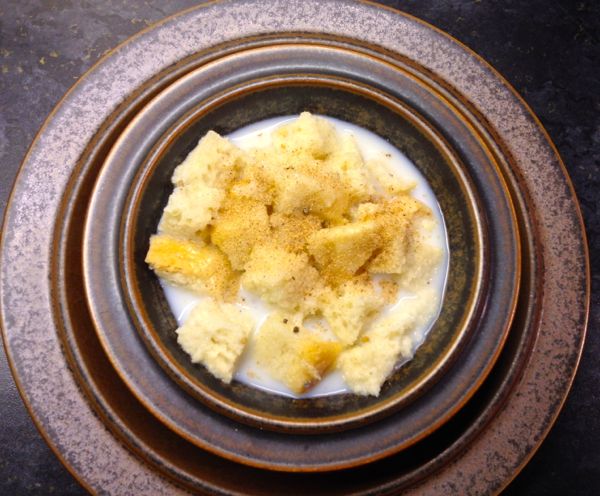
Usually I go for boiled rice, but this year a conversation with family friends reminded me of the childhood dish of panada. A steaming dish of stale bread soaked in boiling water and covered in hot milk, before being sprinkled with sugar, it was designed to warm you up and fill you up. I associate it with my mum’s side of the family and she used to make it for her father when he came in from the farm in the evenings, hungry after dinner.

I thought it was an entirely Northern Irish dish and then a quick Google to see how to spell panada told me it was the very opposite. This dish is global. Panada comes from the Spanish word for a bread soup and I have no idea why the name would stick in Norn Iron when the dish is known through England as bread and milk. This was constantly mentioned in the Enid Blyton books I adored as a child, but I assumed it was a slice of loaf and a beaker of milk like a light snack, but the internet led me to see that Nigella Lawson has a recipe for it in Feast and a whole new world of comfort food was opened up to me.

This Chowhound thread shows that the dish is universal throughout Europe and North America in various forms, even forming the basis of the dish milk toast and it seemed even more apt that I make it to soothe the soul after a eating spree. I may well revisit the cornbread version at some point as I think it would suit the soft texture beautifully. I made mine traditional apart from the twist of a sprinkle of cardamom that lifted it from bland to fortifying. Whatever you call it, don’t miss the chance to make it as a simple supper or a warming breakfast instead of porridge.

Panada (serves 1)

  • 1 thick slice of white bread, cubed
  • 180ml boiling water
  • 50ml milk
  • 1 pod green cardamom, seeds bruised
  • 1 teaspoon vanilla extract (optional)
  • 3 teaspoons caster sugar

The most important thing about this dish is to use decent bread. Don’t use the kind of white sliced Kingsmill or Hovis make or it will turn into paste. Even the kind of unsliced white batch you get in supermarket bakery counters is much better, but if you have some sourdough, that would be ideal. I used the leftover heel of the slow cooker bread I made.

Cube the bread into 1/2 inch pieces and in a heatproof bowl, pour the boiling water over it. Allow to sit and absorb the water for about 2-3 minutes. Don’t stir or agitate it, just allow it to soak up the water and plump up gently.

While the bread is soaking, warm the milk, vanilla and cardamom seeds together until the milk is just about to bowl. Remove from the heat. Check the bread and drain off any excess water using a potato masher. Pour the piping hot milk over the bread and scatter with the sugar and nutmeg. Serve immediately as the sugar remains slightly crunchy and enjoy the taste and texture of childhood again. Although I suspect it make an excellent hangover cure if you’ve been being very adult….


Festive Flies’ Graveyards


Screenshot 2013-12-27 21.58.46

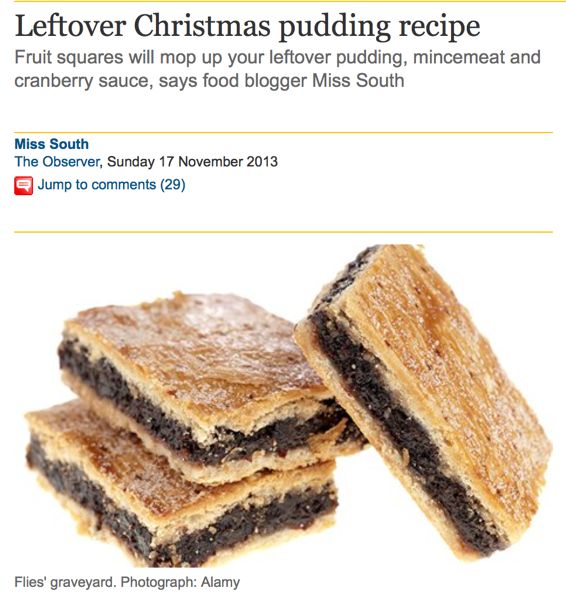
Being organised enough to make my own Christmas pudding this year is fantastic because it’s given me the opportunity to make these fabulous festive flies’ graveyards (or fruit squares for the more squeamish) with the leftovers.

These buttery pastry squares packed with dried fruit were a must have at every tea time get together when I was a child. Both my granny and my Aunt Kathleen made them beautifully and I felt I had a lot to live up to trying to get mine right, so I’ve kept it simple here for this Observer Food Monthly piece and used my granny’s recipe to be sure.

These are fantastic with some leftover cranberry sauce dolloped in and make a great alternative to mince pies when you are a month into the season. Enjoy with custard or brandy butter for more of a dessert feel. I’m off to whip up another batch for the family now I’m home.

You can find the full recipe here. What other leftovers are you using up this week?

Lavender and Vanilla Popcorn

popcornI’m on the home straight of recipe testing for Recipes from Brixton Village as I finish up the last 20 or so recipes while completing the manuscript. I’m loving learning about new ingredients and challenging myself so that you will all have a few surprises in store when you all see the book. But it does mean that when I’m cooking for myself I want simple flavours and simple dishes.

I also want things I can eat with the minimum of fuss and thought, preferably as I write and edit so I can believe in the myth of multi tasking. Popcorn has been fitting the bill perfectly but my usual scattering of sweet and salty needed a shake up. I wanted something sweet, but sophisticated and definitely not sickly. Read more

Malt Loaf Steamed Pudding

malt puddingI think regular readers know my feelings on malt. I go doollally for its dark and sticky charms whether it’s moist cakes or anything involving Veda bread. I like my beers black and I can even be swayed by the lighter malty treats like Horlicks. But one thing I’ve found over years of sampling, is that malt tastes even better when you warm it up slightly.

I got hold of some of that dark malt extract you see in health foods shops where it is sold as a virtuous alternative to granulated sugar. It made me wonder if I could take the warmth of toasted Veda or Soreen and basically serve it with custard instead of the usual slathering of salted butter? I thought I’d try and create dark dense malted steamed sponge pudding dotted with plump juicy dried fruit. I figured you couldn’t go wrong with such a combo.

And I was right. You couldn’t. In fact I went so right I created a sponge of such lightness it is even easier to eat than a whole loaf of Soreen to yourself. But I did discover that it is better to make this pudding and allow it to mellow in a tin for up to 5 days and then steam it again for just long enough to warm it through to get it to the right syrupy texture to go with custard. Apologies for making you wait. I promise it is well worth it. Read more