Tag Archive for: baking

Hello deer… Venison Pasty

Hurray! It’s game season again… a chance to cook a broader range of foodstuffs. As the range of seasonal veg decreases, the blackboard at my local butcher’s is filling up with a wonderful selection of goodies. Recently venison and grouse caught my eye, so I snapped some up at Stansfields when I saw it.

I bought a few hundred grams of diced venison without a clear idea of what I wanted to make with it, but I started to entertain a growing desire to make a pasty. I love a well-made pasty, but where I live is pie country so it’s relatively rare to find a genuine, glorious example of the crust-encased pocket of goodness. I’ve made game pie before, but not pasties, so research and experimentation was called for…

Diligent homework threw up a lot of passionate and divisive opinion about pasties in general, and the Cornish pasty in particular. It was clear that under a strict interpretation of the rules this could not be seen as a true Cornish pasty: that requires beef, swede (turnip as we’d call it back home), and if you’re particularly strict, it needs to be made in Cornwall. It was becoming obvious I couldn’t label this as anything but a venison pasty. At least I was in good company: Shakespeare mentions venison pasties in the Merry Wives of Windsor.

So this was a posh imposter (with a heritage, admittedly), with a spread of ingredients which no traditionalist would entertain, but it sounded mouthwateringly good with the venison, and butternut squash as a substitute for turnip. In homage to ‘proper’ pasty making I followed the instructions on the Cornish Pasty Association website, and discounted my original idea of adding a shiitake mushroom and butter reduction over the top of the mix, as I’d read ‘proper’ pasties don’t have any pre-cooked ingredients in them.

As I was in the middle of making the shortcrust pastry for this I remember think I should’ve left baking to Miss South… it’s definitely her forté. I gave it a good go, but only after I’d mixed up the flour, egg (I used one double yolker duck egg), butter, baking soda and salt did I realise I’d have to hand-mix and rub the mix… I only have a hand-held food processor and it was starting to protest strongly at working the dough as vigourously as it needed. Still, I managed to manually get the pastry mix looking biscuity, as it was meant to, and then rolled it into a ball and bunged it into the fridge for an hour or so in some clingfilm to rise up.

To make 3 (rather large and overfilled) pasties I used around 330g venison, 200g of shallots and red onions in roughly equal measure, 300g of butternut squash, and slightly less potato. Ah well, I’ve never been a stickler for measurements anyway. I diced everything fairly small, mixed it all up with the seasoning, and a splash of oil so the flavours would mingle gently. Miss South suggested I supplement the normal seasoning with a pinch of mace: something which proved to be an inspired choice in adding warmth and old-fashioned flavour, redolent of big country house kitchens. It was only after putting the finished pasties in the oven I realised I should really’ve used up the flat-leaf parsley I’d meant to put in. Oh well…

I did over-fill the pasties (perhaps I should’ve made larger pastry circles, or doled 4 fillings out rather than the 3 I managed) so this made the distended pockets rather hard to seal (using a little egg to moisten the edges) and crimp (perhaps crimping should be left to the experts… the CPA, or The Mighty Boosh). I was amused that when I checked various references online crimping was described as a technique one couldn’t easily explain. My induction into this ancient art was somewhat therefore ignominious; and did allow more leakage than it probably should’ve, as the photos testify. I then baked the three of them at a medium heated oven for around 40 minutes, slowly being driven to distraction by the aroma filling the kitchen.

As mentioned my baking skills are not as fully honed as my sister, so in hindsight I wish I’d placed these on a better-greased tray, or even onto a wire shelf to cook. This did absolutely nothing to impact on the flavour though… these pasties were rich, warming and absolutely delicious. Autumnal heaven! Now I’ve lost my pasty cherry I’m going to make more of these with a variety of fillings… perfect for the lunchbox as a self-contained delight.

Supermalt Cupcakes

A recent blog post by friend Yoruba Girl Dancing about white people’s lack of love for Supermalt got me thinking. I love the taste of malt thanks to growing up with Veda bread and working in a diner as a teenager making malted milkshakes, so I don’t really mind Supermalt, although I do find it teeth-itchingly sweet. But having never sampled it until I moved to Brixton, it’s not really part of my repetoire and I would never buy it to quench my thirst. What about cooking with it instead?

I made these Coca-Cola cupcakes for my friend G’s birthday party a few weeks ago and was impressed by how easy they were to make and how incredibly moist and brownie-esque they were. I could see no reason why they wouldn’t work with Supermalt instead of Coke. Hopefully they’d be as moist as the Coca-Cola ones, but more like a cake crossed with Soreen…

The slight risk that they might just be disgusting meant I decided to make them over the weekend for a birthday party where I knew my friend C would be bringing some of her legendary lemon and blueberry cupcakes which would take the taste away if my baking experiment went awry!

The trickiest part of this recipe was finding a small enough amount of Supermalt. It tends to come in six packs and I had to go to several shops before I could get my hands on a single can of the stuff. Mission accomplished, I got cracking on the recipe. It is best to melt the butter, cocoa powder and Supermalt together first to allow it to cool slightly to minimise the chances of the egg curdling when you mix everything together. Out of interest, the amount of Supermalt (or Coke) required comes to about 2/3 of a normal can…

The Supermalt mixes takes about 5 minutes to melt and measuring out the rest of the ingredients does the same. Then you simply mix everything together, watching the batter going from thick and fudgy to soft and smooth by the time it is all mixed and combined. It’s one of the easiest cake recipes I know and it’s difficult to over-mix this batter so it’s a good one to do with kids. It’s also nice and thick for spooning into cases so great even if you’re a bit clumsy.

I used some new square cases from Ikea that are a cross between a bun and muffin case in size (and a rather fetching print to boot) and each one took two full dessertspoons of batter. Don’t overfill your cases with these cakes as they rise a fair bit and look better not overspilling the cases. Even with the slightly bigger cases, I got 18 cakes from this batter before popping them in the oven for about 25 minutes or until I remembered what was making the lovely baked smell in my flat…

While they were cooling, I turned my attention to making a frosting for the cakes. Last time I used the Coca-Cola buttercream suggested and found it to be incredibly sweet and a bit sickly even with a fizzy Cola Bottle for a touch of tanginess. This time I thought a cream cheese frosting would go down better. I combined two packs of full fat cream cheese with a splash of leftover Supermalt and two tablespoons of cocoa powder and found I had gone too much the other way and the frosting wasn’t sweet enough. In fact it had a bitter aftertaste that jarred somewhat. I abandoned the idea of adding more Supermalt and put a teaspoon of vanilla extract and about a tablespoon of icing sugar to sweeten it slightly and this time it was perfect. Light, creamy, slightly sharp and not at all cloying.

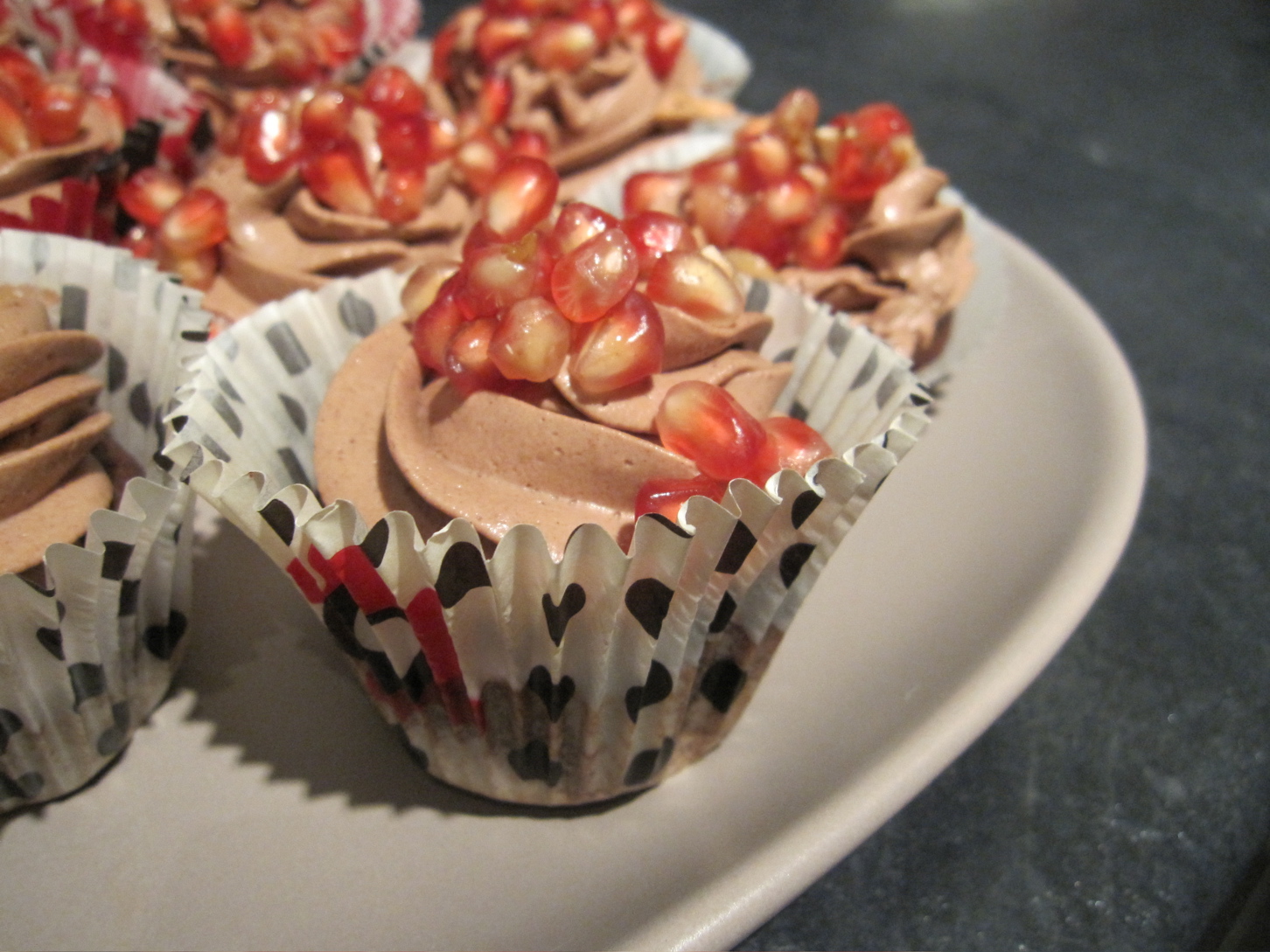
I left the cupcakes wrapped in a teatowel overnight and then my friend C very kindly frosted them for me the next day before I added a an extra blast of sharpness with some pomegranate seeds on top before serving them up to ravenous guests. And they went down a storm! I think they were much better with the Supermalt than the Coca Cola as they were less sweet and firmer and tasted more grown up with a bite of dark chocolate, but without losing the fudgy finish that sets these aside from the average chocolate cupcake.

If you manage to have any of these fabulous cupcakes left (I only had three) they also keep amazingly well wrapped in a teatowel to protect the frosting. They ultimately didn’t taste anything like Soreen cake, but were so good I’m glad I have a second spare can of Supermalt in the fridge to make these due to popular demand! Especially if I don’t have to go camping with them!

Marmalade Cake

I haven’t thought much about marmalade for years, despite a fondness for Paddington himself, but I was given some for Christmas last year and have been pondering what to do with it since I don’t like oranges. Inspired by Oliver Thring’s recent piece on this traditional preserve in The Guardian I decided to try baking with it in place of using lemon.

A marmalade loving little bird told me that Nigel Slater had the ultimate recipe for marmalade cake and thanks to the power of online archives, I soon had my little hands on it. It had a simple list of ingredients and was part of an article about easy straightforward baking. What could go wrong? Read more

Rosemary Cookies

To reward you all for being such lovely loyal readers I have decided to share my favourite recipe for homemade biscuits. Rich with butter, but as light and crumbly as air you cannot say no to a second (or a third) of these stunning cookies. They impress everyone who tries them, but are so incredibly easy to make that you’ll never use another biscuit recipe again!

I would love to take credit for this recipe, but I can’t. It comes froms the rather underrated Bake by Rachel Allen. I was given this lovely cookbook a few years ago for Christmas and it has become a real go-to for me when I consider turning the oven on for anything. The recipes are easy to follow, rarely require unusual or hard to obtain ingredients and have so far all worked perfectly for me, none more so than the Basic Cookie Recipe on Page 14.

This simple straightfoward recipe contains just 3 main ingredients in the shape of butter, flour and sugar, but can be customised a million ways to suit your tastes so you never tire of it. In fact, it has become such a staple for me I haven’t managed to try any other cookie or biscuit recipes from this book yet!

For this month’s Invisible Food Walk buffet I had intended to make Nigel Slater’s Iced Marmalade Cake to use up a spare jar of Paddington’s favourite, but at the last minute I realised I didn’t have enough self-raising flour left, so with very little time to spare, I decided to whip up some cookies. To make them more foraging appropriate, I decided to steal an idea from a recent tea party and flavour them with rosemary.

I have never used rosemary in baking before, but having made the lemon and ginger versions of these cookies many a time, I have learned that about a tablespoon of flavouring or spice gives the best results rather than the slightly timid suggestion of 1 teaspoon in the original recipe. I picked a nice big sprig of rosemary from the garden and chopped it as finely as I could be bothered at 8.30 in the morning…

I then followed the recipe as usual, creaming the butter and sugar together and then adding the flour and rosemary. I have made these cookies by hand and as long as your butter is nice and soft, it takes very little time, but a bit of elbow grease for this stage. I have recently invested in Sainsbury’s Basic Hand Mixer and this little miracle takes the effort out of baking for a mere £4.99. All in all with the mixer, I had a lovely buttery dough flecked with pungent oily green rosemary in less than 5 minutes. If you are making these by hand, it’s a great recipe to do with the kids.

The cookie dough is easier to handle if you pop it in the fridge for half an hour, but if you are desperate for biscuits as soon as possible, you can skip this. Roll small balls of the dough and flatten them out slightly, but don’t put them too close together on the baking tray as they do spread out a fair bit when cooking. Then pop them in the oven for around 15 minutes until they look slightly golden round the edges. Leave them on the tray for a minute or two to firm up when you take them out, put the kettle on and voila, you have homemade biscuits in around 30 minutes from start to finish.

If you happen to have dough leftover (not as unlikely as it seems! I often make two batches at once) it will keep, well wrapped, in the fridge for about a week or it can be frozen too. If you roll it into a log shape before chilling or freezing, you can simply cut discs of dough and cook them straight from the freezer to make home baking even easier. Considering it would take me 15 minutes to go out and buy a packet of (vastly inferior) biscuits, I usually keep some of this super easy to make dough in the fridge or freezer if I’m expecting visitors…and since I started offering warm freshly baked cookies as routine, I have a lot more visitors!

By the way, I am going on anecdotal evidence that the rosemary worked well. I went to try one at the Invisible Food Walk and they’d all gone, so I’m guessing it works well! I think I might have to try lavender next…

Hot Cross Buns

Hot cross buns

I don’t particularly like raisins, but I absolutely love Hot Cross Buns with a passion. As Easter treats go, I would always choose a hot cross bun over an Easter egg. This is probably because I haven’t worked out a way to put butter on a chocolate egg yet…my eyes lit up when I saw Dan Lepard’s recent recipe in the Guardian for Spiced Stout Buns as these are a grown up hot cross bun.

Luscious hot cross buns slathered in butter

Read more