Tag Archive for: simple

Chocolate Liquorice Cake or how to perk up a prune…

The last few weeks have been a bit of a blur of new tastes and food experiences and travel and general activity. I’ve had great company and great meals, but I’ve been yearning to get back in the kitchen and play with my new finds. Mister North had very kindly shared some of his Lakrids Liquorice Powder from a Harvey Nicks bloggers’ lunch and I was intrigued as to what on earth to do with it since the package gives no clues and the site is entirely in Danish and my Sarah Lund fixation really only gives me rudimentary Danish vocab for the world of crime, not cooking.

I’d been eyeing up this David Lebovitz chocolate and prune cake for a while. Luscious with dark chocolate and butter, it’s a flour free number with a squidgy mousse-like consistency and having never made a cake like this before, I couldn’t wait to give it ago. I decided to give it an extra edge by adding some of the liquorice powder to the cake as liquorice is many times sweeter than sugar and I liked the idea of using it to smooth out the sharpness of the dark chocolate and give the prunes an extra earthiness.


I’ve linked to David’s orginal recipe so you can just follow that or you can do what I did and misread it and thus go about it slightly differently and awkwardly. Your call, but be aware my version gives you an excuse to drink some rum as you go…

Chocolate and Prune cake (from David Lebovitz, tweaked by me)

  • 170g pitted prunes
  • 80ml dark rum (or other dark spirit of choice)
  • 1 tablespoon sugar
  • 340g dark chocolate, chopped
  • 6 large eggs, separated
  • 170g butter
  • 3 tablespoons sugar
  • 2 tablespoons raw liquorice powder

First prep your prunes. I cut mine into quarters and then soaked them overnight in the rum and sugar because I obviously thought I was making a tealoaf instead of reading the recipe properly. However, if I’d done it properly, I wouldn’t have discovered how good rum soaked prunes on my morning porridge…

Then butter a 9 inch cake tin (preferably springform). I also used cocoa powder on it and the cake stuck more than usually happens in my tin so I’m not sure I’d do that again.

I melted the chocolate and butter over hot water, stirring well to make sure it was well melted and glossy. I took it off the heat and added in the prunes and remaining rum which cooled the mixture slightly which meant I could add the egg yolks without fear of scrambling them. Pop the liquorice powder in at this point.

Whisk the egg whites until stiff and firm, adding the sugar gradually and then fold them into the chocolate mix a third at a time, making sure you don’t overbeat and knock all the air out of the batter. Pour it into the tin and bake at 170℃ for 40-45 minutes. You can’t use the old skewer trick as the cake rises massively and the centre should be slightly soft, but the edges are pulling away from the tin. Cool well and you’ll notice the cake settles back down again in size.

David Lebovitz says the cake can be made up to three days in advance. I made mine two days in advance and kept it in a tin and felt that actually it was a touch dry round the edges, so I’d say wrap it well in a tea towel to be sure.

The cake was worth waiting for, very grown up with the bitter edge of dark chocolate,  sticky and squidgy with nuggets of prunes and completely and utterly lacking in any hint of liquorice at all. I couldn’t taste it and I’m presuming the others who ate it couldn’t either as no one asked what the other flavour was or if there was a magic ingredient. It didn’t even sweeten the cake particularly as the one question that was asked was if there was any sugar in the cake at all. I actually really enjoyed the lack of sweetness, which is unlike me and my common milk chocolate eating ways, but was disappointed by the Lakrids.

This is the second dish I’ve used it in. Once sweet and once savoury, and I couldn’t taste it either time. I’ve bookmarked this recipe as my go to quick chocolate cake, especially for gluten free folk, but I’m not inclined to persevere with the Lakrids, unless someone can give me a really good idea for it or takes me quietly to one side and explains that I’ve been doing it wrong…

Apple and Amaranth Granola

At this time of year I struggle for breakfast ideas. It’s not cold enough for porridge and I find it hard to get the lovely plums and greengages the season offers so find my bowls of bircher muesli less alluring without a fruity topping. I need something to shake me up a bit and hopefully wake me up a bit as well. The bite of granola seemed to fit the bill.

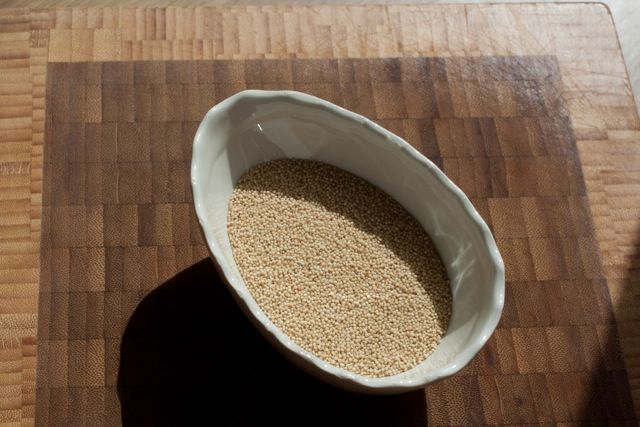
Raw amaranth grains

I’d been wondering what to do with the amaranth I’d impulse purchased at Whole Foods a while back and decided that a granola might lift it from looking like birdseed to something more appetising. As terrified to get it wet as Zack should have been with his Mogwai in Gremlins after hearing it goes gluey, I popped it in a hot pan first, turning it from plain seed to toasty treat.

Popped amaranth seed

Amaranth is an ancient grain (from a grass I believe) and is similiar to quinoa in that it is gluten free* and high in protein and fibre. It makes interesting sounding porridges, but I think it most appetising dry cooked to keep it nutty and crunchy. Bearing in mind that the seed is so crunchy, I decided to make the rest of the granola a little bit softer by coating it with stewed apple instead of oil. Everything about this recipe was impulse based so it’s in cups, not weights.

Apple and Amaranth Granola:

  • 2 apples, stewed down to make one cup of apple puree
  • 2 cups jumbo oats
  • 1/2 cup amaranth
  • 1/4 cup wheatgerm (optional if your granola is wheat free)
  • 1/4 cup sesame seeds
  • 1/2 cup pumpkin seeds
  • 1/2 cup pecans, halved
  • 1/2 brazil nuts, halved
  • 1/2 cup honey (or treacle)
  • 1/2 teaspoon ground ginger
  • 1/2 teaspoon grated nutmeg

First, stew your apples. Back in Belfast where I made this, it’s dead easy to get proper Bramley apples for cooking, but I struggle to find them in London, so just use anything sharp and tangy. Peel, slice finely, add about a tablespoon of water and stew until soft and like a puree. They’ll collapse in on themselves if left at the lowest heat with a lid on for about 20 minutes.

Then using a hot dry pan, toast your sesame seeds and set aside. Have a lid handy and then into the same pan, put your amaranth and toast until about 40% of it looks like tiny white popcorn and the rest is golden brown. It won’t all pop, but what does will go everywhere so you’ll need that lid!

Place all your dry ingredients in a bowl. You can add more types of nuts if you like. Hazelnuts would be lovely. Some flaked coconut is fabulous. You could add in some linseeds or sunflower seeds. Play around to get your perfect mix. Heat the pureed apple and the honey together and then mix into the dry ingredients, mixing well to make sure they are all coated.

Cook on a shallow tray so the granola is well spread out in the oven at 200℃ for about 20 minutes. Turn it over at this point and give it another 10 minutes until golden and crispy looking but not burnt. Cool in the tray and put in an airtight container immediately as this granola is a bit softer than oil based ones and will wilt gently if left out for too long.

Eat clusters of it with your bare hands while doing so or wait until you can get it into a bowl where it is fabulous with fresh berries and yoghurt. Healthy and filling, this doesn’t taste wholesome or lacking in flavour. The amaranth is nutty and packed with flavour and the chunky nuts make this feel very luxurious indeed. Considering it takes so little time to make, I’ll definitely be doing this again instead of spending serious money on boxed mueslis or granolas. Their packaging migh look nice on the table, but you don’t get to pop your own ancient grains with those….

*this whole granola can be gluten free if you choose oats that guarantee themselves GF in processing. See the Coeliac Society for more info from people in the know.

Gooseberry and Elderflower Bircher Muesli

Gooseberry and elderflower bircher muesli

As I’ve mentioned before, I love an oat or two. They form the basis of about 75% of my breakfasts (we’ve written extensively about my other choice in the shape of a duck egg) and the year is split into two phases: porridge or bircher muesli. The latter tends to herald the arrival of summer when I switch from the creamy warmth of porridge to the softness of soaked oats and a heap of seasonal fruit to start the day. However this year, the switch has not been followed by an actual change in the seasons so I decided to make my muesli a bit more of a treat and flavour it with the light and tangy tastes of gooseberry and elderflower.

Super simple, but so good it’ll make you leap out of bed on a Monday morning, this is a seasonal treat and a half. Instead of using the more traditional apple juice to soak the oats, I used elderflower cordial.

Gooseberry and Elderflower Bircher Muesli (serves one)

  • 50g oats  (use jumbo oats or look out for Flahavans)
  • 60ml/1/4 cup elderflower cordial
  • 60ml/ 1/4 cup water
  • 2-3 tablespoons Greek yoghurt
  • handful gooseberries, topped and tailed
  • teaspoon sugar
  • vanilla extract

This is a dish best prepped the night before, but don’t panic, it’s very simple. First add a teaspoon of sugar per handful of gooseberries and add a scant sticky trickle of vanilla extract and then roast your gooseberries in a 180℃ oven for about 20 minutes or until they collapse in their own syrup slightly. Set aside.

Soak the oats in the elderflower/water mix overnight. You can do it for 5 or 10 minutes before you eat, but overnight really plumps the oats up and makes them even better.

Then next morning, fuelled by the live giving power of tea, tip a couple of tablespoons of Greek yoghurt (proper stuff, not that weird no fat high sugar stuff that advertisers seem to think womenhood is entirely constructed of) and add in your roasted goosegogs. Stir round and then melt into the sweet creamy oats and sour kick of the yoghurt and fruit and feel ten times more awake, surprisingly healthy and totally full up til lunchtime. It might even kid you it’s actually summer…

Warm Octopus Salad

 Warm Galician octopus polpo salad

 The more I cook, the more I realise I want to cook. Each meal becomes a fabulous opportunity to do something I want to and something to be savoured. We all have our trusty standbys and favoured dishes, but when the chance to do something completely new comes along it thrills me. So when Liz* from Brixtonia suggested getting together and cooking fresh octopus, I was all over the idea. I’ve never met seafood I don’t love and it seemed like a perfect challenge.

I have to admit that I didn’t have a clue what to do with our eight legged friend so luckily Liz has access to a stack of cookbooks with some good ideas and emailed me several, mainly from Rick Stein. We pondered over two and couldn’t quite decide on which so thought we’d combine them both. But first up was getting our items. We needed a trip to the market.

Saturday morning saw us up relatively bright and early and in the queue at Dagon’s for our octopus. I’ve said it before, and I’ll say it again many times, Dagon’s is the jewel in Brixton Market’s crown. They have a vast choice, good quality, are excellent value and have friendly and helpful staff. I try to go at least once a week and I must admit I get a real kick out of being recognised by the staff there now. It’s like visiting the 50s high street but with more women’s lib and better banter.

They talked us through buying the octopus and we went for one whole cleaned octopus. I forgot to weigh it when I got home but it cost us a very reasonable £4 for the whole thing. We also picked up some samphire, a kipper fillet for me and a mackerel for Liz and the whole lot came to an even eight quid. Can’t say fairer than that. We got everything we needed and a box of Alphonso mangoes we just wanted and then got down to the cooking.

Galician Octopus Salad (From Rick Stein’s Spain)

  • 1 clean octopus
  • 400g waxy potatoes, peeled and cut into chunks
  •  2 tbsp olive oil
  • 2 tsp paprika (of your choice)
  • 1/2 tsp of cayenne pepper if not using hot paprika.
  • 1 tbsp salt

This is so simple it’s untrue. Take your cleaned octopus and put in a pan just covered with water and the tablespoon of salt and bring to the boil. Then reduce the heat to a simmer and cook for 45 minutes to an hour. That’s it. That’s how you cook an octopus. We didn’t tenderise it in anyway, either by freezing and thawing or bashing it against the rocks or anything else. We shoved it in a pot of water, left it well alone and went and had a glass of wine and a good gossip.

Octopus

After an hour, we came back and lifted the octopus out of the cooking water and left it to cool on a plate. It had turned the beautiful mauve we both associated with Spanish octopus dishes and the tentacles had curled in beautifully. We added the potatoes into the remaining cooking water and brought them to the boil until tender but still al dente. Then heat the olive oil, add the paprika and cayenne and fry the potatoes until golden and crispy.

Cooked octopus ready to slice

While they are sauteeing nicely, cut the octopus into inch or so chunks, using both the tentacles and the head and body. Take the potatoes off the heat and add the octopus in for a few seconds just to warm it through and coat it with the paprika. Dish up with some chopped parsley (our concession to the other recipe we had planned as well) along with some vegetables if you so fancy (we did steamed samphire and roasted aubergine and tomatoes) and enjoy!

The octopus was firm but very tender without a hint of rubberiness. It was slightly sweet and very flavoursome, especially alongside the potatoes. Slightly salty, intensely umami and crispy round the edges, these were the best fried potatoes I’ve ever had. Simple and packed with flavour, the whole meal was fantastic. We feasted well, but with a few more spuds, the one octopus would easily serve 3 -4 making it good value as well as impressive and delicious. Until now, all my cephalopod ardour was reserved for squid, but there’s another many legged love in my life now I’ve discovered octopus…


*Thanks to Liz for her cooking skills, being an excellent guest and taking that fantastic sea creature shot!

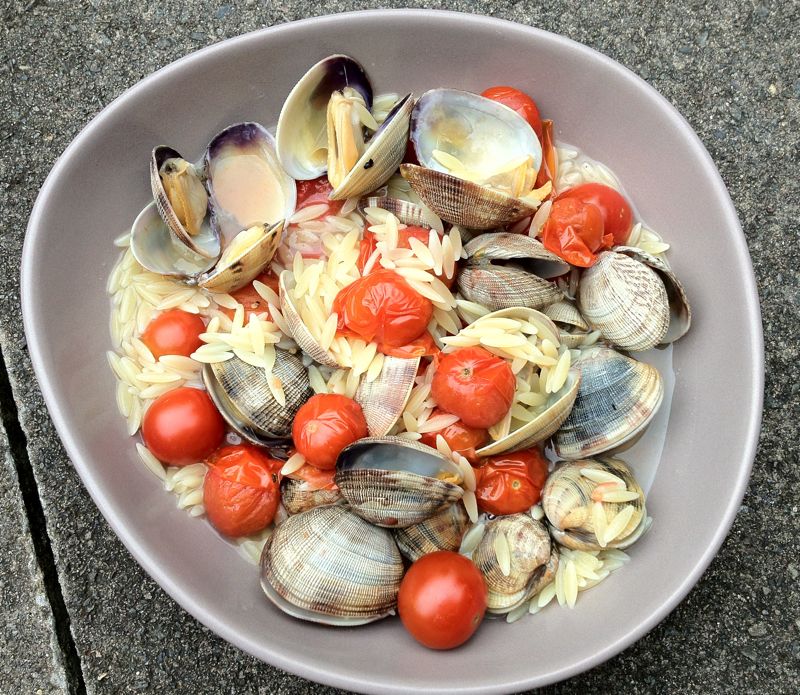
Orzo with palourde clams and cherry tomatoes

Orzo Vongole

Orzo with palourde clams and cherry tomatoes

As soon as the sun appears I immediately feel like eating more, but cooking less. It doesn’t feel especially appealing to be in my rather dark kitchen when the great outdoors feels so light and bright. I need food that won’t interfere with my late spring schedule of sitting on the patio with a G&T. It needs to be low maintenance, but not the stodge of those winter casseroles and soups that you can just leave to get on with it. It needs to feel fresh but be packed with flavour. It’s a tall order, but I felt my fishmonger* could point me in the right direction. And there nestled amongst the rather tempting bass and octopus and prawns, was the perfect solution. A bulging net of smooth shelled palourde clams beckoned to me

Clams are most closely associated with spaghetti and this sweet shellfish works perfectly with the tang of tomatoes and the solid base note of pasta. I wasn’t going to stray too far from this classic combination, but I wanted something one pot so there was the minimum of preparation and very little washing up. The packet of orzo I’d picked up in the pound shop was about to have its moment…
I put half a cup of the rice shaped pasta into my saute pan and added three times the amount of water and simmered it until the orzo had swollen in size and there was barely any water left. At this point I added in a teaspoon of bonito flakes and a quarter of a cup of water as a quick fish stock then adding in a couple of handfuls of cherry tomatoes and the washed clams. A quick season and a splash of vermouth and the lid went on, allowing everything to steam and infuse for about five minutes or until the clams are open and the tomatoes have collapsed in on themselves making a simple sauce.

The clams add so much flavour to the somewhat neutral orzo and the hints of bonito and vermouth make everything taste much more like you made an effort. There should be just enough liquid at the bottom of the pan to make sure you need a hunk of crusty bread to get the maximum effect from this dish. Scatter a bit of parsley over it all and tuck in with a fork and spoon and a napkin to hand. This is a get stuck in hand on kind of meal and it’s fabulous. 15 minutes maximum from start to finish and you’ve got a bowl just packed with flavour. This is a one pot wonder just as at home as a meal to impress friends or as quick post work dinner when you can’t face chopping and stirring. Either way it only needs a large glass of chilled white wine to make it complete!

*I always go to Dagon’s in Granville Arcade/Brixton Village for fish. They are good quality, have a wide selection, are reasonably priced and super friendly. Treasure them.