Cassoulet: rabbit & pork to quicken the pulse(s)

We’ve written before on more than one occasion of our shared love for all things pulse and porcine. Pretty much every pork-eating culture in the world has at least one melt-in-the mouth classic which taps into both of these elements, exploiting the extraordinary harmony and symbiosis of flavour and texture which comes from such comfort food. These are truly made for each other, and it’s a massive favourite here with us at North/South Food.

Inspired in part by a great holiday to Languedoc (and armed with a few goodies on my return) I decided to make a semi-proper cassoulet as a way of warding off the rather autumnal weather which has blighted the north of England since coming home. Not a proper proper cassoulet (with all the regional rivalries that seems to stoke up) but my own interpretation. After all, it’s a genuine classic, and something I’ve never cooked before, so it was well worth having a go at…

I used my well-thumbed copy of Elisabeth Luard’s ‘Classic French Cooking as reference: her recipe for ‘Cassoulet de Castelnaudary’ seems pretty authentic. I deviated on a few occasions, perhaps most heretically by using rabbit rather than duck or goose. You see, I’ve had a bunny in the freezer for a few months, and coming home with a lovely artisanal French sausage, I thought something casserole-y would make for a perfect combination. After a bit of reading I warmed to the idea of cassoulet.

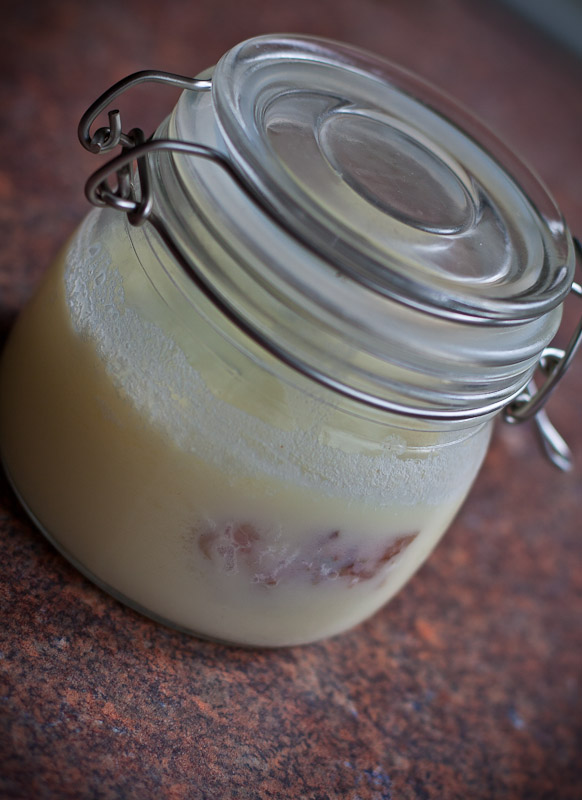
First things first, I had to make the rabbit confit. After a good defrosting I jointed the bunny… legs off and the body / saddle in three. I had some goosefat lurking in the fridge in a kilner jar (really not sure how long it was since I last cooked a goose but I decided to take the risk) and I had a tin of store-bought stuff as well. Tip: buy reduced-price tins of goose fat from supermarkets in the weeks after Christmas. It lasts for ever, and I’m sure you know just how good roast potatoes & Yorkshire puddings are, made with real goose fat.

I melted the fat down in a saucepan, then poured them over the layered rabbit joints in a stoneware pot. I’d also sprinkled salt over the meat (using wonderful fleur de sel from the Camargue), chucked a few peppercorns into the pot, and added a couple of bay leaves. Once the meat was covered by the warm, clear goose fat, it went straight into a pre-heated gas oven at the lowest setting, covered by tinfoil, and I left it overnight.

Next day a delicate aroma greeted me when I opened the kitchen door: inside the oven the meat had blanched and warmed through. very pretty looking too. I took out the legs, ate one of the other bits for breakfast on toast (chef’s perk!) and put the rest in a kilner jar, carefully covering with the fat. That was the rabbit sorted, now for the rest.

A quick trip to Stansfield’s in the market secured some belly pork (I got Paul to remove the skin for me) and some lean escalopes. I decide not to buy some fresh sausages, determined to subvert tradition and use the dried Aveyronnais saucisse instead. This is almost as heretical as using rabbit, but I thought the rich, fatty dry sausage would work well in such a slow-cooked dish.

So I diced the belly meat, and added it to the bottom of a cast iron Le Creuset (heretical decision #3… it should of course be cooked in stoneware but I didn’t have anything large enough). I opted for canned haricot beans over dried (life’s too short for soaking pulses) and added three tins of these, together with a couple of roughly chopped carrots, a bouquet garni, a red onion studded with cloves, and a head of garlic which I’d blackened quickly over a gas flame on the hob. Also in the pot went the rolled-up belly skin. Everything was covered with water, and raised to a rolling boil, before simmering for an hour or so.

After that was done I drained everything, reserving the cooking liquor carefully. I browned the rabbit joints in a heavy frying pan, then did the same with the lean pork and a couple of diced red onions & some garlic, letting them shimmer and glisten in the hot goose fat. I unfurled the pork skin on the bottom of the cast iron pot, and layered up the beans, veg and meats on top. A tin of plum tomatoes was ably accompanied by some home-grown toms, which looked as pretty as they tasted. As the ingredients stacked up I was worried by a deficit of beans to cover everything, so I added a extra tin of cannellini beans. Then I poured the cooking broth from earlier in until everything was just coated, lidded up and put it in the oven at gas mark 2 (150°C) for about two hours.

It was about then I realised that such a long cooking process was going to severely test my patience: the smell when I opened the oven was enough to make me want to gnaw my own arm off. However the next stages would mean it was some time before I could exepct to finally tuck in. After notching the oven up to 160°C the pot went back in, uncovered, to help develop a crust. This took closer to an hour as a fair amount more liquid had been drawn out of the tomatoes, but eventually there was enough of a crust for the next stage. I spooned some goose fat over the top, and broke the crust several times before adding a layer of breadcrumbs. Breaking the crust seems to be one of the defining differences between Castelnaudary and other towns in Languedoc which lay claim to cassoulet as their own. I opted to break the ‘croute’ seven times, as Larousse Gastronomique suggests this is the Castelnaudary way. Then back in the oven again to thicken up and cook for another half an hour or so. Cue more groaning stomachs – it was at this stage I cracked open some rather good anchovy-enfused Camargue olives.

We enjoyed this with a bottle of excellent Saint-Chinian red (sticking to the Languedoc theme) and some crusty white bread to soak up the juices. Dead simple, and all that was needed to really savour this dish. It tasted wonderful, and was well worth the anticipation and wait. Better still, as so many one pot meals do, it just got better over the next couple of days.

I’d give this 7/10 for adherence to tradition, but 10/10 for flavour. The sausage was excellent, adding a complexity and richness to the dish, and the rabbit was succulent and delicious. Sometimes traditions are there to be subverted! If this heralds the season to eat rich, slow-cooked one pot wonders, then I’m glad to wrap up warmer and take things slowly. Meanwhile I’ll be rationing out the goose fat from the confit for future cooking exploits… it’s a wonderful by-product of this dish. What’s good for the goose is certainly good for me…

A warm salad for warm summer nights

So, I’ve recently returned from a week’s holiday in the warmth and civilisation of Languedoc. It’s not a part of the world I was familiar with, and as well as good weather, my companions and I enjoyed a week of superb local food and wine. As they’d been to the area before I enjoyed some local delicacies under their guidance, and we made plenty of new discoveries too. We ate simply, and tried as much as the short timescale could allow (finally ticked bouillabaisse off my list of ‘to dos’, cooked superfresh whitebait, and gingerly tried freshwater clams which we’d sourced ourselves from Lac du Salagou). Plus freshly picked figs & plums everyday, moules et frites at the local village knees-up, and a host of other delights.

I’ve only warmed in recent years to classic French cooking – my reference point was always further south in Italy – and I associated French with more courtly and less rustic cooking. However there’s a healthy overlap between the high-end and the more accessible, so I’ve been expanding my repertoire and gaining more confidence talking mirepoix rather than soffritto. In part this helps when you’re in an area where the aroma of herbs hangs heavy in the air – wild thyme and mint nestling next to tall fennel plants in the verges – and bushes and trees are laden with fruits and nuts. Foraging and gathering becomes a daily constant, not an occasional novel experience.

I’d mentioned previously I was working on the forthcoming Parlour Café Cookbook: before going on hoilday I’d worked up several of these recipes into postcards, and one in particular stuck in my mind: a warm salad of Puy lentils and goats cheese. It’s one of the star recipes in the book and supposed to be a favourite with the regulars,  so I decided to give it a whirl.

We picked up most of the ingredients in the local supermarket before a trip up country to visit Roquefort and Millau – great cheese, rather dull tour of the caves, although I did pick up some sheep’s butter there – and on the way home had to make our respective ways through an enormous, spectacular and somewhat frightening electric storm. Everyone was a bit frazzled by the end of the trip, so it was rather relaxing to potter around in the kitchen, unwinding with a glass in one hand and a stirrer in the other, unwinding while knocking this oh-so-simple recipe up. Mind you, it’s always fun find your way round somebody else’s kitchen for the first time, making the most of what you find lurking in the cupboards.

It still makes me smile that this most Mediterranean of dishes actually comes via Dundee, but using local ingredients (and some great local wine) meant it was perfectly transposed to a more Gallic setting. Rather than rewritng this I’ll use Gillian’s words from the cookbook, annotated slightly.

Puy Lentil and Goats Cheese Salad

Serves 4

●200g Puy lentils [oddly they weren’t labelled as Puy but verte]
●1 onion, chopped
●1 carrot, chopped
●2 stalks of celery, chopped [wonderful dark green celery, still with all the leaves]
●A handful of fresh thyme [straight from the local hills]
●1 bay leaf
●150ml extra virgin olive oil
●3 – 6 garlic cloves, peeled and roughly chopped [I used the full six cloves, and it was extremely feisty… I guess due to the freshness of the garlic. No worries about being bitten that evening!]
●50ml red wine vinegar [I couldn’t find any in the store cupboard so I used a mix of balsamic & some red vin du table instead]
●100g goats cheese [we used a local, strongly flavoured little number]
●a large handful of parsley, roughly chopped
●sea salt and freshly ground black pepper

Cook the lentils in boiling water for 20 minutes, until they are absolutely tender.

Meanwhile, fry the onions, carrots, celery, thyme and the bay leaf in a couple of tablespoons of the olive oil until soft and lightly coloured. In a food processor or with a hand blender, blend the garlic with the rest of the olive oil. With the motor still running, slowly pour in the vinegar and blend until it’s emulsified.

Drain the lentils and pour out onto a flattish dish. Smother in the garlicky dressing and turn gently so everything is glistening. Once the vegetables are cooked, gently mix them into the lentils and leave the salad to cool.

Then toss gently with the goats cheese, torn into chunks, and the parsley. Season with salt and freshly ground pepper if you think it needs it.

The only major change I made was that a couple of our party didn’t like goats cheese, so we served their portions first – they had comté instead – then crumbled the cheese in afterwards. We’d also picked up some smoked sausage to add some savoury notes to the dish. Otherwise we kept it simple – a hunk of fresh bread, a fresh green salad on the side, and some local wine to help everything go down.

This is such a good recipe: it doesn’t take long to make, tastes stunning, and it’s most evocative of warm summer nights and lazy times. I can see why it’s a favourite at the café, and I think it will be with you too. Delicious!

Rosemary and anchovy flatbread

Going flat-out for flatbread …

Rosemary and anchovy flatbread

We’re both fans of fast, healthy and delicious Mediterranean-influenced food here at North/South Food. Miss South is definitely more confident and experienced when it comes to baking than I am, but a recent recipe I came across persuaded me to pander to my basest kneads and enjoy my daily bread.

I’m currently designing a cookbook for the wonderful Parlour Café on West Port in Dundee, run by Gillian Veal. Over the last few years her delicious and unfussy cooking styles have added some sunshine to the local food scene, and her recipes have become firm favourites with many Dundonians. So it’s perhaps only natural that Gillian’s sharing some of her favourites recipes with the wider world.*

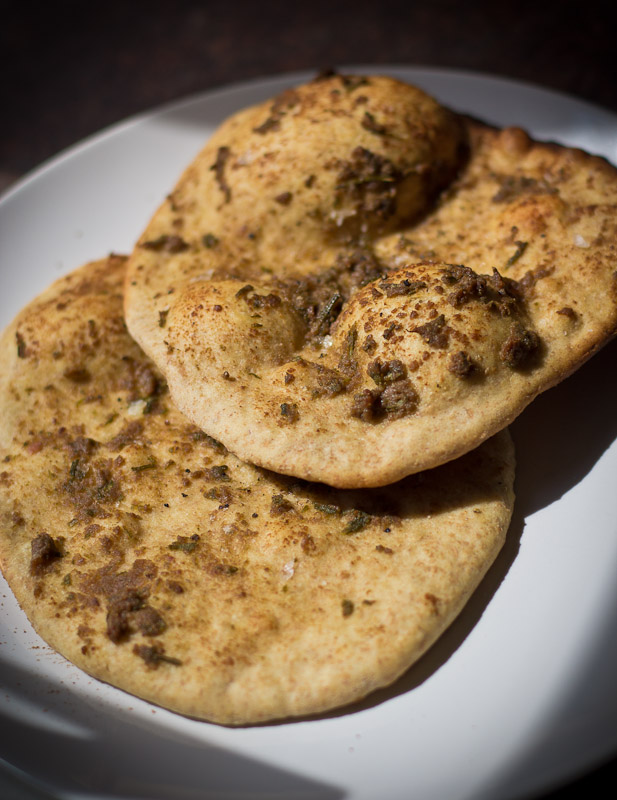
One of the pleasures (or should that be perils) of receiving the manuscript for a cookbook is trying to resist the urge to try out all the recipes: in this case as soon as I saw the recipe for rosemary and anchovy flatbread I was powerless to resist the temptation to snip sprigs of rosemary and crack open a tin of anchovies. Rosemary oil and salty fish on warm bread? Instant win!

Having made these a couple of times now I’m a major fan. Incidentally they’re so moreable I challenge you to make them last more than one sitting. Perfect with some home-made smoky hummus or an edamame bean dip.

So without further ado let me share this recipe, in Gillian’s own words, alongside my photos. Enjoy!

Gillian’s Rosemary and Anchovy Flat-Bread
Makes 8 – 10 flat-breads

● 250 grams wholemeal flour
● 250 grams of plain white flour
● 250 ml warm water
● 1⁄2 a teaspoon of dried yeast
● 80mls olive oil
● 12 anchovy fillets
● 1 sprig of rosemary ● sea salt and pepper to season

“Mix both flours in a large bowl and make a well in the middle. Dissolve the yeast in the warm water and gradually pour into the flour while mixing with the other hand. Pour in 60ml of the olive oil as well, and keep mixing until the ball of dough comes together. Turn the dough onto a lightly floured surface and knead until it becomes smooth and elastic – you will feel the dough changing and it will bounce back when you stick a finger into it (5 minutes should do it). Cover the bowl with cling-film and set aside somewhere warm for about one and a half hours.

Meanwhile prepare the topping. Tear the leaves off the sprig of rosemary, chop them roughly and bash them up in a mortar and pestle with the anchovies and a glug or two of olive oil until you have a rough paste.

When the dough has about doubled in size, punch it down, gather into a ball and divide into 8 – 10 pieces depending on how many people you’re feeding and how big you want your breads to be. Heat up the oven to 220C, and put in two lightly floured baking trays. Roll the dough pieces out into rough circles, about half a centimetre thick, and evenly spread with the anchovy and rosemary paste. Push it into the dough with your fingers and make sure they’re well covered.

Get the hot baking trays out of the oven, and place the waiting flat breads on them. Sprinkle with sea salt, freshly ground black pepper and a drizzle of olive oil and put back in the oven for around 6 minutes until they are golden and starting to puff up”


*If, as I suspect, this recipe whets your appetite then I urge you to buy the book when it’s published later this autumn by Kitchen Press. Wonderful recipes and delightful illustrations make this a perfect kitchen companion. We’ll have full details on here closer to the time…

Veda Bread Ice Cream

July is a hot month back home in Belfast. Not especially due to the weather, but because of the slightly heightened feeling on the streets due to the Orange Order marches held in what is known as the Twelfth Fortnight. This was the traditional summer holiday for the shipyard workers in the city and a chance to hark back and remember Catholics and Protestants knocking the pan out of each other at the Battle of the Boyne in 1690. For those of us who don’t enjoy some light civil disobedience, it’s a good time to potter around at home doing all those things you’d sort of meant to do all year since you can’t really go out. Or ignore them completely and spend time watching box-sets and eating ice cream instead…

Feeling oddly left out here in London, I thought I would try and join in with a ice cream recipe with a taste of home. I’ve been wanting to make a traditional brown bread ice cream since I got my ice cream maker earlier this year, but the arrival of my mother on the week of the Twelfth with every Northern Irish exile’s request in the shape of a loaf of Veda bread, meant I decided to give it an Ulster twist and use Veda instead.

A dark delicious slightly sticky (non-fruited) malt bread, Veda makes the best toast in the world, marrying together with butter like nobody’s business. Adding sugar to bring out the natural sweetness and crisping it up with butter is what my life has been missing up until now. Using this recipe by David Lebovitz, I crumbled the Veda into smallish pieces, fried off in butter and a good unrefined caster sugar and then toasted in the oven for about 30 minutes or until I had clusters of crispy, sticky, malty heaven that were so good, I could have skipped the ice cream and just eaten them alone.

But since I had promised ice cream, I made ice cream. The recipe uses a basic custard, but with the addition of cream cheese to stop it all being just too sweet. This is much more faffy, needing a third bowl, more counter space, a sieve, a whisk and more potential for the custard to curdle as it needs to be hotter to melt the cream cheese, so in future, I don’t think I’ll bother with this addition. Otherwise, it was all pretty straightforward.

I gave this ice cream a bit of a Brixton twist and added a slug of dark rum, some vanilla and then stirred the caramalised crisped up Veda into the churned mixture about five minutes before the end. Because the Veda is stickier and maltier than regular brown bread, the crumbs clumped up more and made huge nuggets of crispiness. Fearing that I would either break my teeth or the machine, I blitzed them in the blender to make them more crumb like. Everything then went in the freezer for a couple of hours to firm up and create hands down the finest ice cream ever created.

Creamy beyond belief but crunchy and chewy due to the crisped up bread crumbs and with a slightly grown up flavour from the rum, this was just magnificient. Rich with butter and with a gorgeous toffee feel, I defy you not to fall in love with this amazing ice cream and want to sneak a spoonful everytime you pass the freezer. It was declared even better than the Northern Irish ice cream institution that is Maud’s Pooh Bear Delight*.

You need to make this ice cream immediately. If you don’t have access to Norn Iron’s best kept secret, try it with some Soreen or a really good brown bread instead. This is what breadcrumbs aspire to being…

*Youse know it’d be belter in a poke.

All Boar, No Bore…

Up bright and early and filled with the joys of summer on Sunday I headed into Brixton to take advantage of the season’s finest. Already chuffed to bits about getting some very reasonably priced donut peaches and baby plum tomatoes at the fruit and veg stall opposite the back of Brixton Village on Coldharbour Lane by the bridge, my day was made when I discovered a stall at the Farmers’ Market selling, (amongst other things) wild boar and duck eggs. Almost before I knew it, my money had found its way out of my purse and a bag with a rolled wild boar loin and two double yolked duck eggs was nestled in my hand. Suddenly dinner seemed a long way away…

Back home, I tucked into a delicious cooked breakfast with the eggs and the tomatoes and set to reading the Sunday papers. Seeing Jay Rayner compare Red Dog Saloon and Pitt Cue Co in the Observer got me thinking that I just can’t have enough pig and pulses in my life and that slow roasting the boar loin over beans would be the perfect twist on that American classic this Independence Day weekend.

Being all organised when I made the root beer beans a few weeks ago, I soaked and cooked more haricots than I needed at the time and then froze them. So while the oven heated to the maximum temperature to blast the boar skin into crackling, the beans defrosted and I prepared a rub of salt, butter, oilve oil and home grown fennel seeds for the skin. Once the meat was at room temperature I slathered the skin with the rub, working on the premise that the only thing better than pork fat, is pork fat with butter on it!

The loin went into a very hot oven for 20 minutes to crisp up. I also chopped up fennel, red onion and some of those baby plum tomatoes and some cloves of garlic to mix with the beans as a bed for the meat to slow roast on.
I then took the meat out, set it aside, deglazed the pan with some water and then tossed the beans and veg well in the juices, put the meat on top and popped in the oven at 160℃ for about two hours. Or until I remembered about it again…

It smelled amazing when I opened the oven, but I was worried that the fennel was the wrong side of caramlised and would just taste burnt. But the meat looked so mouthwatering moist and tender I didn’t really care. Slow roasting on the bone had turned this into something really special. I left it to rest to make sure I didn’t miss those precious juices and chopped up a quick slaw of white cabbage, fennel, carrot and golden beetroot to go on the side.

If you aren’t just as fennel obsessed as I am, feel free to leave it out of the beans. But do keep it in the slaw where the anise cuts through the sweetness of the beets and carrot and tempers the mustardiness of the cabbage. The fresh crunch of the slaw is its selling point, so don’t be tempted to chop too finely or drown it in dressing like a shop bought version. I used a tablespoon of yoghurt, a dessertspoon of mayonnaise, cider vinegar, fish sauce and a tiny bit of Dijon mustard to make a light yet flavoursome dressing that coats the vegetables well without being overwhelming.

Then after all the chopping, shredding and roasting, I dug in. It was so good. The meat was so juicy and tender even compared to the equivalent piece of pork, falling off the bone beautifully. The crackling wasn’t just as shatteringly crisp as pork can be, but the slight chewiness and caramelly finish from the butter made up for that in abundance. The beans were deliciously meaty whil even the slightly burnt fennel was very enjoyable. Everything just burst with flavour, especially the boar itself.

And best of all, it didn’t feel like a heavy dish thanks to the refreshing crunch of the slaw and the fresh flavours of the beans so you could eat a hefty portion of the meat with feeling defeated. It’s dishes like this that remind me why seasonal food is so worth the wait…