A week’s worth of shopping….

Some key groceries for weekly shopping

First of all: thank you! Thank you to everyone who emailed, commented, Tweeted, followed, pinned and got in touch after the Observer Food Monthly piece. We were overwhelmed by the amount of debate, discussion and support it received. We’ve found some amazing new blogs, talked to some great people and had a wonderful time. Even the notorious Comment is Free was positive!

So to say thanks properly I thought I’d give you a sneak peek to the bits of the original article that didn’t make the final cut at Food Monthly. Not content with taking over the entire magazine, I did in fact write more than you saw and while I’m thrilled to have had so much published, a little bit did get lost in the edit. A few people asked if I was using organic for my recipes because it didn’t seem right that they came to £20 per head for that many dishes, but in fact there was a lot more food in my basket and I’m going to give you a cut-out and keep guide to see where I bought food for this week and began building a storecupboard for future ones.

I costed out my basket using Sainsbury’s online as I wanted to use a baseline that the largest number of people across the UK could have and an online ‘big four’ supermarket was the best for that. Not everyone can reach an Aldi, Lidl or a proper market, and online shopping removed regional variations. Using a discount retailer, local greengrocer, market or getting reduced products at a supermarket can help you cut the budget. Remember it’s a guideline, not a diktat.

I allowed for a bare minimum of store cupboard items: salt, pepper, one chilli product (powder, hot sauce, Tabasco, your choice), smoked paprika, one dried green herb of your choice, Worcestershire sauce and mustard powder. The fresh herbs and ground ginger mentioned were optional as was the parmesan and olive oil. I didn’t include butter in the basket as it’s an essential to me, nor  did I include milk as the amount you buy depends on your tea and coffee consumption.

We’ve listed everything you need to buy to do the 7 day menu I wrote for OFM, and in the future I’ll be giving you some more ideas for using the store cupboard items you’ve built up from here.

P.S. At the bottom of the post is a version you can print out if you’d like – it’s just the ingredients shopping list in black and white, with space for your own notes. It prints two copies of the list per sheet of A4 paper, so one printout can be used over a couple of weeks.

Fruit and veg

Bananas – Basics Fairtrade  x8 £1.15

Potatoes – white 2.5kg              £1.95

Leeks 1kg                                      £2.59

Beetroot – Vacuum pack            £0.70

Celery – untrimmed                    £0.90

Carrots – loose 1kg                     £0.90

Onions – 1kg bag                         £1.10

Apples – Basics bag                    £0.82

Parsnips – loose x2                    £0.48

Savoy Cabbage                            £0.80

Swede (turnip)                            £0.90

Garlic (2x bulbs)                        £0.46

Mushrooms – sliced 1kg           £2.50

Frozen

Garden Peas  – frozen bag 910g      £1.60

White fish fillets – Basics 520g      £2.00
Tinned and dried goods

Butterbeans – 400g tin                         £0.69

Kidney beans – Basics 400g tin         £0.27

Chopped tomatoes – 400g Basics       £0.35

Condensed milk 379g                           £0.99

Lemon juice 250ml                               £0.59

Creamed coconut 200g                       £0.99

Semolina 500g                                     £0.89

Pearl Barley 500g                               £0.55

Porridge Oats 1kg                               £1.29

Popping corn 500g                            £1.09

Rice – Long grain rice 1kg               £1.39

Plain flour – Basics 1.5kg                £0.65

Ryvita 250g                                        £0.99

Meat, fish and dairy

Chicken – whole approx. 1.75kg              £5.00

Low fat Natural yoghurt – Basics              £0.65

Eggs – 12 free-range                                     £2.65

Double Cream 600ml                                  £1.68

Total:                                                            £39.95

If you wanted to buy the store cupboard essentials from Sainsbury’s I’ve included what they would cost below:

Store cupboard essentials

Worcestershire sauce 150ml    £1.19

Mustard powder 57g                  £1.35

Olive oil 500ml                           £2.00 (offer price)

Smoked paprika 50g                  £1.19

Ground ginger 32g                     £0.59

Bay leaves 10g                          £0.60

Fresh tarragon 20g                    £0.80

Tabasco sauce 57g                   £1.69

Sea Salt 350g                             £0.55

Black peppercorns 100g           £1.78

Butter – own brand 250g            £1.50

Total:                                                               £12.16

It shocked me when I costed this out. For me, these are the absolute bare basics of a herb, spice and condiments cupboard and with the exception of the fresh tarragon, they’d all last for ages, but they add another 30% onto the cost of your shop just to get some flavour into those fresh foods you’ve bought. You could save some serious cash here by shopping around if you can. Asian grocers or ‘ethnic’ supermarkets will usually have bags of peppercorns, bayleaves and ginger at twice the size and half the price. Bottles of hot sauce will be cheaper than big brand name Tabasco but everyone likes a different heat so it’s hard to advise what to buy. Olive oil often crops up in pound shops or on offer. Smoked paprika is often cheaper in delis in the cute little tins when you look at price by gram. But if you can only get to a supermarket, products like this really add cost to your shopping.

You’ll use nearly all the fresh vegetables in the course of the week, but should have some of the frozen ones left. Other items like the flour, porridge oats, pearl barley, coconut, rice and popping corn will last for ages and form the basis of following weeks’ meals and snacks. I’ll be talking you through the ways the meals came together and how with a bit of planning you don’t have to be tied to a cooker all week but still enjoy your food and your spare time on a budget. In the meantime, what are your number one herbs, spices or flavourings? Could you give up cumin? Is soy sauce essential? Go without garlic?

Click here to get a PDF version of the shopping list

grocery list

Damsons: not just for gin…

damson_gin_crumble-01

I don’t believe in doing a dry January. It’s a long bleak month, made grey by the weather and the removal of those lovely twinkly Christmas lights and decorations. The rest of the world withdraws from society, exhausted after the festive season and starts detailing every morsel they do or don’t eat with a side helping of shame and the Special K diet. So frankly I need a drink just to deal with them.

I don’t mean going out and drinking every bar in the borough dry, but I do enjoy a winter time tipple, usually just before bed to warm the cockles properly. And luckily my family always comes up trumps with just the ticket over Christmas in the shape of homemade fruit gins. Mister North tends to specialise in damson gin and our mum tends to go for sloe gin, which is a family tradition dating back to my childhood. However the weather in 2012 was not good for sloes, so both of them went for damson gin this year.

Warm and jewel coloured, this plum rich sweet liquor warms you better than an electric blanket and with much more style. Sipped slowly in front of fire, it softens and soothes you to sleep well when you get to bed. Served long, tall and cool over ice with tonic to cut it, it reinvents the gin and tonic in a way that’s not just for Christmas. You can even, oddly enough, douse fish in it to make a sultry salmon gravlaks.

Read more

Christmas Chestnut Caramel Shortbread

shortbread

When I was growing up, I associated certain tastes with times of the year. Chestnuts were the taste of celebrations at Christmas when my mum made a gorgeous frozen pudding similar to a Nesselrode pudding with sweetened chestnut puree and we occasionally had marron glacee at my granny’s house round the open fire. But caramel shortbread was the taste throughout the year. None of this ‘millionaire’s shortbread’ malarkey, caramel shortbread was the traybake of choice in our house.

Weirdly though, I’ve never made it myself. I tend to dip into my less well known Northern Irish repetoire of wee buns and bakes when I’m making anything like this back in London, but everyone has heard of this treat so I’ve neglected it for a while, but a recent conversation gave me a Christmassy craving for caramel and when Zoe and Tim from Brixton Blog gave me a tin of chestnut spread last week, I knew I had to combine the two tastes and this classic a new lease of life.

Read more

Chocolate Liquorice Cake or how to perk up a prune…

The last few weeks have been a bit of a blur of new tastes and food experiences and travel and general activity. I’ve had great company and great meals, but I’ve been yearning to get back in the kitchen and play with my new finds. Mister North had very kindly shared some of his Lakrids Liquorice Powder from a Harvey Nicks bloggers’ lunch and I was intrigued as to what on earth to do with it since the package gives no clues and the site is entirely in Danish and my Sarah Lund fixation really only gives me rudimentary Danish vocab for the world of crime, not cooking.

I’d been eyeing up this David Lebovitz chocolate and prune cake for a while. Luscious with dark chocolate and butter, it’s a flour free number with a squidgy mousse-like consistency and having never made a cake like this before, I couldn’t wait to give it ago. I decided to give it an extra edge by adding some of the liquorice powder to the cake as liquorice is many times sweeter than sugar and I liked the idea of using it to smooth out the sharpness of the dark chocolate and give the prunes an extra earthiness.


I’ve linked to David’s orginal recipe so you can just follow that or you can do what I did and misread it and thus go about it slightly differently and awkwardly. Your call, but be aware my version gives you an excuse to drink some rum as you go…

Chocolate and Prune cake (from David Lebovitz, tweaked by me)

  • 170g pitted prunes
  • 80ml dark rum (or other dark spirit of choice)
  • 1 tablespoon sugar
  • 340g dark chocolate, chopped
  • 6 large eggs, separated
  • 170g butter
  • 3 tablespoons sugar
  • 2 tablespoons raw liquorice powder

First prep your prunes. I cut mine into quarters and then soaked them overnight in the rum and sugar because I obviously thought I was making a tealoaf instead of reading the recipe properly. However, if I’d done it properly, I wouldn’t have discovered how good rum soaked prunes on my morning porridge…

Then butter a 9 inch cake tin (preferably springform). I also used cocoa powder on it and the cake stuck more than usually happens in my tin so I’m not sure I’d do that again.

I melted the chocolate and butter over hot water, stirring well to make sure it was well melted and glossy. I took it off the heat and added in the prunes and remaining rum which cooled the mixture slightly which meant I could add the egg yolks without fear of scrambling them. Pop the liquorice powder in at this point.

Whisk the egg whites until stiff and firm, adding the sugar gradually and then fold them into the chocolate mix a third at a time, making sure you don’t overbeat and knock all the air out of the batter. Pour it into the tin and bake at 170℃ for 40-45 minutes. You can’t use the old skewer trick as the cake rises massively and the centre should be slightly soft, but the edges are pulling away from the tin. Cool well and you’ll notice the cake settles back down again in size.

David Lebovitz says the cake can be made up to three days in advance. I made mine two days in advance and kept it in a tin and felt that actually it was a touch dry round the edges, so I’d say wrap it well in a tea towel to be sure.

The cake was worth waiting for, very grown up with the bitter edge of dark chocolate,  sticky and squidgy with nuggets of prunes and completely and utterly lacking in any hint of liquorice at all. I couldn’t taste it and I’m presuming the others who ate it couldn’t either as no one asked what the other flavour was or if there was a magic ingredient. It didn’t even sweeten the cake particularly as the one question that was asked was if there was any sugar in the cake at all. I actually really enjoyed the lack of sweetness, which is unlike me and my common milk chocolate eating ways, but was disappointed by the Lakrids.

This is the second dish I’ve used it in. Once sweet and once savoury, and I couldn’t taste it either time. I’ve bookmarked this recipe as my go to quick chocolate cake, especially for gluten free folk, but I’m not inclined to persevere with the Lakrids, unless someone can give me a really good idea for it or takes me quietly to one side and explains that I’ve been doing it wrong…

Dulse Tapenade: the Province meets Provence

dulse tapenade

When I was a child, I hadn’t yet discovered my high umami fascination. Olives didn’t tickle me, I only liked anchovies marinaded and one of the strongest memories of disliking a food in childhood came with one of the strongest flavours I tasted, in the shape of dulse. Dulse is a seaweed, very common around the coast of Ireland and particularly associated for us with the north coast town of Ballycastle and its famed Auld Lammas Fair. In an early adoption of the salt sweet craze, people bring Yellowman and dulse back from there as treats and it was this contrast that caused my long lasting reaction.

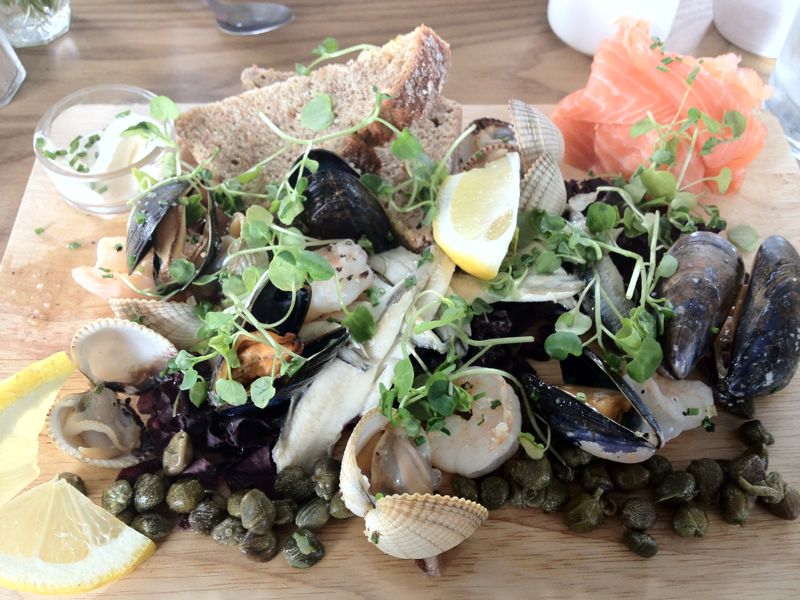
Yellowman is the sweetest crunchy thing you can imagine and dulse is intensely iron rich and seawater salty with a slightly rubbery texture and it is one extreme to the other for a five year old. I never eaten dulse since and the thought of it has always made me feel a bit queasy. But when I was back in Belfast last week, I went for lunch at the Belfast Barge and ordered their superb seafood platter and in with the spankingly fresh seafood and fish was a healthy sprinkling of dulse that would be hard to avoid.

Belfast Barge seafood platter

Bravely loading up my fork with some dulse, a caper or two and a marinaded anchovy, I tried it again, hoping the flavours I liked would hide the one I didn’t. I was very very surprised when I loved it. The flavours all went together like nobody’s business and appealed to my umami addiction utterly. It was so good that before I had finished the plate, I was asking my mum where I could get some dulse to bring home.

I wanted to combine those fishy and salty and savoury flavours to the fullest extent and my mind immediately went to tapenade, loaded up with olives, anchovies and capers and dulse. It needed something fresh and clean on the side and Felicity Cloake solved my dilemma by posting a ceviche recipe this week. Not only do I now know how to liven up a sea bream, but I’d found my perfect partner for the ultimate umami paste!

Dulse Tapanade: makes enough for two people

  • 20g dulse (mail order here or get from St George’s Market on a Saturday or the Bethany Fruit & Veg on the Cregagh Road)
  • 20 black olives, stoned
  • 2 anchovy fillets, chopped
  • 1 tablespoon capers, drained
  • 1 tablespoon olive oil
  • squirt lemon juice
  • good handful parsley and fresh thyme

Check your dulse carefully for any small shells or crustaceans, then chop roughly. Add into a hand blender along with the olives, capers and anchovies, all of which should also been finely chopped. Blitz until mixed. (You could also use a pestle and mortar.)

Add the olive oil and lemon juice until you reach the desired consistency. Because this was a main course thing for me, I kept it drier and chunkier, but if you wanted to make it a dip add more until smooth. It’s super easy to make and should take about 5 minutes tops.

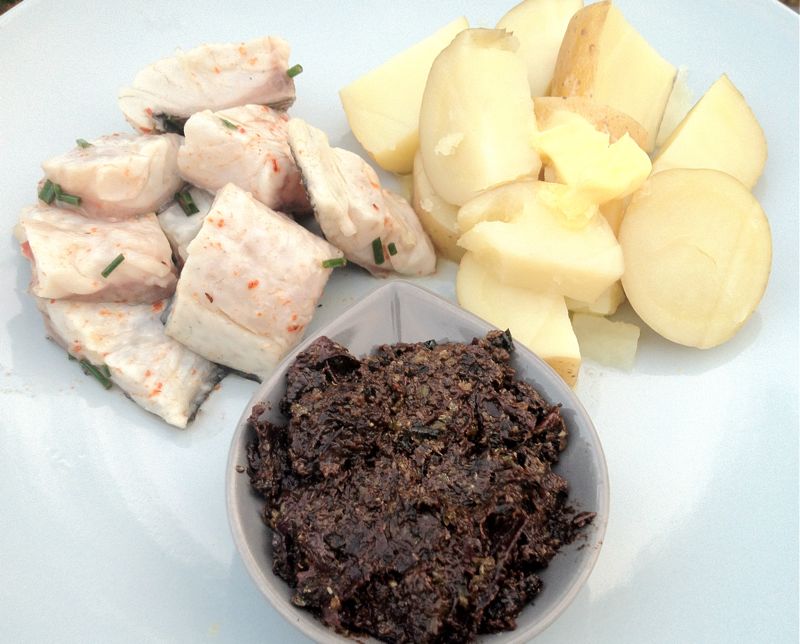
I served mine with boiled Charlotte potatoes (Sainsbury’s Basics Salad Potatoes are the less shapely Charlottes and are under a quid) and with the lime and salt rich ceviche on the side. This is not entry level umami. This is the equivalent of the 80s ads where the Tango man slaps you round the face with a salty fishy savoury explosion. It’s addictively good. I smothered my spuds in tapenade and when I ran out of carbs, ate it by dunking broccoli florets in it, revelling in every tantalisingly over the top mouthful, unable to get quite enough of it.

The sharp of tang of the soft fish (and Felicity’s recipe with sea bream was bang on) cuts through the oiliness of the tapenade perfectly while enhancing it completely. This was one of those meals that took less than 15 minutes to make, was utterly simple in its ingredients and was so good I could hardly believe it. Just perfect for these lingeringly warm autumnal days, I can hardly believe how much I’ve fallen for dulse. This must mean I’m a grown up now!

Dulse Tapenade