
Apple and Amaranth Granola

At this time of year I struggle for breakfast ideas. It’s not cold enough for porridge and I find it hard to get the lovely plums and greengages the season offers so find my bowls of bircher muesli less alluring without a fruity topping. I need something to shake me up a bit and hopefully wake me up a bit as well. The bite of granola seemed to fit the bill.
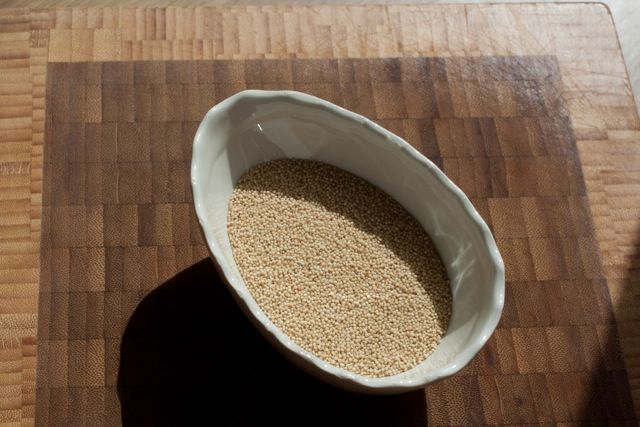
Raw amaranth grains

I’d been wondering what to do with the amaranth I’d impulse purchased at Whole Foods a while back and decided that a granola might lift it from looking like birdseed to something more appetising. As terrified to get it wet as Zack should have been with his Mogwai in Gremlins after hearing it goes gluey, I popped it in a hot pan first, turning it from plain seed to toasty treat.

Popped amaranth seed

Amaranth is an ancient grain (from a grass I believe) and is similiar to quinoa in that it is gluten free* and high in protein and fibre. It makes interesting sounding porridges, but I think it most appetising dry cooked to keep it nutty and crunchy. Bearing in mind that the seed is so crunchy, I decided to make the rest of the granola a little bit softer by coating it with stewed apple instead of oil. Everything about this recipe was impulse based so it’s in cups, not weights.

Apple and Amaranth Granola:

  • 2 apples, stewed down to make one cup of apple puree
  • 2 cups jumbo oats
  • 1/2 cup amaranth
  • 1/4 cup wheatgerm (optional if your granola is wheat free)
  • 1/4 cup sesame seeds
  • 1/2 cup pumpkin seeds
  • 1/2 cup pecans, halved
  • 1/2 brazil nuts, halved
  • 1/2 cup honey (or treacle)
  • 1/2 teaspoon ground ginger
  • 1/2 teaspoon grated nutmeg

First, stew your apples. Back in Belfast where I made this, it’s dead easy to get proper Bramley apples for cooking, but I struggle to find them in London, so just use anything sharp and tangy. Peel, slice finely, add about a tablespoon of water and stew until soft and like a puree. They’ll collapse in on themselves if left at the lowest heat with a lid on for about 20 minutes.

Then using a hot dry pan, toast your sesame seeds and set aside. Have a lid handy and then into the same pan, put your amaranth and toast until about 40% of it looks like tiny white popcorn and the rest is golden brown. It won’t all pop, but what does will go everywhere so you’ll need that lid!

Place all your dry ingredients in a bowl. You can add more types of nuts if you like. Hazelnuts would be lovely. Some flaked coconut is fabulous. You could add in some linseeds or sunflower seeds. Play around to get your perfect mix. Heat the pureed apple and the honey together and then mix into the dry ingredients, mixing well to make sure they are all coated.

Cook on a shallow tray so the granola is well spread out in the oven at 200℃ for about 20 minutes. Turn it over at this point and give it another 10 minutes until golden and crispy looking but not burnt. Cool in the tray and put in an airtight container immediately as this granola is a bit softer than oil based ones and will wilt gently if left out for too long.

Eat clusters of it with your bare hands while doing so or wait until you can get it into a bowl where it is fabulous with fresh berries and yoghurt. Healthy and filling, this doesn’t taste wholesome or lacking in flavour. The amaranth is nutty and packed with flavour and the chunky nuts make this feel very luxurious indeed. Considering it takes so little time to make, I’ll definitely be doing this again instead of spending serious money on boxed mueslis or granolas. Their packaging migh look nice on the table, but you don’t get to pop your own ancient grains with those….

*this whole granola can be gluten free if you choose oats that guarantee themselves GF in processing. See the Coeliac Society for more info from people in the know.

A trilogy of fried chicken…

Three gluten free fried chicken recipes

I hear fried chicken is the next ‘junk food’ to get the gourmet treatment and because I live in Brixton, my tolerance for hipster venues is plummeting, I decided it was time to conquer my fried chicken demons and learn how to do it at home where the whole thing would take less time than queuing up in Market Row. I also decided to set myself the challenge of making it all gluten free as well…

I’m not gluten or wheat sensitive, but for some reason three different people have had conversations with me recently about fried chicken coatings that happen to be gluten free, so inspired by their enthusiasm, I thought I’d steal their ideas and do a fried chicken crunch off, testing each version against each other. All three were good. All three were easy. One was a clear winner.

I standardised a bit. Each recipe does 4 pieces of chicken. All the chicken was free range and was bone in and skin on thighs. I marinaded them in yoghurt loosened with lemon juice to save you all hearing my obsessive rant about why you can’t get proper buttermilk in England again. This would be brilliant marinaded overnight, but a couple of hours will do nicely. About 20 minutes before you need them, drain the thighs in a sieve so they aren’t too wet. Then turn attention to the coatings.

Potato fried chicken: (first piece from the front)

This is basically going a bit 70s and using dehydrated instant mash flakes as your topping. You need the cheap ones from a Basics range so that you don’t accidentally end up with potato paste over chicken skin. It’s dead simple. Put 1/2 cup or about 50g of flakes in a shallow dish and add the seasoning of your choice. I went with thyme, black pepper and paprika. Then dredge your chicken well each side without shaking too much coating off and shallow fry for 10 minutes, turning gently or spooning hot oil over the other side to firm it up before turning. Finish off for 10 minutes in the oven at 180℃. Or simply cook in the oven the whole time without adding any extra oi at 200℃. It won’t be as golden, but it’s quick, easy and crunchy at the same.

Rice flour and cornflour fried chicken: (middle piece)

Slightly more complicated than the first recipe, this has three ingredients instead of one. Mix 1/4 cup of rice flour and 1/4 cup or 25g of each in a dish and add your choice of seasoning. I used Old Bay and cayenne. Then add 4 tablespoons of the yoghurt/buttermilk mix and with your fingertips, rub together until you get what looks like slightly damp breadcrumbs. You don’t want it sticky or too clumpy so keep rubbing til it’s right. Then coat the chicken on each side making sure there are no lumpy bits and shallow fry as above. Or again, oven cook the same way.

Egg white batter fried chicken: (furthest from the front)

A little bit Chinese in style, this one uses egg whites and cornflour beaten together to make a batter. I used 2 egg whites (from the approximately 9000 leftover from my ice cream making) and 1/4 cup cornflour whisked together. I’d run out of seasoning ideas, but some garlic powder might have been good here. Your batter needs to be thick, not liquidy and move quickly or it’ll solidify into something like cement.  Coat the chicken well and then fry. This one needs oil, not the oven. I ended up with a light puffy batter on each side and an uncooked seam from shallow frying. I basted it with hot oil to rid me of this, but it might have been easier to deep fry it. Rest it in a warm oven for 10 minutes after cooking through.

All the chicken was incredibly juicy and tender from its lactic acid bath. Each one had a good contrast between the coating and the meat, but my winner was the potato coating. The rice/corn flour one had a floury squeaky mouthfeel that cloyed slightly, while the batter one was a bit greasy as it absorbed a lot of oil in comparison to the others and both lost their crunch quickly on the plate, becoming a bit gluey, while the potato flakes held up well after cooking and had the most interest to me. It would also have worked well as an oven dish and would be good with fish instead.

I liked all of these better than my usual wheat flour recipe which required marinading, egging and coating and then double dipping to get a good crunch on. The gluten free ones were all very simple and it pleased me the simplest one of all won out. I served my chicken with some roasted plaintain and chilli rubbed corn on the cob for a carb fest, but some slaw would cut through it all nicely and add some colour to the plate. Serve with a refreshing beer and you’ll be frying tonight without having to leave the house…


Blackened corn chowder with deep fried bacon

Blackened corn chowder & deep fried bacon

I adore sweetcorn in soup. I love those corn soups thickened with egg in Chinese restaurants and every year when the cobs are in season I make the divine chicken and sweetcorn soup from the first Leon cookbook, all sweet with corn and sticky with marinaded chicken. But this year I had branched out a bit and been using the first ears for salsa. I’d roasted them on the barbecue til smoky and tossed them with scallion and avocado and lots of lime and watched my dinner guests not scrap over the last spoonful.

Making the most of my glowing coals last weekend, I did some sweet potatoes on the embers and charred as much corn as I had in the house, setting it all aside for a less sunny day when I wanted the flavour of summer. It didn’t take long and by Wednesday I needed to be reminded it was August and turned my attention to the leftovers and immediately thought of a summer soup…

Bacon and corn are natural bedfellows, but I wanted this soup to be easily meat free if you baulk at battered bacon or don’t want to use chicken stock, so the bacon tops it and the stock can be vegetable based. I’d top it with avocado in this case and add some hot sauce to the soup.

Blackened corn chowder with battered bacon (serves two)

  • 2 ears sweetcorn
  • 2 orange fleshed sweet potatoes
  • 2 scallions
  • 200ml stock
  • 100 ml milk
  • 4 rashers of streaky bacon
  • 50g self raising flour
  • 50g rice flour (or all self raising if you don’t have rice flour)
  • 150ml ice cold sparkling water
  • pinch cayenne
  • milk to cover
  • oil for frying

First blacken your corn. The best way to do this is roast them over the barbecue, but you could parboil the ears and then pass through a gas flame or under a smoking hot grill until charred in places. Leave to cool until you can handle the corn and then strip the kernels off with a sharp knife.

If you are using vegetable stock, chop the ears in half and simmer in with your veg to make a super corn-infused stock for the soup.

While that’s doing, cut your bacon rashers in half across the way so you have twice the number of pieces and then cover them with a bit of milk. This will help the batter stick to the bacon and not just slide off in the hot oil.

Chop your scallion and sweat in a bit of oil. If the sweet potato is raw, chop it small and sweat too. Then add in the corn and just cover the veg with stock (you may need less than the amount stated) and simmer until everything is tender. Then take a third of the soup out and blend the remaining, adding the milk as you do. Add the chunky third back in and warm the soup gently.

Put your oil on to heat and make your batter by combining the two flours and the water and cayenne to make a thick, but not solid batter. The rice flour and sparkling water will make the batter very light and puffy, making sure the rashers cook quickly and without becoming shatteringly crisp. Lift the rashers out of the milk and into the batter and then into the oil. The batter puffs and spits slightly but a minute each side should do it. Drain on kitchen roll.

Serve bowls of warm soup with two rashers of bacon on top. The soup is sweet with the veg and the salty slightly spicy bacon cuts through it beautifully. Everything tastes so summery and the bacon is amazing. Cooked til tender enough to split the rasher with a spoon’s edge and crunchy with batter, you’ll want your bacon deep fried every time, not just when the sweetcorn is in season!


Vietnamese Coffee Ice Cream


Last month I finally got the chance to try an iced coffee for the first time since an ill advised carton of Nestle Frappe back at primary school which scarred me for life (I think it’s where they got the idea for that 3 in 1 monstrosity they were pushing at Tube stations recently). This time I showed more sense and went to the Vietnamese cafe Banh Mi Bay and sampled this summer drink made by the people who do it the best.

Strong, but not bitter and slightly sweet from condensed milk, it was so refreshing I couldn’t stop thinking about it. I wanted to re-live its cooling caffeine hit and when Kavey mentioned that July’s Bloggers Scream for Ice Cream challenge was a condensed milk custard, I knew what I had to do…

Vietnamese Coffee Ice Cream (makes about a litre)

  • 410g can of condensed milk or two small cans (Polish shops usually sell the bigger ones & are great value)
  • 3 tablespoons freeze dried coffee dissolved in 60ml of water, cooled slightly
  • 5 egg yolks
  • 250ml double cream
  • 250ml whole milk
  • pinch salt
  • freeze dried raspberries (optional)

First make your coffee. You’re probably having kittens at the thought of using instant coffee, but I always keep some in the house for baking and cooking as you want a good strong coffee flavour without too much liquid and proper ground beans don’t do this. If you really object to the instant stuff, this is a good time to try cold brewing coffee and using the concentrate that method creates instead. I wasn’t organised enough so instead I used 3 tablespoons of freeze dried espresso powder in 60ml or 1/4 cup of boiling water and left to cool a bit while I made the custard. I find when you freeze ice cream it lessens the flavour and I like a proper coffee kick from my custard so heaped the coffee in.

I warmed the cream and whole milk, adding in the condensed milk so it all melted and looked like thick creamy custard. I separated the eggs and beat the yolks, adding in a bit of the condensed milk custard to temper it before adding it all back into the saucepan to thicken. Add in the coffee and the salt and str until blipping gently and thickening nicely. It’s like a regular ice cream custard base but much easier to do without splitting or it not coming together. Chill well. It will look as set in the bowl at this point as pannacotta and will be a little bit difficult to get into the machine without ladling.

From reading the expertise of the people organised enough to get their posts up on Kavey’s blog in time, it looks like you could freeze other condensed milk based custards without a machine because of the texture of the custard is airier than usual and wouldn’t just make a big icy block (see her comment below). I used my machine as normal as this is egg based and while it was churning, turned my attention to the garnish.

I adore coffee and raspberries together. The tang of the berries works especially well with coffee desserts and I decided I wanted to cut through the richness of this ice cream with a sprinkle of freeze-dried raspberry. Unfortunately I wasn’t organised enough to mail order these and instead spent an afternoon trekking round London trying to find them in Whole Foods and Waitrose and Fortnums and not getting very far. Instead I bought a bar of 36% cocoa milk chocolate with raspberry from Marks and Spencer and took my frustration from my failed shopping trip out on it with a rolling pin.

I sprinkled some crushed chocolate chunks into each section of my silicone tray and poured the ice cream in, topping with more crushed chocolate and freezing as ice cream bars. I served these between wafers and the crunch of these and the chocolate chunks made the ice cream seem even creamier than it was. Not to toot my own horn, but this was the best coffee ice cream I’ve ever had and coffee ice cream is my favourite…


Potatoes with fenugreek & lovage; onion & lovage bhajis on the side

Ah, lovage. Blessed with the kind of name which conjures up images of old-fashioned English cottage gardens, nestled next to lavender, it was a herb I’d heard of but until last year I’d not cooked with, until Deanna Thomas gifted me with a generous bunch from her garden. You rarely see it for sale so it’s a herb best used from home-grown if you can manage to source it from a friend, or nurture your own. By all accounts it grows voraciously, so if you do have a patch, you may wonder how to use it up.

When I did start to use it, I was initially thrown by how to play to its strengths. I was delighted and confused in equal measure by its curious ‘curry meets celery’ characteristics… a robust savoury flavour, and it holds its shape and body better than parsley, but I couldn’t find many recipes which excited me. Last year I made an experiemental lovage pesto, served with grilled sardines and lemon juice, but the rest of my stash went into the stockpot and I never felt I’d taken full advantage of its full potential.

This year I was determined to make the most of lovage’s late spring delights, and thought it might work well with some south Asian flavours. A quick look online referenced ajwain seeds in Indian cooking, but despite common misperception these aren’t the same as lovage seeds. Despite not finding a great deal of precedent, I didn’t think I could go far wrong, so on a wet midweek evening last week I got busy in the kitchen for an hour, making a hearty veggie meal for myself and a mate who’d dropped round. Few things counter the soggy evening blues better than grinding your own spices and making something with a touch of spice.

The fenugreek & potato dish has become a firm favourite over the last six months, fuelled by a discovery of fresh fenugreek (alternatively labelled ‘methi’). As mentioned before, I’ve been inspired by Anirudh Arora’ recipes in ‘Food of the Grand Trunk Road‘ and one recipe which leapt out was Aloo Methi Ka Saag. It’s quick and easy compared to many of the recipes in the book, and it’s healthy and good for veggie guests.

I’ve always loved saag aloo, but was really intrigued by the inclusion of fresh methi in this take of a simple classic. Fresh fenugreek has small ovoid leaves and a mild aroma, and can be found in many asian groceries. However it seems to wilt incredibly quickly, even if kept in the fridge in water, so I’ve found it’s best to make this on the day of purchase if possible. You can wash and freeze the leaves: though it seems to tone the flavour down at least it’s a good fallback if you fancy a quick fenugreek hit.

However – and I’ll try to be delicate here – I’ve discovered that fenugreek does have a peculiar ‘characteristic’ which means you’re likely to be reminded of it for a day or two after consumption. Somewhat like the effect asparagus has on some people, the malodorous qualities are longer-lasting and tend to permeate from a variety of regions. It seems this is a common side-effect, and is known on mother and baby forums as fenugreek seeds are used for stimulating milk supply. Not sure I make the connection with maple syrup though…

Finally, I’ve had my cockles warmed by the hitherto unknown delights of panch phoran – a Bengali five spice mix – thanks to Rice & Pickle’s mango pickle recipe she posted a few months ago. Days after reading her recipe, while the name was still fresh in my mind, I stumbled across a pack of this mix in Unicorn, and have been adding it to dishes ever since. As it contains fenugreek seeds it has a particular affinity to fresh methi, and has proven itself to be another reliable addition to the larder shelves.

Over the years I’ve tried a few different recipes for onion bhajis, but have found this from Daxa Dashani on the BBC website is reliably reproducible. However I tend to increase the amount of onion in the recipe, using a couple of decent sized onions to add more bulk. I also dry roast and then grind the panch phoran, adding it to the mix before letting the batter rest. Instead of the spinach in the recipe you can substitute this for other greens: earlier this spring I used wild garlic, and here I used lovage leaves, chopped roughly. This recipe makes around a dozen bhajis, depending how generous you are with the mix. Make sure you drain the bhajis well after cooking, sitting them on kitchen paper or napkins to remove any excess cooking oil.

The final dishes were great (and disappeared in no time between two hungry lads): the lovage gave an extra savoury depth to the bhajis, but was less obvious in the aloo methi. I used a scotch bonnet chilli in the aloo methi, but cautiously removed it before serving. As I’d used smoked paprika rather than chilli the spice flavour was more muted than when I’ve made this previously, so I served it with some hot sauce on the side. A breezy fresh salsa or a fiery lime pickle would be an even better choice.

Best served with some raita, a chutney (which I overlooked on this occasion…doh!) and a glass of good Indian Pale Ale. Fast, fresh and healthy!

Potatoes with fenugreek and lovage
(based on a recipe by Anirudh Arora)

  • 3 bunches of fenugreek
  • 1 handful lovage leaves
  • 30ml vegetable oil
  • 1 teaspoon cumin seeds
  • 1 tablespoon panch phoran
  • 1 teaspoon freshly ground coriander seeds
  • 1 teaspoon smoked paprika or chilli powder
  • 1/2 teaspoon freshly ground black pepper
  • 2 green chillies or 1 scotch bonnet, sliced into lengths
  • 1″/2.5cm length of fresh ginger root, peeled and chopped
  • 8-10 new potatoes, sliced… or several larger potatoes roughly diced
  • 1/4 teaspoon turmeric
  • 1 teaspoon sea salt
  • juice of 1 lemon
  • a decent squirt of tomato purée
  • 1/2 teaspoon garam masala
  • Coriander leaves to garnish
Remove the methi leaves, then wash well and chop. Dry with kitchen paper and leave to one side.
Heat half the oil in a wok and add half the cumin seeds until they snap, crackle and pop. Add the methi leaves and stir until they start to wilt down, then remove and set aside to cool.
Add the rest of the oil and heat, adding the rest of the cumin seeds. Once they start to crackle, chuck in the ginger and chillies and sauté well for a minute. Add the coriander, salt, turmeric and chilli/paprika, stir and cook down for a couple of minutes, then add the spuds. I tend to turn the heat right down and cover the wok, letting everything cook through slowly for 10-15 minutes until the potatoes are just starting to give.
Stir through the tomato purée and cook for a further few minutes, then add the freshly squeezed lemon juice and the garam masala. Finish with a garnish of chopped coriander leaves, and enjoy.