Warm Octopus Salad

 Warm Galician octopus polpo salad

 The more I cook, the more I realise I want to cook. Each meal becomes a fabulous opportunity to do something I want to and something to be savoured. We all have our trusty standbys and favoured dishes, but when the chance to do something completely new comes along it thrills me. So when Liz* from Brixtonia suggested getting together and cooking fresh octopus, I was all over the idea. I’ve never met seafood I don’t love and it seemed like a perfect challenge.

I have to admit that I didn’t have a clue what to do with our eight legged friend so luckily Liz has access to a stack of cookbooks with some good ideas and emailed me several, mainly from Rick Stein. We pondered over two and couldn’t quite decide on which so thought we’d combine them both. But first up was getting our items. We needed a trip to the market.

Saturday morning saw us up relatively bright and early and in the queue at Dagon’s for our octopus. I’ve said it before, and I’ll say it again many times, Dagon’s is the jewel in Brixton Market’s crown. They have a vast choice, good quality, are excellent value and have friendly and helpful staff. I try to go at least once a week and I must admit I get a real kick out of being recognised by the staff there now. It’s like visiting the 50s high street but with more women’s lib and better banter.

They talked us through buying the octopus and we went for one whole cleaned octopus. I forgot to weigh it when I got home but it cost us a very reasonable £4 for the whole thing. We also picked up some samphire, a kipper fillet for me and a mackerel for Liz and the whole lot came to an even eight quid. Can’t say fairer than that. We got everything we needed and a box of Alphonso mangoes we just wanted and then got down to the cooking.

Galician Octopus Salad (From Rick Stein’s Spain)

  • 1 clean octopus
  • 400g waxy potatoes, peeled and cut into chunks
  •  2 tbsp olive oil
  • 2 tsp paprika (of your choice)
  • 1/2 tsp of cayenne pepper if not using hot paprika.
  • 1 tbsp salt

This is so simple it’s untrue. Take your cleaned octopus and put in a pan just covered with water and the tablespoon of salt and bring to the boil. Then reduce the heat to a simmer and cook for 45 minutes to an hour. That’s it. That’s how you cook an octopus. We didn’t tenderise it in anyway, either by freezing and thawing or bashing it against the rocks or anything else. We shoved it in a pot of water, left it well alone and went and had a glass of wine and a good gossip.
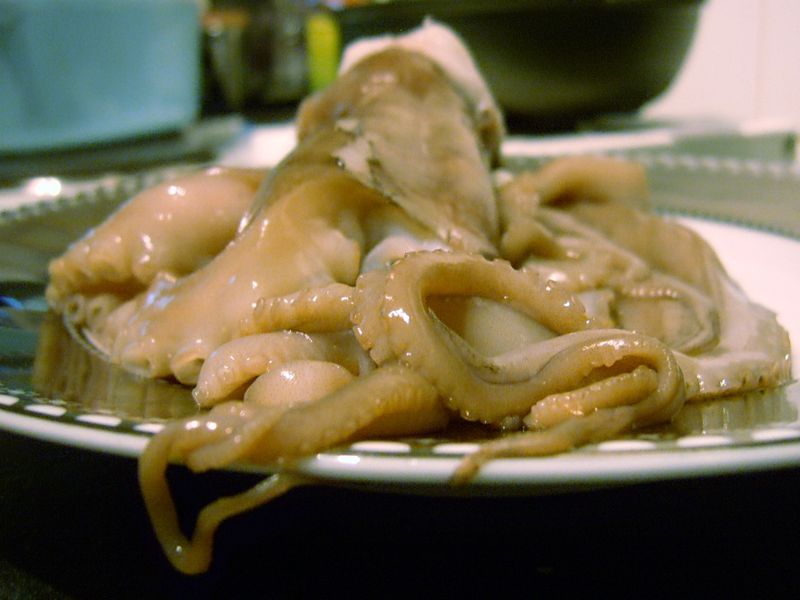
Octopus

After an hour, we came back and lifted the octopus out of the cooking water and left it to cool on a plate. It had turned the beautiful mauve we both associated with Spanish octopus dishes and the tentacles had curled in beautifully. We added the potatoes into the remaining cooking water and brought them to the boil until tender but still al dente. Then heat the olive oil, add the paprika and cayenne and fry the potatoes until golden and crispy.

Cooked octopus ready to slice

While they are sauteeing nicely, cut the octopus into inch or so chunks, using both the tentacles and the head and body. Take the potatoes off the heat and add the octopus in for a few seconds just to warm it through and coat it with the paprika. Dish up with some chopped parsley (our concession to the other recipe we had planned as well) along with some vegetables if you so fancy (we did steamed samphire and roasted aubergine and tomatoes) and enjoy!

The octopus was firm but very tender without a hint of rubberiness. It was slightly sweet and very flavoursome, especially alongside the potatoes. Slightly salty, intensely umami and crispy round the edges, these were the best fried potatoes I’ve ever had. Simple and packed with flavour, the whole meal was fantastic. We feasted well, but with a few more spuds, the one octopus would easily serve 3 -4 making it good value as well as impressive and delicious. Until now, all my cephalopod ardour was reserved for squid, but there’s another many legged love in my life now I’ve discovered octopus…


*Thanks to Liz for her cooking skills, being an excellent guest and taking that fantastic sea creature shot!
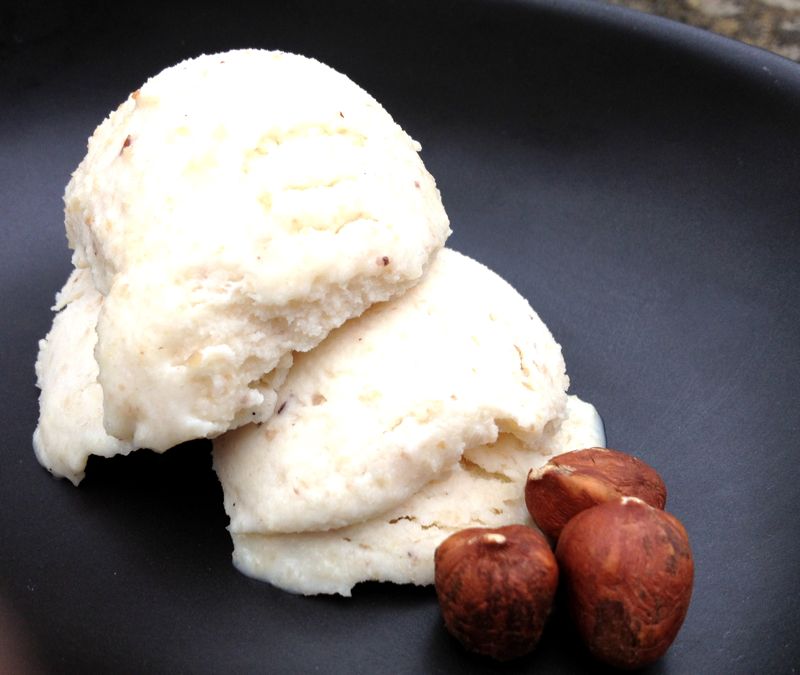
White Chocolate Nutella Sorbet

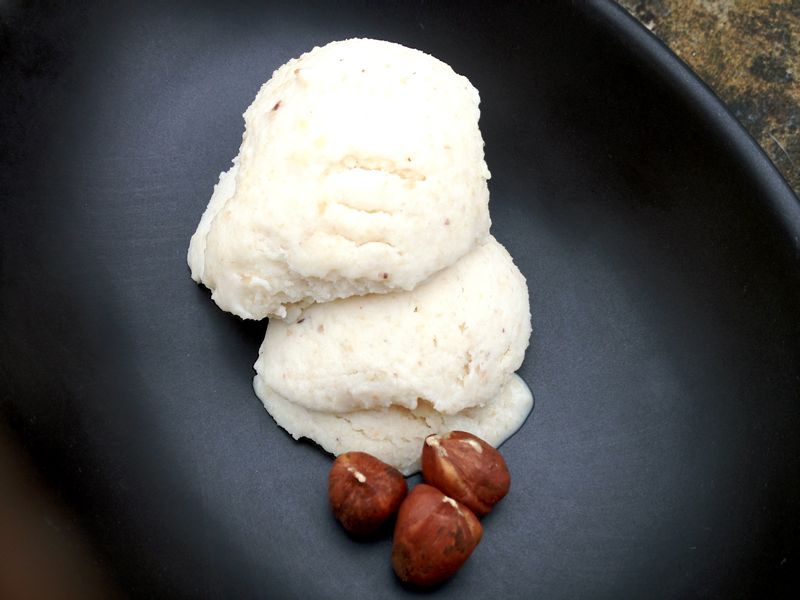
 White Chocolate Nutella sorbet

 Every so often, you realise you’ve never seen certain things you just assumed existed. Baby pigeons, a body positive article on the Daily Mail, a smiling traffic warden or white chocolate Nutella…

People love Nutella, especially ones like me who associate it with childhood holidays so it seemed strange that in this day and age they haven’t gone the Marmite route and brought out variations on a theme with different types of chocolate. It looked like if I wanted to try this elusive style of spread I’d have to make it myself.

I came across this David Lebovitz recipe for home made Nutella and while it looks gorgeously rich and much more alluring than the shopbought stuff, it also seemed quite labouriously faffy with its milk powder and two types of chocolate and dollops of honey. I wondered if I could simplify it and still end up with some thing essentially spreadable? I like to think I did just that and that the most difficult part of it was finding a half decent brand of white chocolate!

White chocolate Nutella spread:

  • 200g white chocolate (I used two large bars from Marks & Spencer)
  • 120ml whole milk
  • 100g hazelnuts
  • 75g sugar
  • 50ml vegetable oil

Firstly, either buy ready skinned hazelnuts or prepare yourself for a horrible kitchen job when you skin them yourself. i was advised to boil them for 3 minutes in a small amount of water and bicarbonate of soda to help loosen the skins rather than just roast them. Unfortunately my small amount must have varied to their’s and it all boiled over leaving my cooker coated in a fizzy brown liquid that clung like nobody’s business. Then when I rubbed the skins off in a teatowel, they stained the cloth forever more and although the entire skin came off, they stuck to everything like glue. I then had to roast the nuts at 220℃ for about 25 minutes to dry them out and turn them golden brown.

However this palaver redeemed itself when I went to grind the nuts in a food processor and they turned to a soft powder with ease which I haven’t noticed before with just roasted nuts. Hazelnuts finally tamed, I turned my attention to the rest of the recipe and heated the whole milk and the sugar gently on the stove. Then I broke up the chocolate and blitzed it into the hazelnuts until I had a thick paste.

white chocolate buttons and hazelnuts

Add the warmed milk mixture into this paste and blend it all together (in batches if needs be) and then return it all to the pan to heat it through and make sure the chocolate is totally melted and everything is combined. Then add the oil, a tablespoon at a time until the whole thing looks soft and spreadable rather than stiff and unyielding, bearing it in mind it will thicken as it cools. I probably used about 60ml in total but depending on your chocolate you might need more.

White chocolate Nutella jar

Pour into a sterilised jar and allow to cool. It will be scoopable and spreadable and in my experience very very good with homemade mini doughnuts. It isn’t as smooth as the shopbought version or David Lebovitz’s one but it tastes great and I don’t mind the texture of the nuts. The only problem is that because of the fresh milk it has a fairly limited shelf life even if kept in the fridge so I decided to turn it into sorbet using this recipe from The Little Loaf as a rough guide.

White Chocolate Nutella Sorbet:

  • the jar of Nutella from above
  • 200 ml water
  • 50g sugar
  • 100g extra white chocolate

Heat the water gently and dissolve in the sugar, melting in the extra white chocolate in lieu of the cocoa powder in the original recipe and then stir in the homemade Nutella until you have a thick shiny custard like soup. If you really don’t want the texture of the nuts in your sorbet then strain the mixture through a sieve at this stage. If you don’t mind/are lazy, pop it all in a bowl and chill well before either churning in your ice cream machine or mixing with a fork every so often in the freezer to create a sorbet.

This is the grown up glamourous sibling of that childlike doughnut dip. Icy cold, nutty and sweet, it’s as sophisticated as chocolate spread gets. It’s delicious, but very rich and a little goes a long way but the whole thing is preserved by freezine so you can dip in and out every time you get the craving. I plan to serve it on the side of the dark chocolate sorbet as a real contrast or as an ice crem sandwich so you still the Nutella on toast vibe. I’m even more baffled as to why I’ve never seen a white chocolate version before. It’s converted me to what I always thought was kids’ chocolate!

White chocolate Nutella sorbet


Pastrami

There is a long weekend coming up and I have an excellent suggestion as to what you could do with it. Why not have a go at making home made pastrami? It’s not quick, but it’s also not difficult in the slightest. And if the weather is good over the Jubilee, it’s an excuse to get the barbecue out. Tempted yet?

Pastrami is beef brisket, brined and cured, then rubbed with spices and smoked until cooked. It’s also known as the finest sandwich filling around and something you always want more of so having a great big hunk of it in the fridge as cold cuts when you’re off work is just ideal. I’d actually never cooked with brisket before, but Mister North’s superlative spiced beef at Christmas had piqued my interest and I was just waiting to get my hands on one. And thanks to Becs over at Lay The Table alerting me to the presence of Farmison and their grass fed, higher welfare standard meat by mail order, I ordered a 2kg beauty on a Tuesday evening and had it ready for its brine bath by Thursday tea time which impressed me greatly and I’ll certainly be using them again for things my butcher can’t get me easily.

Brining meat is very easy. You simply prepare a solution of water, spices and salt and immerse the meat for the required time. This is also a cure thanks to the presence of saltpetre and means the meat doesn’t spoil, but retains a lovely rosy hue instead of looking leathery like some cooked beef does. Although the meat will be preserved by the process, you still need to be cautious with hygiene and make sure everything you use is nice and clean. It’s also worth preparing everything in advance rather than weighing spices at each step or you’ll lose track and end up accidentally doing too much of one thing.

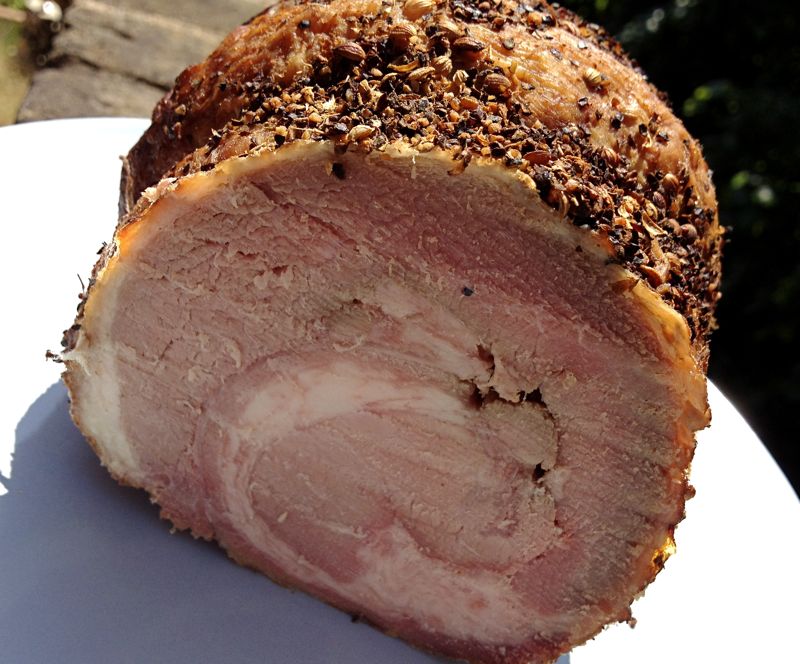
Pastrami

  • brisket (I used a 2kg piece)
  • 200g sea salt
  • 100g dark brown sugar
  • 2 litres water ( I boiled it and cooled it)
  • 6 cloves of raw garlic
  • few stalks of thyme
  • 2 teaspoons of saltpetre (I had mine from the bacon)
  • 1 tsp whole cloves
  • 1 tsp whole peppercorns
  • 1 tsp whole coriander seeds
  • 1 tsp shichimi togarashi (or chilli flakes)
  • 2 tsp allspice berries
  • 2 cinnamon sticks
  • 1 tsp mustard seeds
  • 1 tsp fennel seeds
  • 1 tsp ground ginger
  • 1 tsp ground mace
  • 1 tsp mustard powder
  • 4 bay leaves (ie: I just used everything in the cupboard, bar cumin)

If your brisket comes in one of those meat hairnets, remove that now, but keep the string around it to keep the brisket shaped and rolled. Rub a handful of the salt over the meat while you dissolve the rest of the salt, the sugar and the saltpetre in the hot water. Give the spices a bash to release their oils and flavours and add to the water. Bruise the garlic cloves to release the flavours and put them and the thyme into a deep tupperware and put the meat in and pour the brine you’ve just made over the meat. Seal it up and leave it in the fridge for up to five days, but a minimum of two.

The meat will still have a pinkish tinge when you take it out of the brine so don’t worry, it’s quite safe to cook. The meat needs to be smoked to give that proper pastrami feel so there are two ways you can do it. If the weather is nice, you can use the barbecue or you can do it in the oven, but either way you’ll need wood chips to impart the  smokiness that lifts this from just being beef. Don’t forget to rub a crust of ground coriander seeds and cracked black pepper over the top of the meat first.

I started mine off on the barbecue using the indirect method where the charcoal is on either side of the grill and the meat is in the middle in the coolest spot so that it cooks without getting that charred exterior that direct cooking gives. I added pecan wood chips that I had soaked first and I got a fairly good smoke on but the charcoal went out about two hours in and since I don’t have a meat thermometer, I couldn’t tell if the meat was cooked so I popped in the oven to finish off. I put the rest of the wood chips in a dispable foil tray and put the meat above them on a trivet, then covered it all with foil and slow cooked it for 90 minutes at 150℃. The moisture from the wood chips steams the meat so it doesn’t dry out, but keep an eye and make sure they don’t lose moisture themselves. You might need to top up.

Once you’ve let the meat cool down then you can congratulate yourself. You’ve just made  pastrami from scratch! It’s as simple as that. Now serve it either slightly warmed (pop it back in the oven to heat gently) or at room temperature for a stunning picnic lunch. I made mini pretzel rolls and bagels from Dan Lepard’s excellent recipe and heaped them high with gherkins and mustard on the side and it all seemed to go down marvellously, fortifying us well to sit through four hours of Eurovision, but leaving me with a goodly amount of leftovers for cold cuts in the warm weather. Don’t delay and you could be seeing in the oh so British Jubilee next week with some very American pastrami!

Cho Cho and Asparagus Spring Salad

Chayote salad or cho cho

While this week might have felt like high summer, it is still only spring. But before you feel too downcast, that means it is asparagus season and although you probably don’t need any excuse to indulge in those gorgeous green spears, this lovely spring salad might introduce you to some vegetables you don’t know just as well.

When I first moved to Brixton, I kept seeing strange kermit-green items that looked like a pear crossed with a sock puppet’s mouth on the stalls in market and was unsure if they were to be eaten as a sweet thing like a fruit or more like a vegetable. In fact I wasn’t even sure what they were called until I was flicking through a Caribbean cookbook and spied a photo of them and discovered the Trinidadians call it christophene and other Caribbean cultures call it a cho cho. (Actually it’s the most named fruit I’ve ever seen…)

Usually served as a side dish, cho chos are unbelievably succulent yet firm fleshed, a little bit like a super-charged courgette. I served them blanched then fried off with a bit of chilli and garlic all last summer, which was delicious, but I made a mental note to branch out a bit this year. I thought their fresh feel would be perfect in a salad and here I’ve combined them with thinly sliced fennel, chargrilled asparagus and green beans all topped off with a parsley and caper salsa verde style dressing which served with some steamed new potatoes and some halloumi made a lovely vegetarian dinner dish, but it would also be perfect alongside some grilled fish.

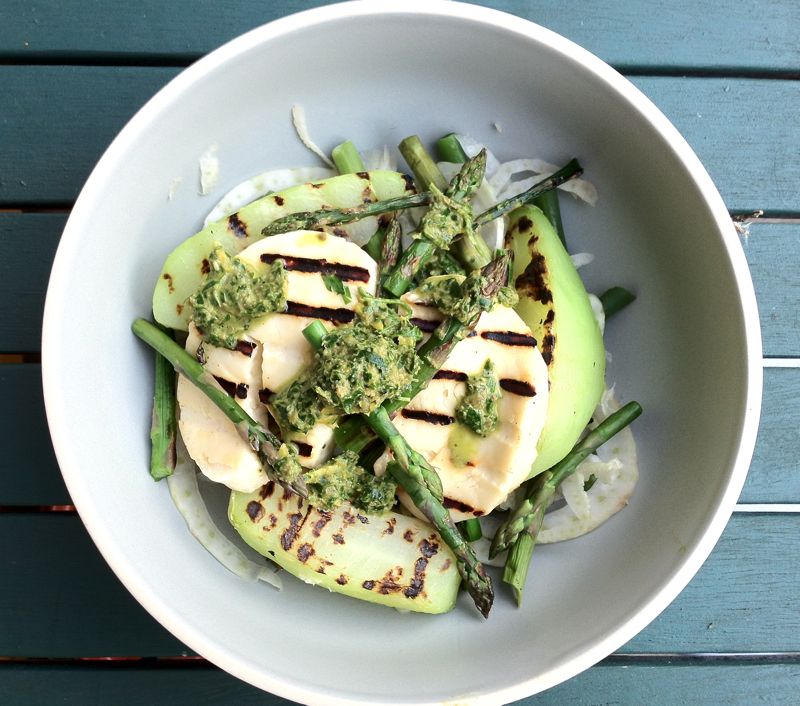
Cho Cho and Asparagus Spring Salad

  • 1 Cho cho (peeled, cored and quartered)
  • 1 bunch asparagus
  • 1/2 bulb fennel
  • about the same amount of green beans as asparagus
  • 1 bunch parsley
  • zest of one lemon
  • juice of two lemons
  • 2 teaspoons drained capers
  • small glug of olive oil
  • splash of vinegar (anything except malt will do)
  • mustard to combine
  • salt and pepper

Don’t panic about the relaxed amounts above. This is a simple salad but it’s to your tastes so there’s no need to be precise to the gram or ounce.

Peel, core and quarter your cho cho and then boil for about 6 minutes or until it still has some give when poked with a knife. Add the green beans in about 4 minutes from the end and cook til still slightly squeaky and al dente. Drain both. Set the cho cho aside and put the green beans in cold water to keep them from cooking further.

Heat a griddle pan until smoking (or if you happen to have the barbecue going…) and then cook the cho cho until properly seared on each side, adding the asparagus when you turn the cho cho the first time. While that’s cooking away adding tonnes of flavour, slice the fennel as thin as possible with a knife or mandolin.

Then put everything for the dressing in a hand blender except the mustard and blitz until the parsley is finely shredded. See how liquid it is (this will vary with the size of the lemons) and then add as much mustard as you think will combine it into a fairly thick dressing. You could also add anchovies to the dressing if you like their saltiness or leave the capers out and put some mint and garlic in instead.

Once the cho cho is well grilled and the asparagus is smokily charred, add to the drained beans and sliced fennel and drizzle everything with as much dressing as you desire and serve for the freshest dish of the weekend. The cho cho is extremely refreshing and the dressing just explodes with flavour and everything is very healthy but without any sense of denying yourself. All the ingredients are easily available in Brixton market (you might struggle to get cho chos in Tesco) and this whole dish should take no more than 15 minutes to assemble leaving you plenty of time to get outside and enjoy the weather!

*This post was orginally featured on Brixton Blog, but it’s too perfect for this weather not to share it with you!


Saltfish and Parsnip Croquettes

When I was wee, you saw croquettes on the menu quite often, usually involved leftover potato and tinned fish in luridly orange breadcrumbs and often oddly accompanied by chips for triple carbing. This rather British concoction has fallen out of favour, replaced by the rich bechamel filled croqueta of tapas bars as we become more cosmopolitan. I rather miss the old version and when I was picking up some saltfish in the market the other week, my mind went toward reinventing, and hopefully reviving them.

I love the firm texture of saltfish or salt cod and since discovering that it freezes well after soaking, often have some to hand since it is eternally versatile. I also often have leftover mash as I find it a kitchen staple. I just needed something else to lift the croquettes from their bland reputation and when rummaging in the fridge on a damp Bank Holiday and sincerely hoping I wouldn’t have to go outside, I stumbled across a parsnip and thought its spicy sweet flavour would go brilliantly with the fish. I suddenly had the perfect leftovers brunch!

Saltfish and Parsnip Croquettes (best as leftovers, slower to make from scratch)

  • 150g saltfish, soaked according to instructions. (I do a big batch and then freeze it for quick dishes)
  • 250g mashed potato (I use a ricer for super smooth mash)
  • 100g grated raw parsnip
  • 1 egg, beaten
  • 100g panko breadcrumbs
  • oil for frying

These are super simple and should take about 30 minutes to make including chilling. Peel and grate a large parsnip. Mix it into the mashed potato with your hands until well combined and then flake in the soaked saltfish, checking for any bones as you go. Season to taste (most of the salt will have soaked off the fish, but be cautious in case it hasn’t) and mix up well with your hands. Then take about a handful and roll into a ball, then out into a sausage shape. This amount should make six. Place on a slightly oiled plate and chill for minimum 20 minutes or until needed.

When you are ready for the croquettes, either heat a frying pan with olive oil for shallow frying. Crack the egg into a bowl and beat. Tip the panko breadcrumbs onto a plate. Then roll the croquette in egg and dip in the breadcrumbs and then into the hot pan. The panko crumbs which are made without a crust will become golden and crispy while the inside is hot and fluffy. Turn regularly giving each side about a minute. Drain onto kitchen paper. You could use a deep fat fryer if you prefer as this will do all sides at once. Serve with salad as a starter or with a poached egg on top as a main course. Chilli sauce is essential either way.

I like all the constituent parts of these so I expected to enjoy them. I was pleasantly surprised to adore them.  The breadcrumb coating was light and crispy and not at all greasy, giving way to a smooth filling crammed with firm flaky fish and peppered with still slightly crunchy parnsip that really came into its own, leaving behind its bland reputation completely. This was the best brunch I’ve had in a long time and I look forward to making them again and trying oven baking them as fishcakes. If you’ve ever wondered what to do with either saltfish or a parsnip, I can’t recommend these enough. If the croquettes of my childhood had been this flavoursome, they would never have fallen out of fashion!

*This post originally appeared over at Brixton Blog where those lovely Brixtonians let me have free run of their kitchen.