Poutine

Sometimes only chips will do. And after a Friday night that saw tvdinners and I literally drink Seven at Brixton dry of basil and ginger mojitos before giving Kaff Bar’s excellent £3 version a go, I not only needed chips. I needed turbo charged chips. It seemed like the moment my entire life had been wating for to try poutine

For those of who wondering what kind of shenanigans that is, let me elaborate. Poutine is the unofficial dish of Canada, a religion in Québec, especially Montréal and known elsewhere as chips covered with gravy and cheese curds. It’s not pretty dish, but it’s a glorious mix of carbs, grease and fat best served piping hot and after alcohol has been consumed. A grown up gravy chip.

I’ve never seen it served here and it might seem like a right faff to go to, but luck and a certain amount of planning made it fairly straightfoward. The seemingly tricky bit is the cheese curds. I already had the rennet from previous cheesemaking exploits and have discovered that even the little Sainsburys in Brixton sells unhomogenised Jersey milk. So fresh they squeak cheese curds were only a few minutes away.

While the spuds for my chips parboiled, I scalded the milk, added the rennet and let the curds and whey develop. Dry the curds off in a cheesecloth or muslin and turn your attention to the chips. Having drained the chips, I couldn’t be bothered with all the stages Felicity Cloake suggests here and fried them for five minutes at lowish temperature, before draining on kitchen paper and allowing the oil to get really going.

I’d roasted a chicken earlier in the week and by some feat of willpower had the juices left to make gravy with. I thickened it up with cornflour and heated it up. I broke the curds up a bit more with a fork and let drain well before batch frying the chips til very golden. I personally loathe an anaemic chip so relished the opportunity to get these good and Ronseal brown in the hot fat.
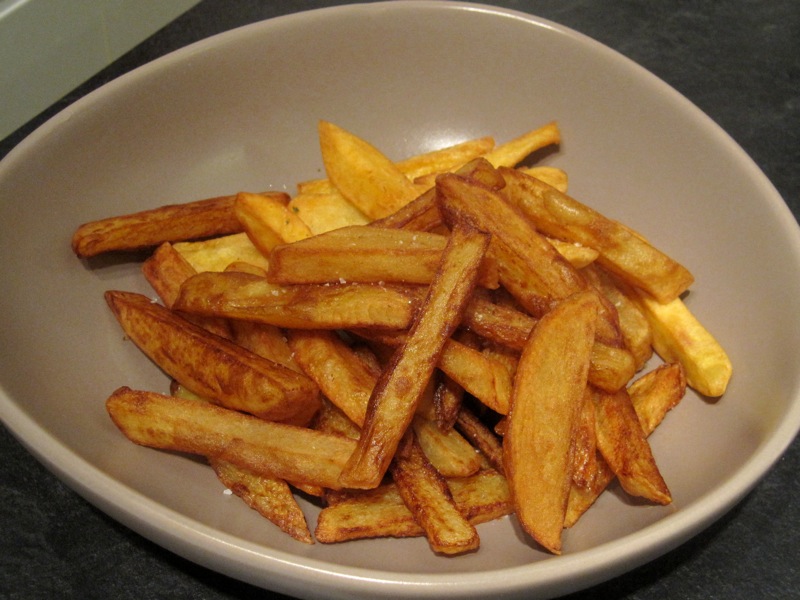
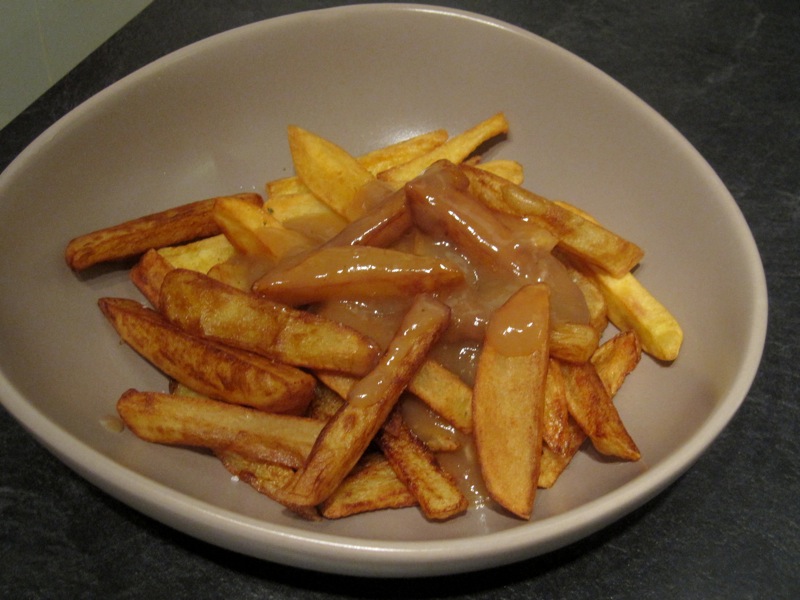
At this point I cannot claim how authentic my poutine was. I dusted the chips with salt and pepper, poured the gravy over and then added the curds. I should have done the curds first and then the gravy to make sure the cheese melted more, but I was too hungry to be too bothered. I got stuck in.

And zut alors, I can see why the Quebecois love this dish so much. It’s simple, it’s tasty, it’s filling. It’s soft and crunchy at the same time and cries out to be eaten quickly and while piping hot. The cheese curds melt more like mozzarella than cottage cheese and add a creaminess. The squeak is a little bit like halloumi and the whole thing works like a charm. I loved it.

I’m entering poutine in the Hall of Fame of chip dishes immediately. You might be able to fiddle with it to make it veggie, but my advice is keep it simple and make a date with the dish as soon as you can. The Canadian embassy should start a poutine joint for post pub Saturday nights in the West End. It’d attract more people to visit Canada than all the maple leaves in the world…

Parlour Café Cookbook spread

From parlour to table: what makes a great cookbook?

Parlour Café Cookbook spread

What is it which turns a cookbook from being something which we merely reference and use, to something which instead we cherish and revere?

Is it the look and feel of the book itself: how it feels in the hand or lies on the kitchen table? Is it the cadence and character of the author’s writing; the photographer’s eye for detail, or illustrations which bring the writing to life? Or is it perhaps the core attraction of the book: the recipes themselves. How good are they; how easy are they to follow; how confident do they make you in being able to achieve something new and exciting?

I love how we can build up close, loyal and loving relationships with some cookbooks: they draw us in, distracting and tantalising; beckoning and beguiling. They may act as good companions on lazy Sunday afternoons, keep us up reading at bedtime, shape our shopping habits, push us to try new techniques, and open new doors with attitudes and concepts. The relationship one builds up with a good cookbook is so personal, and almost intangible… we can all think of certain books which we really love.

Both Miss South and myself have an ever-growing selection of cookbooks which we consult, covet and collect. We grew up surrounded by cookbooks from luminaries and little-known authors alike, lucky enough to have bookish parents with a penchant for collecting recipes and expanding their repertoires. Both of us have carried that interest through to our adult lives, hence groaning kitchen shelves and well-thumbed tomes which’ve found a place in our hearts. Of course, we also have our own notebooks too; full of cuttings, tearings and recipes passed down from family and friends; but the cookbooks on the shelves are what we both go to first.

Recently I’ve been thinking more than ever about what makes a good cookbook truly great, looking from both a consumer and a producer’s perspective. Keen-eyed readers may recall that, during the summer, I highlighted a couple of great recipes from a cookbook which I’ve been involved with. That book, the Parlour Café Cookbook by Gillian Veal, was launched recently at the Dundee Literary Festival, and it’s been selling like hot cakes (or hot pithiviers) ever since.

Parlour Café Cookbook cover

My involvement started when I was contacted by a prospective client earlier this year, and asked whether I’d be interested in designing and typesetting the inaugural publication from a new publisher, Kitchen Press. The brief was quite loose, but it would involve working with the author and illustrator to convey the atmosphere and ethos of a small café in Dundee. I’d never visited the café or met the protagonists, so everything hung on my initial impressions of the writing itself.

However, after being sent an early draft of the manuscript, alongside some illustrations, I was hooked. I loved the Mediterranean-influenced recipes, the emphasis on homely and local ingredients; the calm, instructive tones; and a quiet confidence in demystifying the art of the kitchen wherever possible. It was fun, personal, down-to-earth… and perhaps most importantly, the recipes sounded truly delicious!

Like any creative, a good cookbook author should excite, educate and entertain their audience. Gillian’s writing is confident and straightforward; informed by her passion and experience, but capturing some of the quirky, personal features of this tiny little café on a steep Dundee hill. Striking a good balance between the wholesome (some super salads and healthy, hearty soups) and the utterly decadent (cake recipes which have been getting even me, the non-baker all hot under the collar).

Just as importantly, the book is visually brought to life by Jen Collins‘ enchanting illustrations. Her quirky line drawings are a delight, and I challenge you to suppress a smile when you see them accompanying the recipes in the book. Despite being a photographer, I was really pleased to work on a book where the decision had been made to focus on ingredients and stories using only illustrations.

This, incidentally, is not a book review. Yes, I wholeheartedly admit that I’m biased, having spent time and energy working on this book, so it’s not right for me to attempt to sound neutral and dispassionate. We’re always upfront here on North/South Food about any biases or influences, and my professional involvement in this project is happily admitted. I loved working on this debut book from a passionate, independent new publisher, trying to help make it the kind of cookbook you won’t just like, but will love and cherish.

The best measure of that is how often I’ve dipped into it since getting that initial manuscript… it’s not left the kitchen table in months. My favourite recipes? Well, I’ve not worked my way through the whole book yet, but honourable mentions must go to Parlour Panzanella; Chorizo & Chickpea Stew; Squash, Apple and Ginger Soup; Parma Baked Eggs (above, topped with a tiny homegrown tomato and finished with heavenly ham salt); those aforementioned Rosemary & Anchovy flatbreads and the amazing Puy Lentils and Goats Cheese Salad. I’ve not yet started on the Desserts section, but I’m making the Banana Bread with Coconut and Toasted Nuts soon; and the Parlour Baked Cheesecake is a definite. Along with most of the other recipes in the book…

You can check out a selection of the recipes on their Facebook page, or use Amazon’s Look Inside feature to peek inside the book. As a taster, you can also download a PDF with four of the Café’s most popular recipes on them. Just click on the image below.

Parlour Café postcards

So I hope this post has made you think a little more deeply about what cookbooks you love; and in the meantime, make a suggestion to add another to that favoured list. It might not be possible to go to Dundee for a wickedly good lunch, but now you can enjoy it in the comfort of your own home. Or you could just enjoy curling up in front of a fire on a cold night, feasting on the recipes and supporting more regional food talent…

Parkin

I don’t have much of a history with Bonfire Night. Not celebrated in Northern Ireland for a variety of reasons, Halloween was our festival instead. Talked of in Enid Blyton books and Blue Peter, I was vaguely aware of bonfires, Guy Fawkes and pennies for the guy as a child, but never celebrated it until I was about 15. Mister North had moved to the north west to attend university and seeking teenage independence, I travelled over to visit him at half term. My long boat and train trip was rewarded by a trip to the hills outside Rochdale with his flatmate to experience Bonfire Night properly.

Around the huge bonfire, there was treacle toffee, sausages, black peas and parkin. Memories are slightly hazy from the lashings of Boddingtons also available, but the peas were just the thing to thaw you on a freezing cold night, but it was the parkin that warmed my heart completely. All sticky with treacle and chewy and delicious with spice, it almost converted me to standing in fields in November.

Sadly, they don’t go in for parkin in the south and thus I’ve still never really embraced Bonfire Night even though I’ve lived in England for years. So imagine my glee when listening to Woman’s Hour this week, I discovered parkin was super easy to make and that I just had time to let it mature in time for the big night.

In the end, I used this recipe from Waitrose to make my parkin as I couldn’t be bothered adjusting the imperial measurements from the Radio 4 one and it didn’t call for self raising flour as I could neither be bothered to mix my own or get dressed to go and buy some. I subbed golden syrup for the honey and left out the sugar as all that treacle and syrup is sweet enough for me. I used lard instead of butter and upped the spicing with twice as much ginger and a pinch of mace. The whole thing barely took longer than setting out all the ingredients it’s so simple. Do use a pan to heat the milk on the stove as you add the bicarb to it and it expands quite a bit. It’ll be volcanic in a jug.

Other than that, it’s simple, straightfoward and perfect for kids to do. Don’t overmix the batter, it can afford to be a little bit lumpy like muffin batter. Then pour into a deep square tray you’ve lined as parkin is traditionally served in squares. Recipes vary regionally and this one sounds more like the darker Yorkshire version. Pop in the oven for 50 minutes and get very hungry as a delicious oaty flavour heats up the kitchen.

You’ll need good willpower with parkin. It’s essential that you allow it to rest and don’t eat it straightaway. A week is about the length of time recommended to let it mature into proper sticky heaven. I cooled mine in the tin, cut into squares and stashed it away in a tin on a high shelf out of mind and managed to forget about it for about a week.

And it tasted amazing. Dark with treacle, spiky with ginger and smoky with mace. But it was drier than I expected. Mind you I was expecting it to stick to the roof of my mouth and melt on my tongue which might be slightly over the top. I’ve only got a 15 year old memory to compare it to after all. And I did manage to consume two large pieces with pleasure and a large cup of Yorkshire Gold in front of the Corrie omnibus which still made for a fairly perfect morning. I’d stick a bit more syrup in future, cook it slightly less and maybe only leave it for two or three days next time. But now I’ve rediscovered parkin, I’ll be putting Bonfire Night in the diary…

Salted Vanilla Toffee Apples

Halloween is a big deal in Ireland. We don’t celebrate Guy Fawkes’ Night (for obvious reasons in Northern Ireland) but the Irish have been holding a celebration around this time since Celtic times when Samhain was the equivalent of New Year. The date merged with the Christian All Souls Day and All Hallows’ Eve to become Halloween. Traditionally the time when the link between the world of the living and the dead was closest, it is a time of supernatural feeling and rememberance of those passed on. Irish and Scottish emigrants to America took the traditional Halloween customs with them and those have been exported back across the Atlantic to the less spooky-minded folk of England in recent times.

As kids growing up in Belfast, Halloween was a big deal. Half term always fell around this time and we were off school to celebrate with a variety of traditions from a turnip lantern and full on costumes, trick or treating, apple bobbing, indoor fireworks (anything more explosive was banned) and a rich array of seasonal foods. Our mum made her legendary apple dumpling most years, steamed in a cloth, complete with silver coins for luck and it was also the time of year for barmbrack. But we also got in another one of our five a day with a toffee apple or two.

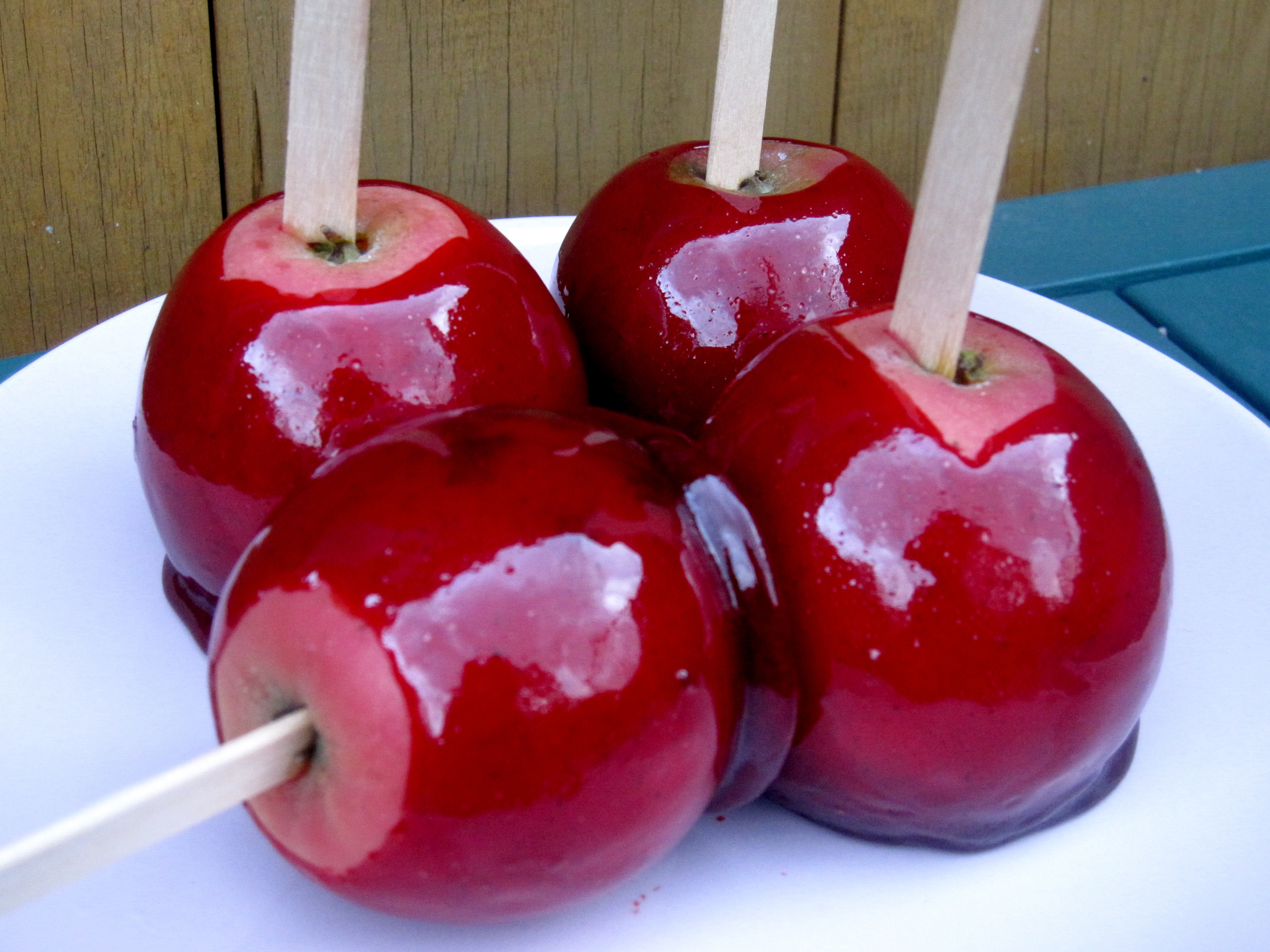
Wrapped in cellophane, these twinkled and crinkled in the run up to the big night and produced a fantastic crunch when we were finally allowed them. Sharp shattering toffee, softened but crunchy apple and a burst of tangy juice, these got eaten faster than any other apple in the year. These are the taste of childhood to me and I haven’t eaten one for years. Could I make them a touch more adult while keeping the memories?

One of my favourite things I’ve made all year was the Salted Caramel Butter Ice-Cream and thinking back on it inspired me to add a salted twist to toffee apples. It was the perfect time to use the Halen Môn Vanilla Sea Salt I’ve been hoarding for a while and make them salt sweet perfection. I got some lolly sticks off Ebay and stocked up on English apples at Brixton Farmers’ Market. I was ready to heat sugar to scary temperatures…

First up, scald your apples with just boiled water to take off any waxy coating they might have. Dry them completely and push the sticks into them firmly. Line a baking tray with greaseproof paper and heat in a small pan:

225g golden granulated sugar
about a heaped tablespoon golden syrup
1 tsp vinegar (I used cider)
1 tsp sea salt
50ml water

Melt everything, bring to the boil and then get it all to the hard crack stage or approximately 150C. A sugar thermometer is a godsend here to make sure you don’t go over. Take the pan off the heat directly at this point and add in some red food colouring to get that proper candy apple red. I used a teaspoon of powdered colouring and I’d hazard a guess at the same of liquid. Natural isn’t the look we’re going for.

Keep the toffee molten and very liquid, putting back on a low or residual heat if needs be. Tilt the pan to one side to get the toffee as deep as possible and roll your apple in it, coating as high up as you can. Allow the excess the drip off into the pan and then set on the lined tray. Repeat until you run out of toffee. I got 6 small apples out of this, but probably could have done 8. Dollop any leftovers onto a tray to set like toffee and cover with chocolate or make spun sugar baskets or add a dash of bicarb for a cinder toffee-esque treat.

The toffee will set almost instantly on the apples and on the pan. Fill it with water and bring to the boil to save hours of soaking and scrubbing. Admire your handiwork and feel smug that you have not burnt yourself or the sugar. Then get stuck into a toffee apple as soon as possible.

They tasted exactly as I wanted. The flavour and feel of childhood but with a tiny tinge of adulthood from the salt. There was just a hint of vanilla, almost like a waft, rather than a flavour. You could add essence if you wanted a more defined taste. I scarfed mine in the same record speed as I used to, revelling in the soft apple and the shimmering crunchy toffee. I wrapped the remaining ones in cellophane and hoped fervently that no one called to trick or treat so I could eat the lot…

barmbrack

Barmbrack

As if autumn wasn’t good enough with its abundance of harvest items, sunny days that don’t actually require SPF and mellow fruitfulness, it also has Halloween. This is the perfect excuse to get dressed up and indulge in some seasonal treats that taste of my Irish childhood. One of those is the gorgeous spiced yeasted fruit bread known as barmbrack.

We loved it so much in our house, we ate it all year round, usually with lashings of butter and often a smidgeon of cheese, but it is traditionally associated with Halloween in Ireland according to those who know. It was studded with items such as coins and a ring to foretell your future luck. So as the days grow shorter, it seemed like the perfect time to try my hand at making it.

It was surprisingly hard to find a recipe. Barmbrack isn’t as well known over here as bara brith and a lot of the ones I across were really just fruit soda, lacking the yeast. I used a combination of these two recipes, adapting to create the closest memory of childhood tastes I could.

Start the night before and soak 350g of mixed dried fruit in tea. I wanted something to remind me of bonfires and being able to see my breath on dark nights and used lapsang souchong with a splash of rum, but you could use regular tea or even just water. Don’t skip the soaking stage. It really helps give the bread moistness.

Next day you’ll need:

  • 350g plain flour
  • 60g butter (chilled)
  • 50g caster sugar
  • 1 tsp ground mixed spice or I used a mix of nutmeg, ginger, mace and cinnamon
  • 7g fast-action Dried Yeast or 15g if using fresh
  • ½ tsp salt
  • 150ml milk, lukewarm
  • 1 large egg, beaten

Sift the flour and rub the butter into as you would for scones to create fine breadcrumbs. Then stir in the sugar, yeast and spices. Beat the milk and egg together and add to the dry ingredients, bringing together to form a dough. Add a bit more flour if it seems too sticky to knead.

Flour your surface well and begin the knead the dough on it. Keep this up for 8-10 minutes or until the dough is smooth and elastic. Start adding the soaked fruit to the dough. This is slightly fiddly as about half the fruit you add each time will fly off the counter if you don’t go slowly and carefully. Fold the dough over itself each time to minimise that. I also added some leftover chopped cobnuts or you could use hazelnuts. Stop kneading as soon as the fruit is combined, you don’t want to make it mushy.

Pop the dough back in the bowl, cover with a tea towel or clingfilm and allow the dough to rise for an hour or so in a warm place. It should double in size in this time. Flour a baking tray and place on it. Barmbrack should be cooked without a tin for a freehand feel. Cook in a preheated oven at 200C or Gas Mark 6 for 45 to 50 minutes or until golden on top. Don’t let the fruit burn or it’ll be bitter.

When the barmbrack comes out of the oven, anoint it liberally with a wash of butter and cinnamon to give it a most appealing glossy top. Barmbrack is a joy in its own right, but it’s also a vehicle for butter. Don’t skip this simple but effective stage. Serve slices of still warm bread with a good slathering of butter, slices of seriously good cheddar (try Greens of Glastonbury at Brixton Farmers’ Market) and a good strong mug of tea.

Despite my loaf not rising as much I had hoped and an uncooked seam at the bottom of my loaf (I think my milk wasn’t warm enough to get the yeast going*) the barmbrack tasted brilliant. Properly warm with spices, it was very moist with tonnes of lovely smoky sticky fruit and a teeny bit of crunch from the cobnuts. I wanted more than one piece, but it’s surprisingly filling. Perfect for taking on a long walk in the remaining sun or just being lazy and toasting it in front of a fire. Apparently it also makes excellent bread and butter pudding when it goes stale. As long as you butter it with gusto, I don’t need tell you any more!

*if you have similar problems, it’s probably my recipe and I apologise.