Irish Spiced Beef brings Christmas comfort…

Spiced beef 11

Having read Miss South’s glowing write-up before my latest visit to her, I was keen to read through Niamh Shields‘ “Comfort & Spice” cookbook. I sped read as much as possible in a short time, and one of the (many) wonderful recipes which caught my eye was Spiced Beef: an Irish dish which is traditionally served cold over the Christmas period. We’d normally have a decent-sized cold cut in the house over the holiday period, often the Coca Cola Ham which we wrote about last year.

However I can only remember having spiced beef once, when our mum brought back joint from the butcher. She’d fondly mentioned it from her childhood, but this shop-bought version was memorably unmemorable. So I’ve always wanted to make proper spiced beef from scratch, and Niamh’s recipe provided the perfect excuse to give it a go this year. I alternate between spending Christmas in the north of England, and returning to Belfast, and this year I was in Manchester with my girlfriend and her family. Having something which brought a taste of Ireland to the table was important to me… and having a cold joint to be able to pick and nibble at is always a bonus.

Spiced beef isn’t a complicated dish, but it does require some patience, preparation… and an ingredient which wasn’t available to the general public in Northern Ireland during the Troubles, which curtailed its consumption when we were growing up. Saltpetre aka potassium nitrate was a controlled substance, as it’s a key constituent of black powder (gunpowder). I’m not sure if it’s still verboten: I was lucky enough to be given some for this recipe by a friend. Saltpetre’s one of those relatively unknown but essential compounds on which the modern world has been built; used for fertiliser, food preservation, an oxiding agent for gunpowder and fireworks amongst other uses.*

I ordered the Christmas meat in advance from Stansfield’s in Todmorden Market –  the centrepiece of our Christmas meal was leg of venison – but Paul always has good beef and I picked up a weighty brisket form him last weekend.

Irish Spiced Beef (from Comfort & Spice)

  • 2kg beef brisket off the bone

The curing mix:

  • 1tsp allspice
  • 1tsp cloves
  • 1tsp fresh nutmeg
  • 1tsp mace
  • 75g soft brown sugar
  • 10g saltpetre
  • 100g sea salt

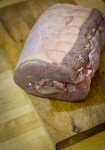
Combine all the ingredients for the curing mix and rub all over the brisket. Sterilise with boiling water a non metallic pot or plastic container into which the beef will fit snugly. Add the beef, cover and store in the fridge for eight days, turning daily and basting with any juices.

Wipe off the excess marinade and cover the beef with water in a large saucepan. Bring to a boil and simmer for two hours. Allow to cool and serve over the festive period as you would a ham.

First step: make the curing mix. I closely followed Niamh’s ingredients, with a couple of minor tweaks. I used Muscovado sugar, as I love its rich, sticky, almost smoky rawness. I also raided my extensive selection of salts to create a posh mix which would hopefully play up the strengths of the beef and spices, using Maldon Smoked Sea Salt, Guerande Grey Sea Salt, and Carmargue Fleur de Sel. Every recipe I’ve seen for dry-curing meat stresses that the quality of the salt is imperative, and they looked beautiful ranged on the plate too.

Spiced beef 1

I ground the whole allspice, nutmegs and cloves together, together with a cheeky tablespoon of mixed peppercorns to add a little bit more warmth to the mix. Then I combined the salt, sugar and saltpetre in a bowl, make a good stiff mix. The aroma was stunning: if you’re ever looking for a sure-fire way to enfuse your home with the sweet, aromatic and suggestive hints of winter, this really is it. It’s even better with a cockle-warming glass of hot port to aid the cook’s concentration!

Spiced beef 4

I sterilised a tupperware container, and placed the cured meat in it, sealing it tightly and placing it in the fridge. With six days between the initial preparation and Christmas Eve, the only requirements were to gently spoon and baste the spiced liquids over the joint daily. You’ll find a fair amount of juice will be drawn out of the meat by the cure. I tried my best to disturb as little of the spiced coating as possible, wanting to let the power of the spices permeate properly through the meat.

Spiced beef 7

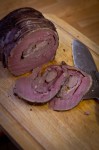
On Christmas Eve we simmered the beef for a couple of hours, before letting it cool (patience is a virtue) and cautiously cutting a few slices off for a Christmas Eve nibble. As you can see, the beef had held its vivid rose hue thanks to the saltpetre, and the flavour was quite wonderful: warming, comforting and so tender. Paired with wholegrain mustard mixed into some mayo, and ranged with gherkins, this was a perfect sandwich: almost the Irish equivalent of New York pastrami. We didn’t leave any out for Father Christmas though, as it proved way too popular with everyone who tasted it.
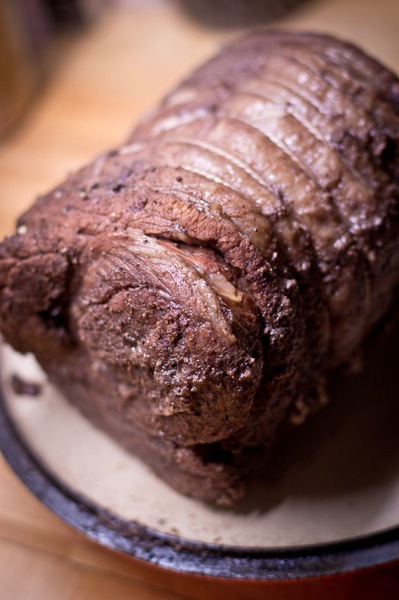
Spiced beef 8

I’d also decided to have the Irish-themed starter on Christmas Day revolve around the spiced beef: after a night in the fridge the meat was even easier to thinly slice, and I plated it up with a small toasted piece of soda bread, a dab of redcurrant jelly, some cubes of Cashel Blue cheese, and a lightly dressed selection of watercress, rocket and baby spinach leaves. Everything worked well together: the sweetness of the jelly complementing the sharpness and warmth of the mustard vinaigrette, pepperiness of the rocket, the crisp of the bread… and of course that succulent, aromatic and oh-so tender beef. Needless to say, we’ve been cutting cheeky slices off the joint ever since, as it’s perfect for snacking and sating our cravings for seasonal cold meats.
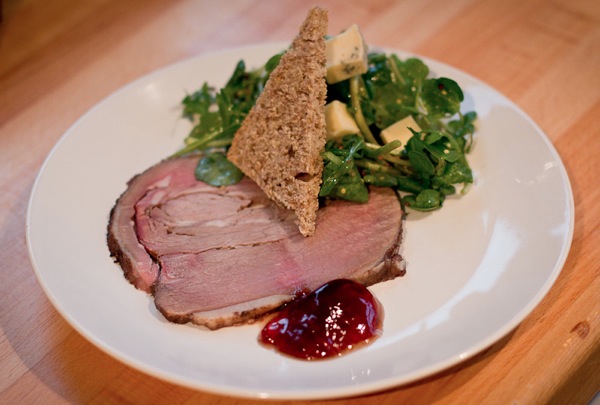
Spiced beef 14

Thanks to Niamh aka @Eatlikeagirl for allowing us to reproduce the above: it’s a brilliant encapsulation of a traditional Irish recipe, and doesn’t suggest any of the adulterations which crop up in many US-oriented traditional ‘Oirish’ recipes. We’ve recommended it before and we’ll do it again… buy Comfort & Spice and make your kitchen a happier, better place!

*Update. This still remains a firm festive favourite dish in our family. The last couple of years I’ve not used saltpetre as part of the cure, as there’s increasing awareness of the potential health risks associated with nitrites used in processed or preserved meats. Without the saltpetre acting as a colour fixative the spiced beef isn’t as rosy, but tastes just as good… and even a large 1.5kg joint rarely lasts more than a few days, so as long as you follow standard good practise for food hygiene, there’s no need for the preservative qualities of saltpetre. You may or may not chose to exclude saltpetre from the recipe when you make this dish.

Baked Alaska Mince Pies

While there are many Christmas foods I adore, I just can’t get excited about mincemeat. It’s been several years since I ate a mince pie and feeling somewhat left out, I decided to make my own this year to see if I could get myself more enthused. Unable to get my hands on enough quinces to do jelly this year, I decided to get my fix by following Nigella’s Quincemeat recipe from page 265 of How to Be a Domestic Goddess and up the fruit content of those pies.

The quincemeat went into a jar in September to mature gently and I gave myself time to get excited. I was quickly distracted when The Little Loaf and I managed to find a date that we could meet for a pre-Christmas bake. An idea to do a winter inspired chocolate brownie Baked Alaska developed a life of its own when I heard about Sainsbury’s mince pie ice cream. We just had to do Baked Alaska mince pies instead! Talk about exciting…

We decided to each take a component and prepare it in advance and because we were baking at mine, I went for the ice cream. I wanted it to be inspired by that extra thick brandy cream people top their mince pies with and decided to push the boat on it. Using the foolproof custard from David Lebovitz as a base, I tweaked it slightly to be as rich as possible. You’ll need:

250ml (1 cup) whole milk (I used unhomogenised Jersey Milk)
500ml (2 cups) double cream
100g sugar
8 egg yolks (you could use 5 if you prefer)
pinch salt
dash of vanilla extract
good slug of brandy

Heat the milk and sugar gently to make sure all the sugar is dissolved. Add the cream and make sure it is nicely warmed. Then take a cupful or so of the warm dairy mixture and stir into the beaten egg yolks to temper them and stop them scrambling when you tip them all back into the milk mixture.

Gently add the tempered yolks into the warm milk and cream and cook over a low heat, stirring well. Use a spatula for this to make it easier and because you’ll know when the custard is ready when it coats the back of the spatula.

Take it off the heat immediately. Pour into a metal bowl, adding the vanilla and brandy and either chill overnight in the fridge or make an ice bath inside another larger bowl. Then once nicely chilled, pour into your machine and churn as standard. About five minutes before the end, gently add in about 250g of the quincemeat, a tablespoon at a time and let the machine mix it in well.

You’ll need scoops of ice cream for your mince pies so if you want you could shape the scoops now and freeze them on a plate or simply place in a container with a lid and freeze as normal. You can soften it slightly and do the scoops when needed but you’ll need to re-freeze them for at least two hours to prevent a fit of melting that would alarm even a climate change denier.

It was all a bit Blue Peter for me when the pies were assembled as The Little Loaf had made this beautiful clementine pastry and had rolled it out, pricked with a fork and blind baked it while I turned 3 egg whites, a teaspoon of cream of tartar and 100g of caster sugar into some meringue with the help of a hand whisk.

A scoop of ice cream went into a cooled pie case and the meringue was piped in with a disposable bag and a large star nozzle. Piping gives lots of surface area to crisp up and looks lovely, but you could also smooth the meringue over with a mini spatula and rough up with a fork. Make sure there are no gaps either way and then put the piped pies into the freezer for about 20-30 minutes.

Get the grill nice and hot and then toast the pies under it for about 2-3 minutes. Do not take your eyes off them for even a second. Meringue has a nasty habit of turning without close supervision. You can like us finish the meringue off with a blow torch for extra toastiness (and dinner party entertainment) but be careful the whole thing doesn’t ignite! Meringue is surprisingly flammable.

Serve your pies immediately to get the maximum mixture of buttery pastry, creamy cold ice cream and and crispy crunchy meringue. These Baked Alaskas are smooth and sweet with just enough bite from the quincemeat and the brandy not to be sickly. I’d use a bit less cardamom in the quincemeat in future, but otherwise this was pitch perfect. I think I’m a total mince pie convert now…

Guinness Pumpkin Gingerbread

Christmas isn’t Christmas without the scent and taste of spices in the air and on the tongue. Last year I indulged with doughnuts and mulled cider. This year, my appetite whetted by the parkin, I decided my Christmas spice had to come from gingerbread. I intended to make hard gingerbread people made extra festive with gold leaf, but my dough refused to play ball and I ended up with something more akin to sticky Play-doh. I sought solace in booze and a stack of Nigella’s recipes to see if I could find a foolproof gingerbread recipe.

And lurking in Kitchen, but also available online was the truly tempting sounding Guinness Gingerbread that combined dark sticky stout with dark sticky treacle and spice. I was instantly sold. Except I didn’t have any sour cream or even emergency yoghurt. I didn’t have time to go out and hunt any down (sour cream is surprisingly elusive these days. It’s all creme fraiche instead.) But I did have some leftover buttermilk and half a can of the pumpkin leftover from the ice cream. Despite the lack of success with that, I knew the pumpkin works well in baked goods, adding amazing moisture. Mouth watering, I got baking…

You’ll need:

150g butter
300g golden syrup (or use black treacle if you have it. I did half and half)
200g dark muscavado sugar
250ml Guinness (this is about half a bottle and you can use any stout)

2tsp ground ginger
2tsp ground cinnamon
1/4 teaspoon ground cloves (or as I had none, I used mace)

300g plain flour
2tsp bicarbonate of soda
150g pumpkin or squash puree
150ml buttermilk (or leave out the pumpkin & buttermilk and use 300ml sour cream)
2 large eggs

Then prepare yourself for the easiest baking recipe in the history of the world. Line a 20x30cm deep baking tray with parchment. Then melt the syrup, treacle, sugar and Guinness in a pan. This will smell amazing.

Sift the flour and bicarb and spices into a nice big bowl and then pour in the melted treacle Guinness mix and half combine. Then add in the beaten eggs, buttermilk and pumpkin puree and combine the mixure lightly until just properly mixed. Don’t overbeat or you’ll knock the air out of this beautiful batter. Pour the batter in the lined tray and then bake at 170℃ for around 45 minutes or until the gingebread is a glossy dark brown on top and coming away from the edges slightly.

Then comes the tricky bit. Your house will smell sensational, all spicy and treacly and sweet and you will have to wait at least 20 minutes for the gingerbread to cool and firm enough to get it out of the tray and cut in pieces. This will test your limits. You’ll want to get the kettle on and your chops round a sticky piece of gingerbread sooner, but it is worth the wait.

Unbelievably moist, but firm and springy from that fortifying Guinness and with the most wonderful spicing, this is the stickiest, moistest most Christmassy gingerbread possible. Served slightly warm with a scoop of good vanilla ice cream it would make a great dessert. I iced some of it with simple icing sugar and water mix with a teeny splash of the leftover Guinness to make it more a cake. The un-iced stuff lasted well in a tin, growing softer and stickier each day, allowing you to make this and have it ready for visitors with ease.

Just remember to keep your last piece to put by the stockings for Santa on Christmas Eve. He’ll come to your house first next year after tasting gingerbread this good…

Candied Bacon ‘N’ Pumpkin Ice Cream

I think we’ve touched on me being a bit of an Americanophile before. I have a total weakness for the literature and food of the USA. And I’m prepared to struggle for my art. The Kraft Mac n’Cheese might have defeated me, but like my first time reading Moby Dick, I don’t give up easily. Pumpkin pie didn’t float my boat, but I was determined to find a Thanksgiving inspired dessert that did this year. Pumpkin ice cream sounded just the thing.

Shamelessly copying this David Lebovitz recipe, I dug out the spare can of Libby’s from last year and got going. A rich thick custard was created, laced with vanilla and a lot more rum than he suggested and anointed with some proper amounts of spice. Half a can of the pumpkin puree was added in and the whole thing was churned til a beautiful golden shade of orange. It was then served as the highpoint after a proper Amurrican meal of corndogs and macaroni cheese with a friend from Chicago. And it tasted like grass.

Oddly powdery in texture with a strong vegetable taste that took over the soft spices and vanilla, it was the strangest ice cream I’ve ever had. The extra water content in the pumpkin made it freeze as hard as a rock and taste of ice crystals rather than the usual velvety blanket of churned cream I make. The rum didn’t help and added no flavour. And unusually for an American recipe, it wasn’t sweet enough. It seemed sparse and utilitarian. Neither of us finished our bowls.

But I had around a litre of it in the freezer and was loath to throw it out. It needed something to lift it and make it sweeter, more dessert-like and less like a very peculiar starter. And it need to be properly American in style. Hershey syrup would have worked. Maybe some of those mini marshmallows you get in American cereals. Butterscotch chips embedded in would be great. I didn’t have any of those things to hand and I refuse to pay Selfridges’ Food Hall prices.

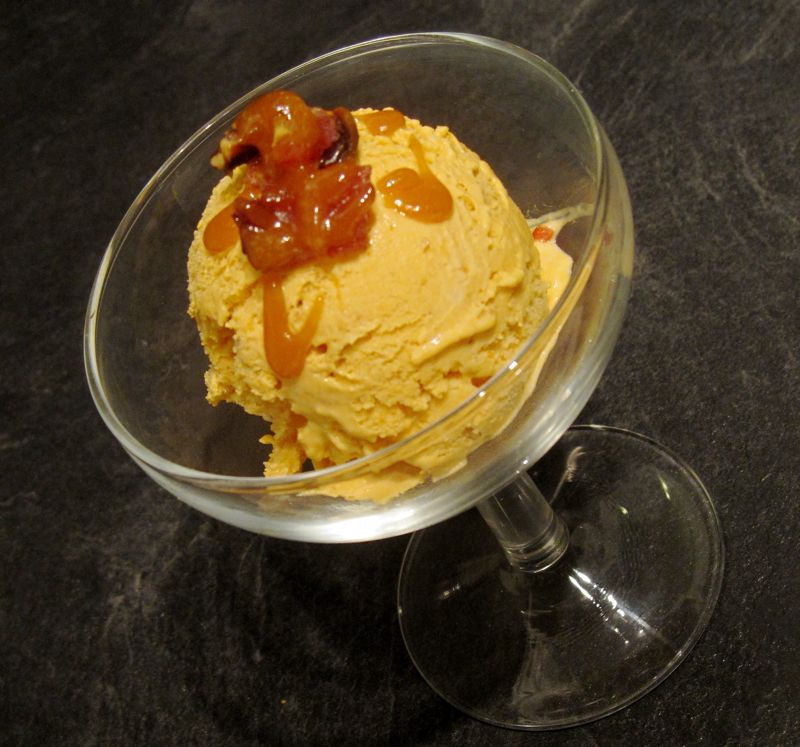
What I did have to hand was some lovely unsmoked bacon from the Porcus people. I realised the time had come to get on the candied bacon bandwagon. It’s been uber fashionable to bacon everything possible in the past few years from chocolate to Baconnaise. Apart from one disappointing dalliance with the chocolate, I’ve steered clear, haunted by memories of bacon bits in adolescence. But when bacon is this good, it cries out to be coated with sugar, baked til crisp and then crumbled over ice cream and swirled with toffee sauce…

It went into the oven on a lined tray, heaped with sugar and cooked at about 200℃ for about ten minutes, then turned over and dredged through the syrup and cooked a bit more, before being cooled to a crisp. Shred it up nice and small. And then turn your full attention to the toffee sauce. I used equal quantities (handily unmeasured) of golden caster sugar, golden syrup, double cream and butter and boiled it for about 5 minutes or until I got bored waiting.

The rock hard ice cream had loosened up nicely and it got a liberal swirl of sauce and a decent sprinkling of bacon. Some crushed pecans nuts and a rasher of best back cut lengthways would make an amazing (and very adult) sundae. But we kept it simple and got stuck in. And it really worked. The sauce sweetened the ice cream and toned down the powderiness while the sticky shards of bacon added much needed texture. We finished the bowls with gusto this time.

Next year I won’t be bothering with pumpkin desserts, keeping my slices from the deli for soups and stews, but I recommend you combine this ice cream and the accompanying candied bacon one to have something to experiment with this time next year. You’ll be be giving thanks for the bacon all year round!

Candied Peel

I love love love candied peel. I used to run to the baking cupboard and cram spoonfuls of it in my mouth when my mum wasn’t looking. It was my favourite bit of any fruitcake or barmbrack. This is especially odd since I don’t like oranges as a fruit, juice or flavouring, and generally eschew citrus fruits of all kinds. But mellow those citrus rinds in vats of sugar and it’s hypnotic to me.

An inability to read recipes a few weeks ago meant I ended up with an overabundance of grapefruits when making marmalade for cake and found myself wondering what to do with them all. A casual Twitter conversation about Christmas preparations brought about a massive lightbulb moment. I would make my own candied peel. Never mind if it was incredibly faffy and complicated: I could rise to the challenge!

Imagine my glee when this Waitrose recipe popped up and I realised candying my own peel was actually easier than pie. Radio on, sleeves rolled up, I set about peeling and de-pithing my citrus fruit. I had a mix of pomelo, ruby grapefruit, lemons and orange, but avoided limes as I thought it might be too overwhelming, like cordial.

Get four pans going on your hob and simmer the peels separately in hot water for about 20 minutes to soften them up. Then split the peels into two pots to simmer in the syrup. I actually made two batches of candied peel and found it easier to keep the peels bigger and cram less peel into the pans as they bubble and soak up the sugar. I just did two batches of the syrup to be sure nothing caught or burned. Keep the heat down low as you can, you only want the merest blip in the syrup to stop it getting bitter or caramelising. Then go off and do stuff while your house smells truly amazing…

I came back to my peel when there was still a tiny bit of syrup left, and lifted the biggest pieces out with tongs, laying them on baking trays. The smaller bits went into a sieve to drip any excess syrup off, as you don’t want so much syrup on the pieces: they dry crunchy and I didn’t fancy trying to boil my pan dry and win the challenge. I then left the trayfuls of peel in the living room to dry as it was the only place I had room, but the airing cupboard or anywhere the cat can’t walk on them will do.

About three days later, I turned the peel with tongs and left for another two or three days or until I remembered about it. I popped it in a ziplock bag, with a tablespoon or so of icing sugar, and shook it up to coat it and stop it sticking together. Some went into the Christmas mincemeat. Some went into cellophane bags to give as gifts. The rest was stored in a jar to be used for various festive recipes closer to the time and the leftover syrup stored for a drizzle cake or put on porridge or ice cream.

So if you didn’t do a cake on Stir-Up Sunday, impress people with homemade candied peel instead. You will never buy one of those tiny tubs again after you’ve tasted the citrus sensation of making your own. It tastes as good as it looks!