Parkin

I don’t have much of a history with Bonfire Night. Not celebrated in Northern Ireland for a variety of reasons, Halloween was our festival instead. Talked of in Enid Blyton books and Blue Peter, I was vaguely aware of bonfires, Guy Fawkes and pennies for the guy as a child, but never celebrated it until I was about 15. Mister North had moved to the north west to attend university and seeking teenage independence, I travelled over to visit him at half term. My long boat and train trip was rewarded by a trip to the hills outside Rochdale with his flatmate to experience Bonfire Night properly.

Around the huge bonfire, there was treacle toffee, sausages, black peas and parkin. Memories are slightly hazy from the lashings of Boddingtons also available, but the peas were just the thing to thaw you on a freezing cold night, but it was the parkin that warmed my heart completely. All sticky with treacle and chewy and delicious with spice, it almost converted me to standing in fields in November.

Sadly, they don’t go in for parkin in the south and thus I’ve still never really embraced Bonfire Night even though I’ve lived in England for years. So imagine my glee when listening to Woman’s Hour this week, I discovered parkin was super easy to make and that I just had time to let it mature in time for the big night.

In the end, I used this recipe from Waitrose to make my parkin as I couldn’t be bothered adjusting the imperial measurements from the Radio 4 one and it didn’t call for self raising flour as I could neither be bothered to mix my own or get dressed to go and buy some. I subbed golden syrup for the honey and left out the sugar as all that treacle and syrup is sweet enough for me. I used lard instead of butter and upped the spicing with twice as much ginger and a pinch of mace. The whole thing barely took longer than setting out all the ingredients it’s so simple. Do use a pan to heat the milk on the stove as you add the bicarb to it and it expands quite a bit. It’ll be volcanic in a jug.

Other than that, it’s simple, straightfoward and perfect for kids to do. Don’t overmix the batter, it can afford to be a little bit lumpy like muffin batter. Then pour into a deep square tray you’ve lined as parkin is traditionally served in squares. Recipes vary regionally and this one sounds more like the darker Yorkshire version. Pop in the oven for 50 minutes and get very hungry as a delicious oaty flavour heats up the kitchen.

You’ll need good willpower with parkin. It’s essential that you allow it to rest and don’t eat it straightaway. A week is about the length of time recommended to let it mature into proper sticky heaven. I cooled mine in the tin, cut into squares and stashed it away in a tin on a high shelf out of mind and managed to forget about it for about a week.

And it tasted amazing. Dark with treacle, spiky with ginger and smoky with mace. But it was drier than I expected. Mind you I was expecting it to stick to the roof of my mouth and melt on my tongue which might be slightly over the top. I’ve only got a 15 year old memory to compare it to after all. And I did manage to consume two large pieces with pleasure and a large cup of Yorkshire Gold in front of the Corrie omnibus which still made for a fairly perfect morning. I’d stick a bit more syrup in future, cook it slightly less and maybe only leave it for two or three days next time. But now I’ve rediscovered parkin, I’ll be putting Bonfire Night in the diary…

Salted Vanilla Toffee Apples

Halloween is a big deal in Ireland. We don’t celebrate Guy Fawkes’ Night (for obvious reasons in Northern Ireland) but the Irish have been holding a celebration around this time since Celtic times when Samhain was the equivalent of New Year. The date merged with the Christian All Souls Day and All Hallows’ Eve to become Halloween. Traditionally the time when the link between the world of the living and the dead was closest, it is a time of supernatural feeling and rememberance of those passed on. Irish and Scottish emigrants to America took the traditional Halloween customs with them and those have been exported back across the Atlantic to the less spooky-minded folk of England in recent times.

As kids growing up in Belfast, Halloween was a big deal. Half term always fell around this time and we were off school to celebrate with a variety of traditions from a turnip lantern and full on costumes, trick or treating, apple bobbing, indoor fireworks (anything more explosive was banned) and a rich array of seasonal foods. Our mum made her legendary apple dumpling most years, steamed in a cloth, complete with silver coins for luck and it was also the time of year for barmbrack. But we also got in another one of our five a day with a toffee apple or two.

Wrapped in cellophane, these twinkled and crinkled in the run up to the big night and produced a fantastic crunch when we were finally allowed them. Sharp shattering toffee, softened but crunchy apple and a burst of tangy juice, these got eaten faster than any other apple in the year. These are the taste of childhood to me and I haven’t eaten one for years. Could I make them a touch more adult while keeping the memories?

One of my favourite things I’ve made all year was the Salted Caramel Butter Ice-Cream and thinking back on it inspired me to add a salted twist to toffee apples. It was the perfect time to use the Halen Môn Vanilla Sea Salt I’ve been hoarding for a while and make them salt sweet perfection. I got some lolly sticks off Ebay and stocked up on English apples at Brixton Farmers’ Market. I was ready to heat sugar to scary temperatures…

First up, scald your apples with just boiled water to take off any waxy coating they might have. Dry them completely and push the sticks into them firmly. Line a baking tray with greaseproof paper and heat in a small pan:

225g golden granulated sugar
about a heaped tablespoon golden syrup
1 tsp vinegar (I used cider)
1 tsp sea salt
50ml water

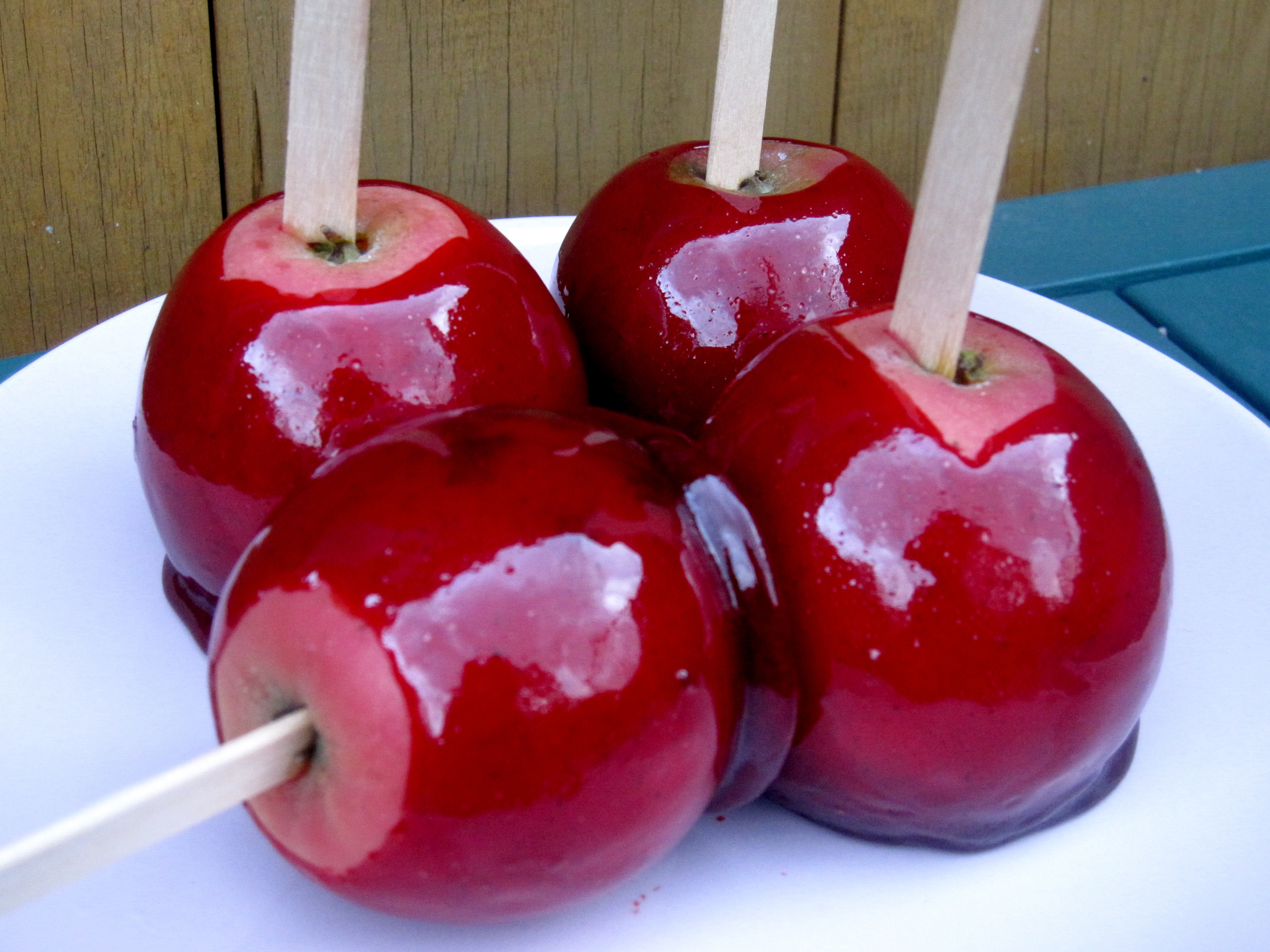
Melt everything, bring to the boil and then get it all to the hard crack stage or approximately 150C. A sugar thermometer is a godsend here to make sure you don’t go over. Take the pan off the heat directly at this point and add in some red food colouring to get that proper candy apple red. I used a teaspoon of powdered colouring and I’d hazard a guess at the same of liquid. Natural isn’t the look we’re going for.

Keep the toffee molten and very liquid, putting back on a low or residual heat if needs be. Tilt the pan to one side to get the toffee as deep as possible and roll your apple in it, coating as high up as you can. Allow the excess the drip off into the pan and then set on the lined tray. Repeat until you run out of toffee. I got 6 small apples out of this, but probably could have done 8. Dollop any leftovers onto a tray to set like toffee and cover with chocolate or make spun sugar baskets or add a dash of bicarb for a cinder toffee-esque treat.

The toffee will set almost instantly on the apples and on the pan. Fill it with water and bring to the boil to save hours of soaking and scrubbing. Admire your handiwork and feel smug that you have not burnt yourself or the sugar. Then get stuck into a toffee apple as soon as possible.

They tasted exactly as I wanted. The flavour and feel of childhood but with a tiny tinge of adulthood from the salt. There was just a hint of vanilla, almost like a waft, rather than a flavour. You could add essence if you wanted a more defined taste. I scarfed mine in the same record speed as I used to, revelling in the soft apple and the shimmering crunchy toffee. I wrapped the remaining ones in cellophane and hoped fervently that no one called to trick or treat so I could eat the lot…

Hare removal… or who killed Roger Ragu…

Hare ragu, plated and ready
It’s game season again, and my thoughts have been straying towards furred and feathered fare as the hills and woods around here turn various gorgeous autumnal hues. Here at North/South Food we seemed to have cooked a disproportionately large selection of locally-sourced wild beasties over the last couple of years, perhaps motivated by an interest for something a little bit different, combined with a healthy desire to keep food miles low and quality levels high.

The blackboard in the local butcher’s been filled with a good variety of game in the last month: it’s been a bumper year for berries and fruits, so it stands to reason that many of things which feast on them will be in particularly fine fettle. Time to sharpen the steak knives, check the juniper berries, dig out the redcurrant jam and pour a glass of home-made damson gin!

I was gutted to have missed out on hare recently at the butchers (hare today, gone the next… buy it when you see it is the moral of this tale) so I was extremely chuffed to be offered a hare and three rabbits from another source; all local, lean and super-fresh. I’ve had hare in the kitchen once before, but it was more memorable for the cooking than the eating, perhaps as I’d ad-libbed the ingredients and found the beast a bit stringy and wanting for flavour. Since then I’ve read a lot more about hare – how in many respects it’s more akin to venison than rabbit – and wanted to give it a proper go before I made up my mind. So I took no chances and decided to follow a proper recipe this time, rather than make it up as I went.

The beast had been jointed and came without blood or giblets – jugged hare obviously wasn’t an option – so I delved into the excellent ‘Game: A Cookbook‘ by Trish Hilferty and Tom Norrington-Davies (now my go-to book for all things game) and plumped for a classic northern Italian dish of Hare Ragu. It sounded perfect for these cooler autumn evenings. I’m not a great fan of that hardcore, machismo-laced strain of game eating: you know, when the meat’s been left to hang for so long it’s high to the point of walking around the kitchen on its own. Not appealing to me… I’m all for flavour, but not so dominant it threatens to overpower everything else. This hare had been caught the day before I had it, and it spent a day resting before I started cooking. I reckoned the extreme slowness of the recipe would compensate for a lack of extended hanging.

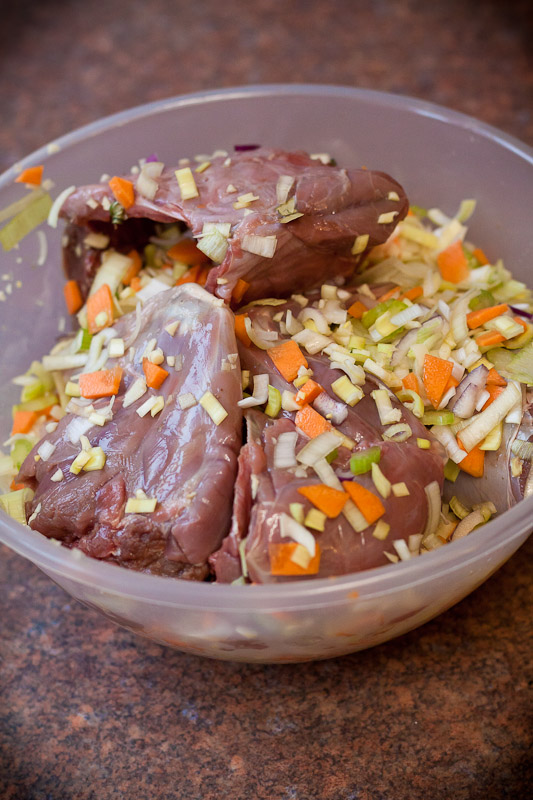
Before going to bed I finely chopped up the veg and aromatics to make a marinade, gave the joints a good coating, mixed up everything and left it overnight to mellow and rest. I then did the same, minus the marinade. Next day I chopped up the last of some wonderfully smokey Porcus backfat and bacon (to keep with the local, hilltop vein), and rendered that down, substituting this for the oil in the recipe. Then the veg got sweated down, accompanied by what few drips of marinade juices were left in the bowl, then in went half a litre of red wine. This took a while to simmer down and evaporate, then I added a dollop of tomato puree and some cocoa.

The addition of cocoa powder might sound a tad unexpected… but after the frankly amazing rabbit with morcilla and chocolate I’d previously cooked, I didn’t need much persuasion to whack a generous teaspoon into the mix. The cocoa-y flavours add a richness with a slight tang, just enough to play off the tomato and sweetness of the veggies. Finally in went the meat, the pot was filled with water, and everything simmered slowly, softening and bubbling away for a few hours until the meat threatened to slip unbidden off the bones. It was at about this time that my guest for the evening, a good mate who’s recently recanted an adult lifetime of vegetarianism, helped me to clean the cooked meat from the bones for the second stage of the cooking. To be honest,  this was above and beyond the call of duty, but he threw himself into the task with more gusto and enthusiasm than many a seasoned carnivore would; driven by a combination of curiosity and hunger. I’d at least warned him that wild beast would be on the menu before he turned up, so it wasn’t too much of a shock for him…

Everything went back in the pot, bar the carcass which was reserved for later use, and the ragu reduced for an hour or so, until it more resembled a dark pulled-pork dish than a normal pasta sauce. By this stage the collective groans of our stomachs ensured the pasta was cooked and garnished. I’d originally intended to dig out the pasta maker and roll out a few sheets of home-made ribbons, but this was a bit ambitious for a midweek work night, so I decided to go with something already in the store cupboard instead. I went for Orecchiette Pugliesi, that curious ear-shaped pasta, reckoning its bite and open shape would work well to catch the thick ragu. It did the trick…

A good helping of pecorino and a twist of parsley topped off the hearty, steaming bowls, and we tucked right in. You know it’s a good meal when there’s little conversation and less left in the dishes by the end. The hare had a big flavour… deeply rich and meaty, with more than a hint of game, but the tastes were balanced rather than overwhelming. Cooking it so slowly meant the meat was soft, succulent and very moist, and had absorbed all the other flavours in the pot, reducing everything down to a dark, unctuous delight. The only criticism is that it was almost too dry for a sauce to coat and accompany pasta… if I made this again I’d take it off the hob slightly earlier.

As is so often the way, the flavour got better over the next couple of days – just as well, as there was a lot of meat on this hare. I was (happily) eating it for days, and there’s still a tupperware container in the freezer, holding at least three generous portions, ready to meets its match with some home-made pappadellle one evening as the nights draw in. And, as the bones were substantial enough to boil up, I’ve also got a good selection of hare stock (or should that be hare restorer?) ice cubes in the freezer, ready to add to something special in the future.

Brown hare are powerful, elegant but shy native creatures – normally the most I see of them is a browny-grey blur when I’m out walking in the hills – so I’m pleased to have gotten a second chance to savour this beast… and that we hit it off better on our second dinner date. I can highly recommend this dish… stop reading this now and make yourself a hare appointment!

A warm salad for warm summer nights

So, I’ve recently returned from a week’s holiday in the warmth and civilisation of Languedoc. It’s not a part of the world I was familiar with, and as well as good weather, my companions and I enjoyed a week of superb local food and wine. As they’d been to the area before I enjoyed some local delicacies under their guidance, and we made plenty of new discoveries too. We ate simply, and tried as much as the short timescale could allow (finally ticked bouillabaisse off my list of ‘to dos’, cooked superfresh whitebait, and gingerly tried freshwater clams which we’d sourced ourselves from Lac du Salagou). Plus freshly picked figs & plums everyday, moules et frites at the local village knees-up, and a host of other delights.

I’ve only warmed in recent years to classic French cooking – my reference point was always further south in Italy – and I associated French with more courtly and less rustic cooking. However there’s a healthy overlap between the high-end and the more accessible, so I’ve been expanding my repertoire and gaining more confidence talking mirepoix rather than soffritto. In part this helps when you’re in an area where the aroma of herbs hangs heavy in the air – wild thyme and mint nestling next to tall fennel plants in the verges – and bushes and trees are laden with fruits and nuts. Foraging and gathering becomes a daily constant, not an occasional novel experience.

I’d mentioned previously I was working on the forthcoming Parlour Café Cookbook: before going on hoilday I’d worked up several of these recipes into postcards, and one in particular stuck in my mind: a warm salad of Puy lentils and goats cheese. It’s one of the star recipes in the book and supposed to be a favourite with the regulars,  so I decided to give it a whirl.

We picked up most of the ingredients in the local supermarket before a trip up country to visit Roquefort and Millau – great cheese, rather dull tour of the caves, although I did pick up some sheep’s butter there – and on the way home had to make our respective ways through an enormous, spectacular and somewhat frightening electric storm. Everyone was a bit frazzled by the end of the trip, so it was rather relaxing to potter around in the kitchen, unwinding with a glass in one hand and a stirrer in the other, unwinding while knocking this oh-so-simple recipe up. Mind you, it’s always fun find your way round somebody else’s kitchen for the first time, making the most of what you find lurking in the cupboards.

It still makes me smile that this most Mediterranean of dishes actually comes via Dundee, but using local ingredients (and some great local wine) meant it was perfectly transposed to a more Gallic setting. Rather than rewritng this I’ll use Gillian’s words from the cookbook, annotated slightly.

Puy Lentil and Goats Cheese Salad

Serves 4

●200g Puy lentils [oddly they weren’t labelled as Puy but verte]
●1 onion, chopped
●1 carrot, chopped
●2 stalks of celery, chopped [wonderful dark green celery, still with all the leaves]
●A handful of fresh thyme [straight from the local hills]
●1 bay leaf
●150ml extra virgin olive oil
●3 – 6 garlic cloves, peeled and roughly chopped [I used the full six cloves, and it was extremely feisty… I guess due to the freshness of the garlic. No worries about being bitten that evening!]
●50ml red wine vinegar [I couldn’t find any in the store cupboard so I used a mix of balsamic & some red vin du table instead]
●100g goats cheese [we used a local, strongly flavoured little number]
●a large handful of parsley, roughly chopped
●sea salt and freshly ground black pepper

Cook the lentils in boiling water for 20 minutes, until they are absolutely tender.

Meanwhile, fry the onions, carrots, celery, thyme and the bay leaf in a couple of tablespoons of the olive oil until soft and lightly coloured. In a food processor or with a hand blender, blend the garlic with the rest of the olive oil. With the motor still running, slowly pour in the vinegar and blend until it’s emulsified.

Drain the lentils and pour out onto a flattish dish. Smother in the garlicky dressing and turn gently so everything is glistening. Once the vegetables are cooked, gently mix them into the lentils and leave the salad to cool.

Then toss gently with the goats cheese, torn into chunks, and the parsley. Season with salt and freshly ground pepper if you think it needs it.

The only major change I made was that a couple of our party didn’t like goats cheese, so we served their portions first – they had comté instead – then crumbled the cheese in afterwards. We’d also picked up some smoked sausage to add some savoury notes to the dish. Otherwise we kept it simple – a hunk of fresh bread, a fresh green salad on the side, and some local wine to help everything go down.

This is such a good recipe: it doesn’t take long to make, tastes stunning, and it’s most evocative of warm summer nights and lazy times. I can see why it’s a favourite at the café, and I think it will be with you too. Delicious!

Salade Niçoise with guinea fowl eggs

guinea_eggs-7

To be honest; until I started writing this post I didn’t know very much about guinea fowl (or guinea-fowl), never mind their eggs. I’ve bought guinea fowl on a few occasions, to make Ghanaian dishes like Nkatenkwan, as their flesh is almost gamey and really benefits from slow, moist, covered cooking methods. I also knew the bird originated in West African, hence their name, and have long been a favourite with chefs (Larousse suggests they’ve been domesticated since Roman times).

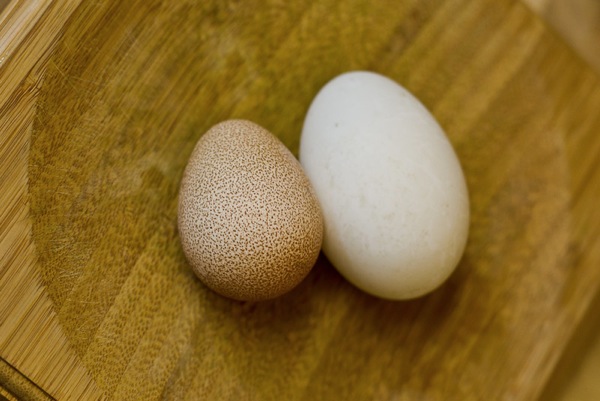
Guineafowl egg & duck egg

I’ve also spotted them pecking around farmyards on a few occasions, looking a little haughty and slightly out-of-place with their blue faces and wonderful op-art speckled plumage. Last week my friends from Porcus persuaded me to leave their farm with a selection of wonderful guinea fowl eggs (these are the same people who sated my quest to enjoy turkey eggs last year too)

Guinea fowl eggs

So I came home with six speckly guinea fowl eggs, undecided on how best to use them. I’d been warned they had thick shells, which could prove a bit of a challenge to break through, but I had an extra pair of hands in the form of our mum who was visiting. A quick search on the web threw up very few recipes specifically for guinea fowl eggs, but a friend suggested making a niçoise salad. This proved to be an inspired recommendation, as the diminutive hard-boiled eggs (sized somewhat between a quail and a bantam egg) looked gorgeous nestled against the other ingredients. Not that we needed an excuse to enjoy a classic summer salad (even when the sun is somewhat lacking) which manages to combine some of our favourite family ingredients.

In this case I followed an Antony Worrall Thompson recipe from the BBC website, deviating a little from some other versions, but ticked all the boxes in terms of fresh flavours. I started by marinating the tuna steaks for an hour or so in the vinaigrette mix while prepping the veg. These and the other ingredients filled a large salad bowl. Once the tuna was sufficiently soused it got seared on a very hot ridged griddle, then rested gently.

Meanwhile we boiled the guinea fowl eggs for six minutes, then cooled them off in cold water. They proved quite difficult to peel: the shell was indeed tough, and the inner membrane was equally resistant. Eventually we managed to de-shell and slice them, and were rewarded with sight of bright yellow yolks. They looked wonderfully pretty set against the rest of the salad. Once they were in place the tuna steaks were added, everything was drizzled with the vinaigrette, and we sat down to eat.

The whole thing looked and tasted wonderful: salty, smooth, crisp, sharp and rounded flavours contrasted just as you’d expect a salade niçoise to do. The eggs were creamy and more flavoured than hen’s eggs. The final verdict: great salad, and really tasty wee eggs. If you’re lucky enough to find guinea fowl eggs, don’t pass up on the opportunity to enjoy their delights. Cracking!