Any (hot) port in a (snow) storm…


hot-ports-3

There are some firm favourites which I indelibly associate with certain seasons. As the temperature plummets, and biting-cold weather beckons, the first thing I’ll turn to is a hot port… and as we’re enjoying a ferociously cold snap and it’s Christmas, this is the perfect tipple. Think of it as a speedy mulled wine with a bit more of a kick behind it…

Read more

Crabapple Cheese…with a kick!


October’s Invisible Food Walk was themed around the autumnal joys of apples and pears (the real ones, not the Cockney version) and I was amazed to discover that I could pick both within five minutes walk of my house.

We visited the pear tree in the Loughborough Estate off Angell Road and using a fishing rod with a handy blade attached, honed our skills at cutting through the stems and sending the large green pears downwards, like a fruity version of a fairground game! I’m not sure what variety of pears these are, but they tasted pretty good after being slowly poached in wine and spices as a light autumnal dessert after some goat stew.

Further round the corner in the community herb garden at Angell Town we came across our apples. Beautiful little cherry sized crabapples to be precise. There are three decent sized trees and they were absolutely groaning with fruit. With a bit of concentration and time, I managed to pick 8lbs of the most perfect looking little apples and carried them home with glee, planning to work on the domestic skills I picked up making quince jelly a few weeks ago and make both crabapple jelly and cheese with them.*

Read more

Hello deer… Venison Pasty

Hurray! It’s game season again… a chance to cook a broader range of foodstuffs. As the range of seasonal veg decreases, the blackboard at my local butcher’s is filling up with a wonderful selection of goodies. Recently venison and grouse caught my eye, so I snapped some up at Stansfields when I saw it.

I bought a few hundred grams of diced venison without a clear idea of what I wanted to make with it, but I started to entertain a growing desire to make a pasty. I love a well-made pasty, but where I live is pie country so it’s relatively rare to find a genuine, glorious example of the crust-encased pocket of goodness. I’ve made game pie before, but not pasties, so research and experimentation was called for…

Diligent homework threw up a lot of passionate and divisive opinion about pasties in general, and the Cornish pasty in particular. It was clear that under a strict interpretation of the rules this could not be seen as a true Cornish pasty: that requires beef, swede (turnip as we’d call it back home), and if you’re particularly strict, it needs to be made in Cornwall. It was becoming obvious I couldn’t label this as anything but a venison pasty. At least I was in good company: Shakespeare mentions venison pasties in the Merry Wives of Windsor.

So this was a posh imposter (with a heritage, admittedly), with a spread of ingredients which no traditionalist would entertain, but it sounded mouthwateringly good with the venison, and butternut squash as a substitute for turnip. In homage to ‘proper’ pasty making I followed the instructions on the Cornish Pasty Association website, and discounted my original idea of adding a shiitake mushroom and butter reduction over the top of the mix, as I’d read ‘proper’ pasties don’t have any pre-cooked ingredients in them.

As I was in the middle of making the shortcrust pastry for this I remember think I should’ve left baking to Miss South… it’s definitely her forté. I gave it a good go, but only after I’d mixed up the flour, egg (I used one double yolker duck egg), butter, baking soda and salt did I realise I’d have to hand-mix and rub the mix… I only have a hand-held food processor and it was starting to protest strongly at working the dough as vigourously as it needed. Still, I managed to manually get the pastry mix looking biscuity, as it was meant to, and then rolled it into a ball and bunged it into the fridge for an hour or so in some clingfilm to rise up.

To make 3 (rather large and overfilled) pasties I used around 330g venison, 200g of shallots and red onions in roughly equal measure, 300g of butternut squash, and slightly less potato. Ah well, I’ve never been a stickler for measurements anyway. I diced everything fairly small, mixed it all up with the seasoning, and a splash of oil so the flavours would mingle gently. Miss South suggested I supplement the normal seasoning with a pinch of mace: something which proved to be an inspired choice in adding warmth and old-fashioned flavour, redolent of big country house kitchens. It was only after putting the finished pasties in the oven I realised I should really’ve used up the flat-leaf parsley I’d meant to put in. Oh well…

I did over-fill the pasties (perhaps I should’ve made larger pastry circles, or doled 4 fillings out rather than the 3 I managed) so this made the distended pockets rather hard to seal (using a little egg to moisten the edges) and crimp (perhaps crimping should be left to the experts… the CPA, or The Mighty Boosh). I was amused that when I checked various references online crimping was described as a technique one couldn’t easily explain. My induction into this ancient art was somewhat therefore ignominious; and did allow more leakage than it probably should’ve, as the photos testify. I then baked the three of them at a medium heated oven for around 40 minutes, slowly being driven to distraction by the aroma filling the kitchen.

As mentioned my baking skills are not as fully honed as my sister, so in hindsight I wish I’d placed these on a better-greased tray, or even onto a wire shelf to cook. This did absolutely nothing to impact on the flavour though… these pasties were rich, warming and absolutely delicious. Autumnal heaven! Now I’ve lost my pasty cherry I’m going to make more of these with a variety of fillings… perfect for the lunchbox as a self-contained delight.

Quince Jelly

After trying quince and rhubarb earlier this year, I have been somewhat fascinated by this most majestic of fruits, so when my aunt arrived around with 3lbs of them she had got from a friend’s tree, it was like Christmas had come early. Looking at these beautiful small golden orbs, there seemed only one contender for what to do with them and that had to be quince jelly!

Read more

Beetroot and Cobnut Pesto

This weekend saw September’s Invisible Food Walk and the beautiful autumnal day brought much seasonal foodie inspiration. I eyed up some crabapples for a chili infused jam, noted where the sloes are in Brixton, marvelled at the abundance of elderberries and sampled some amazing vegan food at the post walk picnic.

One of these dishes was a vegan pesto made with beetroot greens and cashew nuts. I was too busy stuffing my face with it to ask what the umami element was since it definitely wasn’t parmesan. Whatever it was it was delicious and I lost out on seconds to a couple of the kids who were very taken with the colour and the flavour…

So when I picked my first crop of beetroot from the garden the next day to accompany the grouse Mister North and I roasted, I made sure to keep the lovely young tender leaves, stems and teeny tiny baby beets that hadn’t really reached full potential. I planned to pick up some pine nuts next day and make a pesto with them when I remembered Mister North had picked up some fresh Kentish cobnuts at the Farmers’ Market earlier that day. Why not use these seasonal treats to make the pesto instead of the more traditional pine nuts?

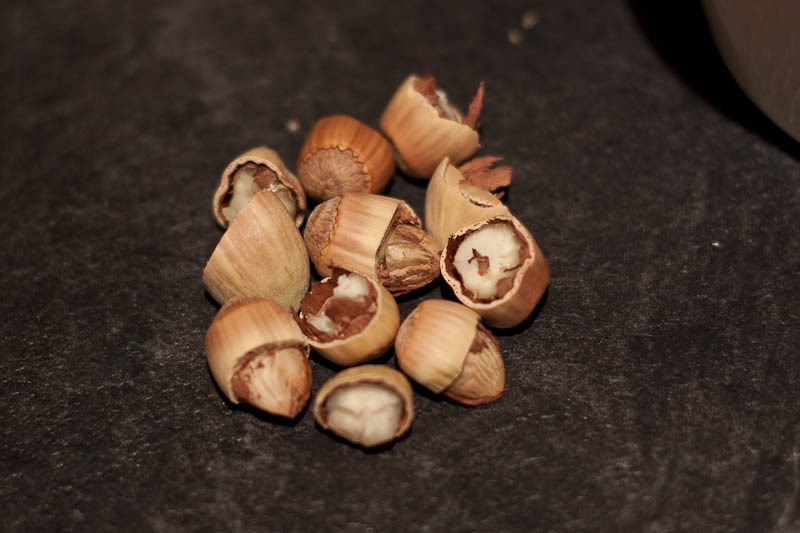
While the grouse was roasting, we stripped the outer husks and then popped the cobnuts in the oven at 180°C for about 20 minutes to roast them lightly before shelling them. This was trickier than it sounds. The shells are quite tough and the nuts quite soft and buttery in texture so it was almost impossible to get them out intact. Obviously this wasn’t a problem for pesto, but might have been if you wanted to serve them as nibbles.

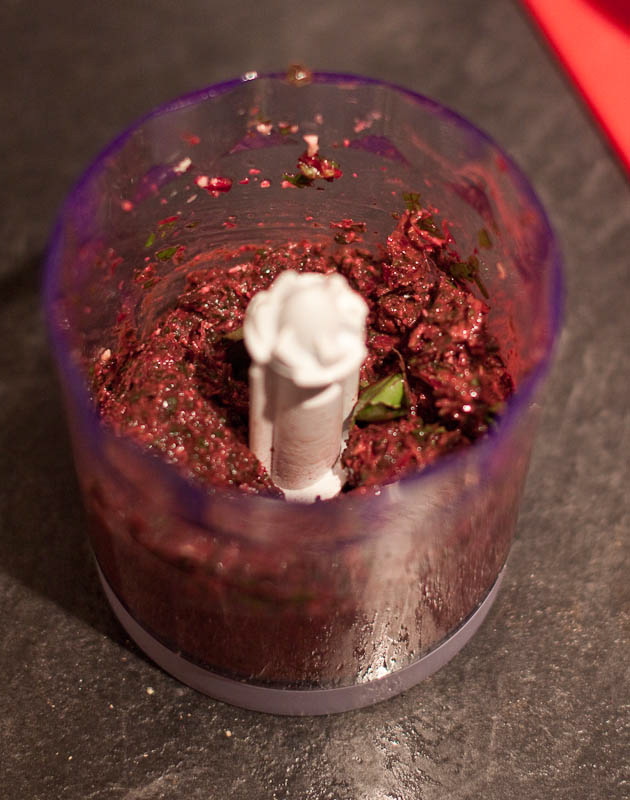
Once the cobnuts were shelled (using a cleaver, chopping board and metal skewer), I blitzed them in the food processor along with the chopped beetroot leaves and stems and some rapeseed oil to get a chopped but well bound texture. Olive oil would of course work beautifully here, but I had run out and had to improvise a bit, although the rapeseed oil made this an even more fantastically seasonal British dish! I then added in some grated parmesan and a good grinding of black pepper to finish. Feeling very domesticated I put some of this gorgeously vibrant pesto into a pot for Mister North to take home and the rest in the fridge for me.

We both ate the pesto the next day. He served his stirred through fresh pasta for dinner and I had mine on oatcakes with a sliver or two of Pexommier cheese for lunch and we both loved it. Sweet and earthy, it tasted deliciously fresh compared to traditional basil pesto and the light smooth texture of the cobnuts made it especially creamy and quite light. It needed some extra pepper to lift it completely, but this was otherwise a real seasonal delight!


There’s no excuse to waste any beetroot tops you might have around, and don’t worry if you can’t get cobnuts. Pine nuts or walnuts would be equally lovely. Think pink this week when you’re picking up veg from the garden or the farmers’ market and make this fab pesto for a quick and easy meal!