barmbrack

Barmbrack

As if autumn wasn’t good enough with its abundance of harvest items, sunny days that don’t actually require SPF and mellow fruitfulness, it also has Halloween. This is the perfect excuse to get dressed up and indulge in some seasonal treats that taste of my Irish childhood. One of those is the gorgeous spiced yeasted fruit bread known as barmbrack.

We loved it so much in our house, we ate it all year round, usually with lashings of butter and often a smidgeon of cheese, but it is traditionally associated with Halloween in Ireland according to those who know. It was studded with items such as coins and a ring to foretell your future luck. So as the days grow shorter, it seemed like the perfect time to try my hand at making it.

It was surprisingly hard to find a recipe. Barmbrack isn’t as well known over here as bara brith and a lot of the ones I across were really just fruit soda, lacking the yeast. I used a combination of these two recipes, adapting to create the closest memory of childhood tastes I could.

Start the night before and soak 350g of mixed dried fruit in tea. I wanted something to remind me of bonfires and being able to see my breath on dark nights and used lapsang souchong with a splash of rum, but you could use regular tea or even just water. Don’t skip the soaking stage. It really helps give the bread moistness.

Next day you’ll need:

  • 350g plain flour
  • 60g butter (chilled)
  • 50g caster sugar
  • 1 tsp ground mixed spice or I used a mix of nutmeg, ginger, mace and cinnamon
  • 7g fast-action Dried Yeast or 15g if using fresh
  • ½ tsp salt
  • 150ml milk, lukewarm
  • 1 large egg, beaten

Sift the flour and rub the butter into as you would for scones to create fine breadcrumbs. Then stir in the sugar, yeast and spices. Beat the milk and egg together and add to the dry ingredients, bringing together to form a dough. Add a bit more flour if it seems too sticky to knead.

Flour your surface well and begin the knead the dough on it. Keep this up for 8-10 minutes or until the dough is smooth and elastic. Start adding the soaked fruit to the dough. This is slightly fiddly as about half the fruit you add each time will fly off the counter if you don’t go slowly and carefully. Fold the dough over itself each time to minimise that. I also added some leftover chopped cobnuts or you could use hazelnuts. Stop kneading as soon as the fruit is combined, you don’t want to make it mushy.

Pop the dough back in the bowl, cover with a tea towel or clingfilm and allow the dough to rise for an hour or so in a warm place. It should double in size in this time. Flour a baking tray and place on it. Barmbrack should be cooked without a tin for a freehand feel. Cook in a preheated oven at 200C or Gas Mark 6 for 45 to 50 minutes or until golden on top. Don’t let the fruit burn or it’ll be bitter.

When the barmbrack comes out of the oven, anoint it liberally with a wash of butter and cinnamon to give it a most appealing glossy top. Barmbrack is a joy in its own right, but it’s also a vehicle for butter. Don’t skip this simple but effective stage. Serve slices of still warm bread with a good slathering of butter, slices of seriously good cheddar (try Greens of Glastonbury at Brixton Farmers’ Market) and a good strong mug of tea.

Despite my loaf not rising as much I had hoped and an uncooked seam at the bottom of my loaf (I think my milk wasn’t warm enough to get the yeast going*) the barmbrack tasted brilliant. Properly warm with spices, it was very moist with tonnes of lovely smoky sticky fruit and a teeny bit of crunch from the cobnuts. I wanted more than one piece, but it’s surprisingly filling. Perfect for taking on a long walk in the remaining sun or just being lazy and toasting it in front of a fire. Apparently it also makes excellent bread and butter pudding when it goes stale. As long as you butter it with gusto, I don’t need tell you any more!

*if you have similar problems, it’s probably my recipe and I apologise.

Hare removal… or who killed Roger Ragu…

Hare ragu, plated and ready
It’s game season again, and my thoughts have been straying towards furred and feathered fare as the hills and woods around here turn various gorgeous autumnal hues. Here at North/South Food we seemed to have cooked a disproportionately large selection of locally-sourced wild beasties over the last couple of years, perhaps motivated by an interest for something a little bit different, combined with a healthy desire to keep food miles low and quality levels high.

The blackboard in the local butcher’s been filled with a good variety of game in the last month: it’s been a bumper year for berries and fruits, so it stands to reason that many of things which feast on them will be in particularly fine fettle. Time to sharpen the steak knives, check the juniper berries, dig out the redcurrant jam and pour a glass of home-made damson gin!

I was gutted to have missed out on hare recently at the butchers (hare today, gone the next… buy it when you see it is the moral of this tale) so I was extremely chuffed to be offered a hare and three rabbits from another source; all local, lean and super-fresh. I’ve had hare in the kitchen once before, but it was more memorable for the cooking than the eating, perhaps as I’d ad-libbed the ingredients and found the beast a bit stringy and wanting for flavour. Since then I’ve read a lot more about hare – how in many respects it’s more akin to venison than rabbit – and wanted to give it a proper go before I made up my mind. So I took no chances and decided to follow a proper recipe this time, rather than make it up as I went.

The beast had been jointed and came without blood or giblets – jugged hare obviously wasn’t an option – so I delved into the excellent ‘Game: A Cookbook‘ by Trish Hilferty and Tom Norrington-Davies (now my go-to book for all things game) and plumped for a classic northern Italian dish of Hare Ragu. It sounded perfect for these cooler autumn evenings. I’m not a great fan of that hardcore, machismo-laced strain of game eating: you know, when the meat’s been left to hang for so long it’s high to the point of walking around the kitchen on its own. Not appealing to me… I’m all for flavour, but not so dominant it threatens to overpower everything else. This hare had been caught the day before I had it, and it spent a day resting before I started cooking. I reckoned the extreme slowness of the recipe would compensate for a lack of extended hanging.

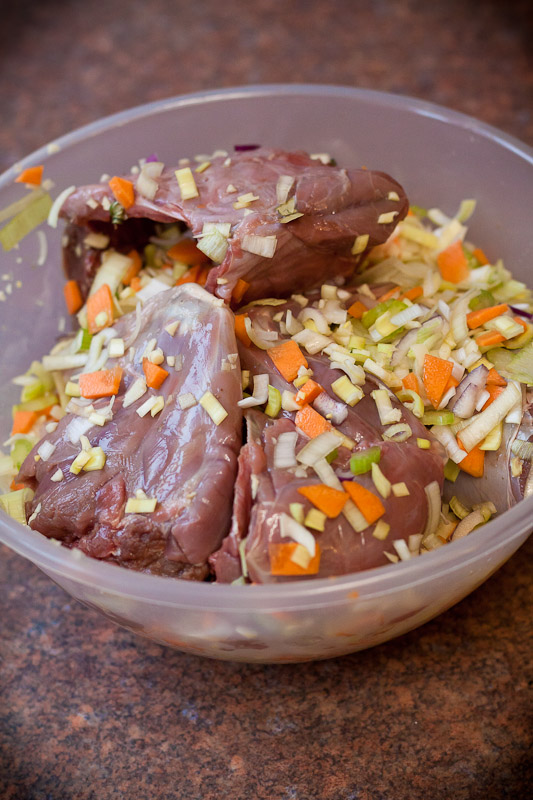
Before going to bed I finely chopped up the veg and aromatics to make a marinade, gave the joints a good coating, mixed up everything and left it overnight to mellow and rest. I then did the same, minus the marinade. Next day I chopped up the last of some wonderfully smokey Porcus backfat and bacon (to keep with the local, hilltop vein), and rendered that down, substituting this for the oil in the recipe. Then the veg got sweated down, accompanied by what few drips of marinade juices were left in the bowl, then in went half a litre of red wine. This took a while to simmer down and evaporate, then I added a dollop of tomato puree and some cocoa.

The addition of cocoa powder might sound a tad unexpected… but after the frankly amazing rabbit with morcilla and chocolate I’d previously cooked, I didn’t need much persuasion to whack a generous teaspoon into the mix. The cocoa-y flavours add a richness with a slight tang, just enough to play off the tomato and sweetness of the veggies. Finally in went the meat, the pot was filled with water, and everything simmered slowly, softening and bubbling away for a few hours until the meat threatened to slip unbidden off the bones. It was at about this time that my guest for the evening, a good mate who’s recently recanted an adult lifetime of vegetarianism, helped me to clean the cooked meat from the bones for the second stage of the cooking. To be honest,  this was above and beyond the call of duty, but he threw himself into the task with more gusto and enthusiasm than many a seasoned carnivore would; driven by a combination of curiosity and hunger. I’d at least warned him that wild beast would be on the menu before he turned up, so it wasn’t too much of a shock for him…

Everything went back in the pot, bar the carcass which was reserved for later use, and the ragu reduced for an hour or so, until it more resembled a dark pulled-pork dish than a normal pasta sauce. By this stage the collective groans of our stomachs ensured the pasta was cooked and garnished. I’d originally intended to dig out the pasta maker and roll out a few sheets of home-made ribbons, but this was a bit ambitious for a midweek work night, so I decided to go with something already in the store cupboard instead. I went for Orecchiette Pugliesi, that curious ear-shaped pasta, reckoning its bite and open shape would work well to catch the thick ragu. It did the trick…

A good helping of pecorino and a twist of parsley topped off the hearty, steaming bowls, and we tucked right in. You know it’s a good meal when there’s little conversation and less left in the dishes by the end. The hare had a big flavour… deeply rich and meaty, with more than a hint of game, but the tastes were balanced rather than overwhelming. Cooking it so slowly meant the meat was soft, succulent and very moist, and had absorbed all the other flavours in the pot, reducing everything down to a dark, unctuous delight. The only criticism is that it was almost too dry for a sauce to coat and accompany pasta… if I made this again I’d take it off the hob slightly earlier.

As is so often the way, the flavour got better over the next couple of days – just as well, as there was a lot of meat on this hare. I was (happily) eating it for days, and there’s still a tupperware container in the freezer, holding at least three generous portions, ready to meets its match with some home-made pappadellle one evening as the nights draw in. And, as the bones were substantial enough to boil up, I’ve also got a good selection of hare stock (or should that be hare restorer?) ice cubes in the freezer, ready to add to something special in the future.

Brown hare are powerful, elegant but shy native creatures – normally the most I see of them is a browny-grey blur when I’m out walking in the hills – so I’m pleased to have gotten a second chance to savour this beast… and that we hit it off better on our second dinner date. I can highly recommend this dish… stop reading this now and make yourself a hare appointment!

A tail of pork pie…

After our all too brief dalliance with summer, autumn is upon us once more. Some might moan, but it’s my favourite time of the year. Crisp sunny days, scuffly crunchy leaves, purple tinged sunsets, the smell of bonfires and an excuse to indulge in a few more carbs. Have I converted you yet?

I decided to take advantage of this first really cold snap this week with a pie for dinner. What could be better than lots of seasonal ingredients topped with flaky puff pastry? What about accessorising the whole thing with a boar’s tail and beating Fergus Henderson at his own game? Not so much cow pie as pig tail pie…

I got the tail at the stall* in Brixton Farmers’ Market for the bargain price of a pound and couldn’t resist its curly charms, especially since there’s a fair bit of meat on one. You can also get them smoked at the Colombian butcher in Brixton Village.

To fill my pie, I used diced pork leg as I couldn’t stretch to wild boar this time. For a seasonal sensation, I added shallot, leek and some seasonal mushrooms, all sweated off in butter and coated in flour and bathed in Henney’s Herefordshire cider before simmering it all for 40 minutes on a low heat. When it thickened up, I added fresh tarragon, a pinch of mace and a good grind of black pepper. Like all the best pie fillings, it can be prepped in advance and then given a lovely lid when needed.

My lovely lid came courtesy of Jus-Rol. I wanted to do puff pastry and with butter the price it is, I did not feel inclined to experiment. Instead I failed to read the instructions for use properly and ended up having to defrost one sheet in the microwave. This was a bad idea. It ended up brittle and with greasy patches. I had to use the other sheet instead and allow it to come to room temperature naturally. Feeling deflated that I could mess up bought pastry, I turned attention to the tail.

I wanted it to partly inside the pie to cook the meat and allow the bone to infuse the gravy. This is surprisingly difficult. Pig’s tails are incredibly flexible and not especially easy to position. I put the pastry lid on the pie and slit it open to wedge the tail inside. This took longer than I thought and led to an interesting moment where I stopped while holding a floppy tail in one hand and wondered how exactly my life turned out this way…

Eventually with some ingenious overlaid pastry stars holding the tail in place, the pie went in the oven at 220C for about 40 minutes. I peered in after 30 or so and marvelled at how much it really had puffed up. It also smelled tremendous. I boiled some spuds and did some peas to go on the side and rushed to get at it.

The tail had crisped up at the very very end and the meat inside was nicely cooked. It might be better to skin it first as there was quite a lot of slightly flabby skin to wade through, but it was surprisingly tasty to gnaw on and it had added a meaty kick to the pie filling. Pork leg wouldn’t be my first choice of cut usually, but it softened up nicely and was delicious. The cider and tarragon worked well and the pastry was great. I had two helpings straightaway (and forgot the peas both times!)

If you can get hold of a tail or two, try not to be put off by the cute factor. It’s a tasty thing perfect for a bit of stock or to make people’s eyes open wide when you serve this pie. I just wish I’d gone the whole hog and bought a snout in the market too…

*I’m really sorry, but I cannot remember the name of the boar people at all, but they are there every week and super helpful and very friendly.

Kitchen Happiness

Many of us find generally find time spent in the kitchen to be relaxing and enjoyable, but certain things make it ever more pleasant for me. The older I get, the more I revel in the little things in life (and Radio 4). These things please me endlessly…

A full fridge: that feeling of quiet satisfaction and challenge when you’ve just done a big shop and the fridge is crammed with deliciousness that calls out for you to eat your way through as soon as possible. All that opportunity and an excuse to open the fridge door and stare longingly.

An organised freezer:
Not just a leftover box of lollies and some frozen peas for me. I get geekish levels of enjoyment from a neat organised freezer with tupperware containers of parmesan rinds and breadcrumbs, bags of meat bones and seafood shells to make stock and ice cube trays filled with the fruits of that labour. I bulk buy meat and wrap things individually for ease of defrosting. I’ve even started labelling things after one game of freezer roulette too many. Especially since that random bag of ‘stuff’ always seemed to be chicken livers!

Storage:
everything seems more tempting when stored properly. I am a total sucker for a La Parfait jar. Even the driest most wholesome ingredient looks more appetising encased in gleaming glass and accessorised with a bold splash of orange rubber. Aside from aesthetics, jars of all descriptions make storage easier with fewer packets falling over and leaving trails of their contents in the cupboard. Jars and bottles also help mouseproof your larder making it a good investment. And if it’s good enough for Rose Prince and Kavey

Kitchen equipment: I don’t mean fancy gadgets like an electric pasta measurer or the other weird items from Lakeland that you know you’ll never use, but things you can actually justify even the once. This is how I came to own ice tongs and a pineapple shaped bucket. But then again I have other useful things like a lemon zester and steak knives. I’m a total girl when it comes to individual sized things like tart tins and my new Le Cresuet ramekins. And I think we all know how much I adore my ice cream machine…

So what tickles your fancy in the kitchen? Does the food matter if the company is good? Could you spend all day in there baking or cheffing it up? Do you just like pottering and reading cookbooks? Are you the cleaning and tidying type? Or are kitchens just somewhere to keep the kettle?

Pickles and Pizza

I like a bit of fine dining as much as anyone, but sometimes one’s tastes run a bit more on the casual side of things. I don’t mean I ever want to eat a Prawn Ring or kebab meat again and I believe ready meals to be a waste of calories. But I do have a soft spot for the kind of comfort food that borders on junk, especially that brand of Americana popularised by Nigella recently.

So when Mister North was down recently, it seemed like the perfect opportunity to indulge some homemade delights that would make a dietician weep. I’d been lusting after deep fried pickles ever since a Southern friend told me about them a few years back. Seeing Homesick Texan and Food Stories‘ recipes for them put them at the top of my to try list.

I dialled down the trashy vibe and put myself in the running for a pretentiousness award by growing my own gherkins and pickling them myself specially. (If this makes you eye roll at the sheer foodiness of it all, be comforted by the fact they didn’t taste that different to a Mrs Elswood.) Horticulturally experiments aside, these babies are super simple. I got cultured buttermilk in Sainsbury’s, but you could use yoghurt watered down instead. Do not feel tempted to substitute cream crackers for saltines. You’ll end up crying into your hot oil as all the moisture in your mouth evaporates. I used coarse cornmeal instead.

Heat your oil while you do the flour, egg, dip thing with the pickles. Fry for about a minute each side and then serve piping hot on the side of something delicious. In our case it was some leftover rollmops, a zingy homemade ranch style dressing with buttermilk, tarragon and garlic and a beer on the side. It was a heavenly plate of tanginess, crunch and sheer gluttony. I want to eat all gherkins in a crunchy coating now.

You’d think that plateful would have quelled our cravings for pig-out style food for the day, but you’d be wrong. About an hour later, we started getting ready to make a serious pizza for dinner. We used Marcella Hazan’s pizza dough recipe, leaving it to prove for several hours and turned our attention to the mozzarella. And I don’t just mean jiggling it about the bag in a slightly smutty fashion, I mean making it from scratch

Using some non-homogenised cow’s milk from Alham Wood Farms at Brixton Farmers’ Market, my fledgling cheese making skills, some citric acid that we explored all of Brixton for* and my trusty bottle of rennet, we created mozzarella magic. Surprisingly easy, especially if you have asbestos hands like Mister North for dipping the curds into the hot whey, we ended up with two beautiful bouncing balls of mozzarella in no time at all.

Buoyed by this, we turned to the pizza bases, lovingly dressing them with homemade sauce courtesy of Mister North and a glut of Blackpool tomatoes and an umami hit of anchovies, green olives, some of my home grown plum tomatoes and a finishing sprinkle of ham salt from Comfort and Spice. Unfortunately made giddy by the cheese achievement, we forgot to dust the worksurfaces with semolina as instructed and the bases stuck somewhat, leading to some creativity with a fishslice and a slightly concertina style pizza.

The pizza might have lacked finesse, but it was loaded with flavour. The tomatoes tasted of summer and the mozzarella was so soft and fresh I could have eaten the whole ball like an apple to fully enjoy the texture. It needed a touch more salt and I think it would have been even better with buffalo milk, but for a first go, it was pretty amazing.

We devoured the pizzas like kids at a sleepover, both wishing we’d had more of the mozzarella to do a tomato salad with or go retro and deep fry in a crispy coating like the gherkins. Instead we rounded off a day of gluttony with a cheeky bowl of Veda bread ice cream and a glass of wine or two, proving that sometimes the taste of home is all you need. Your own kitchen provides the greatest comfort.

*Try the Nour Cash and Carry if you need it Monday to Saturday and the Low Price Food & Wine on the corner of Brixton Road and Loughborough Road on a Sunday. We did the walking round so you don’t have to.