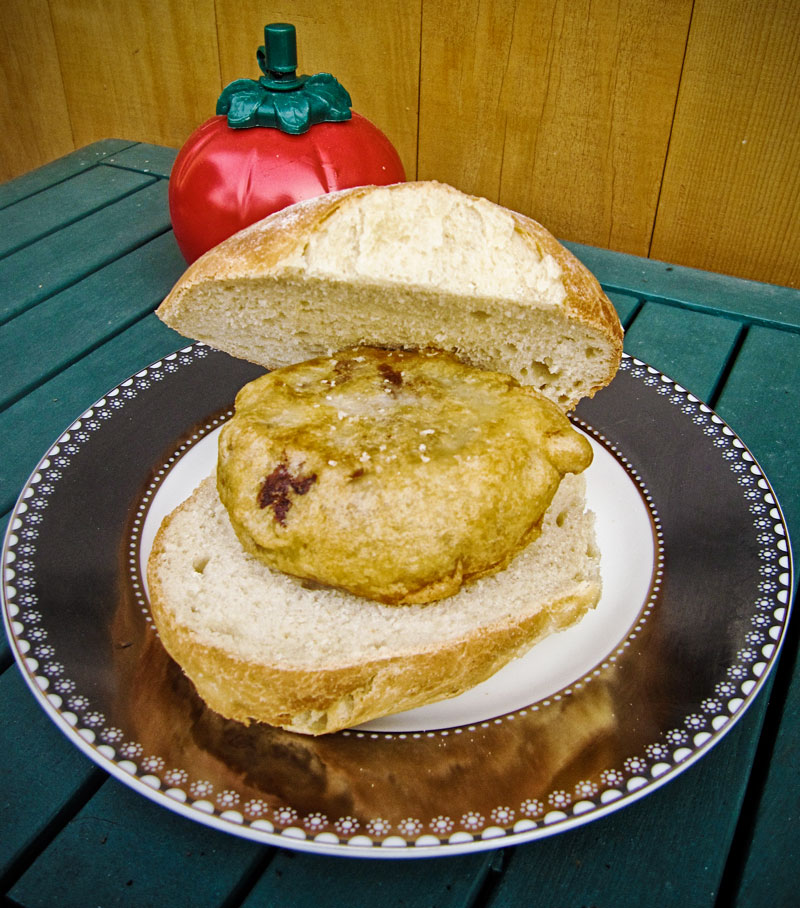
Wise yer bap… put pasties on them!

Growing up reciting the Lord’s Prayer everyday at school, it made perfect sense that we asked to be given our daily bread. Belfast is a city of bakeries and practically every meal, including our famous Ulster Fry, combines bread in some shape or form. In fact, the city even gives its name to the world famous crusty Belfast Bap.

Perfect filled with anything, mainly fried goods, this humble bread roll has an illustrious past. Invented by master baker, cross community pioneer and philanthropist Barney Hughes in the 1840s, it is credited with feeding the city during the Famine and ensuring it wasn’t as badly affected as many other parts of Ireland, paving the way for it to become one of the great industrial centres of the Empire, famed especially for shipbuilding, including the Titanic.

The Belfast bap is still baked daily back in Northern Ireland, forming the basis of many a meal. There’s few things that don’t taste better stuffed into a buttery Belfast bap. In fact, a crisp sandwich isn’t a crisp sandwich unless it’s Tayto Cheese & Onion on a proper burnt brown topped bap. But the ultimate Belfast meal is that stalwart of every chippie, the Pastie Bap.

Read more

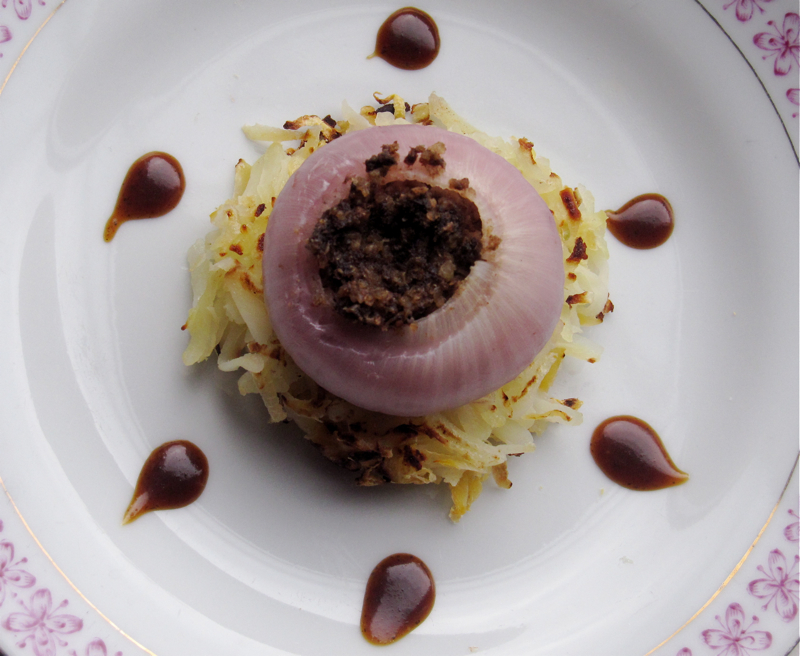
Haggis Stuffed Onions

I love Burns’ Night. Not only is it a welcome night of revelry in the grey gloom of January, it’s an excuse to enjoy the delights of haggis (and mash). Seen as plain food by some, I associate it with excitement and glamour thanks to childhood memories of our parents hosting Burns’ Suppers for friends. They’d dress up, the table would get laid with the good plates and the house would be full of laughter and clinking glasses and everyone having a good time. That association and the comedy flying haggis that sat on the mantlepiece all year round has given me a huge soft spot for the humble haggis.

I do try and eat it each January, but I’ve never cooked it for myself before as its usually too much for one person and I feel I’d be treading on Scottish toes to host a supper myself. So imagine my glee when on a recent trip to Walters Butchers in Herne Hill I espied a teeny tiny perfectly portioned haggis for sale. Feeling slightly in need of indulgence since it’s a dry January, I brought it home and plotted doing something slightly different to the normal haggis, neeps and tatties.

And unsurprisingly, I got the urge to stuff something with the haggis. But since I’ve already tried squid and cabbage leaves and tomatoes and a marrow and probably more I’ve forgotten, it seemed like I’d run out of things to stuff. Until I espied a big bag of onions in the farmers’ market. I’ve heard of such things as a stuffed onion but never eaten them. I decided they would be a good challenge.

Read more

Sloe cured salmon and slow cooked goose…

Christmas may be over for another year, but some memories linger on happily. A hot port in front of a roaring turf fire, a proper fry with Coca-Cola ham instead of bacon on Boxing Day and the revelation that was home made gravlaks or home cured salmon fillet. Economical, easy and above all, delicious, I can’t recommend it enough!

As you might have noticed, we at North/South Food have a soft spot for Scandinavian food due to the influence of having family friends in Norway, so it’s no surprise to hear that I got my paws of a copy of Scandilicious by Signe Johansen as soon as I could after it was published last year. Filled with mouthwatering recipes and beautiful photos, I almost didn’t know where to start with this book when on page 151, gravlaks with dill mustard sauce leapt out at me. It might have been September, but I knew what our Christmas Day starter was going to be already.

All the Scandinavian countries cure, pickle and salt fish to improve its taste and to preserve it. Having seen how easy it was to pickle rollmops, I couldn’t wait to get curing, especially when I saw how easy the process is. I used Signe’s recipe as a guide to get the sugar and salt proportions correct, but wanted to add a personal twist. She suggests oomphing up the cure with some aquavit, but I decided to use a family favourite and add a splash of sloe gin instead.

Along with those Norwegian influences, one of my strongest childhood memories is of my parents making sloe gin nearly every autumn. We’d go on family walks in the autumn near my grandmother’s farmhouse searching out blackberries and blackthorn bushes and pick as many of each as we can carry. Back home, everyone would join in the pricking of the sloes before the jars of gin were stashed in the cupboard to mature. It was one of the first tastes of alcohol I had and the sweet, yet sharp flavour made me the gin lover I am to this day. Mister North has carried this tradition on with his legendary damson gin and our mum resurrected it when she managed to get hold of some stunning sloes when housesitting for friends who live on the tip of the Ards Peninsula facing Strangford Lough. Plump, juicy and slightly infused with salt, they made superlative sloe gin. I couldn’t wait to infuse the cure and the salmon with a splash of it.

A salmon fillet was purchased from Tesco as Belfast, sadly, isn’t abundant with fishmongers. Since there were only two of us, we went for half of one side of salmon. We didn’t freeze it first, but this would be advised if you aren’t sure how fresh the fish is or if you’re serving children or anyone with a comprimised immune system. The actual work involved in gravlaks is minimal, but you’ll need to let it cure for up to 48 hours so plan ahead.

I covered a flat baking tray with foil, then covered the foil with clingfilm before laying the salmon on the clingfilm, skin side down and applying a mix of pink peppercorns, coriander seeds, home grown fennel seeds and dill from my mum’s garden to the flesh. I then mixed up the sugar and salt with just enough sloe gin to turn the mix pale pink and make a stiff paste. This went on top of the spiced fish before the clingfilm was used to parcel the fish up tightly. It was all wrapped in the foil and left on the tray to catch any brine and then weighted down well in the fridge, multi-tasking by using the goose we were having for Christmas dinner.

A gift from the same friends on the Peninsula as we sourced our sloes from, this beast rivalled Mister North’s spiced beef for best meat dish of the season. Raised in the family’s walled garden, this goose was free range and more. Killed and plucked especially for us, we’d been looking forward to it for months. Scalded, salted and simply roasted, first in a hot oven to crisp the skin and then on a low heat to cook through, it was plump and juicy and so bursting with flavour that we just couldn’t get enough of it even though there were just two of us.

But it was challenged as dish of the day by the salmon. We usually do a seafood supper on Christmas Eve and to accompany our Lidl lobsters, we had some of the gravlaks on the side. Brushed clean of the peppercorns, sliced thinly and served with some fresh wheaten bread, it was spectacular. So soft it melted in the mouth, unlike slices of packed smoked salmon that remain firmly rubbery, it was moreishly salty sweet and fresh with the aniseed of dill and fennel and we both loved it.

Extraordinarily easy to make and much better value than most smoked salmon, it made a perfect start to Christmas dinner and the ultimate cold cut after the big day, as wafer thing slices of it cried out to snaffled everytime the fridge door was opened. It would make a easy, but impressive centrepiece for a lunch anytime of the year, but after this, I can’t imagine our Christmas without it in future…

Venison Christmas dinner, and the best leftovers ever…

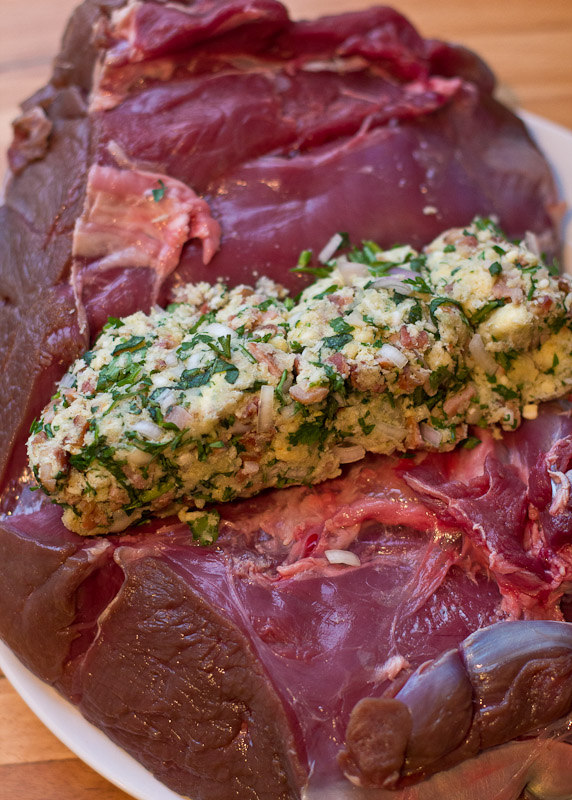
Uncooked venison pieThe centrepiece of our Christmas dinner this year was a roasted leg of venison. Pretty good as it stands (ahem), but curiously, this tale ends up being all about the leftovers: the venison pie afterwards stole the show!

Cooked venison pie

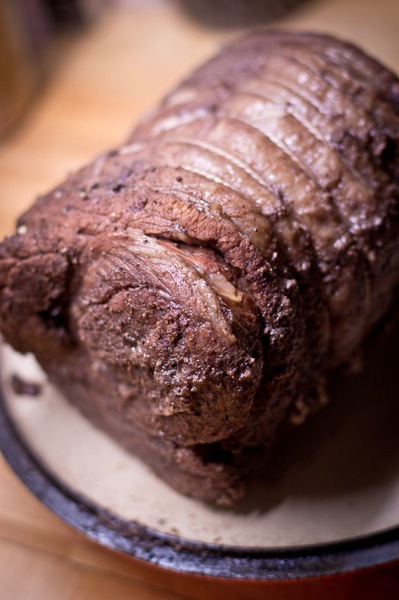
My girlfriend’s family had served the roast venison a couple of Christmasses before, but it had overcooked disappointingly. I was given the challenge/opportunity to see if I could do it better. The roast recipe (see photo below) is from the Tatton Park estate, and I was handed a photocopy, complete with annotations. Now I like a good bit of venison, but hadn’t cooked a joint this size before, and was aware it’d need a bloody good basting to keep it tender. Hardly the hassle-free roast which is recommended for a peaceful Christmas Day, especially the first cooking for the in-laws!

Roasted joint of venison

I ordered the meat from Paul in the market (asking him to leave me the bone), and started work on Christmas Eve by making a stock … roasting the bones for 30mins before boiling up with a mirepoix and some herbs for a hour or so, until the stock tasted rich, robust and savoury. Venison’s very lean, but this yielded a creamy covering of fat, which I reserved and reformed for later use. While the stock was bubbling I also made up a batch of spiced Eastern European-style red cabbage. It’s normally better then day after making it, and has a good tang with caraway seeds, wild honey and bramley apple.

Spiced Red cabbage

After their experiences with the venison joint I was a little wary of following the recipe to the letter, so on Christmas Day we got cracking by late morning. This gave us time for a slow, low cooking; although potentially less than the recipe called for. After making the Stilton, bacon and panko stuffing, this got rolled up inside the joint which was then retied. I also stuck spears of that venison fat into the flesh, to help lard it. I wrapped the joint tightly in foil for all but the last 40 mins or so, when the foil covered the whole roasting tin, so the juices could really get going. All in all it was probably cooking for a shade over three hours, basted regularly. The meat rested for a half hour while I whipped up gallons of gravy, deglazing the pan with port and using the stock to build up the flavour.

Christmas dinner 2011

After our Spiced Beef starters, our Christmas plate was finished off with hasselback potatoes, roasted parsnips, sprouts with bacon and chestnut, and sweet potato mash. A great spread, with plenty of flavour, variety and colour for the main meal. The venison was very tender and moist (phew!) and the taste was good and richly gamey, but not exceptional (admittedly this was up against the Spiced Beef, which was a real winner by any standards). We had a leftover meal on Boxing Day, with as many of the trimmings and accompaniments as our plates would hold, but we didn’t fancy eating rich slices of venison every day until New Year.

Pie ingredients

One of my Christmas presents was the OCD Chef’s Chopping Board (my friends know me too well) and I’d joked about keeping my scalpel in the kitchen with it. My inner designer feels totally at home with a scalpel blade, and I fancied building on a couple of previous attempts to decorate a game pie. With around half a kilo of cooked venison, and a gale blowing outside, pie seemed like the perfect prospect. A post-Christmas pie, made with Christmas presents, leftovers, and a nod to the frozen north…

We came home after a shorter-than-planned afternoon walk in the heavy winds – any hot port in a storm –  and we threw ourselves into making the leftover ‘pie to end all pies’. Venison, stilton and gravy were all to hand. This was to be rich, rumbustious and made to revel in the excesses of the Christmas period: game, port and piggy bits, but I had a sweet potato leftover to use up. I reckoned that, much like the butternut squash in my venison pasties, this token vegetable’d work well.

I rendered down the bacon fat, and melted some butter, along with a sprig of rosemary. Then in went a few shallots, the diced bacon, and some cubes of wild boar salami, followed after a bit by cubed sweet potato and a hare stock cube. The plan was to soften everything through, cooking gently and once that was done, it all came off the heat. We discarded the stuffing from the venison, and cut the meat into properly decent-sized chunks. Venison has a tendency to firm up if overcooked, so I reckon bigger was better, and should guard against dryness. The hunky chunks of deer got mixed up well with the other cooled, cooked ingredients, then I crumbled in generous handfuls of Stilton to the mix. It looked great.

There was probably about 330ml of gravy left over from Christmas Day (a handy size… can you imagine if they sold tins of real gravy next to the Coke and Irn-Bru?) so that got warmed up in a pan, along with  teaspoon of Gentleman’s Relish (the secret ingredient),

Cutting board and reindeer

some extra hare stock cubes, a tablespoon-sized blob of redcurrant jelly, and significant quantities of ‘cooking’ port. After thickening to a wonderfully rich, thick consistency this was gently and methodically poured over the pie filling in the dish.

I’d already rolled out the pastry (Jus-Ro’s finest… I didn’t fancy making puff (or rough puff) this time) and traced around the pie dish, gathering up the offcuts to make decorations with my trusty blade. Once the pie dish was filled we had fun with the decorations! I’m really pleased by how it came out… there was no over-arching theme but I did reference my other half’s Christmassy knitwear for the reindeer inspiration. After that we got busy making trees and stars, then fitted everything together in a 3D manner. I think I went a bit too heavy with the egg wash in places, but I love the seasonal tableaux we came up with. It’s certainly raised the bar for the next pastry creation!

The finished dish got cooked for about 40mins in a medium oven: I didn’t want to overcook the filling and this was just enough to puff the pastry topping up perfectly and the contents heated to a slight bubble. By the time it came out we were almost climbing the walls with anticipation… just enough time to get the celeriac mash and a healthy portion of the spiced cabbage on the side. Oh, the smell…

Venison pie and mash

And we’re talking about a full-on, revelatory moment on the first bite. Boom… a gloriously grown-up pie fest… with the tang of the stilton, the richness of the game, the sweetness of the port-laden gravy and sweet potato meltingly intimate together on a fork. Proper posh pie heaven. Big chunks of succulent meat and light pastry were so good together… I didn’t want to stop eating it. Next day the pie made a glorious re-appearance alongside some home-fried chips and peas on the side. Which, if anything, was better than the first portion, as the gravy and filling had mellowed and mixed even more. No point in dressing up the accompaniments… pie and mash, pie and chips. Dead simple, job done. Fan-bloody-tastic!

Venison pie and chips

PS. Drinks during the cooking were provided by the superlative Buxton Brewery (their cracking Wild Boar making its debut next to the aptly game in the kitchen): then we washed the pie down with a suitably Nordic brew, Einstök‘s Icelandic Pale Ale. I like my ales at anytime, but a pie and a pint is a marriage made in heaven. Happy Christmas, deer!

Irish Spiced Beef brings Christmas comfort…

Spiced beef 11

Having read Miss South’s glowing write-up before my latest visit to her, I was keen to read through Niamh Shields‘ “Comfort & Spice” cookbook. I sped read as much as possible in a short time, and one of the (many) wonderful recipes which caught my eye was Spiced Beef: an Irish dish which is traditionally served cold over the Christmas period. We’d normally have a decent-sized cold cut in the house over the holiday period, often the Coca Cola Ham which we wrote about last year.

However I can only remember having spiced beef once, when our mum brought back joint from the butcher. She’d fondly mentioned it from her childhood, but this shop-bought version was memorably unmemorable. So I’ve always wanted to make proper spiced beef from scratch, and Niamh’s recipe provided the perfect excuse to give it a go this year. I alternate between spending Christmas in the north of England, and returning to Belfast, and this year I was in Manchester with my girlfriend and her family. Having something which brought a taste of Ireland to the table was important to me… and having a cold joint to be able to pick and nibble at is always a bonus.

Spiced beef isn’t a complicated dish, but it does require some patience, preparation… and an ingredient which wasn’t available to the general public in Northern Ireland during the Troubles, which curtailed its consumption when we were growing up. Saltpetre aka potassium nitrate was a controlled substance, as it’s a key constituent of black powder (gunpowder). I’m not sure if it’s still verboten: I was lucky enough to be given some for this recipe by a friend. Saltpetre’s one of those relatively unknown but essential compounds on which the modern world has been built; used for fertiliser, food preservation, an oxiding agent for gunpowder and fireworks amongst other uses.*

I ordered the Christmas meat in advance from Stansfield’s in Todmorden Market –  the centrepiece of our Christmas meal was leg of venison – but Paul always has good beef and I picked up a weighty brisket form him last weekend.

Irish Spiced Beef (from Comfort & Spice)

  • 2kg beef brisket off the bone

The curing mix:

  • 1tsp allspice
  • 1tsp cloves
  • 1tsp fresh nutmeg
  • 1tsp mace
  • 75g soft brown sugar
  • 10g saltpetre
  • 100g sea salt

Combine all the ingredients for the curing mix and rub all over the brisket. Sterilise with boiling water a non metallic pot or plastic container into which the beef will fit snugly. Add the beef, cover and store in the fridge for eight days, turning daily and basting with any juices.

Wipe off the excess marinade and cover the beef with water in a large saucepan. Bring to a boil and simmer for two hours. Allow to cool and serve over the festive period as you would a ham.

First step: make the curing mix. I closely followed Niamh’s ingredients, with a couple of minor tweaks. I used Muscovado sugar, as I love its rich, sticky, almost smoky rawness. I also raided my extensive selection of salts to create a posh mix which would hopefully play up the strengths of the beef and spices, using Maldon Smoked Sea Salt, Guerande Grey Sea Salt, and Carmargue Fleur de Sel. Every recipe I’ve seen for dry-curing meat stresses that the quality of the salt is imperative, and they looked beautiful ranged on the plate too.

Spiced beef 1

I ground the whole allspice, nutmegs and cloves together, together with a cheeky tablespoon of mixed peppercorns to add a little bit more warmth to the mix. Then I combined the salt, sugar and saltpetre in a bowl, make a good stiff mix. The aroma was stunning: if you’re ever looking for a sure-fire way to enfuse your home with the sweet, aromatic and suggestive hints of winter, this really is it. It’s even better with a cockle-warming glass of hot port to aid the cook’s concentration!

Spiced beef 4

I sterilised a tupperware container, and placed the cured meat in it, sealing it tightly and placing it in the fridge. With six days between the initial preparation and Christmas Eve, the only requirements were to gently spoon and baste the spiced liquids over the joint daily. You’ll find a fair amount of juice will be drawn out of the meat by the cure. I tried my best to disturb as little of the spiced coating as possible, wanting to let the power of the spices permeate properly through the meat.

Spiced beef 7

On Christmas Eve we simmered the beef for a couple of hours, before letting it cool (patience is a virtue) and cautiously cutting a few slices off for a Christmas Eve nibble. As you can see, the beef had held its vivid rose hue thanks to the saltpetre, and the flavour was quite wonderful: warming, comforting and so tender. Paired with wholegrain mustard mixed into some mayo, and ranged with gherkins, this was a perfect sandwich: almost the Irish equivalent of New York pastrami. We didn’t leave any out for Father Christmas though, as it proved way too popular with everyone who tasted it.

Spiced beef 8

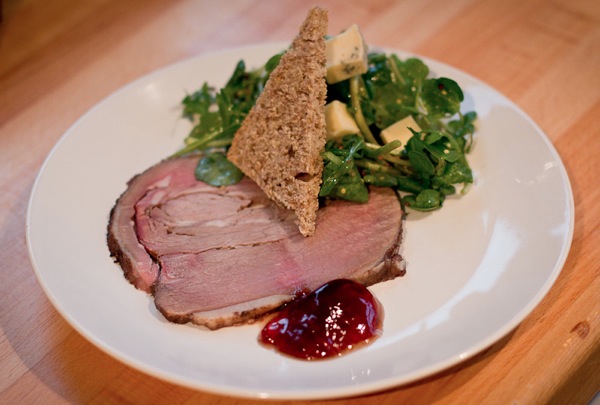
I’d also decided to have the Irish-themed starter on Christmas Day revolve around the spiced beef: after a night in the fridge the meat was even easier to thinly slice, and I plated it up with a small toasted piece of soda bread, a dab of redcurrant jelly, some cubes of Cashel Blue cheese, and a lightly dressed selection of watercress, rocket and baby spinach leaves. Everything worked well together: the sweetness of the jelly complementing the sharpness and warmth of the mustard vinaigrette, pepperiness of the rocket, the crisp of the bread… and of course that succulent, aromatic and oh-so tender beef. Needless to say, we’ve been cutting cheeky slices off the joint ever since, as it’s perfect for snacking and sating our cravings for seasonal cold meats.

Spiced beef 14

Thanks to Niamh aka @Eatlikeagirl for allowing us to reproduce the above: it’s a brilliant encapsulation of a traditional Irish recipe, and doesn’t suggest any of the adulterations which crop up in many US-oriented traditional ‘Oirish’ recipes. We’ve recommended it before and we’ll do it again… buy Comfort & Spice and make your kitchen a happier, better place!

*Update. This still remains a firm festive favourite dish in our family. The last couple of years I’ve not used saltpetre as part of the cure, as there’s increasing awareness of the potential health risks associated with nitrites used in processed or preserved meats. Without the saltpetre acting as a colour fixative the spiced beef isn’t as rosy, but tastes just as good… and even a large 1.5kg joint rarely lasts more than a few days, so as long as you follow standard good practise for food hygiene, there’s no need for the preservative qualities of saltpetre. You may or may not chose to exclude saltpetre from the recipe when you make this dish.