Cooked tongue and cheek pudding

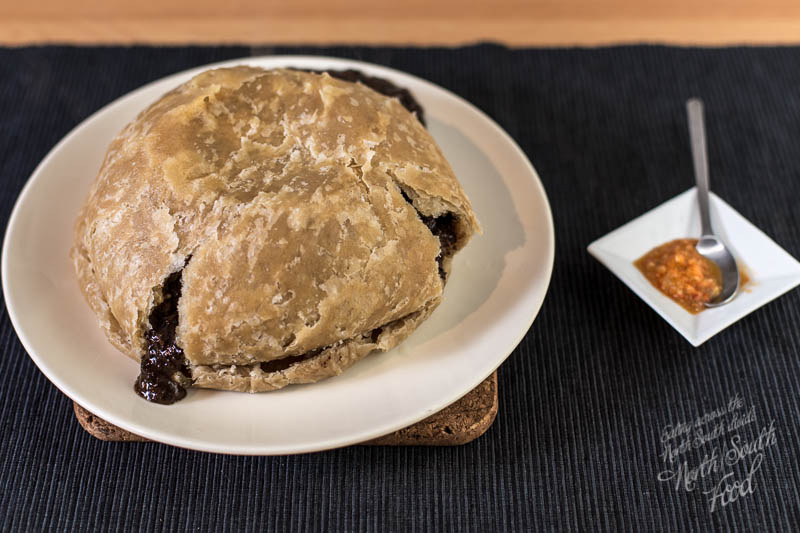
Tongue ‘n’ cheek: a hot, steamy, sticky pudding

Tongue and cheek steamed pudding

Regular readers have no doubt picked up on our growing love affair with offal. Over the last three years we’ve embraced cooking and eating the more esoteric, wobbly and less-eaten parts of various animals… mostly successfully. In part this has been driven by our curiosity; in part interest in rediscovering traditional dishes (thanks to championing chefs like Fergus Henderson and Robert Owen Brown), and in part because it’s a cheap and healthy foodstuff. Oh, and we’ve laid a few demons to rest in the process too…

When we were young, our mum used to serve us tongue sandwiches, and I loved them. Despite being a reasonably smart kid, I never made the connection between the name ‘tongue’ and the actual muscle inside an animal’s head; I just assumed it was another odd quirk of the English language. My illusions were shattered when I walked into the kitchen one day to find mum making pressed tongue: setting a boiled ox tongue in jelly, then pressing a plate down with an old-fashioned iron. Suddenly I put two and two together and realised why the slices were round, and curled. Although I was fascinated by the size, texture and feel of the ox tongue, I was also pretty creeped out. Both familiar and alien, one glimpse of the tongue was enough to change my attitude to it as a foodstuff. No longer was it a welcome morsel to find in my packed lunch, now it was a giant freaky cow tongue. I didn’t eat tongue again for over twenty years.

Read more

Dulse Tapenade: the Province meets Provence

dulse tapenade

When I was a child, I hadn’t yet discovered my high umami fascination. Olives didn’t tickle me, I only liked anchovies marinaded and one of the strongest memories of disliking a food in childhood came with one of the strongest flavours I tasted, in the shape of dulse. Dulse is a seaweed, very common around the coast of Ireland and particularly associated for us with the north coast town of Ballycastle and its famed Auld Lammas Fair. In an early adoption of the salt sweet craze, people bring Yellowman and dulse back from there as treats and it was this contrast that caused my long lasting reaction.

Yellowman is the sweetest crunchy thing you can imagine and dulse is intensely iron rich and seawater salty with a slightly rubbery texture and it is one extreme to the other for a five year old. I never eaten dulse since and the thought of it has always made me feel a bit queasy. But when I was back in Belfast last week, I went for lunch at the Belfast Barge and ordered their superb seafood platter and in with the spankingly fresh seafood and fish was a healthy sprinkling of dulse that would be hard to avoid.
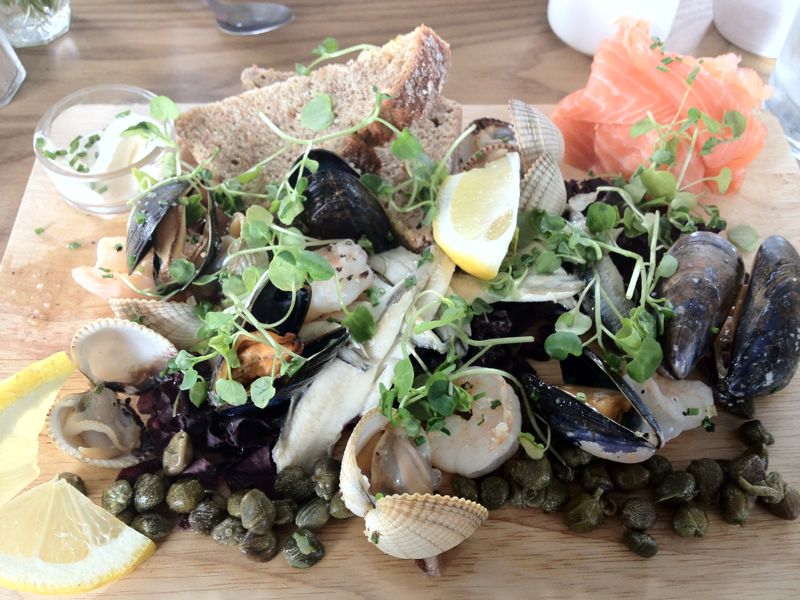
Belfast Barge seafood platter

Bravely loading up my fork with some dulse, a caper or two and a marinaded anchovy, I tried it again, hoping the flavours I liked would hide the one I didn’t. I was very very surprised when I loved it. The flavours all went together like nobody’s business and appealed to my umami addiction utterly. It was so good that before I had finished the plate, I was asking my mum where I could get some dulse to bring home.

I wanted to combine those fishy and salty and savoury flavours to the fullest extent and my mind immediately went to tapenade, loaded up with olives, anchovies and capers and dulse. It needed something fresh and clean on the side and Felicity Cloake solved my dilemma by posting a ceviche recipe this week. Not only do I now know how to liven up a sea bream, but I’d found my perfect partner for the ultimate umami paste!

Dulse Tapanade: makes enough for two people

  • 20g dulse (mail order here or get from St George’s Market on a Saturday or the Bethany Fruit & Veg on the Cregagh Road)
  • 20 black olives, stoned
  • 2 anchovy fillets, chopped
  • 1 tablespoon capers, drained
  • 1 tablespoon olive oil
  • squirt lemon juice
  • good handful parsley and fresh thyme

Check your dulse carefully for any small shells or crustaceans, then chop roughly. Add into a hand blender along with the olives, capers and anchovies, all of which should also been finely chopped. Blitz until mixed. (You could also use a pestle and mortar.)

Add the olive oil and lemon juice until you reach the desired consistency. Because this was a main course thing for me, I kept it drier and chunkier, but if you wanted to make it a dip add more until smooth. It’s super easy to make and should take about 5 minutes tops.

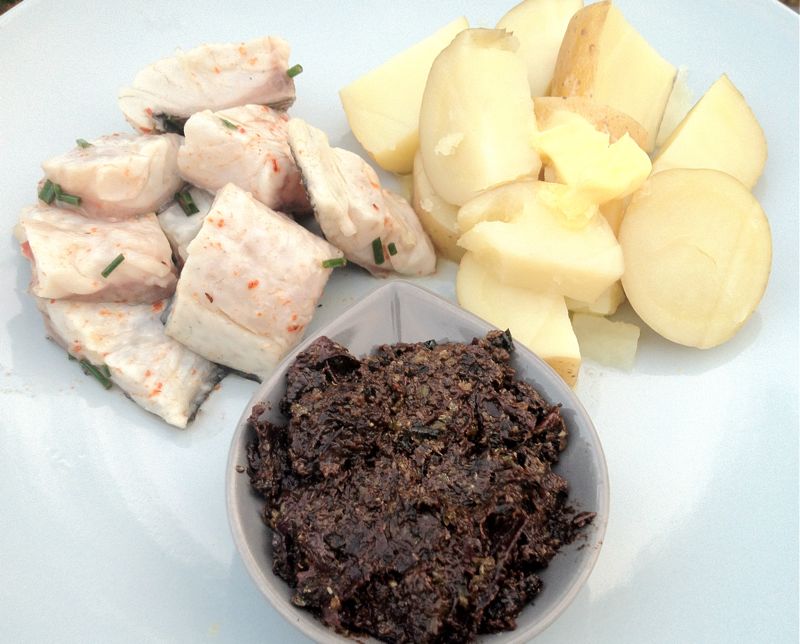
I served mine with boiled Charlotte potatoes (Sainsbury’s Basics Salad Potatoes are the less shapely Charlottes and are under a quid) and with the lime and salt rich ceviche on the side. This is not entry level umami. This is the equivalent of the 80s ads where the Tango man slaps you round the face with a salty fishy savoury explosion. It’s addictively good. I smothered my spuds in tapenade and when I ran out of carbs, ate it by dunking broccoli florets in it, revelling in every tantalisingly over the top mouthful, unable to get quite enough of it.

The sharp of tang of the soft fish (and Felicity’s recipe with sea bream was bang on) cuts through the oiliness of the tapenade perfectly while enhancing it completely. This was one of those meals that took less than 15 minutes to make, was utterly simple in its ingredients and was so good I could hardly believe it. Just perfect for these lingeringly warm autumnal days, I can hardly believe how much I’ve fallen for dulse. This must mean I’m a grown up now!


Dulse Tapenade

Rhubarb Surprise Ice Cream Sandwiches

My ice cream life was varied and disparate when I was a wain. There was the exquisite gelato of family holidays to Italy ( scene of one of my most memorable moments when I brattily declared I didn’t like ice cream to howls of disbelieving laughter), Mr Whippy style cornets with a flake on the side, the mouth puckering but moreish lemon sorbet my mum’s friend Ann made at dinner parties and slices of raspberry ripple from a rectangular carton, often served on the side of fresh raspberries from my granny’s garden but also slipped between two wafers to make a slider.

Cue quizzical eyebrow raising from our foodie readers. Well to us Norn Irish (and Scottish) folk, a slider is not a mini burger, it’s an  ice cream sandwich, usually from a van or one of those amazing Celtic-Italian ice cream cafes both countries welcomed so happily due to their super sweet tooth. Possible to make at home if you could get your Dale Farm in the right sized block and work quickly, they were more often a treat bought on a seaside trip or at the end of a Sunday out. They came in several souped up versions such as the nougat wafer (dipped in chocolate and nougat and pronounced nugget) or the seemingly sophisticated oyster, but my favourite was the version that had a Flake inside. I could work out how they got the figs in Fig Rolls, but not the Flake inside one of these.

Quite hard to eat in a dignified manner, these required a careful combo of licking, nibbling, turning and eventually biting to make sure you got every drop without it exploding down your front. I imagine it was their trickiness to eat that has led to them seemingly vanishing without a trace these days. I haven’t seen one for years and neither had the other slightly bemused people I canvassed about them. It looked like I was going to have to make my own version. It was a project worthy of one of Kavey’s ice cream challenges!

Chocolate is all very well and good but my last two batches had both been chocolatey and I felt I needed some fresher and tangier to hit the spot. One of those perfect lightbulb moments happened and I realised that a stick of poached rhubarb inside the ice cream would make a perfect grown up copy of that childhood classic…

Rhubarb Surprise Ice Cream Sandwiches:

  • 4 egg yolks
  • 250ml milk
  • 500ml double cream
  • 100g caster sugar
  • 5 stalks rhubarb
  • pack of rectangular ice cream wafers

I used a silicone tray like this one to make individual blocks of ice cream. All instructions are for this tray, but you could use something else if you prefer.

Roast your rhubarb in the oven at 150℃ for about 20 minutes until soft but still holding its shape firmly. Then set aside the narrower stalks on a plate so you have enough for nine pieces and allow them to drain any juice away. Puree the rest of the rhubarb in the blender.

Then make your ice cream base by heating the milk and sugar together until bubbling but not boiling. Add in the cream. Separate the eggs and beat the yolks in a small bowl. Then add a cupful of the warm cream mixture to the egg yolks and stir. This will temper the yolks so they don’t scramble when you add them to the hot liquid. Then add the egg mix to the warmed milk and cream and cook gently until starting to thicken and coats the back of a spatula. Take off the heat and chill well before churning in your machine.

About five minutes before your ice cream machine has done its job, add in the rhubarb puree to flavour your custard base. Make sure your ice cream is still quite soft and malleable and then put a dessertspoonful in the base of each section of your tray. Place the cut piece of roast rhubarb on top and then cover it all with another spoonful of ice cream so there are no gaps. When all are filled, put the tray flat into the freezer to chill completely for several hours so that each little block is nice and firm.

When you are ready to eat the ice cream, take the tray out about 5 minutes before and run a blunt knife round the block to loosen it and the block should pop out in one piece. Pop between two rectangular ice cream wafers (I used Askey’s for extra childhood nostalgia) and then get your chops round this awesome ice cream sandwich. The ice cream is super creamy and custardy with a proper tang from the rhubarb shot through it and the whole thing is made amazing by the frozen piece of rhubarb which makes it all taste a bit like a quarter of the eponymous sweeties. I revisited childhood memories and instead of being disappointed, it was even better than remembered…


Pastrami

There is a long weekend coming up and I have an excellent suggestion as to what you could do with it. Why not have a go at making home made pastrami? It’s not quick, but it’s also not difficult in the slightest. And if the weather is good over the Jubilee, it’s an excuse to get the barbecue out. Tempted yet?

Pastrami is beef brisket, brined and cured, then rubbed with spices and smoked until cooked. It’s also known as the finest sandwich filling around and something you always want more of so having a great big hunk of it in the fridge as cold cuts when you’re off work is just ideal. I’d actually never cooked with brisket before, but Mister North’s superlative spiced beef at Christmas had piqued my interest and I was just waiting to get my hands on one. And thanks to Becs over at Lay The Table alerting me to the presence of Farmison and their grass fed, higher welfare standard meat by mail order, I ordered a 2kg beauty on a Tuesday evening and had it ready for its brine bath by Thursday tea time which impressed me greatly and I’ll certainly be using them again for things my butcher can’t get me easily.

Brining meat is very easy. You simply prepare a solution of water, spices and salt and immerse the meat for the required time. This is also a cure thanks to the presence of saltpetre and means the meat doesn’t spoil, but retains a lovely rosy hue instead of looking leathery like some cooked beef does. Although the meat will be preserved by the process, you still need to be cautious with hygiene and make sure everything you use is nice and clean. It’s also worth preparing everything in advance rather than weighing spices at each step or you’ll lose track and end up accidentally doing too much of one thing.

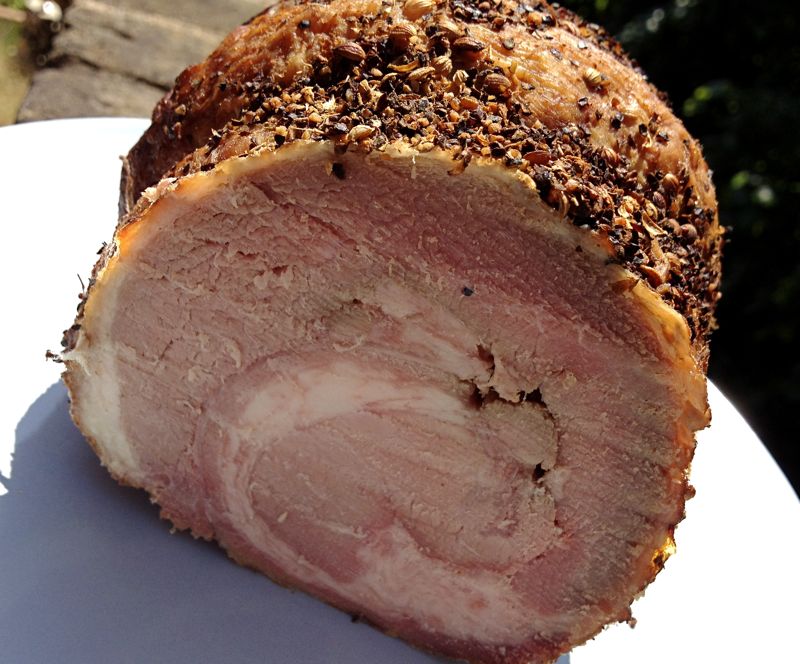
Pastrami

  • brisket (I used a 2kg piece)
  • 200g sea salt
  • 100g dark brown sugar
  • 2 litres water ( I boiled it and cooled it)
  • 6 cloves of raw garlic
  • few stalks of thyme
  • 2 teaspoons of saltpetre (I had mine from the bacon)
  • 1 tsp whole cloves
  • 1 tsp whole peppercorns
  • 1 tsp whole coriander seeds
  • 1 tsp shichimi togarashi (or chilli flakes)
  • 2 tsp allspice berries
  • 2 cinnamon sticks
  • 1 tsp mustard seeds
  • 1 tsp fennel seeds
  • 1 tsp ground ginger
  • 1 tsp ground mace
  • 1 tsp mustard powder
  • 4 bay leaves (ie: I just used everything in the cupboard, bar cumin)

If your brisket comes in one of those meat hairnets, remove that now, but keep the string around it to keep the brisket shaped and rolled. Rub a handful of the salt over the meat while you dissolve the rest of the salt, the sugar and the saltpetre in the hot water. Give the spices a bash to release their oils and flavours and add to the water. Bruise the garlic cloves to release the flavours and put them and the thyme into a deep tupperware and put the meat in and pour the brine you’ve just made over the meat. Seal it up and leave it in the fridge for up to five days, but a minimum of two.

The meat will still have a pinkish tinge when you take it out of the brine so don’t worry, it’s quite safe to cook. The meat needs to be smoked to give that proper pastrami feel so there are two ways you can do it. If the weather is nice, you can use the barbecue or you can do it in the oven, but either way you’ll need wood chips to impart the  smokiness that lifts this from just being beef. Don’t forget to rub a crust of ground coriander seeds and cracked black pepper over the top of the meat first.

I started mine off on the barbecue using the indirect method where the charcoal is on either side of the grill and the meat is in the middle in the coolest spot so that it cooks without getting that charred exterior that direct cooking gives. I added pecan wood chips that I had soaked first and I got a fairly good smoke on but the charcoal went out about two hours in and since I don’t have a meat thermometer, I couldn’t tell if the meat was cooked so I popped in the oven to finish off. I put the rest of the wood chips in a dispable foil tray and put the meat above them on a trivet, then covered it all with foil and slow cooked it for 90 minutes at 150℃. The moisture from the wood chips steams the meat so it doesn’t dry out, but keep an eye and make sure they don’t lose moisture themselves. You might need to top up.

Once you’ve let the meat cool down then you can congratulate yourself. You’ve just made  pastrami from scratch! It’s as simple as that. Now serve it either slightly warmed (pop it back in the oven to heat gently) or at room temperature for a stunning picnic lunch. I made mini pretzel rolls and bagels from Dan Lepard’s excellent recipe and heaped them high with gherkins and mustard on the side and it all seemed to go down marvellously, fortifying us well to sit through four hours of Eurovision, but leaving me with a goodly amount of leftovers for cold cuts in the warm weather. Don’t delay and you could be seeing in the oh so British Jubilee next week with some very American pastrami!

Saltfish and Parsnip Croquettes

When I was wee, you saw croquettes on the menu quite often, usually involved leftover potato and tinned fish in luridly orange breadcrumbs and often oddly accompanied by chips for triple carbing. This rather British concoction has fallen out of favour, replaced by the rich bechamel filled croqueta of tapas bars as we become more cosmopolitan. I rather miss the old version and when I was picking up some saltfish in the market the other week, my mind went toward reinventing, and hopefully reviving them.

I love the firm texture of saltfish or salt cod and since discovering that it freezes well after soaking, often have some to hand since it is eternally versatile. I also often have leftover mash as I find it a kitchen staple. I just needed something else to lift the croquettes from their bland reputation and when rummaging in the fridge on a damp Bank Holiday and sincerely hoping I wouldn’t have to go outside, I stumbled across a parsnip and thought its spicy sweet flavour would go brilliantly with the fish. I suddenly had the perfect leftovers brunch!

Saltfish and Parsnip Croquettes (best as leftovers, slower to make from scratch)

  • 150g saltfish, soaked according to instructions. (I do a big batch and then freeze it for quick dishes)
  • 250g mashed potato (I use a ricer for super smooth mash)
  • 100g grated raw parsnip
  • 1 egg, beaten
  • 100g panko breadcrumbs
  • oil for frying

These are super simple and should take about 30 minutes to make including chilling. Peel and grate a large parsnip. Mix it into the mashed potato with your hands until well combined and then flake in the soaked saltfish, checking for any bones as you go. Season to taste (most of the salt will have soaked off the fish, but be cautious in case it hasn’t) and mix up well with your hands. Then take about a handful and roll into a ball, then out into a sausage shape. This amount should make six. Place on a slightly oiled plate and chill for minimum 20 minutes or until needed.

When you are ready for the croquettes, either heat a frying pan with olive oil for shallow frying. Crack the egg into a bowl and beat. Tip the panko breadcrumbs onto a plate. Then roll the croquette in egg and dip in the breadcrumbs and then into the hot pan. The panko crumbs which are made without a crust will become golden and crispy while the inside is hot and fluffy. Turn regularly giving each side about a minute. Drain onto kitchen paper. You could use a deep fat fryer if you prefer as this will do all sides at once. Serve with salad as a starter or with a poached egg on top as a main course. Chilli sauce is essential either way.

I like all the constituent parts of these so I expected to enjoy them. I was pleasantly surprised to adore them.  The breadcrumb coating was light and crispy and not at all greasy, giving way to a smooth filling crammed with firm flaky fish and peppered with still slightly crunchy parnsip that really came into its own, leaving behind its bland reputation completely. This was the best brunch I’ve had in a long time and I look forward to making them again and trying oven baking them as fishcakes. If you’ve ever wondered what to do with either saltfish or a parsnip, I can’t recommend these enough. If the croquettes of my childhood had been this flavoursome, they would never have fallen out of fashion!

*This post originally appeared over at Brixton Blog where those lovely Brixtonians let me have free run of their kitchen.