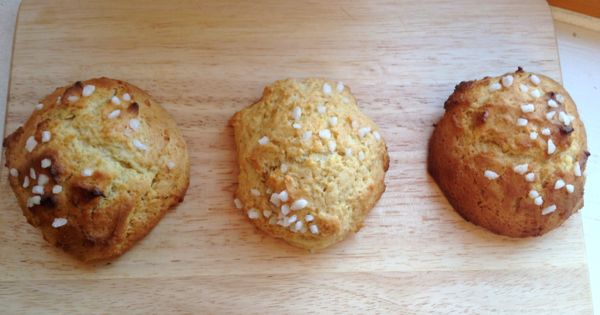
Paris Buns

3 buns

Baked goods have become very complicated these days. Cakes are 7 layered wonders, iced to Sistine Chapel like standards. Cupcakes have wacky flavourings and enough frosting to get lost in. Breads have starters from 500 years ago that require the kind of nurturing of a pet. It gets quite exhausting. Faced with so much choice, I’ve had a yen for something very simple. And nothing gets more simple than the staple of the Belfast bakery when I was a child, the Paris Bun.

Sweet bready cakes the size of your fist, they were little mounds of total simplicity, only jazzed up by a scattering of crisp pearled sugar on top. Some might even say they are a bit dull, but I loved them. Similarly comforting as a Rich Tea biscuit or a malted milk, they go quietly and unobstrusively with a cup of tea mid afternoon. No one outside of Northern Ireland and the west coast of Scotland seems to have known their un-showy charms and it was frankly a devil to get a recipe for them. I’ve ended up cobbling something together from three or four bits and bobs on ex-pat forums, adding my own twist in the shape of malt powder to give them a slight richness and flavour. Despite all that, they were very easy to make.

Paris Buns: makes 12

  • 115g butter
  • 125g sugar
  • 2 tablespoons Horlicks or other malt powder (optional)
  • 2 eggs
  • 150g plain unsweetened yoghurt or buttermilk
  • 1/2 teaspoon baking soda
  • 250g plain flour
  • 2  teaspoons baking powder
  • Pearl sugar to scatter

Cream the butter and sugar together until light and fluffy. Add the Horlicks powder and the baking soda and mix well. Crack the eggs in and pour in the yoghurt. Mix until a batter forms. It will look slightly curdled, but this is fine.

Sift in the flour and the baking powder and mix until the batter becomes a soft dough that pulls away from the sides and forms a lump in the middle of the bowl. Don’t overmix.

Place dessertspoonfuls of the mix on a baking paper covered tray. Paris Buns are traditionally a smooth domed shape with a slight point on the top which looks quite bosom like, so try and make these smooth and slightly more upright as they will spread while cooking. Scatter with pearled sugar and then bake at 220℃ for about 12 minutes. They should be a golden sun kissed colour rather than actually brown. Cool on a wire rack.

I was as pleased as punch with these. Paris buns could be a bit dry in my memory but the yoghurt in these makes them very soft and the malt powder gives them a stickier crumb with a beautiful glossiness. I had one with a cup of Suki Belfast Brew tea and it was the perfect combination. If you like your baked goods simple, do give these a try. They are so quick and delicious, you’ll understand why things that work well in Belfast are described as ‘wee buns’….

PS: I have no idea why they are called Paris buns. I suspect the shape might be supposed to look like the Eiffel tower. If you really squint…

Feijoada – the ultimate pork and pulses dish?

feijoada-19

Ah, Feijoada: the national dish of Brazil, straddling the culinary and cultural tectonic plate boundaries of Africa, Europe and South America. Possibly the stoutest meal you’re likely to encounter, and enough to give any vegetarian a dose of the cold shivers.

Feijoada marries the southern European / Romance tradition of slow-cooked pork cuts and beans, but with the addition of west African and Amerindian flavours and techniques. It’s often described as originating from slave fare (the story being it was made up of scraps and offcuts of meat that plantation owners disregarded), but like many classic dishes comes loaded with myths and romanticised stories of its origin. Regardless, it reflects the melting pot culture of modern Brazil, which perhaps explains its extraordinary popularity across generation, class, race and region.

I vaguely remember reading about feijoada many years ago, amongst a glut of facts about Brazil gleaned from geography schoolbooks. At the time it didn’t really register…as a teenage boy I was focusing more on images of the impossibly gaudy and glamorous Carnaval and sugar cane-fuelled cars than meat-heavy dishes. A few years ago, as part of an impromptu South American-themed meal, a good friend brought her own version of feijoada, and that sparked my interest. Ever since I’ve resolved to make my own.

Regular readers are probably spotting a pattern here: yet another dish pairing pork products and pulses, and another opportunity to indulge in the joys of black pudding. Well yes, guilty as charged. And having access to some superb rare-breed pork from our friends at Porcus, I’m inclined to work my way through the world’s greatest pig ‘n’ bean dishes, one by one.

When it comes to feijoada there are a plethora of recipes out there. My well-thumbed go-to-guide for South American recipes, Felipe Rojas-Lombardi’s ‘The Art of South American Cooking‘, suggested one needs at least five types of pork in there, including the snout. Others suggest a bit of pork belly and sausage is enough. In the end I ploughed my own furrow, referencing recipes from the ever-enjoyable Flavours of Brazil blog and a smattering of others.

I’d previously procured a Tamworth tail and trotters (being able to source a pig tail generally points to it being raised ethically, as sadly most intensively-farmed pigs have their tails cut off) and had also set aside some artisan chorizo from the fabulous folk at Levanter Fine Foods. After visiting Miss South in Brixton, allowing me to pick up some genuine morcela de lamego from the wonderful Continental Deli on Atlantic Road, I was as ready as I’d ever be.

Here’s the final recipe: it took a day of preparation and cooking, but believe me, it was worth every minute.

Read more

Keep taking the tablet…

dime tablet-2

Last weekend I found myself in the slightly retro experience of finding myself with half a can of evaporated milk needing used up. I haven’t eaten the stuff neat since childhood and even then I never particularly liked the slightly metallic taste. I generally prefer the toffee-ish tones of condensed milk and its sticky sweetness, and as a topping, I always preferred cream, so it seemed for a minute like I’d either be throwing it down the sink or finding out if squirrels like a spot of Carnation.

But then a conversation with the Lovely Scotsman reminded both of us about that peculiarly Scottish delicacy of tablet. Harder than fudge, sweeter than falling in a bag of pure caster sugar after being dipped in syrup and utterly lovely, it seemed like the perfect solution to my evaporated milk* dilemma. I prepared to roll up my sleeves and beat some molten sugar into submission when I espied that you can magic this sweetmeat up the modern way and do it in the microwave making it perfect for a lazy Sunday afternoon.

Tablet is usually served simply. Some even suggest that the addition of vanilla extract is too newfangled, but I’m no stickler for tradition so it seemed like a marvellous idea to add a Scandinavian twist and add some crunch to the tablet in the shape of some crushed up Daim bar. I thought the saltiness of it would work here without just copying the salted caramel trend.

Read more

Brazilian wild duck à l’orange

Wild duck with forced rhubarb, blood orange, carrots and mash

Actually, this is a slightly misleading title. The duck wasn’t from Brazil (it was however, pretty wild, coming as it did from near Preston*), and it’s not your classic duck à l’orange either. But hey,  it was absolutely delicious, and as smooth and fluff-free as any Brazilian you’re likely to find in this country. Let me explain…

The game season somewhat passed me by this year: I’ve placed a few bits and pieces in the freezer which will make an appearance for a special occasion, but have been lacking in feathered friends to feast upon. So when a friend contacted me to ask whether I’d be interested in a wild duck, I jumped at the chance. I’d have been quackers not to…

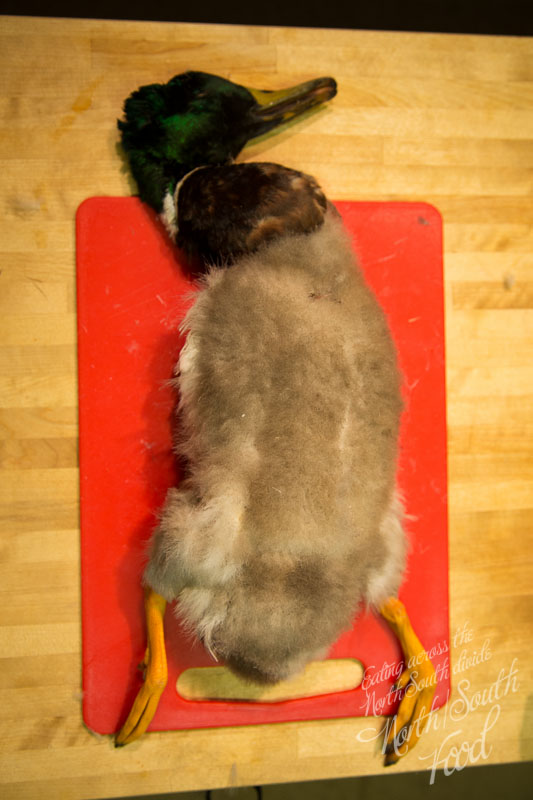
He explained once of his colleagues is a wildfowler, so at this time of year he often comes into work with a bunch of mallards in the back of his car. This particular specimen was a very fine fellow… a good weight, beautiful plumage, cleanly shot. I was very grateful, but after taking receipt realised I’d have to pluck the bugger. I left it hanging for a couple of days in a cool place, and put the plucking to the back of my mind as a busy working week flew by.

Wild duck, hanging

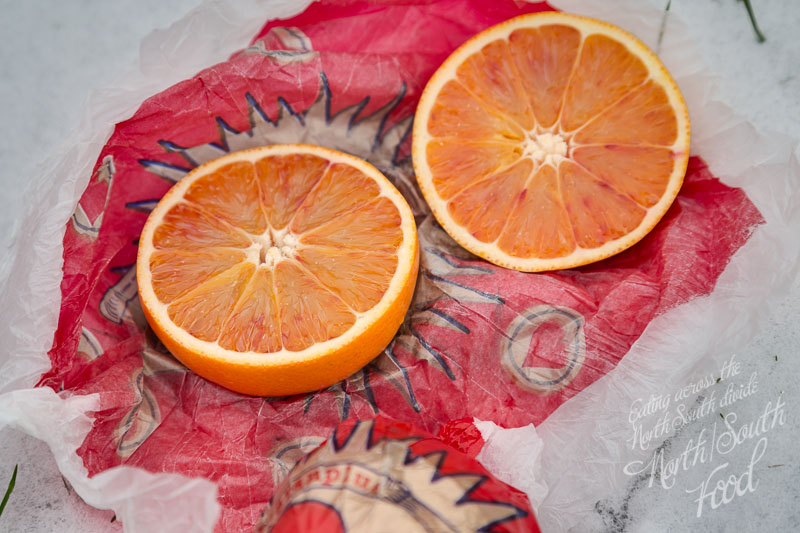
I’d picked up a handful of wonderful blood oranges from Bill the greengrocer in Todmorden Market in late January, along with my perennial local favourite, Yorkshire forced rhubarb. These wonderfully seasonal delights sat for a few days at home, teasing me as I mulled over what they’d be best used with. I really fancied pairing the two of them for something lip-smackingly tart and sweet, inspired by Miss South’s award-winning Bloody Old Lady marmalade from last year (which, despite rationing, I sadly finished last month).

Beautiful blood oranges

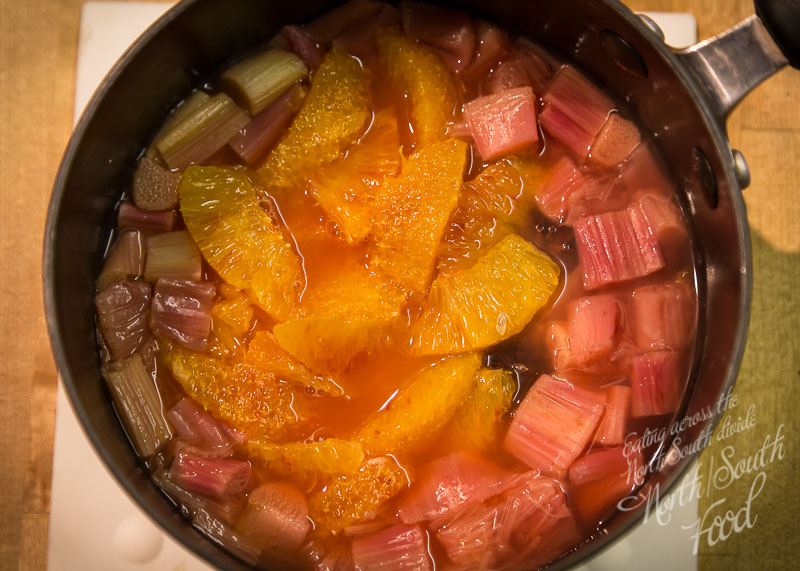
So when the mallard popped up I thought a simple compote would provide the perfect foil its wild gamey flavour. All I did was to roughly chop the rhubarb stalks, halve the orange segments, add a tablespoon or two of Demerara sugar and a splash of cloudy apple juice, then heat for a couple of hours with a cinnamon stick and a couple of star anise. After some gentle cooking the fruit fell apart into pastel strands, its sharpness balanced by the spices and a touch of sweetness. That made for a lovely dessert with some natural yoghurt

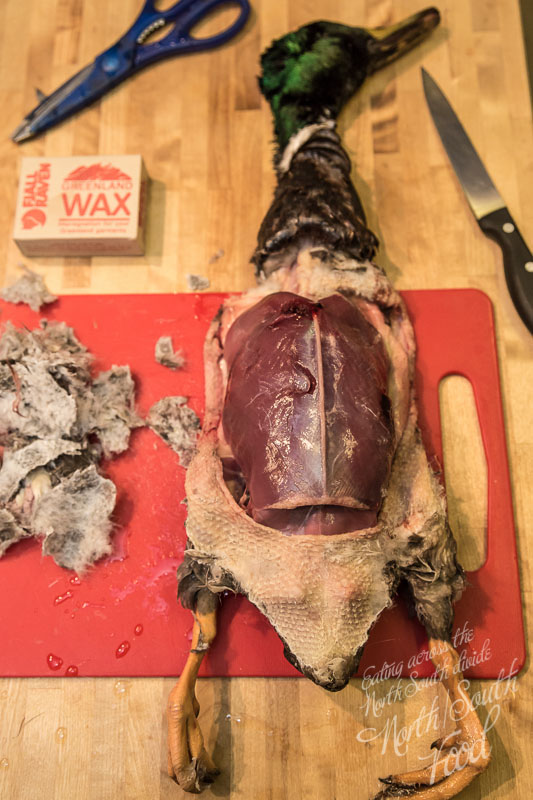
Cue Saturday night, when I’d promised to cook for my better half, and I suddenly realised I needed a foolproof method to denude the bird. Not fancying a messy pluck in the darkness outside, I stumbled on a video of this unconventional technique from the ever-reliable Hank Shaw from Hunter, Angler, Gardener, Cook.

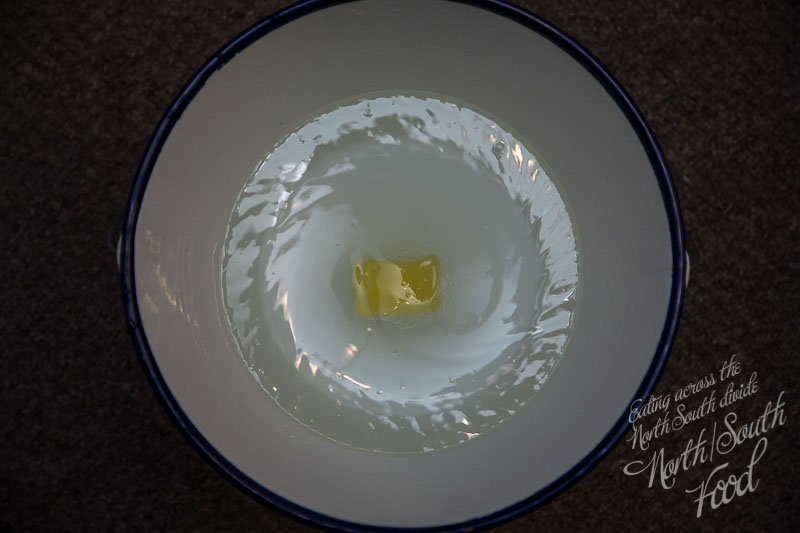
Rather than describing the technique in great detail, I recommend watching the video. But in brief, once you’ve removed the main feathers from the duck, rather than getting caught up in a maelstrom of down, you dip the carcass in a cocktail of hot water  and melted paraffin wax.  I had to improvise a bit (using half a bar of my favourite Fjällräven Greenland wax… is this the first time it’s been used in the kitchen, or does that proud Swedish hunting tradition mean it’s a regular culinary assistant in the frozen north?) but the whole process was dead easy.

Once the down was coated in a thin film of wax I yanked it straight out and plonked it into a bucket of icy water. Like magic (in fact, like Ice Magic, if anyone remembers that) the whole thing sets into a hard shell around the carcass. Removing the final shell of wax and down was as easy as peeling an orange… and it left skin as clean and dimpled as one too. A DIY wildfowl Brazilian… plucking brilliant!

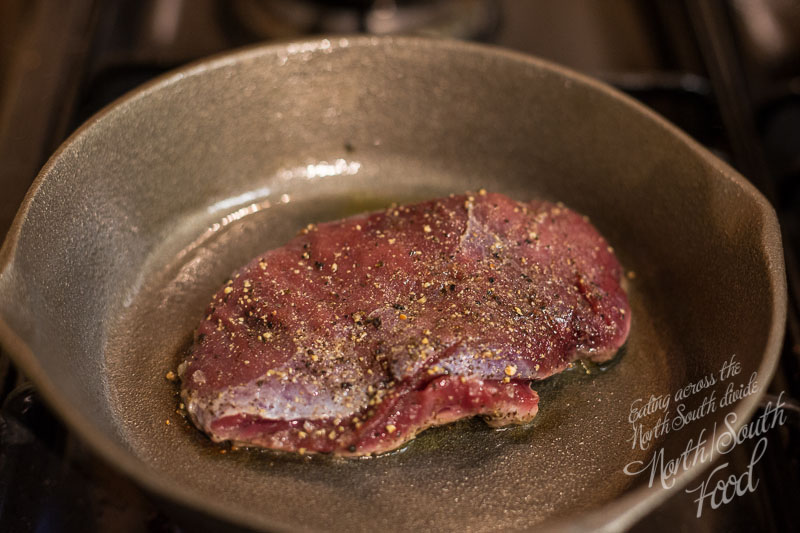
I only used the breasts, which I delicately removed and rubbed with sea salt and freshly ground pepper, before sealing and searing it in my newly seasoned Mermaid** skillet. I’d had wild duck breasts a couple of weeks before at El Gato Negro Tapas, where the head chef, Simon Shaw, had recommended they needed to be treated with a delicate touch so they wouldn’t overcook and lose their flavour and texture. As we like our meat rare, I flashed them for a couple of minutes in the pan, then rested them for at least twice as long.

There was just time to plate up the veg – a simple selection of creamy parsley mash and some Vichyssoise carrot batons – then I sliced the duck. The deep magenta meat quivered almost as much as I did as I spooned the spiced winter fruit over it… the aroma was stunning and it looked as pretty as a picture. Thankfully the taste was equally good… incredibly tender, rich duck was given a light kick from the sharp, spiced notes of the rhubarb and blood orange. Accompanied by a bottle of Spanish red (a delightful Quinta Milú Ribera del Duero from Hangingditch) this was the perfect dish for a freezing cold January night… seasonal, (mostly) local, and bursting with wonderfully rich, complimentary flavours. I can’t recommend it highly enough; indeed I might open a salon to wax the local wildfowl population on a more regular basis…

* Wild? I was absolutely livid
*
* Disclosure: I unexpectedly won this in a Christmas Blogger’s Challenge for my Tongue’n’Cheek pudding… hurray!

Tadpoles in the Hole

toad in the hole

It’s been cold and grey recently with even snow on the ground and a chill in the air and I’ve wanted warm, filling food, rich with carbs and comfort to see me through. A recent trip to Waitrose to get ox cheek from their butchery counter to make Mister North’s famous tongue and cheek pudding also resulted in the purchase of a lovely jar of beef dripping and so my mind immediately thought of Yorkshire puddings or a proper toad in the hole. But sadly my house was sausage-less and I thought such delights would have to wait for another day when I suddenly thought ‘could you make it with meatballs instead?’

My dinner companion assured me that would work very nicely indeed and because he’s wittier than me, named it Tadpoles in the Hole before I’d even rolled my sleeves up to roll the meatballs. How could you not want to eat a meal with a name like that? The oven went on to get lovely and hot to make sure my batter rose well and I turned my attention to the meatballs.

I used turkey mince for mine as it was the first draw on my game of freezer roulette, but any relatively lean meat would work well. I mixed the meat with some breadcrumbs and added lemon zest and tarragon as I had both to hand, but your seasonings here are only limited by your imagination. Some chilli would have been just the ticket here actually and I do love black olives and parmesan in a meatball. Whatever you go for, roll your meatballs nice and small so you get one in every bite of batter and chill for at least half an hour first. You’ll also need to leave your batter to sit for about this long so plan ahead slightly and then this is a very simple dish to assemble and cook.

It also works fabulously well with a caramelised onion gravy which if you have a bit of extra time to spare, but is extremely good served naked as well. I tend to slow cook a big batch of onions at a time and then freeze them in portions so you don’t need to wait on them turning sticky sweet and golden every time you need them.

Tadpoles in the Hole (serves 4)

For the meatballs:

  • 250g lean mince
  • 125g breadcrumbs
  • zest of 1/2 lemon
  • 25g chopped tarragon
  • salt and pepper
  • pinch cayenne pepper
  • 1 egg, beaten

For the batter:

  • 200g plain flour
  • 2 eggs, beaten
  • 150ml milk
  • 1 teaspoon mustard powder
  • 2 tablespoon beef dripping

For the gravy:

  • 2 onions, sliced
  • 25g butter
  • pinch demarara sugar
  • 2 tablespoons plain flour
  • 300ml stock (vegetable or animal, depending on your meat choice)
  • 100ml vermouth or wine (replace with more stock if you don’t have any)
  • generous dash of Worcestershire sauce
  • seasoning

Start with your onions for the gravy. Slice them into half moons and cook in the butter on a low heat for about 30 minutes on a low heat or until soft and just starting to colour. If there is liquid coming off them, drain it and keep for the gravy as it’s pure onion flavour. Add in the sugar and leave to cook for about another 45 minutes. They need no attention (I went off and watched an episode of Breaking Bad which meant I wouldn’t have noticed the kitchen going on fire) but to properly caramelise an onion til jammy and golden takes time. If you do extra, they freeze well and take only a few seconds in a microwave to defrost.

Try not to become utterly fixated by the do it yourself meth trade while your onions are cooking, and start on your batter instead. Resting it really does make a difference, making it much lighter and fluffier and rise better. I presume this is something to do with the gluten. But I like to think it’s a reward for patience. The batter is easy, put everything but the beef dripping into a bowl and mix til the consistency of double cream. The odd slight bump in the batter doesn’t matter as mixing it too much can make it flop. Leave to rest on the worktop til needed.

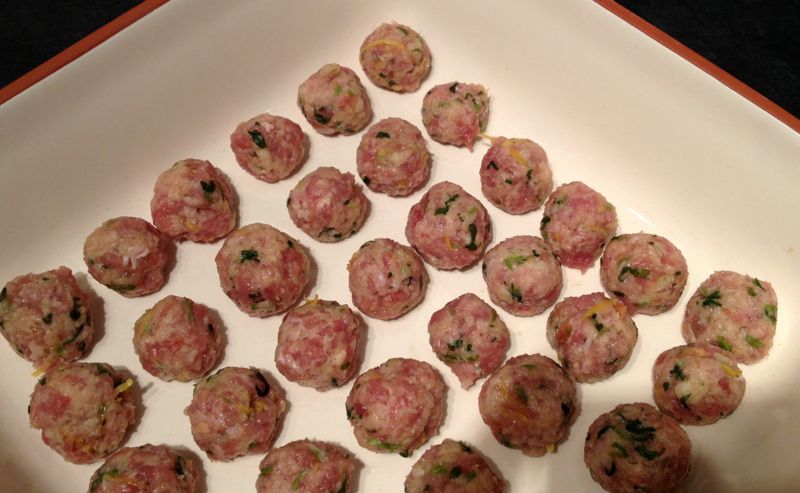
Your meatballs also like a rest before dinner and are similarly simple. I love rolling them, I find it very relaxing and the longer you chill them for the less they fall apart when cooking. They are so easy to make, it’s also worth doing a freezer batch while you’re there. Basically put everything but the egg in a bowl and mash together well with your hands to combine everything. Then add the egg a bit at a time, making sure the mix isn’t too wet and mix well. Then roll about a fork’s worth at a time into a meatball and chill til needed. Doing them with this proportion of breadcrumbs makes them very light and stretches the meat a longer way making this great value.

raw meatballs

When you’re ready to eat, put the meatballs in your dish and add the dripping and heat for at least ten minutes or until it is smoking hot. Hot fat may be mildly terrifying, but it’s the secret of a pillowy billowing batter. Pour your batter in carefully from the edge so you don’t cause the meatballs to float and pop into the oven as fast as possible and leave it to cook for 40 minutes. On pain of death, don’t open your oven door again before then or you’ll end up with a giant pancake with meatballs poking out forlornly.

Make your gravy about 10 minutes before by adding the plain flour to the buttery onions and cook til quite dry. Then add in the warm stock, including those onion juices and the wine if using, and stir until it starts to thicken. Season and add the Worcestershire sauce. Add more liquid if you like it less thick. This gravy can be adapted to be veggie or vegan if you use oil and tamari instead if you need a meat free gravy at some point.

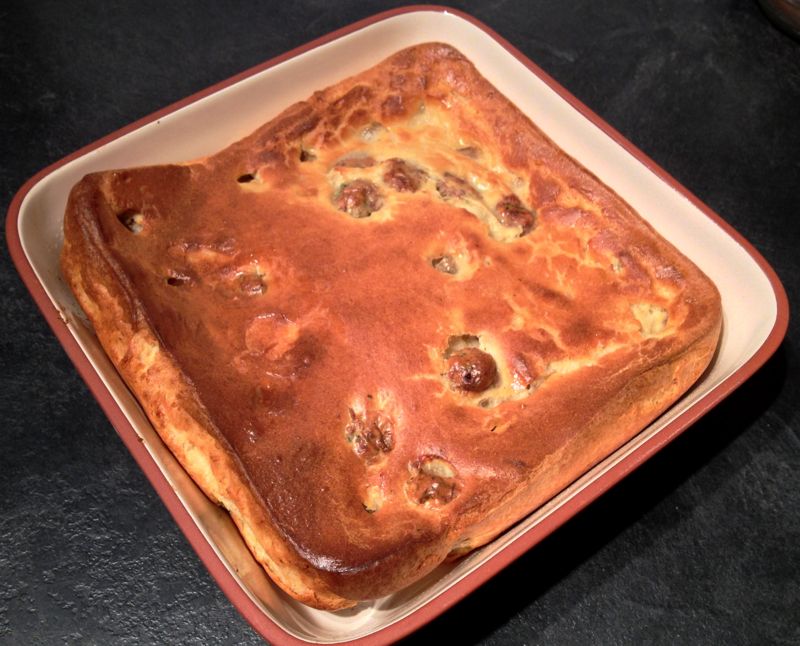
When your tadpoles are completely cooked and the hole is puffy and golden and slightly quivering with its own self importance, serve big slices of it with lashing of gravy and heaps of peas (garden or mushy) on the side and give fervent thanks for cold weather. As comforting as eating a hot water bottle, this is deliciously decadent with the meat to batter ratio and a great twist on a old favourite. It’s just as well we’ve got a north wind coming in…

portion