Apple and Amaranth Granola

At this time of year I struggle for breakfast ideas. It’s not cold enough for porridge and I find it hard to get the lovely plums and greengages the season offers so find my bowls of bircher muesli less alluring without a fruity topping. I need something to shake me up a bit and hopefully wake me up a bit as well. The bite of granola seemed to fit the bill.
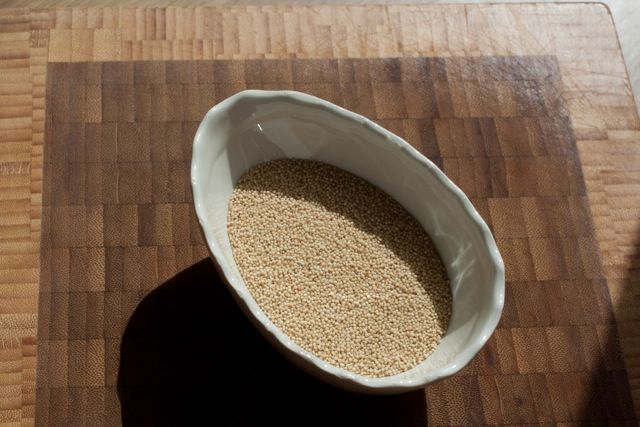
Raw amaranth grains

I’d been wondering what to do with the amaranth I’d impulse purchased at Whole Foods a while back and decided that a granola might lift it from looking like birdseed to something more appetising. As terrified to get it wet as Zack should have been with his Mogwai in Gremlins after hearing it goes gluey, I popped it in a hot pan first, turning it from plain seed to toasty treat.

Popped amaranth seed

Amaranth is an ancient grain (from a grass I believe) and is similiar to quinoa in that it is gluten free* and high in protein and fibre. It makes interesting sounding porridges, but I think it most appetising dry cooked to keep it nutty and crunchy. Bearing in mind that the seed is so crunchy, I decided to make the rest of the granola a little bit softer by coating it with stewed apple instead of oil. Everything about this recipe was impulse based so it’s in cups, not weights.

Apple and Amaranth Granola:

  • 2 apples, stewed down to make one cup of apple puree
  • 2 cups jumbo oats
  • 1/2 cup amaranth
  • 1/4 cup wheatgerm (optional if your granola is wheat free)
  • 1/4 cup sesame seeds
  • 1/2 cup pumpkin seeds
  • 1/2 cup pecans, halved
  • 1/2 brazil nuts, halved
  • 1/2 cup honey (or treacle)
  • 1/2 teaspoon ground ginger
  • 1/2 teaspoon grated nutmeg

First, stew your apples. Back in Belfast where I made this, it’s dead easy to get proper Bramley apples for cooking, but I struggle to find them in London, so just use anything sharp and tangy. Peel, slice finely, add about a tablespoon of water and stew until soft and like a puree. They’ll collapse in on themselves if left at the lowest heat with a lid on for about 20 minutes.

Then using a hot dry pan, toast your sesame seeds and set aside. Have a lid handy and then into the same pan, put your amaranth and toast until about 40% of it looks like tiny white popcorn and the rest is golden brown. It won’t all pop, but what does will go everywhere so you’ll need that lid!

Place all your dry ingredients in a bowl. You can add more types of nuts if you like. Hazelnuts would be lovely. Some flaked coconut is fabulous. You could add in some linseeds or sunflower seeds. Play around to get your perfect mix. Heat the pureed apple and the honey together and then mix into the dry ingredients, mixing well to make sure they are all coated.

Cook on a shallow tray so the granola is well spread out in the oven at 200℃ for about 20 minutes. Turn it over at this point and give it another 10 minutes until golden and crispy looking but not burnt. Cool in the tray and put in an airtight container immediately as this granola is a bit softer than oil based ones and will wilt gently if left out for too long.

Eat clusters of it with your bare hands while doing so or wait until you can get it into a bowl where it is fabulous with fresh berries and yoghurt. Healthy and filling, this doesn’t taste wholesome or lacking in flavour. The amaranth is nutty and packed with flavour and the chunky nuts make this feel very luxurious indeed. Considering it takes so little time to make, I’ll definitely be doing this again instead of spending serious money on boxed mueslis or granolas. Their packaging migh look nice on the table, but you don’t get to pop your own ancient grains with those….

*this whole granola can be gluten free if you choose oats that guarantee themselves GF in processing. See the Coeliac Society for more info from people in the know.
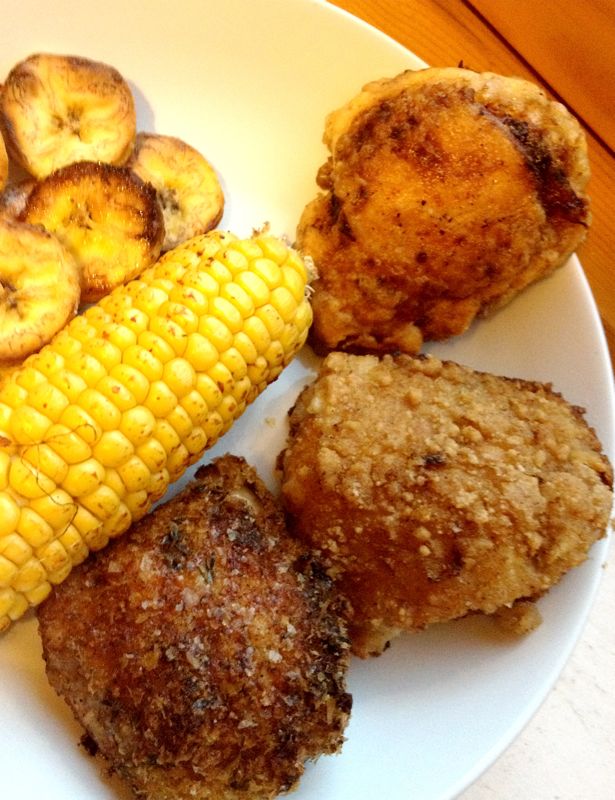
A trilogy of fried chicken…

Three gluten free fried chicken recipes

I hear fried chicken is the next ‘junk food’ to get the gourmet treatment and because I live in Brixton, my tolerance for hipster venues is plummeting, I decided it was time to conquer my fried chicken demons and learn how to do it at home where the whole thing would take less time than queuing up in Market Row. I also decided to set myself the challenge of making it all gluten free as well…

I’m not gluten or wheat sensitive, but for some reason three different people have had conversations with me recently about fried chicken coatings that happen to be gluten free, so inspired by their enthusiasm, I thought I’d steal their ideas and do a fried chicken crunch off, testing each version against each other. All three were good. All three were easy. One was a clear winner.

I standardised a bit. Each recipe does 4 pieces of chicken. All the chicken was free range and was bone in and skin on thighs. I marinaded them in yoghurt loosened with lemon juice to save you all hearing my obsessive rant about why you can’t get proper buttermilk in England again. This would be brilliant marinaded overnight, but a couple of hours will do nicely. About 20 minutes before you need them, drain the thighs in a sieve so they aren’t too wet. Then turn attention to the coatings.

Potato fried chicken: (first piece from the front)

This is basically going a bit 70s and using dehydrated instant mash flakes as your topping. You need the cheap ones from a Basics range so that you don’t accidentally end up with potato paste over chicken skin. It’s dead simple. Put 1/2 cup or about 50g of flakes in a shallow dish and add the seasoning of your choice. I went with thyme, black pepper and paprika. Then dredge your chicken well each side without shaking too much coating off and shallow fry for 10 minutes, turning gently or spooning hot oil over the other side to firm it up before turning. Finish off for 10 minutes in the oven at 180℃. Or simply cook in the oven the whole time without adding any extra oi at 200℃. It won’t be as golden, but it’s quick, easy and crunchy at the same.

Rice flour and cornflour fried chicken: (middle piece)

Slightly more complicated than the first recipe, this has three ingredients instead of one. Mix 1/4 cup of rice flour and 1/4 cup or 25g of each in a dish and add your choice of seasoning. I used Old Bay and cayenne. Then add 4 tablespoons of the yoghurt/buttermilk mix and with your fingertips, rub together until you get what looks like slightly damp breadcrumbs. You don’t want it sticky or too clumpy so keep rubbing til it’s right. Then coat the chicken on each side making sure there are no lumpy bits and shallow fry as above. Or again, oven cook the same way.

Egg white batter fried chicken: (furthest from the front)

A little bit Chinese in style, this one uses egg whites and cornflour beaten together to make a batter. I used 2 egg whites (from the approximately 9000 leftover from my ice cream making) and 1/4 cup cornflour whisked together. I’d run out of seasoning ideas, but some garlic powder might have been good here. Your batter needs to be thick, not liquidy and move quickly or it’ll solidify into something like cement.  Coat the chicken well and then fry. This one needs oil, not the oven. I ended up with a light puffy batter on each side and an uncooked seam from shallow frying. I basted it with hot oil to rid me of this, but it might have been easier to deep fry it. Rest it in a warm oven for 10 minutes after cooking through.

All the chicken was incredibly juicy and tender from its lactic acid bath. Each one had a good contrast between the coating and the meat, but my winner was the potato coating. The rice/corn flour one had a floury squeaky mouthfeel that cloyed slightly, while the batter one was a bit greasy as it absorbed a lot of oil in comparison to the others and both lost their crunch quickly on the plate, becoming a bit gluey, while the potato flakes held up well after cooking and had the most interest to me. It would also have worked well as an oven dish and would be good with fish instead.

I liked all of these better than my usual wheat flour recipe which required marinading, egging and coating and then double dipping to get a good crunch on. The gluten free ones were all very simple and it pleased me the simplest one of all won out. I served my chicken with some roasted plaintain and chilli rubbed corn on the cob for a carb fest, but some slaw would cut through it all nicely and add some colour to the plate. Serve with a refreshing beer and you’ll be frying tonight without having to leave the house…


West African Inspired Mussels and Chips…


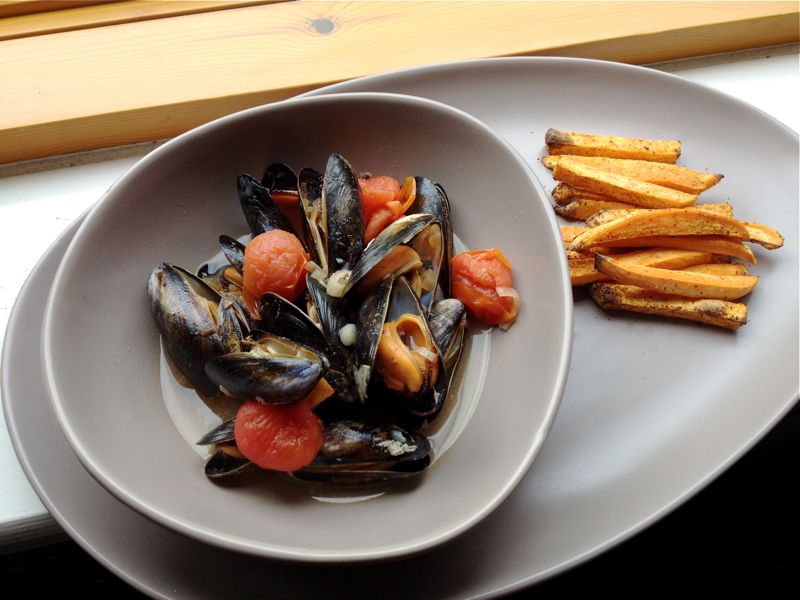
West African inspired mussels and chips

Much and all as I love summer, the months without an ‘R’ in curb my ability to eat shellfish as much as I’d like. So thank goodness for the humble mussel which can be eaten all year round. I love them in the summer as a light simple supper that doesn’t need much standing over a hot stove (normally because of the high temperature outside, but this year so it doesn’t cut into my watching TV under a blanket time…)

The French style is most common with mussels and although I love it, I wanted something a bit fresher and punchier.  Some fat scarlet tomatoes from O Talho caught my eye on the way back from Dagon’s and I’d just picked up some picture perfect red chillis from the Wing Tai Asian Supermarket. But as well as the warmth from the capsicums, I wanted some tingle and my mind went to the pod of alligator pepper a friend had gifted me after we shopped in the Village one Saturday.

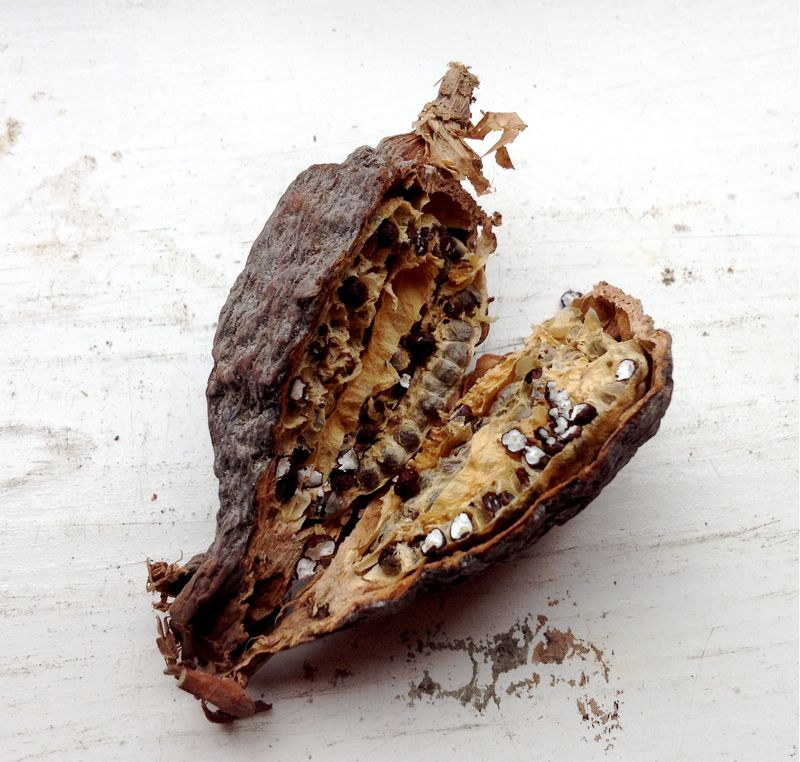
Alligator pepper pod

Highly prized in West Africa, especially Nigeria where the Yoruba incorporate it into naming ceremonies for babies, this pepper comes in a dry pod that looks like an alligator’s back and has a warm bite of pepper mixed with a slight hint of cardamom. I’ve mainly seen recipes for it involving fish and tomatoes so I knew it was likely to work with my mussels. I have no idea how authentic this might be though…

West African Inspired Mussels and Chips: serves 2 comfortably

  • 1kg bag mussels
  • 1/2 pod alligator pepper
  • 2 banana shallots or small onion
  • two handfuls of cherry tomatoes
  • 1 red chilli or 1 tsp hot sauce
  • 150ml water
  • 2 tsp oil
  • 4 sweet potatoes

First clean your mussels well. Pull the beards from them and discard any that are already open and that don’t close when tapped or that are broken. Leave them to soak in cold water to clean out any grit while you turn your attention elsewhere.

Heat the oven to 200℃ and then peel your sweet potatoes. I used orange fleshed ones from the supermarket. Cut them into chips, making sure that they are all roughly the same size and thickness so they cook evenly. Toss in a light coating of oil and then cook. I used a mesh tray like this which cuts the cooking time and washing up, but you are using an oven tray, they’ll take about 25 minutes.

About ten minutes before the chips are ready, finely dice your shallot and cook in a small amount of oil on a moderate heat until softened but not coloured. If using the chilli, cut finely and add to the shallot. Keep the seeds in if you want more heat. Then take the alligator pepper pod and scoop the seeds out and grind them in a pestle and mortar before adding to the shallot and chilli to cook out slightly. Cut your tomatoes in half and add to the pan. You don’t need any extra seasoning.

When the tomatoes start to collapse slightly round the edges, add in the cleaned wet mussels to the pan. Pour the water on top and put the lid on and cook for about 3-4 minutes or until the mussels have opened and the tomatoes are thickening the juices. Take off the heat and leave the lid on while you dish up the sweet potato fries on a separate plate. Then serve the steaming hot mussels in bowls with a good amount of the tomato rich liquor and then dig in.

The best way to eat mussels is to use the empty shell to pick the meat out of the next. Discard any mussels that haven’t opened and enjoy each flavoursome mouthful as the warmth of the chilli and alligator pepper builds a tingle on your lips and the pile of shells grows. Best eaten with a ice cold beer, a roll of kitchen paper and some non judgemental friends to hand!


This post first appeared over at Brixton Blog celebrating all our lovely local shops.


Deep Fried Okra

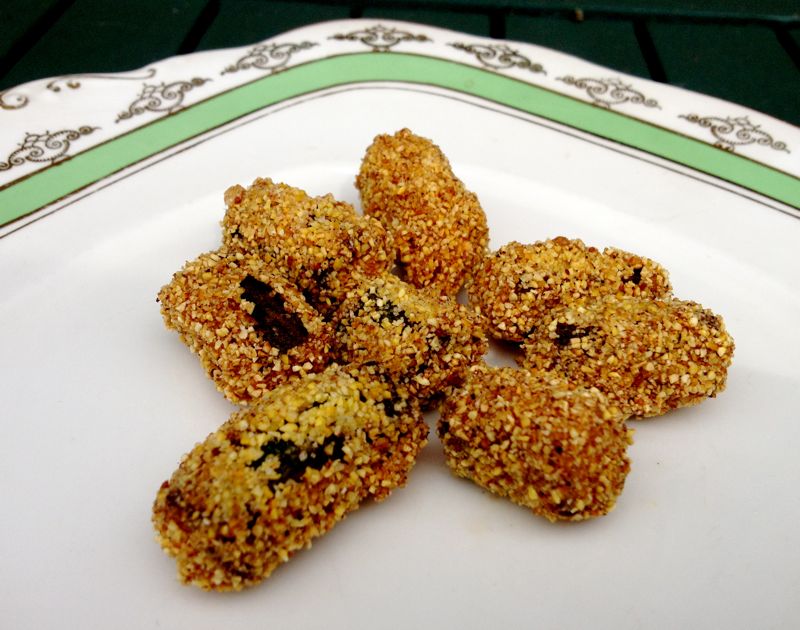
Recently in my travels round Brixton, I keep coming across Americans who now live here. It’s testament to what a great area Brixton is that many of them say it’s the best neighbourhood they’ve ever lived in and my recipe here is partly inspired by them. But its mainly inspired by my determination not to shudder slightly whenever I see piles of okra on the stalls in the market. I’ve only ever eaten it once when I was a child and was singularly unimpressed by its slimy texture and have avoided it ever since. But encouraged by African friends who consider it a kitchen staple and those Americans who all responded affirmatively when I mentioned it, I’ve decided to give you my melting pot take on it and like the good Belfast girl I am, fry it. I mean, what food doesn’t taste even better when fried?

I’m branching out a bit here and using cornmeal instead of a batter. I’ve only recently discovered this as a coating for things and can’t get enough of its crunchy crispness, preferably dipped in something spicy and delicious. A firey salsa made with the super sweet vine tomatoes that are perfectly in season right now, some smoked garlic and a burst of red onion would take this from side dish to star attraction at dinner, especially with an ice cold beer to accompany it…

Fried Okra:

  • about 200g of okra, cut into 1 inch chunks
  • 2 eggs, beaten
  • 200g yellow cornmeal (also called polenta if you’re looking for it)
  • 1/2 teaspoon chilli powder/cayenne pepper
  • 1 teaspoon paprika
  • seasoning as required.
  • vegetable oil for frying

Get your oil on to heat, making sure you only fill your pan a third full of oil so it can’t bubble over. You want it hot but not scorching.

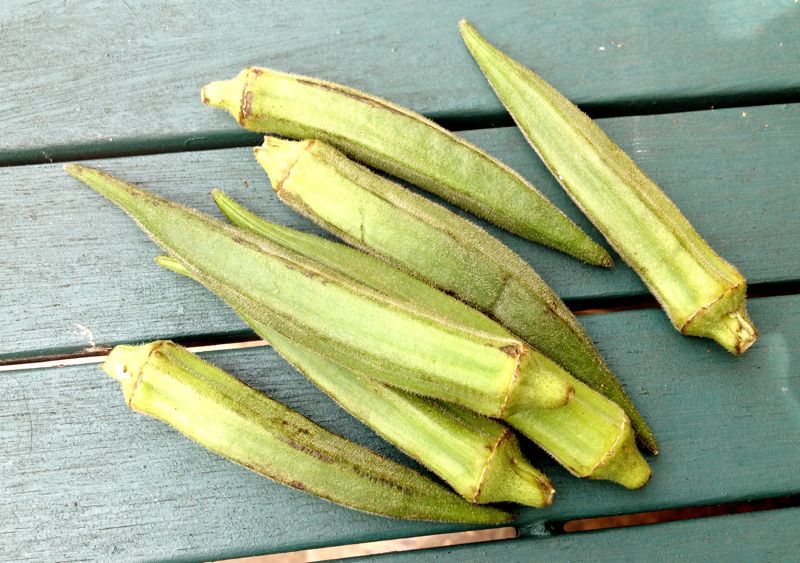
When buying the okra, make sure the pods are nice and furry and not split at all. Wash them and dry them well. Cut each pod in roughly three pieces. Then dip the pieces into the beaten egg before putting them into the cornmeal and making sure they are well coated. Don’t hang about, do both dippings quickly and put them into the oil immediately to cook. Give them about 2-3 minutes each side or until the okra and the coating both go golden.

Serve immediately, preferably dipped into a little hot sauce and salt. We had them on the side of some curry goat, but these fried okra will go with anything and make a great gluten free vegetarian dish. If like me, you were nervous about the slime potential, don’t be. Fried up like this, it’s a good balance between soft and crunchy and I surprised myself by having seconds, as did my American dining companion…

Okra pods

*An edited version of this post originally appeared at Brixton Blog.

Pastrami

There is a long weekend coming up and I have an excellent suggestion as to what you could do with it. Why not have a go at making home made pastrami? It’s not quick, but it’s also not difficult in the slightest. And if the weather is good over the Jubilee, it’s an excuse to get the barbecue out. Tempted yet?

Pastrami is beef brisket, brined and cured, then rubbed with spices and smoked until cooked. It’s also known as the finest sandwich filling around and something you always want more of so having a great big hunk of it in the fridge as cold cuts when you’re off work is just ideal. I’d actually never cooked with brisket before, but Mister North’s superlative spiced beef at Christmas had piqued my interest and I was just waiting to get my hands on one. And thanks to Becs over at Lay The Table alerting me to the presence of Farmison and their grass fed, higher welfare standard meat by mail order, I ordered a 2kg beauty on a Tuesday evening and had it ready for its brine bath by Thursday tea time which impressed me greatly and I’ll certainly be using them again for things my butcher can’t get me easily.

Brining meat is very easy. You simply prepare a solution of water, spices and salt and immerse the meat for the required time. This is also a cure thanks to the presence of saltpetre and means the meat doesn’t spoil, but retains a lovely rosy hue instead of looking leathery like some cooked beef does. Although the meat will be preserved by the process, you still need to be cautious with hygiene and make sure everything you use is nice and clean. It’s also worth preparing everything in advance rather than weighing spices at each step or you’ll lose track and end up accidentally doing too much of one thing.

Pastrami

  • brisket (I used a 2kg piece)
  • 200g sea salt
  • 100g dark brown sugar
  • 2 litres water ( I boiled it and cooled it)
  • 6 cloves of raw garlic
  • few stalks of thyme
  • 2 teaspoons of saltpetre (I had mine from the bacon)
  • 1 tsp whole cloves
  • 1 tsp whole peppercorns
  • 1 tsp whole coriander seeds
  • 1 tsp shichimi togarashi (or chilli flakes)
  • 2 tsp allspice berries
  • 2 cinnamon sticks
  • 1 tsp mustard seeds
  • 1 tsp fennel seeds
  • 1 tsp ground ginger
  • 1 tsp ground mace
  • 1 tsp mustard powder
  • 4 bay leaves (ie: I just used everything in the cupboard, bar cumin)

If your brisket comes in one of those meat hairnets, remove that now, but keep the string around it to keep the brisket shaped and rolled. Rub a handful of the salt over the meat while you dissolve the rest of the salt, the sugar and the saltpetre in the hot water. Give the spices a bash to release their oils and flavours and add to the water. Bruise the garlic cloves to release the flavours and put them and the thyme into a deep tupperware and put the meat in and pour the brine you’ve just made over the meat. Seal it up and leave it in the fridge for up to five days, but a minimum of two.

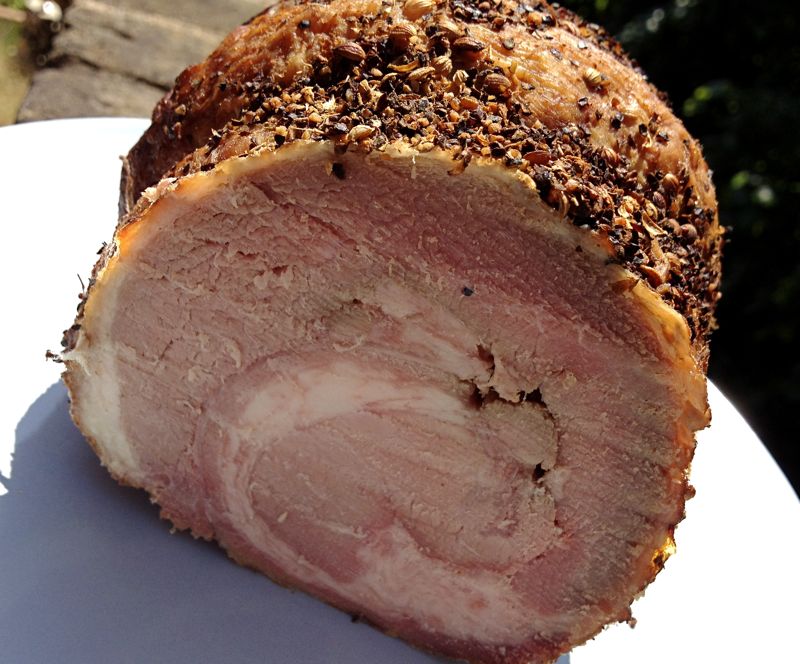
The meat will still have a pinkish tinge when you take it out of the brine so don’t worry, it’s quite safe to cook. The meat needs to be smoked to give that proper pastrami feel so there are two ways you can do it. If the weather is nice, you can use the barbecue or you can do it in the oven, but either way you’ll need wood chips to impart the  smokiness that lifts this from just being beef. Don’t forget to rub a crust of ground coriander seeds and cracked black pepper over the top of the meat first.

I started mine off on the barbecue using the indirect method where the charcoal is on either side of the grill and the meat is in the middle in the coolest spot so that it cooks without getting that charred exterior that direct cooking gives. I added pecan wood chips that I had soaked first and I got a fairly good smoke on but the charcoal went out about two hours in and since I don’t have a meat thermometer, I couldn’t tell if the meat was cooked so I popped in the oven to finish off. I put the rest of the wood chips in a dispable foil tray and put the meat above them on a trivet, then covered it all with foil and slow cooked it for 90 minutes at 150℃. The moisture from the wood chips steams the meat so it doesn’t dry out, but keep an eye and make sure they don’t lose moisture themselves. You might need to top up.

Once you’ve let the meat cool down then you can congratulate yourself. You’ve just made  pastrami from scratch! It’s as simple as that. Now serve it either slightly warmed (pop it back in the oven to heat gently) or at room temperature for a stunning picnic lunch. I made mini pretzel rolls and bagels from Dan Lepard’s excellent recipe and heaped them high with gherkins and mustard on the side and it all seemed to go down marvellously, fortifying us well to sit through four hours of Eurovision, but leaving me with a goodly amount of leftovers for cold cuts in the warm weather. Don’t delay and you could be seeing in the oh so British Jubilee next week with some very American pastrami!