Tadpoles in the Hole

toad in the hole

It’s been cold and grey recently with even snow on the ground and a chill in the air and I’ve wanted warm, filling food, rich with carbs and comfort to see me through. A recent trip to Waitrose to get ox cheek from their butchery counter to make Mister North’s famous tongue and cheek pudding also resulted in the purchase of a lovely jar of beef dripping and so my mind immediately thought of Yorkshire puddings or a proper toad in the hole. But sadly my house was sausage-less and I thought such delights would have to wait for another day when I suddenly thought ‘could you make it with meatballs instead?’

My dinner companion assured me that would work very nicely indeed and because he’s wittier than me, named it Tadpoles in the Hole before I’d even rolled my sleeves up to roll the meatballs. How could you not want to eat a meal with a name like that? The oven went on to get lovely and hot to make sure my batter rose well and I turned my attention to the meatballs.

I used turkey mince for mine as it was the first draw on my game of freezer roulette, but any relatively lean meat would work well. I mixed the meat with some breadcrumbs and added lemon zest and tarragon as I had both to hand, but your seasonings here are only limited by your imagination. Some chilli would have been just the ticket here actually and I do love black olives and parmesan in a meatball. Whatever you go for, roll your meatballs nice and small so you get one in every bite of batter and chill for at least half an hour first. You’ll also need to leave your batter to sit for about this long so plan ahead slightly and then this is a very simple dish to assemble and cook.

It also works fabulously well with a caramelised onion gravy which if you have a bit of extra time to spare, but is extremely good served naked as well. I tend to slow cook a big batch of onions at a time and then freeze them in portions so you don’t need to wait on them turning sticky sweet and golden every time you need them.

Tadpoles in the Hole (serves 4)

For the meatballs:

  • 250g lean mince
  • 125g breadcrumbs
  • zest of 1/2 lemon
  • 25g chopped tarragon
  • salt and pepper
  • pinch cayenne pepper
  • 1 egg, beaten

For the batter:

  • 200g plain flour
  • 2 eggs, beaten
  • 150ml milk
  • 1 teaspoon mustard powder
  • 2 tablespoon beef dripping

For the gravy:

  • 2 onions, sliced
  • 25g butter
  • pinch demarara sugar
  • 2 tablespoons plain flour
  • 300ml stock (vegetable or animal, depending on your meat choice)
  • 100ml vermouth or wine (replace with more stock if you don’t have any)
  • generous dash of Worcestershire sauce
  • seasoning

Start with your onions for the gravy. Slice them into half moons and cook in the butter on a low heat for about 30 minutes on a low heat or until soft and just starting to colour. If there is liquid coming off them, drain it and keep for the gravy as it’s pure onion flavour. Add in the sugar and leave to cook for about another 45 minutes. They need no attention (I went off and watched an episode of Breaking Bad which meant I wouldn’t have noticed the kitchen going on fire) but to properly caramelise an onion til jammy and golden takes time. If you do extra, they freeze well and take only a few seconds in a microwave to defrost.

Try not to become utterly fixated by the do it yourself meth trade while your onions are cooking, and start on your batter instead. Resting it really does make a difference, making it much lighter and fluffier and rise better. I presume this is something to do with the gluten. But I like to think it’s a reward for patience. The batter is easy, put everything but the beef dripping into a bowl and mix til the consistency of double cream. The odd slight bump in the batter doesn’t matter as mixing it too much can make it flop. Leave to rest on the worktop til needed.

Your meatballs also like a rest before dinner and are similarly simple. I love rolling them, I find it very relaxing and the longer you chill them for the less they fall apart when cooking. They are so easy to make, it’s also worth doing a freezer batch while you’re there. Basically put everything but the egg in a bowl and mash together well with your hands to combine everything. Then add the egg a bit at a time, making sure the mix isn’t too wet and mix well. Then roll about a fork’s worth at a time into a meatball and chill til needed. Doing them with this proportion of breadcrumbs makes them very light and stretches the meat a longer way making this great value.
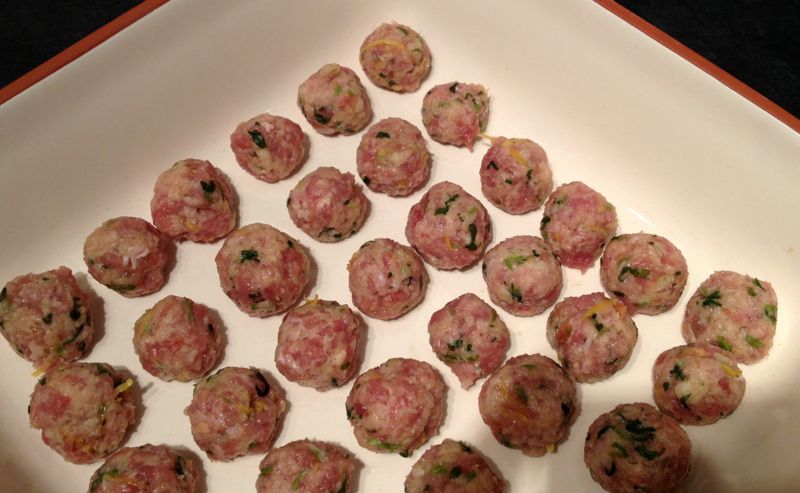
raw meatballs

When you’re ready to eat, put the meatballs in your dish and add the dripping and heat for at least ten minutes or until it is smoking hot. Hot fat may be mildly terrifying, but it’s the secret of a pillowy billowing batter. Pour your batter in carefully from the edge so you don’t cause the meatballs to float and pop into the oven as fast as possible and leave it to cook for 40 minutes. On pain of death, don’t open your oven door again before then or you’ll end up with a giant pancake with meatballs poking out forlornly.

Make your gravy about 10 minutes before by adding the plain flour to the buttery onions and cook til quite dry. Then add in the warm stock, including those onion juices and the wine if using, and stir until it starts to thicken. Season and add the Worcestershire sauce. Add more liquid if you like it less thick. This gravy can be adapted to be veggie or vegan if you use oil and tamari instead if you need a meat free gravy at some point.

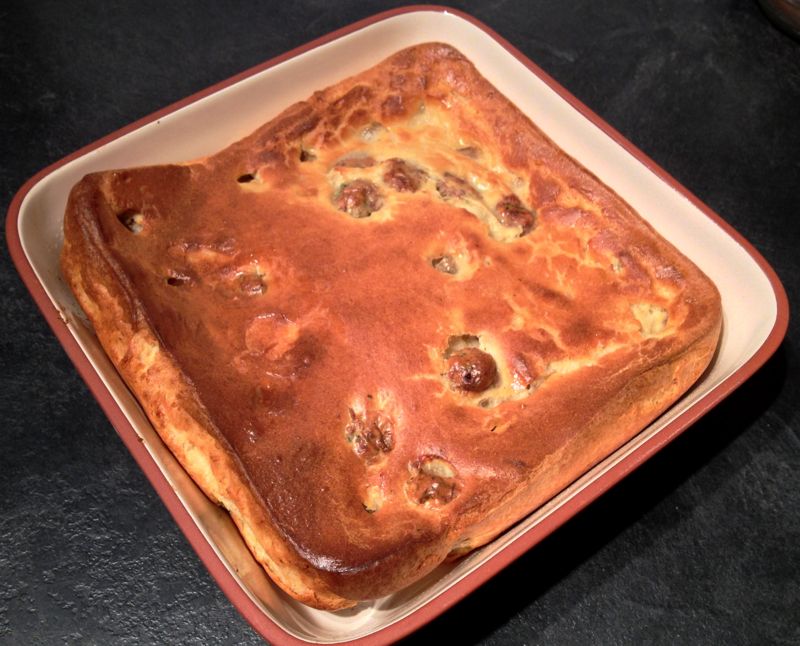
When your tadpoles are completely cooked and the hole is puffy and golden and slightly quivering with its own self importance, serve big slices of it with lashing of gravy and heaps of peas (garden or mushy) on the side and give fervent thanks for cold weather. As comforting as eating a hot water bottle, this is deliciously decadent with the meat to batter ratio and a great twist on a old favourite. It’s just as well we’ve got a north wind coming in…

portion


A week’s worth of shopping….

Some key groceries for weekly shopping

First of all: thank you! Thank you to everyone who emailed, commented, Tweeted, followed, pinned and got in touch after the Observer Food Monthly piece. We were overwhelmed by the amount of debate, discussion and support it received. We’ve found some amazing new blogs, talked to some great people and had a wonderful time. Even the notorious Comment is Free was positive!

So to say thanks properly I thought I’d give you a sneak peek to the bits of the original article that didn’t make the final cut at Food Monthly. Not content with taking over the entire magazine, I did in fact write more than you saw and while I’m thrilled to have had so much published, a little bit did get lost in the edit. A few people asked if I was using organic for my recipes because it didn’t seem right that they came to £20 per head for that many dishes, but in fact there was a lot more food in my basket and I’m going to give you a cut-out and keep guide to see where I bought food for this week and began building a storecupboard for future ones.

I costed out my basket using Sainsbury’s online as I wanted to use a baseline that the largest number of people across the UK could have and an online ‘big four’ supermarket was the best for that. Not everyone can reach an Aldi, Lidl or a proper market, and online shopping removed regional variations. Using a discount retailer, local greengrocer, market or getting reduced products at a supermarket can help you cut the budget. Remember it’s a guideline, not a diktat.

I allowed for a bare minimum of store cupboard items: salt, pepper, one chilli product (powder, hot sauce, Tabasco, your choice), smoked paprika, one dried green herb of your choice, Worcestershire sauce and mustard powder. The fresh herbs and ground ginger mentioned were optional as was the parmesan and olive oil. I didn’t include butter in the basket as it’s an essential to me, nor  did I include milk as the amount you buy depends on your tea and coffee consumption.

We’ve listed everything you need to buy to do the 7 day menu I wrote for OFM, and in the future I’ll be giving you some more ideas for using the store cupboard items you’ve built up from here.

P.S. At the bottom of the post is a version you can print out if you’d like – it’s just the ingredients shopping list in black and white, with space for your own notes. It prints two copies of the list per sheet of A4 paper, so one printout can be used over a couple of weeks.

Fruit and veg

Bananas – Basics Fairtrade  x8 £1.15

Potatoes – white 2.5kg              £1.95

Leeks 1kg                                      £2.59

Beetroot – Vacuum pack            £0.70

Celery – untrimmed                    £0.90

Carrots – loose 1kg                     £0.90

Onions – 1kg bag                         £1.10

Apples – Basics bag                    £0.82

Parsnips – loose x2                    £0.48

Savoy Cabbage                            £0.80

Swede (turnip)                            £0.90

Garlic (2x bulbs)                        £0.46

Mushrooms – sliced 1kg           £2.50

Frozen

Garden Peas  – frozen bag 910g      £1.60

White fish fillets – Basics 520g      £2.00
Tinned and dried goods

Butterbeans – 400g tin                         £0.69

Kidney beans – Basics 400g tin         £0.27

Chopped tomatoes – 400g Basics       £0.35

Condensed milk 379g                           £0.99

Lemon juice 250ml                               £0.59

Creamed coconut 200g                       £0.99

Semolina 500g                                     £0.89

Pearl Barley 500g                               £0.55

Porridge Oats 1kg                               £1.29

Popping corn 500g                            £1.09

Rice – Long grain rice 1kg               £1.39

Plain flour – Basics 1.5kg                £0.65

Ryvita 250g                                        £0.99

Meat, fish and dairy

Chicken – whole approx. 1.75kg              £5.00

Low fat Natural yoghurt – Basics              £0.65

Eggs – 12 free-range                                     £2.65

Double Cream 600ml                                  £1.68

Total:                                                            £39.95

If you wanted to buy the store cupboard essentials from Sainsbury’s I’ve included what they would cost below:

Store cupboard essentials

Worcestershire sauce 150ml    £1.19

Mustard powder 57g                  £1.35

Olive oil 500ml                           £2.00 (offer price)

Smoked paprika 50g                  £1.19

Ground ginger 32g                     £0.59

Bay leaves 10g                          £0.60

Fresh tarragon 20g                    £0.80

Tabasco sauce 57g                   £1.69

Sea Salt 350g                             £0.55

Black peppercorns 100g           £1.78

Butter – own brand 250g            £1.50

Total:                                                               £12.16

It shocked me when I costed this out. For me, these are the absolute bare basics of a herb, spice and condiments cupboard and with the exception of the fresh tarragon, they’d all last for ages, but they add another 30% onto the cost of your shop just to get some flavour into those fresh foods you’ve bought. You could save some serious cash here by shopping around if you can. Asian grocers or ‘ethnic’ supermarkets will usually have bags of peppercorns, bayleaves and ginger at twice the size and half the price. Bottles of hot sauce will be cheaper than big brand name Tabasco but everyone likes a different heat so it’s hard to advise what to buy. Olive oil often crops up in pound shops or on offer. Smoked paprika is often cheaper in delis in the cute little tins when you look at price by gram. But if you can only get to a supermarket, products like this really add cost to your shopping.

You’ll use nearly all the fresh vegetables in the course of the week, but should have some of the frozen ones left. Other items like the flour, porridge oats, pearl barley, coconut, rice and popping corn will last for ages and form the basis of following weeks’ meals and snacks. I’ll be talking you through the ways the meals came together and how with a bit of planning you don’t have to be tied to a cooker all week but still enjoy your food and your spare time on a budget. In the meantime, what are your number one herbs, spices or flavourings? Could you give up cumin? Is soy sauce essential? Go without garlic?

Click here to get a PDF version of the shopping list

grocery list

A small announcement…

Miss South's piece in the Observer Food Monthly, 20th Jan 2013

We’ve got some exciting news for you. Just as our blog enters its fourth year, an article and series of recipes I’ve written is published in this month’s Observer Food Monthly!

Based on my piece about food poverty and eating on a budget not being just as simple as it might seem, I’ve written another piece and a week’s worth of recipes for breakfast, lunch, dinner and a treat or two for them. They’ve very kindly published the whole lot, both online and in the magazine itself.

I’ve budgeted that everything feeds 2 for £20 a week each, priced at Sainsbury’s online. There’s a minimum of energy costs, kitchen equipment and herbs, spices and condiments; but the opportunity to add in the things that you absolutely can’t do without to flavour your food. I’ve intended it as a guide–not gospel–and tried to make frugal food seem fun.

I’m so pleased to have been given the opportunity to do this and at risk of sounding a bit like I’m giving an Oscar speech, I’d like to thank everyone for the overwhelming support and encouragement they gave me over the first piece. Many of you took the time to tweet and email me personally as well as leaving personal, thoughtful, honest comments that created a real discussion on the subject. Some of you even went out of your way to suggest a piece by me to the Guardian/Observer and I hope I’ve thanked you personally.

Both Mister North and I would like to thank you all for the fun, support and encouragement we’ve had in our blogging career. It’s been brilliant so far. I’m certainly a much better and resourceful cook than I was and it’s introduced me to wonderful people and opportunities. Here’s to many more years!

Miss South's article online for Observer Food Monthly, 20th Jan 2013

Cooked tongue and cheek pudding

Tongue ‘n’ cheek: a hot, steamy, sticky pudding

Tongue and cheek steamed pudding

Regular readers have no doubt picked up on our growing love affair with offal. Over the last three years we’ve embraced cooking and eating the more esoteric, wobbly and less-eaten parts of various animals… mostly successfully. In part this has been driven by our curiosity; in part interest in rediscovering traditional dishes (thanks to championing chefs like Fergus Henderson and Robert Owen Brown), and in part because it’s a cheap and healthy foodstuff. Oh, and we’ve laid a few demons to rest in the process too…

When we were young, our mum used to serve us tongue sandwiches, and I loved them. Despite being a reasonably smart kid, I never made the connection between the name ‘tongue’ and the actual muscle inside an animal’s head; I just assumed it was another odd quirk of the English language. My illusions were shattered when I walked into the kitchen one day to find mum making pressed tongue: setting a boiled ox tongue in jelly, then pressing a plate down with an old-fashioned iron. Suddenly I put two and two together and realised why the slices were round, and curled. Although I was fascinated by the size, texture and feel of the ox tongue, I was also pretty creeped out. Both familiar and alien, one glimpse of the tongue was enough to change my attitude to it as a foodstuff. No longer was it a welcome morsel to find in my packed lunch, now it was a giant freaky cow tongue. I didn’t eat tongue again for over twenty years.

Read more

Food for thought

Close-up of lentils in the pan

As sure as day follows night, if the subject of food is mentioned at all, it will inevitably touch on the debate between processed and cooked from fresh food in the UK today. And unless you know everyone in the discussion well and get side tracked into swapping recipes or discussing one’s favourite deli, someone will take the chance to opine on how poor people just need to try harder, be less lazy, just read the labels and realise you can buy a week’s veg for two quid if you’re a good enough member of society. These people are at best out of touch and at worst, running our country.

They are also idiots and liars. What you eat may have an impact on your dietary fibre, but it has bugger all to do with your moral fibre. It’s patronising and reductive to suggest otherwise and to focus on the actions of an individual, rather than those of the food industry, helps no one and hinders many, while causing massive divisions in society. But what would I know? I’m a nice middle class food blogger who grew up on homemade yoghurt and makes their own bacon. Surely I’m part of the problem?

I’m also poor. Not in a pretend can’t afford to split the bill including cocktails for a friend’s birthday or using Orange Wednesday vouchers for Pizza Express way. I’m properly poor. Due to ill health that stretches back to my early teens, I’m currently unable to work and live on benefits. Thanks to the welfare state (for which I could not be more grateful) I have the basic amount of money to live on each week and do just that. I can afford to live and eat well enough to write about it once a week simply due to careful budgeting, being a good and resourceful cook, having time and the generosity of friends and family who shout me lunch and bring wine to dinner. If you buy one Starbucks medium latte a day, picking up a muffin even once, you spend the same in a week as my entire food budget for 7 days.  I think this qualifies me to talk about cooking and eating on a long term low income rather than a summer between uni where you have to make money stretch.

Read more